




Qing Hardwood Sculpture
Qing hardwood sculpture brings substantial figurative presence into a room, carved from dense timber to depict figures, animals, and mythological subjects.
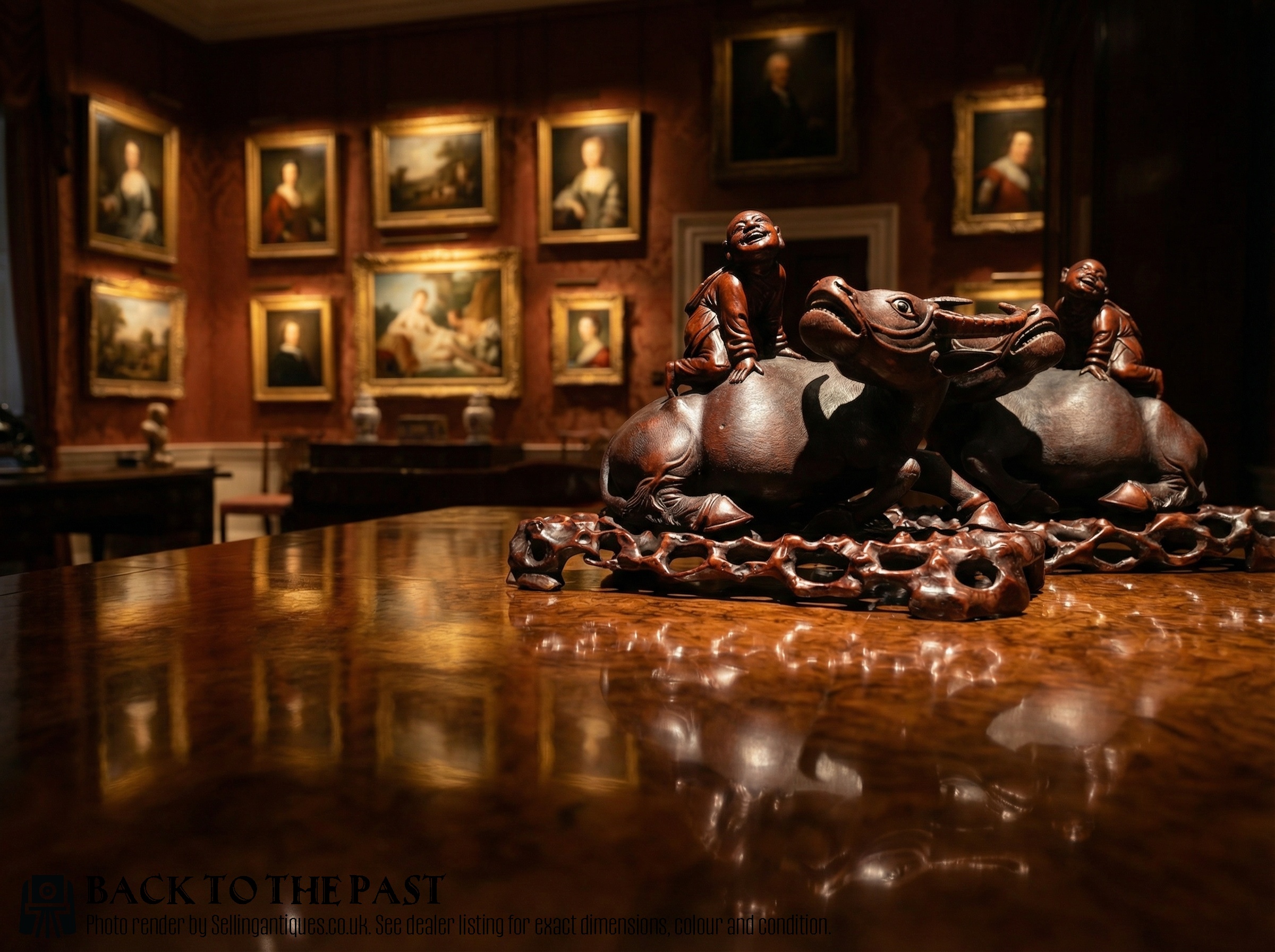
Qing Hardwood Sculpture
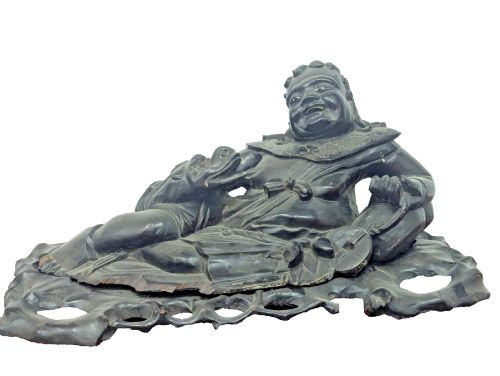
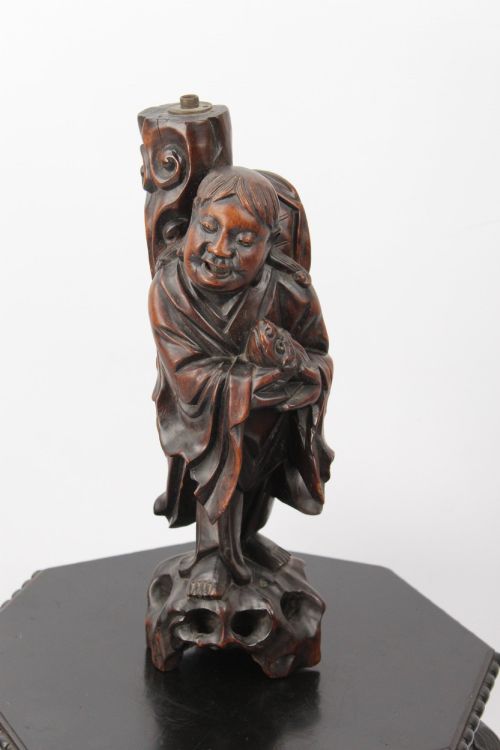
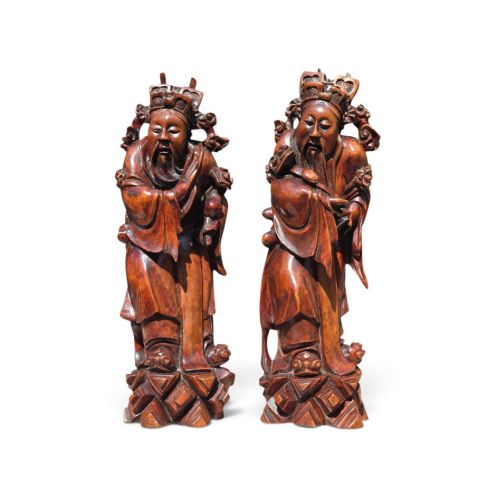
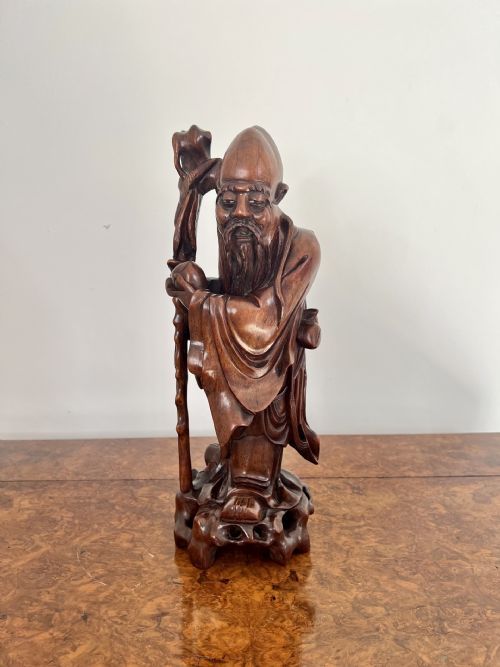
When you search for qing hardwood sculpture, you encounter figural carvings and decorative works created across the nineteenth century and into the early twentieth century. These pieces encompass depictions of Daoist immortals, laughing Buddhas, fishermen, and animals such as elephants, water buffaloes, and Mandarin ducks.
The examples you meet on this page range from monumental paired figures on stands to root wood carvings and table lamps incorporating jadeite elements. Many reflect traditional Chinese subjects associated with auspicious meanings and longevity, shaped within the aesthetic framework of the Qing dynasty.
How they were made
Some compositions incorporate secondary elements such as bone or brass fittings, alongside carved wooden stands made specifically to support the sculptures. Root wood pieces exploited the organic twists of the root mass, shaping natural growths into figures and landscape forms.
Qing Hardwood Sculpture Retail Price Guide 2026
Typical asking prices for qing hardwood sculpture among the pieces listed under this phrase on Sellingantiques today, from the lower quarter to the upper quarter. They describe what is for sale here now, not the wider market.
Listings feature works spanning the nineteenth and early twentieth centuries, constructed primarily from carved hardwood, root wood, and occasional jadeite.
What varies in quality
Quality in these carvings rests upon the depth and precision of the hand-carving, particularly in the rendering of hands, facial expressions, and textile folds. Sculptures with strong anatomical proportion and confident detailing display greater sculptural authority than simpler production pieces.
The scale and ambition of the composition also differentiate the range, with monumental pairs and complex figural groups demonstrating higher levels of workshop skill. The choice of timber grain and the preservation of the original surface finish contribute significantly to the visual impact of each sculpture.
The Qing Hardwood Sculpture Glossary
- Hardwood
- Dense, slow-growing timber capable of holding intricate, sharp detail under hand-carving tools. It provides the heavy, durable substrate for most figures on this page.
- Root Wood
- Naturally twisted and gnarled timber root mass utilised by carvers to inspire organic figural shapes. Artisans incorporated the natural contours of the wood into the final sculpture.
- Qing Dynasty
- The final imperial dynasty of China, lasting from 1644 until 1912. Sculptures from this era follow traditional artistic conventions and historical motifs.
- Foo Dogs
- Traditional guardian lions depicted in pairs to protect buildings and spaces. They appear frequently in nineteenth-century decorative sculpture.
- Daoist Immortal
- A figure from Chinese tradition associated with longevity, wisdom, and supernatural abilities. These subjects are carved with specific attributes such as staffs or peaches.
Qing Hardwood Sculpture: Frequently Asked Questions
How do I care for hardwood sculptures?
Keep wooden sculptures away from direct heat sources and rapid temperature shifts to prevent the timber from splitting. Dust them gently with a dry, soft cloth rather than using liquid polishes.
Maintaining stable indoor humidity preserves the natural finish of the hardwood over time. Avoid placing them in direct sunlight to protect the deep colour of the grain.
What subjects are most common?
Figures of Daoist immortals, Buddhas, and fishermen appear frequently alongside animals like water buffaloes, elephants, and Mandarin ducks. These subjects often carry traditional symbolic meanings of peace and prosperity.
Many works are designed as balanced pairs for symmetrical placement in a room. Others incorporate mythological creatures or natural landscape elements.
How are periods identified?
Dating relies on stylistic markers, tool marks, and the natural ageing of the hardwood surface. Nineteenth-century examples often display deep patination and distinct carving techniques associated with traditional workshops.
Comparing the proportions and subject matter with dated pieces helps establish the likely era of production. Documentation or provenance from earlier collections also assists in verification.
Where should I place these sculptures?
Large figural carvings suit prominent positions on heavy furniture, sideboards, or dedicated display stands. Their substantial weight and scale allow them to anchor a room visually.
Paired figures work well arranged symmetrically on either side of a fireplace or mantelpiece. Smaller root carvings fit effectively into cabinet displays where the organic details can be examined closely.