
Oriental Hardwood Furniture
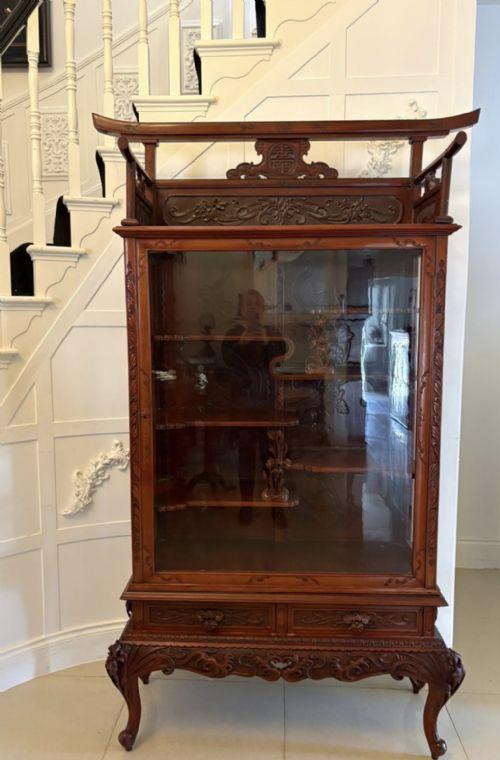
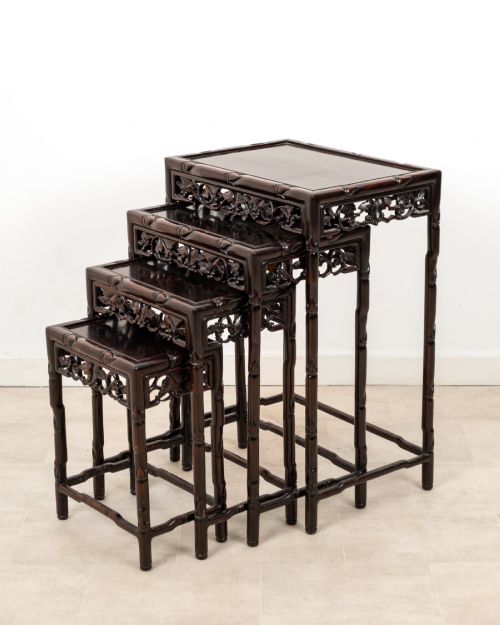
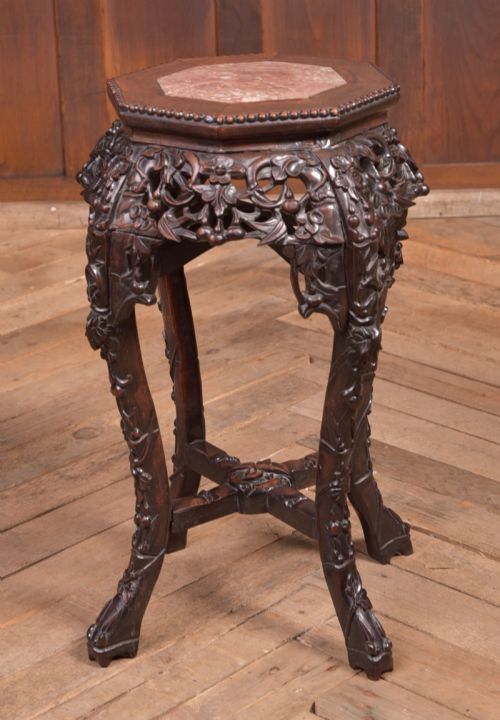
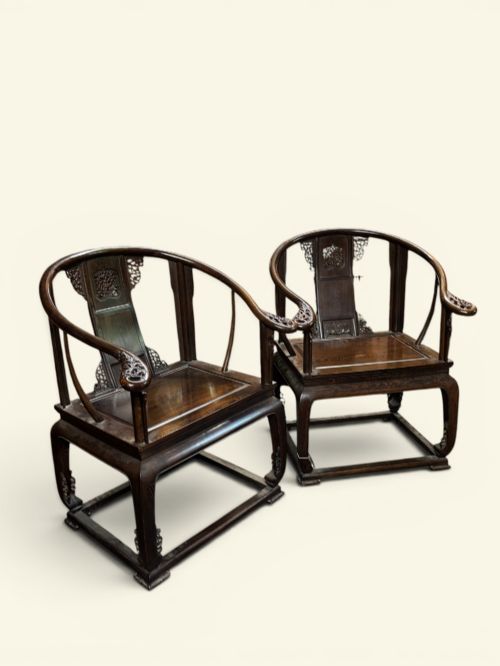
Oriental hardwood furniture brings dense rosewood, padauk, and lacquer into a room through carved tables, display cabinets, and horseshoe-back armchairs.
Oriental Hardwood Furniture
When searching for oriental hardwood furniture, buyers encounter items produced across various periods, notably the 19th century, Victorian era, and early decades of the twentieth century. The selection ranges from Chinese export pieces and Qing dynasty tables to Japanese Meiji period cabinets and Anglo-Indian designs.
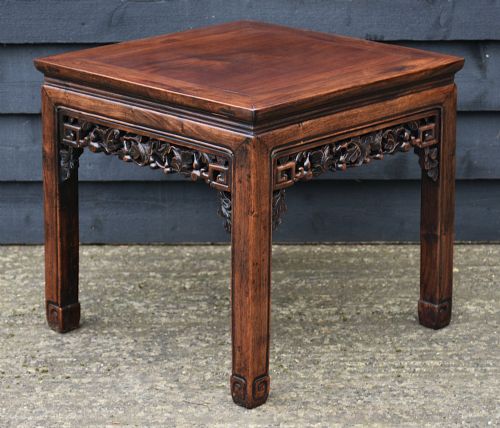
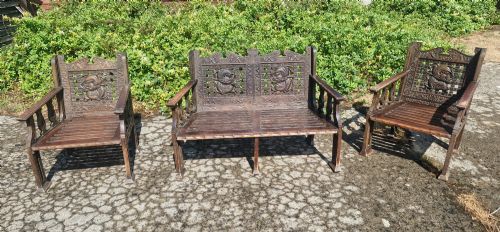
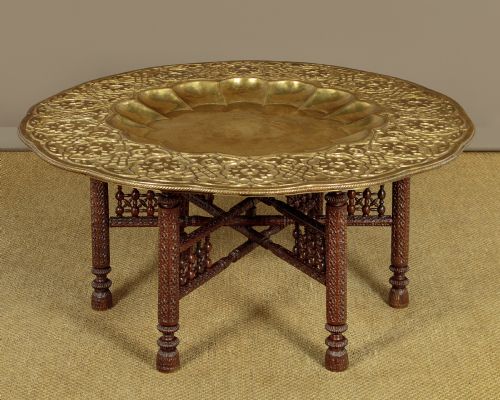
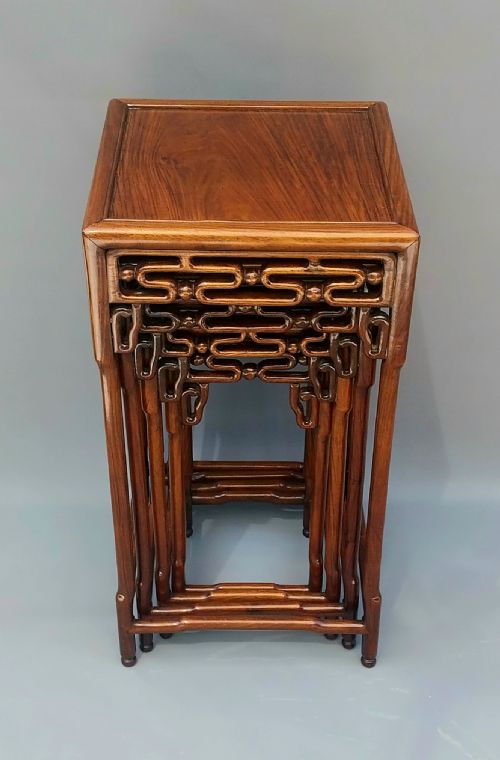
Practical domestic items dominate the offerings, including nests of tables, low tables, altar tables, plant stands, and occasional tables. Larger seating arrangements and storage pieces such as benches, settles, and shodona display cabinets also appear frequently.
Origins span distinct regional workshops in China, Japan, Burma, and India, reflecting traditional craftsmanship adapted for both local use and international trade. These pieces utilise dense timbers designed to support heavy carvings and structural joinery.
Materials and construction methods
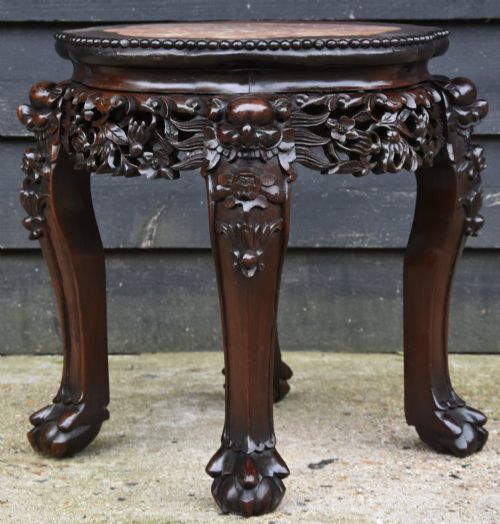
Makers utilised dense timbers such as rosewood, padauk, elm, and hongmu, relying on their natural weight and grain to provide structural integrity without extensive metal fixings. These woods were carved deeply with floral, figurative, and dragon motifs, or finished with red lacquer and cinnabar.
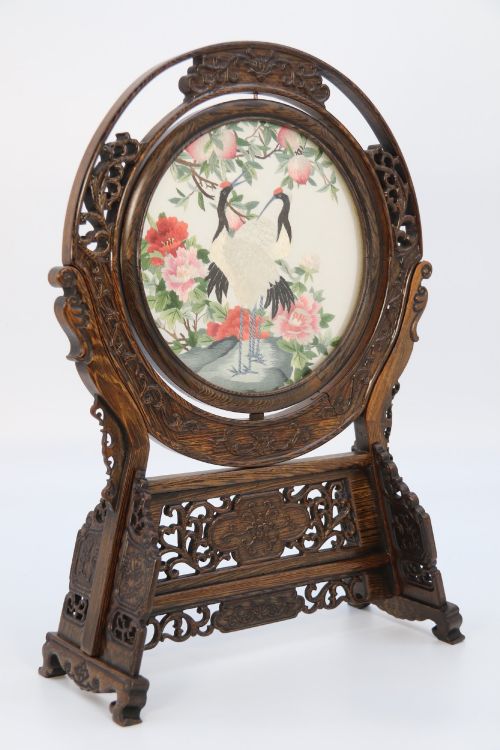
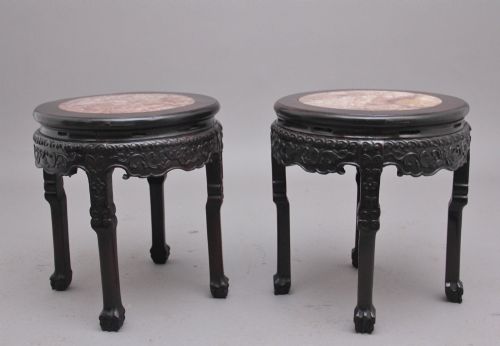
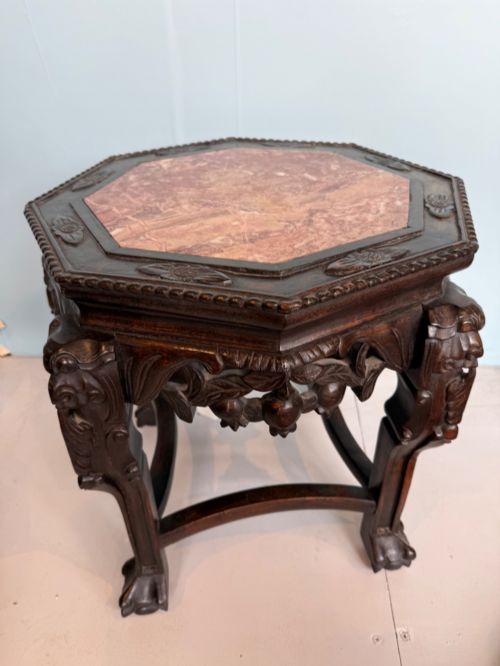
Decorative elements frequently incorporated contrasting materials set directly into the wooden frames, including marble inserts for tabletops, bone details, and brass or glass components. Silk embroidery and inlaid amboyna wood further enriched specific display stands and altar tables.
Listings feature items dated across the nineteenth century, the Meiji period, and the 1920s, constructed from rosewood, marble, lacquer, and bone.
Distinguishing quality in craftsmanship
The depth and crispness of the hand carving separate standard items from superior examples, particularly on panels, aprons, and chair splats where intricate motifs demand steady control. Superior pieces retain sharp undercut details in floral and dragon designs rather than softened, shallow relief.
The choice and preservation of primary materials dictate overall standard, notably the selection of dense rosewood or hongmu with stable grain, alongside well-fitted inset marble tops and intact lacquer finishes. Sound joinery that maintains structural rigidity without excessive movement indicates careful original assembly.
Gabriel Viardot
The Oriental Hardwood Furniture Glossary
- Hongmu
- A traditional Chinese term for dense, heavy hardwoods, often translated as red wood and frequently associated with rosewood furniture. It provides a dark, polished surface suitable for intricate carving.
- Shodona
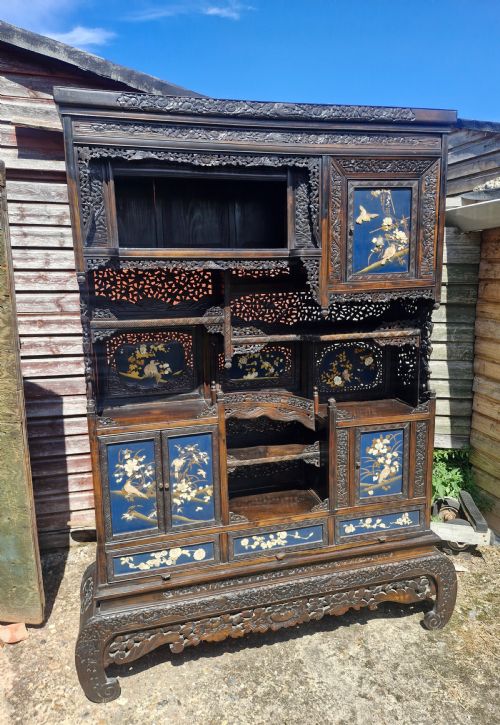
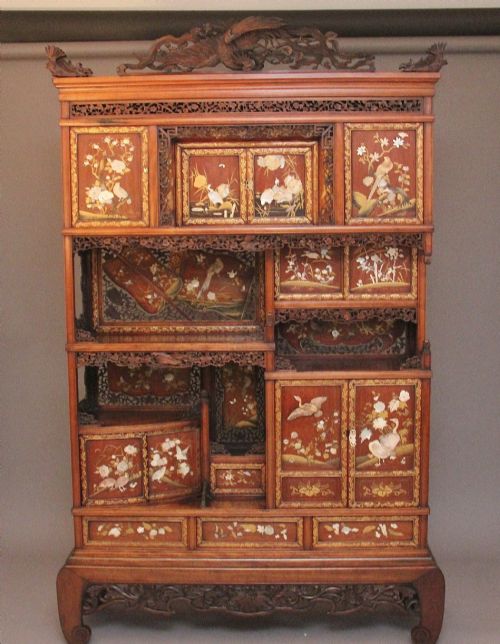
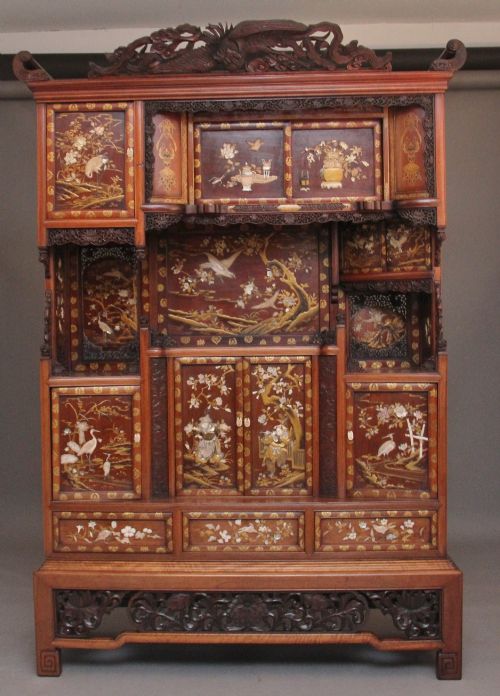
- A type of Japanese multi-tiered display cabinet from the Meiji period, featuring asymmetrical shelving and sliding doors. These cabinets showcase intricate woodwork and joinery.
- Padauk
- A durable, heavy tropical timber with a reddish-brown tone, utilised for substantial Chinese stands, cabinets, and Burmese furniture. It takes a fine carved edge and ages to a deep patina.
- Cinnabar
- A vermilion-coloured mineral pigment applied in multiple layers to a wooden base before being carved with relief patterns. It appears on ceremonial and decorative surfaces.
- Altar table
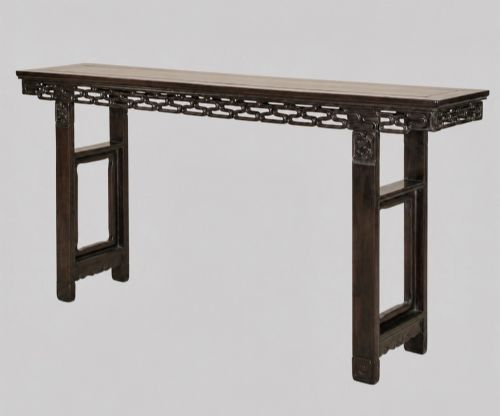
- A long, narrow table originating from traditional domestic and ceremonial settings in China, characterised by upturned flange ends. They were traditionally placed against walls to display objects.
Oriental Hardwood Furniture: Frequently Asked Questions
What is an oriental hardwood altar table?
An altar table is a long, narrow surface featuring distinctive upturned flanges at the short ends, originally designed for domestic or ceremonial display in China. These tables utilise dense timbers such as rosewood and hongmu, supported by recessed legs.
In modern interiors, they function well as console tables in hallways or living spaces, providing a stable platform for lamps, plants, and decorative objects without occupying excessive floor depth.
How do I identify a Meiji period shodona?
A Meiji period shodona is a Japanese display cabinet characterised by asymmetrical shelving, small cupboards, and sliding panels. They often incorporate elaborate carved motifs and distinct joinery.
Placed in a reception room, a shodona serves as a focal point for displaying small collections, ceramics, or glass objects, highlighting the varied compartments built into the cabinet.
What are horseshoe-back armchairs used for?
Horseshoe-back armchairs feature a continuous curved top rail that sweeps down to form armrests, offering an ergonomic shape developed in traditional Chinese seating. They are constructed from sturdy hardwoods to support the curved joinery.
These chairs provide comfortable occasional seating in studies or living rooms, often paired around a low table or positioned individually as statement accent chairs.