


Asian Carved Wood Chest
These pieces of asian carved wood chest offer both decorative presence and practical storage, shaped by traditional craftsmanship and regional design.
Asian Carved Wood Chest
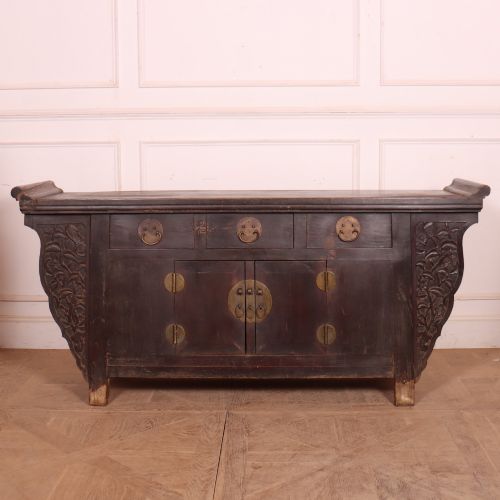
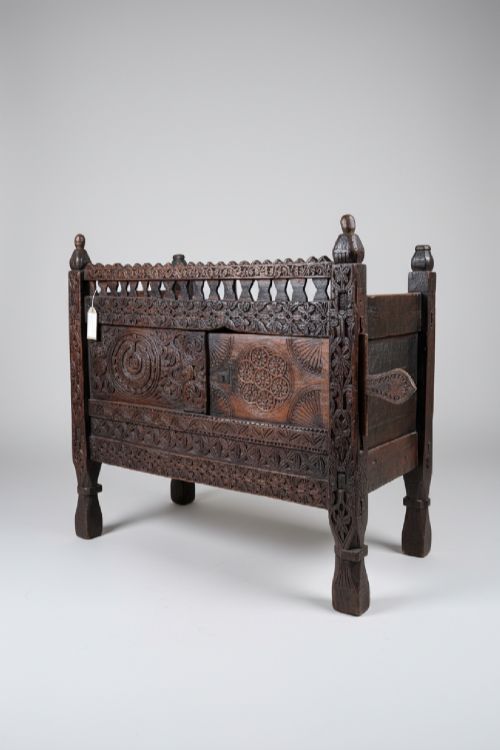
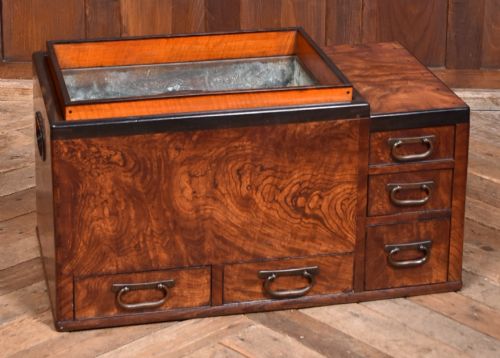
An asian carved wood chest serves primarily as a storage vessel or blanket box, originating from regions such as China, India, and Afghanistan. These forms encompass trunks, wedding boxes, and storage coffers designed to safeguard garments and valuables.
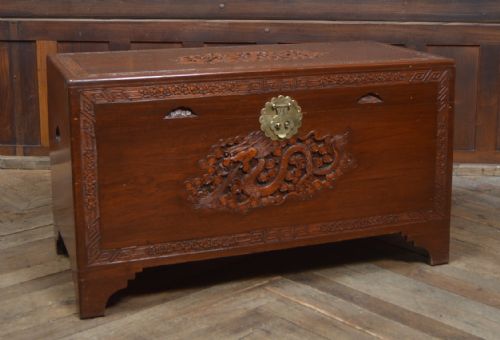
The most common examples encountered here are camphor wood trunks and blanket boxes dating from the nineteenth century and the early twentieth century. Pieces range from simple folk art dowry chests to highly decorated export trunks featuring brass hardware.
How they were made
Makers utilised distinct timbers suited to carving and storage, predominantly camphor wood, elm, and varied hardwoods. Camphor wood remains prevalent due to its aromatic qualities and natural insect-repellent properties.
Construction techniques combine traditional joinery with surface ornamentation such as deep relief carving, brass coverings, lacquer work, and mother-of-pearl inlay. These decorative layers reflect regional aesthetics spanning Chinese export styles to Swat Valley folk art.
Many a nineteenth-century camphor chest still carries the faint, unmistakable aroma that once kept Himalayan moths at bay.
What varies in quality
Quality differentiates through the depth and crispness of the hand carving, alongside the selection of timber used for the carcass. Richly carved panels demonstrate superior artisan skill compared to plainer, utility storage boxes.
The integration of secondary materials such as brass fittings, lacquer finishes, and inlaid mother-of-pearl further distinguishes finer production pieces from standard regional utility chests.
The Asian Carved Wood Chest Glossary
- Camphorwood
- A durable, aromatic timber traditionally utilised for storage chests to protect textiles from moths. Its natural scent defines many antique trunks.
- Lacquer
- A protective and decorative coating applied in multiple layers to wood surfaces, often seen on Chinese cabinets and trunks.
- Dowry chest
- A traditional piece of furniture prepared for a bride's household, frequently ornamented with regional folk carvings.
- Chinoiserie
- European decorative style reflecting Chinese artistic motifs, occasionally applied to or associated with imported furniture forms.
- Hardwood
- Dense timber derived from broad-leaved trees, selected for structural cabinetry and detailed relief carving.
Asian Carved Wood Chest: Frequently Asked Questions
What were these chests used for originally?
These chests functioned primarily for storing garments, household linens, and valuable documents. Their dense wood construction helped protect contents from humidity and pests.
In domestic settings, dowry chests also held personal possessions brought by a bride to her new household, combining utility with symbolic cultural value.
How do I care for a camphor wood chest?
Maintain the wood by dusting with a dry cloth and avoiding direct sunlight, which can dry out the natural oils. Keep the interior clean without harsh chemical polishes.
Allow the natural aromatic properties of the camphor wood to persist by avoiding synthetic deodorisers inside the storage compartment.
How can I tell the period of a chest?
Dating relies on observing construction methods, hardware styles, and the specific nature of the hand carving. Nineteenth-century examples often exhibit distinct regional motifs and hand-forged brass elements.
Comparing the timber grain and surface wear helps contextualise pieces within broader periods like the Qing dynasty or early twentieth-century production.
Where were these pieces made?
Origin locations span across Asian regions represented in the evidence, including China, India, and Afghanistan. Chinese export workshops and regional makers produced many of the surviving trunks.
Specific styles such as Swat Valley folk art or traditional Chinese export work reflect the local aesthetic traditions of their geographic origins.