



Oriental Folding Table
An oriental folding table brings portable craftsmanship into a room, offering collapsible utility through carved wood and metal work.
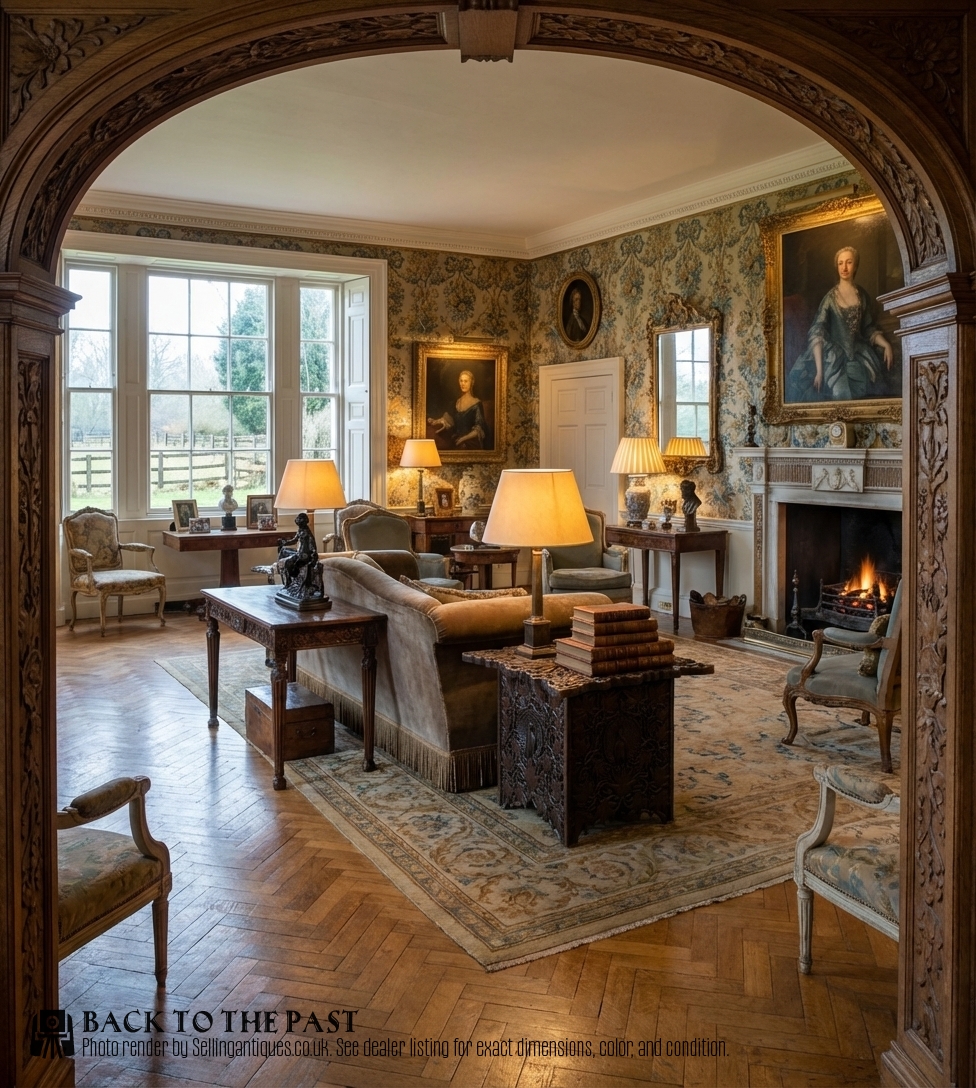
Oriental Folding Table
When you search for an oriental folding table, you encounter versatile occasional furniture designed for practical transport and decorative display. The pieces on this page span the late nineteenth century through to the early twentieth century, encompassing the Edwardian era and the art deco period. You will frequently find octagonal side tables, coffee tables, card tables, and tray tables alongside occasional pieces.
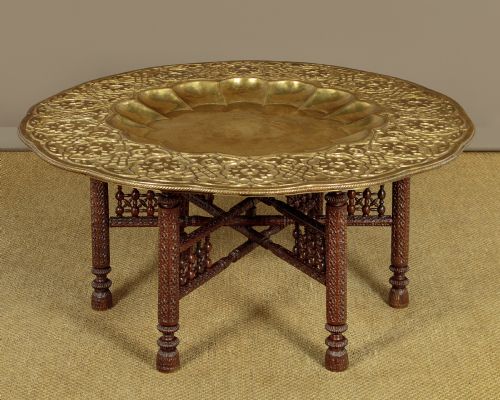
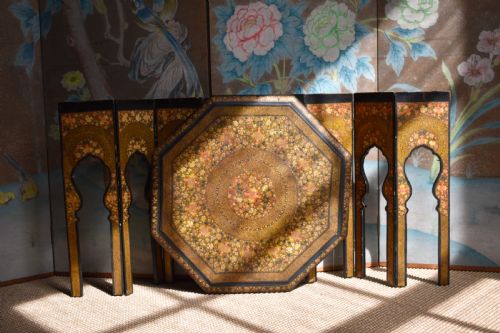
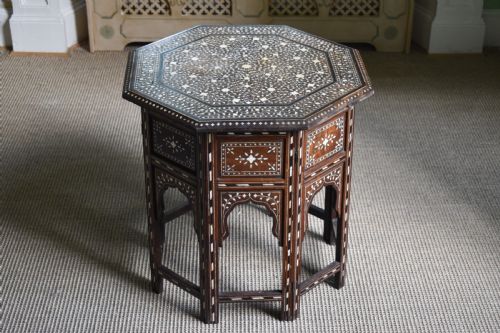
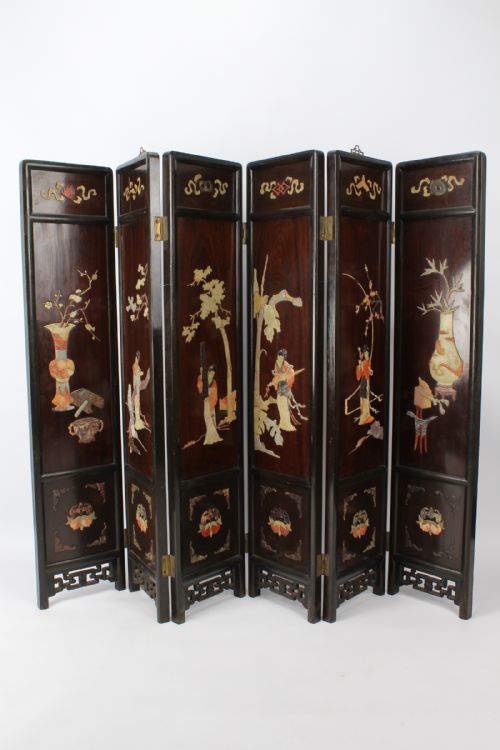
The regional origins of these items are wonderfully diverse, drawing on Anglo-Indian, Chinese Qing Dynasty, Chinese Export, Anglo-Burmese, and Moorish Revival traditions. Forms range from small Hoshiarpur tables with inlaid tops to large brass-topped tables and black lacquered side tables. Many feature clever folding bases that allow the top to lift off or fold flat for storage.
Makers and workshops across different regions produced these objects for both domestic use and export markets. You will see items constructed from teak, rosewood, sheesham wood, and sandalwood, often paired with contrasting metal or bone elements. The selection bridges formal games tables and low folding coffee tables utilised in eclectic interiors.
How they were made
Hardwoods form the structural core of these items, with artisans utilising teak, rosewood, sheesham, and sandalwood for frames and folding stands. Woodworkers carved intricate geometric patterns, foliate motifs, and figurative scenes directly into the timber surfaces. Surfaces were frequently treated with black lacquer or painted finishes to achieve a smooth sheen.
Inlay work defines a large proportion of these pieces, incorporating sheet brass, copper, and delicate pieces of bone. Makers routed channels into the dense hardwood to receive the metal or bone inserts, securing them flush with the wood. Tray tops often paired heavy beaten brass plates with collapsible wooden stands joined by simple hinges.
Some folding tables doubled as travellers' altars before finding new life holding afternoon tea.
What varies in quality
The precision and depth of the hand carving dictate the aesthetic standing of each piece. Finer examples display crisp relief work and tightly registered joints where the folding mechanism meets the top. Simpler items rely on painted decoration rather than intricate relief carving or bone inlay.
Material selection marks another distinction across the range, separating dense hardwoods like rosewood and sandalwood from softer, plain woods. The complexity of the inlay work, particularly intricate bone or metal placement, distinguishes standard production items from masterwork specimens.
The Oriental Folding Table Glossary
- Hoshiarpur
- A town in Punjab renowned for its distinct woodworking tradition involving dense bone and wire inlay on sheesham or shesham wood. Pieces from this centre often feature geometric star motifs.
- Anglo-Indian
- A design style created during the British colonial period in India that combined traditional Indian craftsmanship with European furniture forms. These items frequently utilise heavy carving and brass inlay.
- Chinoiserie
- A European artistic style reflecting Chinese aesthetic influences, popular in decorative arts and furniture during the eighteenth and early twentieth centuries. It employs black lacquer and painted scenes.
- Hongmu
- A category of dense, dark hardwood used in traditional Chinese furniture making. It translates literally to red wood and provides a heavy, durable structure for folding tray tables.
Oriental Folding Table: Frequently Asked Questions
What is an oriental folding table?
An oriental folding table is a portable piece of furniture featuring a collapsible base and a removable or folding top, originating from various Asian and colonial traditions.
These items were built for versatility, allowing owners to move and store them easily while maintaining decorative carved or inlaid surfaces.
How do you fold these tables?
Most folding tables use an interlocking wooden X-frame base that collapses flat once the top is lifted off.
Some smaller occasional pieces utilise hinge mechanisms built directly into the frame to fold inward without removing the surface.
Where were these tables made?
These pieces originate from workshops across India, Burma, China, and Japan, often reflecting export styles tailored for Western homes.
Specific regional centres such as Hoshiarpur became famous for distinctive bone-inlaid folding stands and occasional tables.
How do I style a folding table?
A folding table works effectively as a compact coffee table, side table, or occasional surface in eclectic and traditional interiors alike.
Its portable nature allows you to move it near seating areas or fold it away when floor space is needed.