

Oriental Carved Wood Figure
An oriental carved wood figure brings centuries of Asian and Middle Eastern craftsmanship into a room through hand-chiselled deities, animals, and scholars.
Oriental Carved Wood Figure
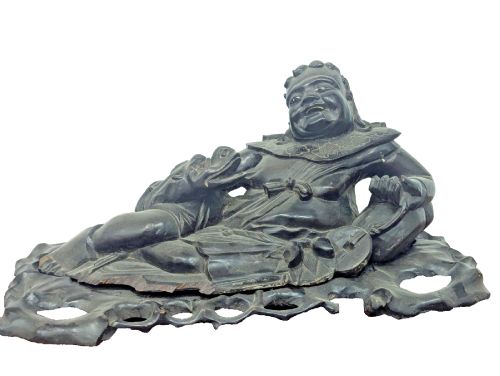
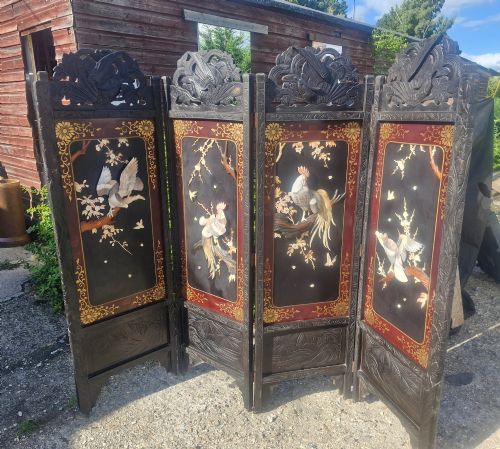
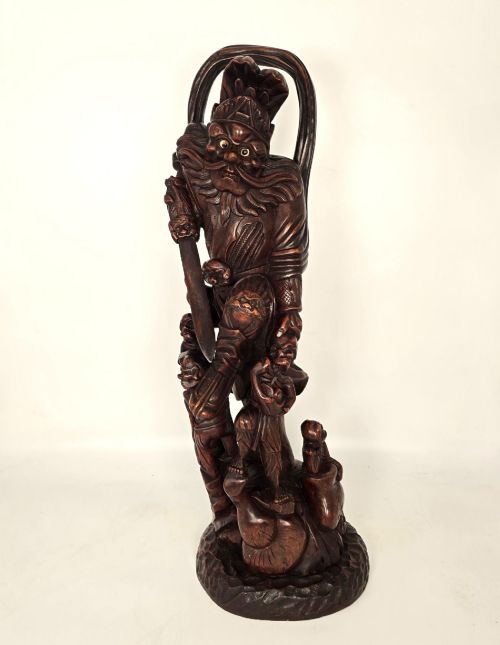
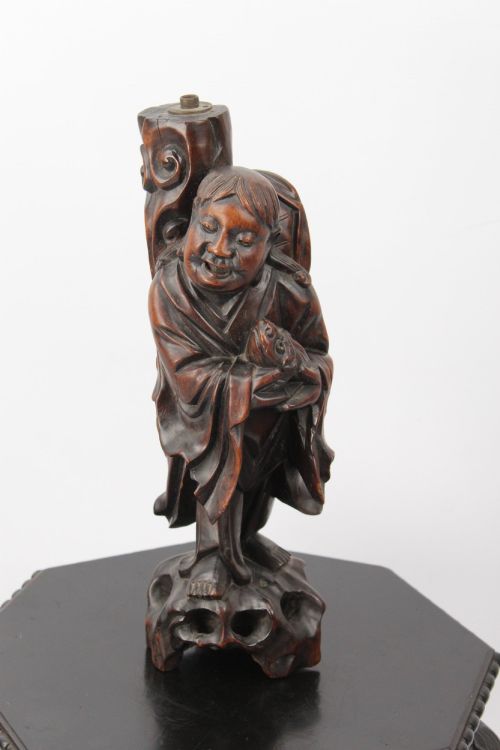
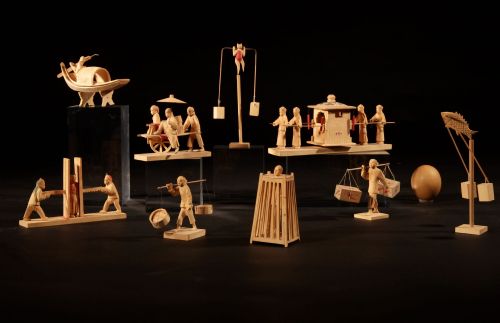
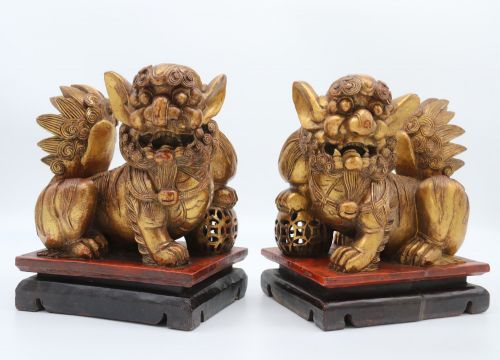
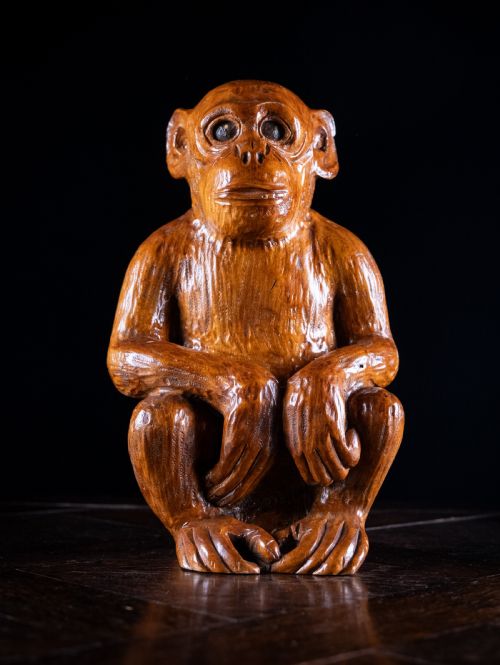
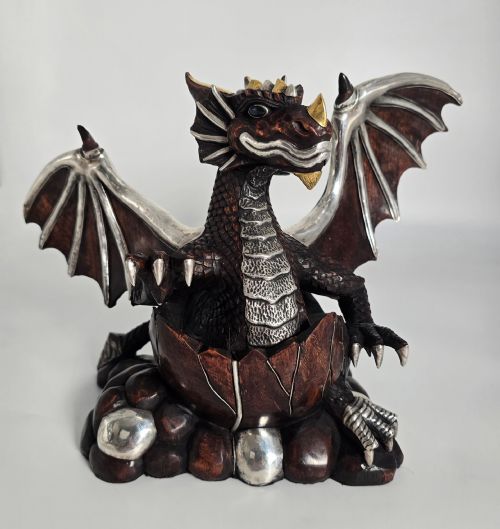
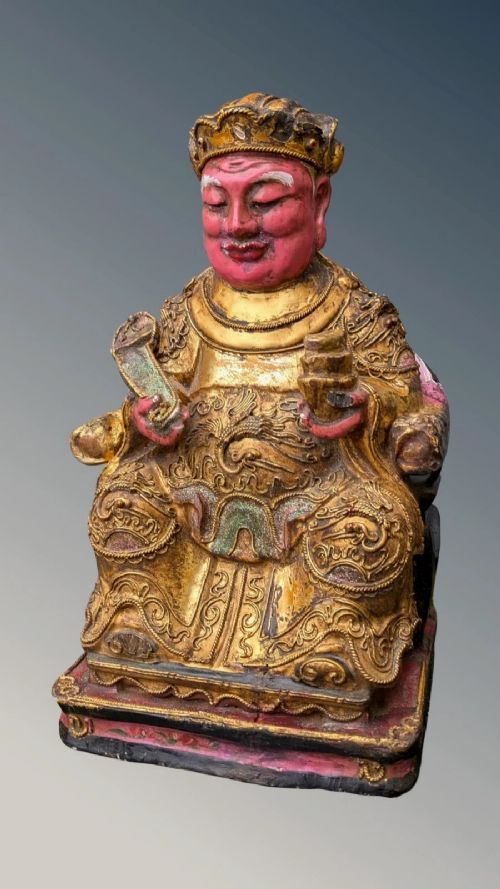
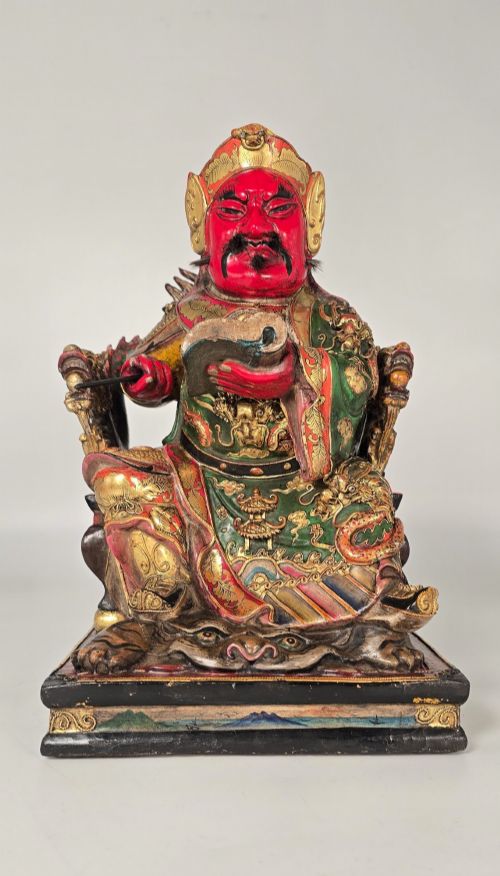
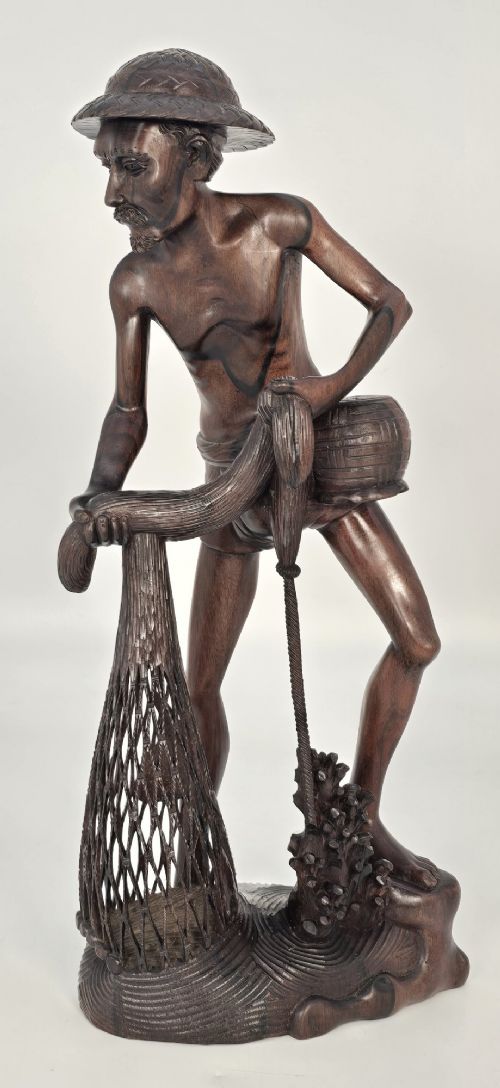
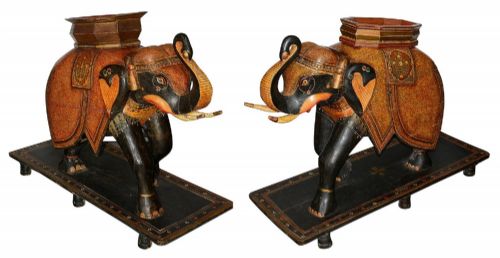
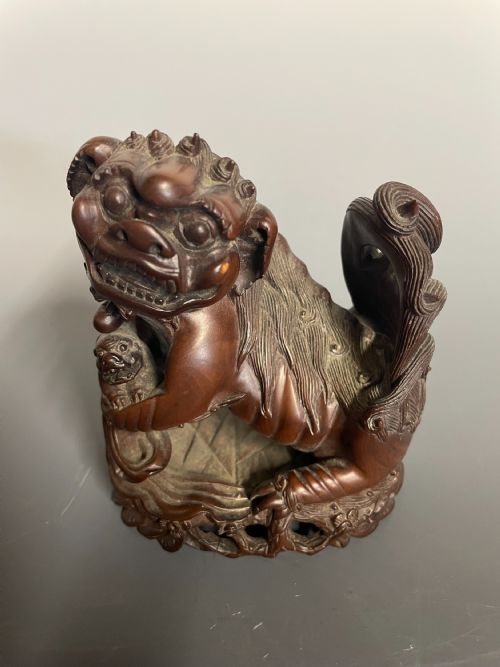
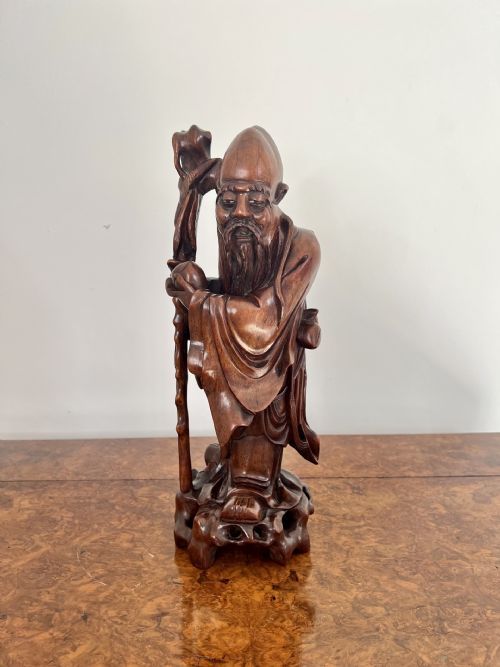
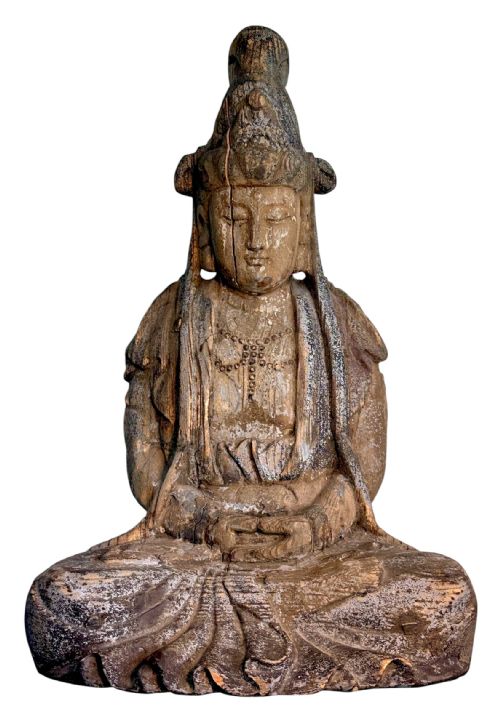
When searching for an oriental carved wood figure, collectors encounter a diverse range of sculptures, statues, and smaller okimono spanning multiple centuries. The selection encompasses depictions of Buddhist immortals, temple guardians, scholars, and animals carved from dense timbers.
The versions most commonly met on this page originate from Chinese Qing Dynasty workshops and Japanese Meiji period studios. These pieces frequently take the form of standing deities, seated fishermen, and mythical creatures carved from hardwood, root wood, or boxwood.
Materials and construction
Carvers utilised dense timbers such as hardwood, boxwood, and root wood to achieve intricate detail without splintering the grain. Artisans frequently incorporated natural irregularities in root wood to shape the dynamic postures of scholars and animals.
Surfaces were often finished with layers of lacquer, gesso, or gold leaf to accentuate high-relief carving and polychrome painted details. Mixed metal mounts and carved bone elements occasionally complemented the primary timber construction.
Listings feature 19th-century works alongside pieces from 17th-century Ming and Qing dynasties.
Factors of quality
The distinction between standard works and exceptional pieces lies in the depth of the carving and the anatomical precision of the subject. Master carvers utilised the natural grain of the timber to define drapery folds and facial expressions with striking realism.
Preservation of original polychrome paint, gold leaf, and lacquer finishes strongly influences the standing of a piece. Works retaining their unblemished surface patination demonstrate superior historical integrity compared to heavily restored examples.
The Oriental Carved Wood Figure Glossary
- Okimono
- A Japanese ornamental carving designed for display on a household shelf or tokonoma. These figures typically depict daily life, folklore, or animals.
- Boxwood
- A dense, pale hardwood favoured by carvers for miniature works and netsuke due to its fine, even grain. It allows for microscopic detail without chipping.
- Gesso
- A plaster-like mixture applied to timber as a preparation for painting or gilding. It provides a smooth base for gold leaf and polychrome decoration.
- Root wood
- Timber sourced from the root system of a tree, prized for its gnarled, twisting shapes. Carvers often incorporated these natural forms into scholar and deity sculptures.
- Hongmu
- A category of dense, dark Chinese hardwoods often translated as red wood. It was utilised for substantial statues and furniture.
- Polychrome
- Painted or decorated in several colours. This surface treatment brings depth to temple figures and ritual sculptures.
Oriental Carved Wood Figure: Frequently Asked Questions
What is root wood carving?
Root wood carvings utilise the gnarled and twisting subterranean parts of trees, where carvers shape the natural contours into figures of scholars or mythical beasts.
This technique allows the organic growth of the timber to dictate the dynamic posture of the finished sculpture.
How should I care for wooden figures?
Keep carved wooden sculptures away from direct sunlight and sudden temperature shifts to prevent the timber from splitting or warping.
Dust the surface gently with a soft, dry brush and avoid applying liquid polishes that might damage historic lacquer or gold leaf.
What distinguishes temple figures from domestic pieces?
Temple figures such as Guardian Kings and Lokapala are typically larger, monumental works designed for ritual spaces rather than home display.
They frequently feature remnants of heavy gilding and polychrome paint applied over gesso to command authority in a sacred setting.