
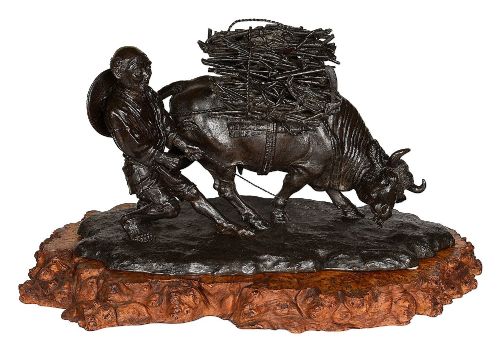


Meiji Period Wood Statue
These Japanese Meiji period wood statue pieces bring remarkable carved detail and natural grain into a room, capturing nineteenth-century artistry.
Meiji Period Wood Statue
A meiji period wood statue embodies the intricate carving traditions of nineteenth-century Japan, spanning sculptures, figurines, and okimono. These works range from small netsuke figures to substantial carved hardwood and boxwood figures standing over seventy centimetres tall.
Collectors encounter specific subjects like gods, figures, and animals such as tigers and woodsmen with buffalo. The pieces on this page draw from the nineteenth century, including specific dates around eighteen seventy, eighteen ninety, and nineteen hundred.
Alongside purely wooden works in boxwood, root wood, burr wood, and carved hardwood, the selection includes pieces incorporating bronze and root wood bases. Each meiji period wood statue reflects the stylistic output of Japanese makers from the Meiji era.
What varies in quality
The sophistication of the carving separates standard figures from exceptional works, particularly in the rendering of animal musculature and facial expressions. Master carvers achieved remarkable naturalism in subjects like tigers and human figures.
Material selection dictates much of the inherent value, with dense boxwood and figured root wood or burr wood commanding attention for their grain and stability. The presence of signatures from known carvers further distinguishes superior examples.
Object types span sculptures, figurines, okimono, and netsuke, incorporating both hardwood and dark stain finishes.
Tomochika·Gyoko
The Meiji Period Wood Statue Glossary
- Okimono
- A Japanese ornamental statue or carving designed for display in a domestic alcove. These decorative objects depict deities, animals, and everyday figures.
- Netsuke
- A small carved toggle fastened to the end of a cord connecting a traditional pouch or container. These miniature carvings demonstrate immense sculptural detail.
- Boxwood
- A dense, pale hardwood favoured for intricate and miniature Japanese carvings due to its fine grain. It holds sharp edges exceptionally well.
- Root wood
- Timber sourced from the root system of a tree, displaying gnarled and complex organic grain patterns. Makers utilised these natural forms for sculptural bases.
- Bronze
- A copper alloy frequently paired with wood or used alongside wooden elements in Meiji period mixed-media sculptures. It provides a contrasting metallic texture.
Meiji Period Wood Statue: Frequently Asked Questions
What is a meiji period wood statue?
A meiji period wood statue is a hand-carved Japanese sculpture or figurine created during the Meiji era in the nineteenth century. These works depict mythological figures, deities, and animals.
They reflect the traditional craftsmanship and naturalistic aesthetic of Japanese carvers working in boxwood, root wood, and hardwood.
How were okimono used?
Okimono were decorative carvings placed within the traditional living spaces of Japanese homes for aesthetic appreciation. They served as focal points in a room rather than items of practical utility.
Collectors today display these statues on tables or shelves to highlight their detailed craftsmanship.
How do I care for wooden statues?
Wooden statues require stable indoor humidity and protection from direct sunlight to prevent the timber from drying out or cracking. Dusting them gently with a dry, soft cloth maintains the surface.
Avoid using liquid polishes or harsh cleaning agents on antique wood or dark stains.
How do I identify a Meiji period piece?
Identification relies on examining the carving style, subject matter, and materials characteristic of late nineteenth-century Japanese artistry. Many pieces feature signature plaques or direct artist signatures carved into the base.
The use of specific timbers like boxwood and root wood also points toward this distinct historical era.