


19th Century Japanese Carving
These 19th century japanese carving selections bring together intricate cast bronze vessels, carved netsuke, and hardwood display furniture shaped by the Meiji and Edo periods.
19th Century Japanese Carving
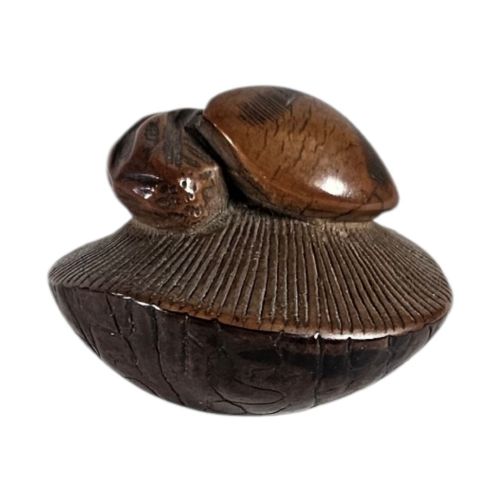
A 19th century japanese carving search draws together traditional East Asian artistry and European interpretations created during the Meiji and Edo periods. Buyers encounter small handheld objects such as boxwood netsuke, stag antler figures, and carved okimono alongside large decorative pieces.
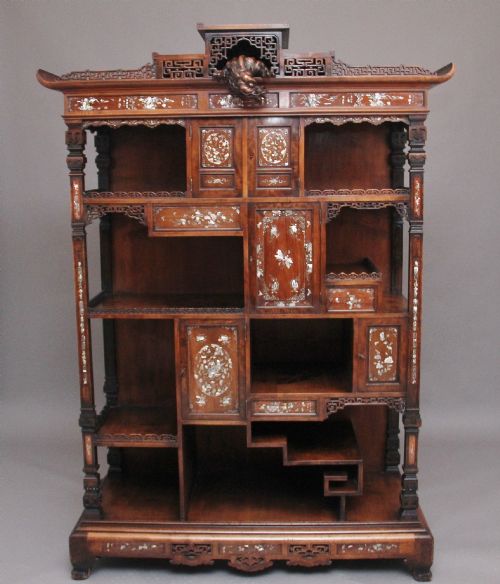
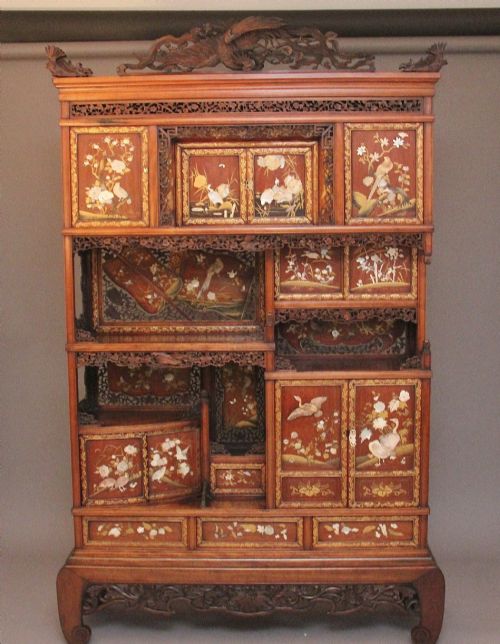
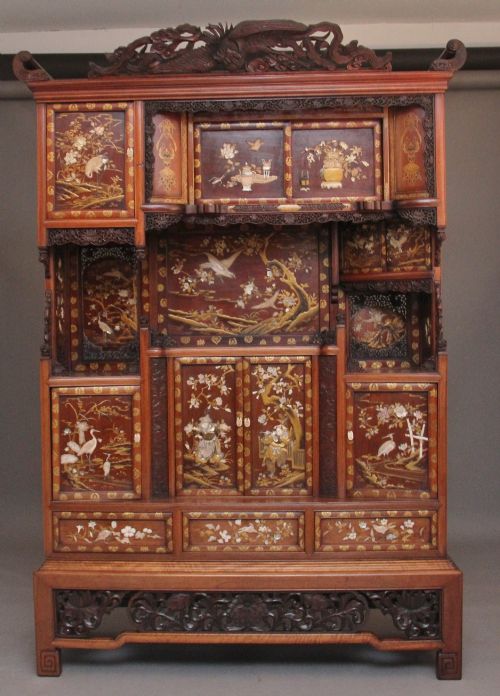
The objects on this page span several forms including bronze vases, hardwood shodana display cabinets, porcelain chargers, and occasional tables with Anglo-Japanese influence. Many items originate directly from Japan, while others reflect European workshops adopting the Japonisme and Aesthetic Movement styles of the late nineteenth century.
Materials and construction methods
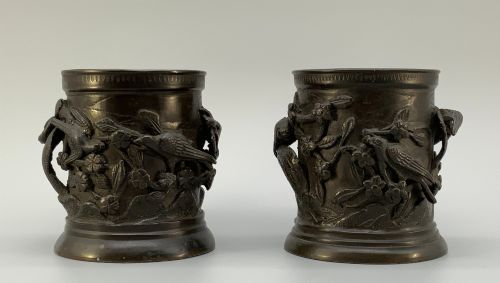
Artisans utilised dense organic materials such as boxwood, stag antler, and padouk, shaping them with hand tools to produce detailed netsuke and large furniture cabinets. Bronze casting was widely employed for heavy vases and jardinières, often incorporating birds, blossoms, and intricate relief patterns.
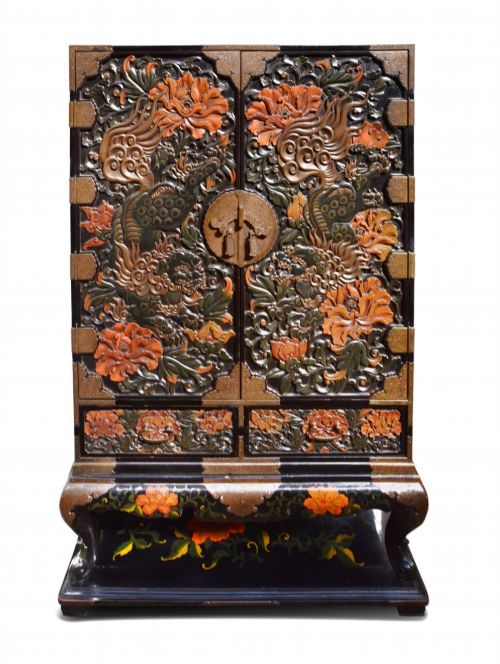
Surface decoration frequently combined lacquer over wood or metal, champleve cloisonne enamel panels inset into tables, and porcelain decorated with koi or phoenix motifs. European cabinetmakers working in the Anglo-Japanese style applied similar carving techniques to satin birch and walnut frameworks.
Several monkeys, snails, toads, and phoenix birds populate these nineteenth-century carvings, keeping watch from mushrooms and lacquer panels.
Distinctions in quality and execution
Larger items like shodana cabinets and bronze vases differentiate themselves through structural integrity, balanced symmetry in cast motifs, and the integration of secondary materials such as enamel or lacquer panels. Signed pieces generally indicate workshop mastery and deliberate attention to detail.
Blyth & Son London·Gabriel Frederic Viardot
The 19th Century Japanese Carving Glossary
- Netsuke
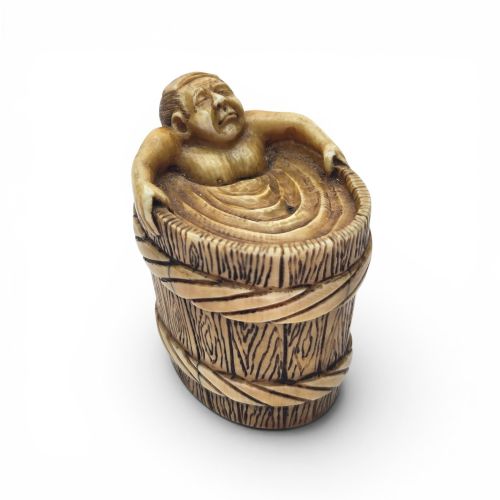
- A small carved toggle fastened to the end of a cord on a traditional Japanese pouch or container. These toggles were typically fashioned from boxwood or stag antler.
- Shodana
- A small Japanese display cabinet featuring asymmetrical shelving, sliding doors, and carved decorative panels. They gained immense popularity in European interiors during the late nineteenth century.
- Okimono
- A Japanese decorative freestanding carving intended for display on a shelf or tabletop rather than for practical utility. They often portray human figures, animals, or mythical subjects.
- Japonisme
- A Western artistic movement describing the widespread influence of Japanese art on European design, painting, and decorative crafts from the mid-nineteenth century onward.
- Kagamibuta
- A round, bowl-shaped netsuke fitted with a metal lid that is often decorated with intricate engraving or enamel work.
19th Century Japanese Carving: Frequently Asked Questions
What is a netsuke used for?
A netsuke served as a practical toggle in traditional Japanese dress, securing small hanging pouches known as inro to the top of a kimono sash.
Over time, these carved wooden or antler pieces evolved into highly collectible miniature sculptures valued for their intricate detail and tactile form.
How do I identify a Meiji period bronze?
Meiji period bronze vases and jardinières typically feature cast relief decoration depicting birds, blossoms, or dragons, often complemented by patinated finishes and signature stamps.
These pieces generally date from the late nineteenth century and reflect the rapid opening of Japanese metalwork craftsmanship to international export markets.
What is an Anglo-Japanese cabinet?
An Anglo-Japanese cabinet is a piece of European furniture created during the Aesthetic Movement that incorporates Japanese carving motifs, asymmetrical forms, and exotic hardwoods.
These cabinets bridge Victorian interior design with Eastern artistic principles, frequently utilising materials like satin birch or walnut alongside inset panels.
How should I clean carved hardwood furniture?
Carved hardwood furniture and display cabinets require gentle dusting with a soft, dry brush to prevent debris from settling into deep crevices.
Avoid liquid polishes or modern chemical sprays, as older lacquered and polished surfaces respond best to occasional application of traditional beeswax.