


Oriental Bronze Elephant
These oriental bronze elephant figures and vessels bring remarkable metalwork into a room, shaped by centuries of Asian foundry traditions.
Oriental Bronze Elephant
When you search for oriental bronze elephant, you encounter diverse metal objects ranging from naturalistic Japanese sculptures to Chinese censers and Indian ceremonial figures. The items span various historical epochs, including the Meiji period and the Ming dynasty.
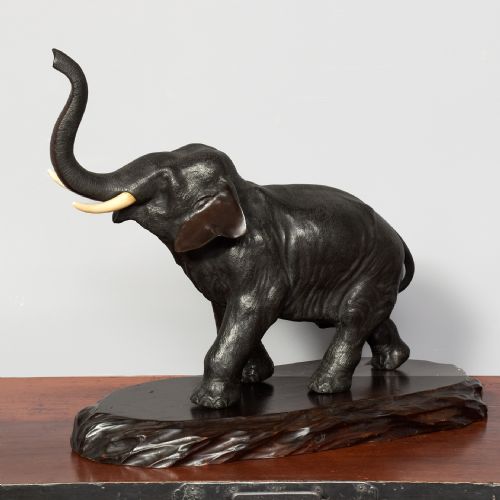
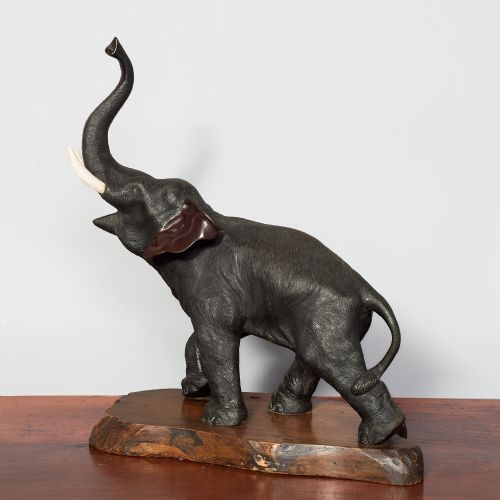
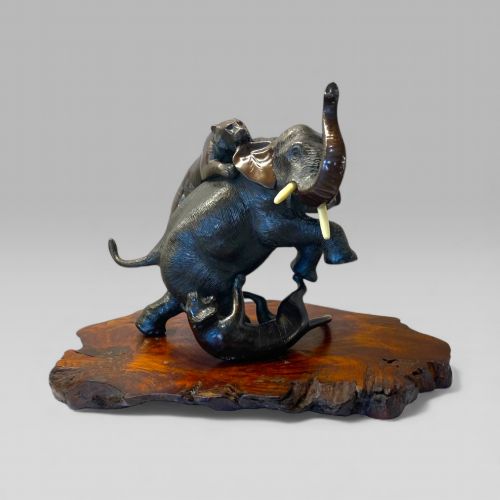
You are most likely to meet Japanese Meiji period examples on this page, particularly figures depicting elephants standing alone or locked in combat with tigers. These pieces often feature ivory tusks and detailed surface textures.
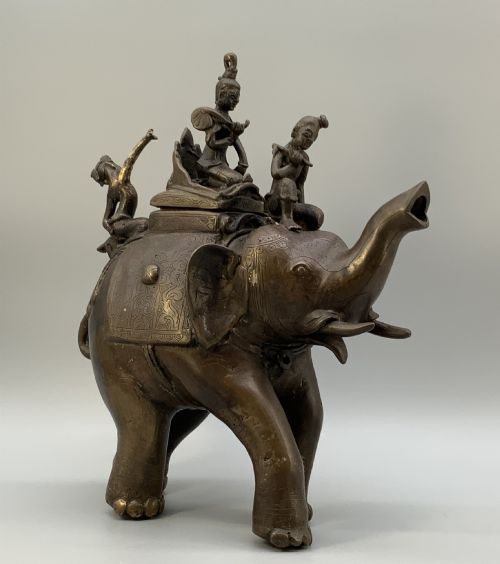
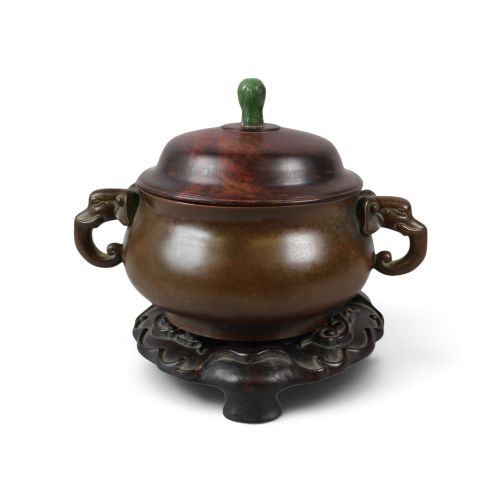
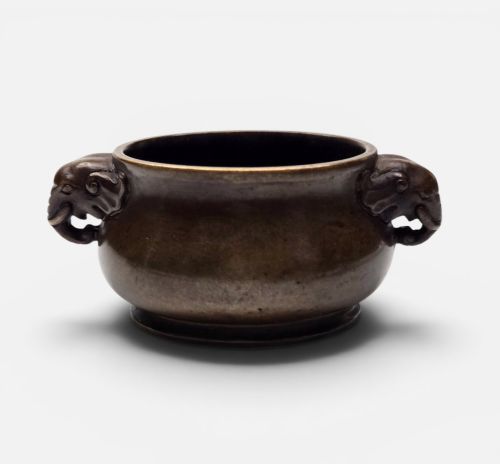
Beyond standalone sculptures, the selection includes scholar's censers with elephant-head handles, table lamps, jardiniere planters, and engraved pieces with riders. Chinese archaistic designs and Burmese examples also appear among the offerings.
How oriental bronze elephant items were made
Foundries utilised traditional casting methods to shape the bronze body of each elephant, achieving intricate forms through lost-wax techniques or sectional moulds. Artisans then chased the surfaces by hand to render skin folds, muscles, and harness details.
Makers integrated contrasting materials into the metalwork, incorporating ivory tusks, bone, hardstone jade finials, and diamond eyes. Some items also incorporate mixed metals, cloisonné enamel, or custom hardwood stands.
Engraved and patinated surfaces define the finish of these bronzes, ranging from dark brown tones to polished highlights. Certain vessels combine the bronze structure with champlevé enamel decoration.
Materials across the listings include bronze, hardwood, wood, bone, ivory, jade, fabric, and cloisonne enamel.
What varies in quality
The sophistication of the casting and the depth of the hand-chased surface work set the finest figures apart from simpler productions. Master metalworkers achieved dynamic movement and precise anatomical accuracy, particularly in complex figural groups involving multiple animals.
The presence of original integrated elements, such as matched ivory tusks, jade finials, and custom hardwood stands, influences the integrity of an object. The finesse of subsidiary decorations like mixed metal inlays or cloisonne enamel panels also distinguishes superior examples.
Tsunemitsu 常光·Genryusai Seiya
The Oriental Bronze Elephant Glossary
- Meiji Period
- The era in Japanese history spanning from 1868 to 1912, known for highly detailed bronze sculpture and decorative arts. This period produced many of the standing and fighting elephant figures found in collections today.
- Okimono
- A Japanese term for a decorative object designed for display, typically placed on a tokonoma alcove or cabinet. Many bronze elephant sculptures created during the late nineteenth century take this sculptural form.
- Censer
- A vessel used for burning incense, often featuring a fitted lid and decorative handles. Chinese archaistic examples frequently incorporate elephant heads into the handles or form.
- Archaistic
- A stylistic descriptor for later decorative objects that consciously imitate the forms, motifs, and patination of ancient bronzes from early Chinese dynasties. These pieces draw upon ritual vessel designs.
- Cloisonné Enamel
- A technique where vitreous enamel paste is applied within compartments created by soldered metal wires on a bronze base. The piece is then fired and polished to a smooth finish.
Oriental Bronze Elephant: Frequently Asked Questions
What periods do oriental bronze elephants come from?
The listings span multiple centuries, with significant representation from the nineteenth century, including the Meiji era in Japan.
Earlier examples trace back to the seventeenth-century Ming period and eighteenth-century Chinese production, alongside later pieces from the early twentieth century.
How were these bronze elephants used originally?
Many served as decorative okimono sculptures intended for interior display in Japanese and Western homes during the late nineteenth century.
Others functioned as practical objects such as incense burners, table lamps, jardiniere planters, and desk items.
What materials accompany the bronze in these pieces?
Makers frequently combined bronze with natural materials like ivory tusks, bone, and jade finials.
Some examples also incorporate mixed metals, diamond eyes, fabric shades, and decorative cloisonne or champleve enamel.
Where do these bronze elephants originate?
The selection includes works from Japanese metalworkers operating during the Meiji period, alongside Chinese archaistic and enameled pieces.
Indian and Burmese workshops also contributed engraved figural sculptures and ceremonial pieces to this category.