


Dark Bronze Elephant Statue
A dark bronze elephant statue carries the weight of 19th-century metalwork through intricate engraving and powerful casting.
Dark Bronze Elephant Statue
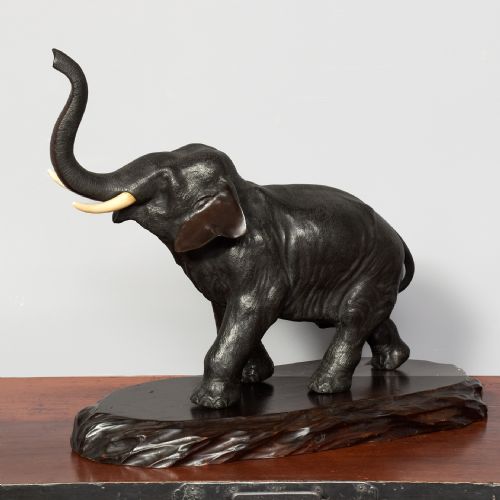
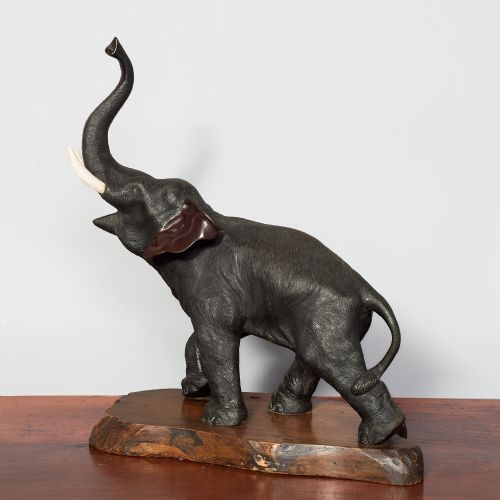
When you search for a dark bronze elephant statue, you encounter substantial animalier sculptures and okimono created during the 19th century and the early 20th century. The inventory on this page consists predominantly of Japanese Meiji period works alongside Indian and Burmese examples.
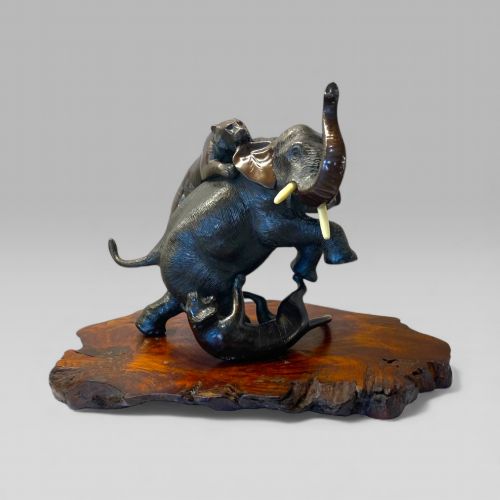
The forms range from standing and walking beasts to dramatic narrative scenes involving tigers. Many examples incorporate riders, naturalistic bases, and contrasting organic elements.
These sculptures originate from distinct regional workshops, bringing together the sculptural traditions of Meiji Japan, India, and Burma. Buyers seeking these works will find heavy metal castings produced for export and domestic display.
How they were made
The makers utilised traditional bronze casting methods to capture the thick hide and muscular forms of the animals. Artisans frequently added fine surface engraving to delineate skin texture and harness details.
Listings span the 19th century and the 1920s, featuring Japanese Meiji, Indian, and Burmese origins.
What varies in quality
The refinement of the casting and the crispness of the surface chasing define the upper tier of these sculptures. Pieces depicting complex interactions, such as elephants fighting tigers, demonstrate superior compositional ambition.
The inclusion of original organic elements like ivory tusks or diamond eyes elevates the work. Master-signed pieces from named Japanese artists represent the pinnacle of this sculptural tradition.
Tsunemitsu
The Dark Bronze Elephant Statue Glossary
- Meiji Period
- The era in Japanese history spanning from 1868 to 1912, noted for a surge in bronze casting for international export. Works from this time often exhibit exceptional naturalism.
- Okimono
- A Japanese term for a decorative object designed for display on a shelf or in a tokonoma alcove. These sculptures are typically self-contained and highly detailed.
- Animalier
- A nineteenth-century artistic genre dedicated to the realistic portrayal of animals. Sculptors in this tradition focused on anatomical accuracy and dynamic movement.
- Naturalistic base
- A cast metal footing designed to mimic the terrain of the natural world. This feature grounds the heavy bronze sculpture and provides stability.
Dark Bronze Elephant Statue: Frequently Asked Questions
What are dark bronze elephant statues made of?
These sculptures are cast primarily from bronze, utilising copper and tin alloys to achieve dark patination. Artisans frequently combined the metalwork with organic materials such as bone and ivory for tusks.
Specific examples also integrate precious stones like diamonds for eyes, mounted upon heavy bronze or naturalistic bases.
Where do these bronze elephant sculptures originate?
The pieces originate primarily from late 19th-century Japan, particularly during the Meiji period, alongside examples from India and Burma. Japanese workshops produced many of these works for the Western export market.
Regional stylistic differences distinguish the Indian engraved figures from the dynamic Japanese okimono.
How do I identify a Meiji period bronze?
Meiji period bronzes are identifiable through their dense casting, sophisticated patination, and intricate surface detailing. Many incorporate naturalistic themes such as elephants confronting tigers.
Some high-relief sculptures feature artist signatures or seals cast directly into the bronze surface.
How should I display a heavy bronze sculpture?
Due to the substantial weight of solid bronze castings, these sculptures require sturdy furniture or dedicated display pedestals. Placement should avoid direct, prolonged exposure to moisture to protect the metal patina.
Allowing sufficient space around the piece ensures that narrative details, such as engaged tigers or riders, remain fully visible.