
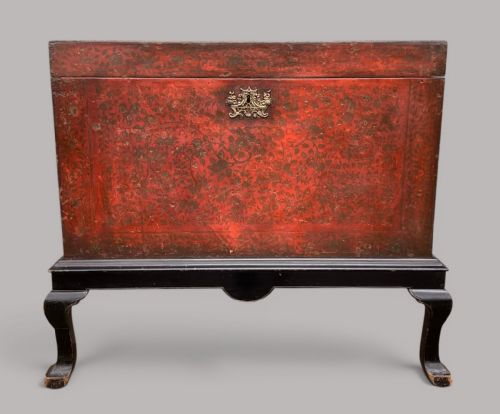


Oriental Brass Trunk
An oriental brass trunk brings enduring storage utility and distinct global character to an interior.
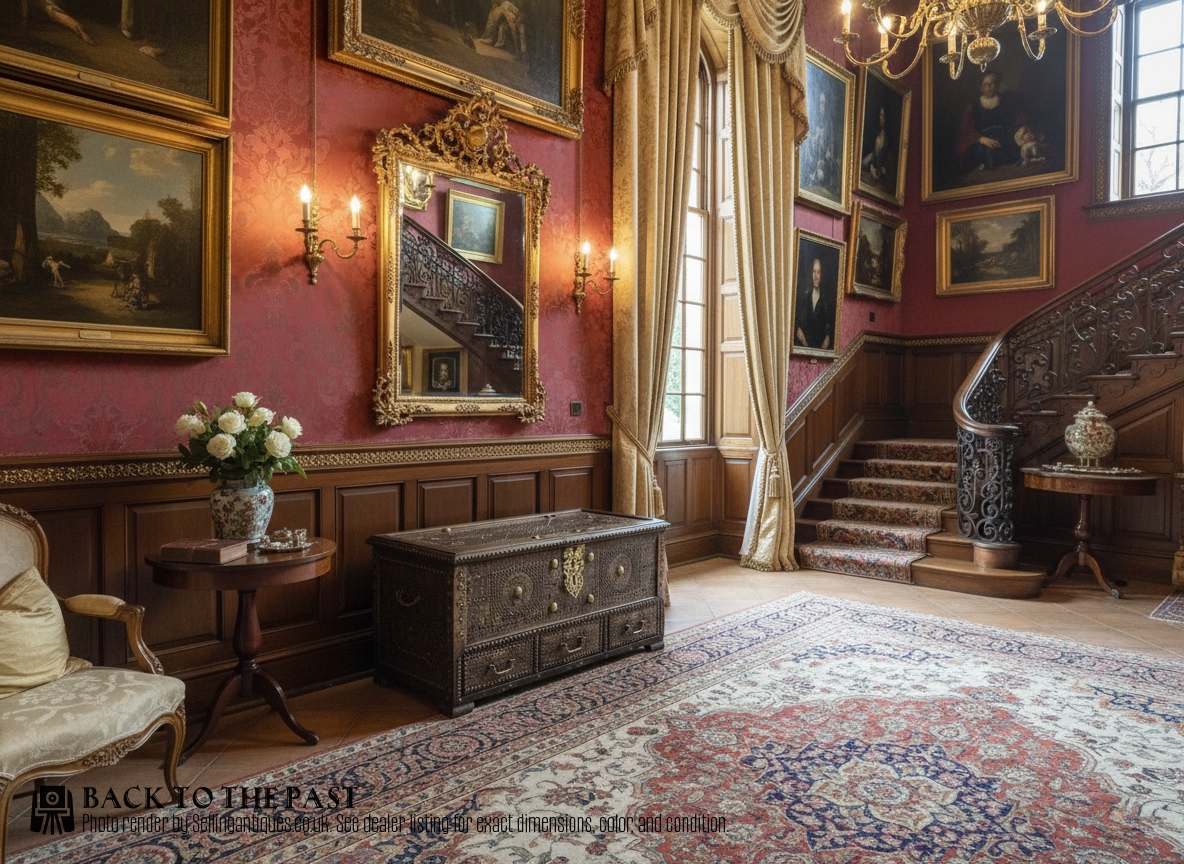
Oriental Brass Trunk
When you search for an oriental brass trunk, you encounter robust storage containers fashioned across distant trade routes and domestic workshops. These pieces span centuries of making, with the nineteenth century heavily represented alongside later examples from nineteen twenty and nineteen thirty. Formats range from blanket boxes and luggage chests to elaborate cases on stands.
The most common versions on this page are Chinese camphor wood chests adorned with brass hardware or bindings. Alongside these, you find Indian red lacquered boxes, leather China trade trunks, and East African teak Zanzibar chests. Each variety reflects distinct regional traditions adapted for travel and domestic use.
Materials and construction
Artisans relied on durable woods such as camphor wood, teak, rosewood, hardwood, and elm as the primary structural foundations. These timbers were frequently combined with leather, lacquer, or copper, then finished with brass bindings, locks, and corner brackets. The inclusion of camphor wood provided natural insect-repellent properties suited for storing textiles.
Construction techniques balanced portability and strength, utilising sturdy joinery and protective metal detailing designed to withstand long journeys. Surfaces were often richly carved with traditional motifs, painted in polychrome, or left with a clean polished finish. Original brass hardware secures the edges and corners, contributing both structural reinforcement and decorative contrast.
Materials recorded across the inventory include brass, camphor wood, leather, hardwood, lacquer, copper, rosewood, and elm.
Judging quality and craftsmanship
Distinctions in quality often rest upon the depth and intricacy of the hand-carved ornamentation across the wooden surfaces. Pieces featuring crisp, detailed carving and well-preserved painted leather or lacquer finishes sit clearly above plain utility boxes. The integrity of the timber and the weight of the brass hardware further separate standard items from finer examples.
The survival of original brass mountings, locks, and hinges dictates much of a piece's integrity. Better examples retain their structural harmony without excessive replacement hardware, showing careful integration between the metalwork and the underlying hardwood or camphor body.
The Oriental Brass Trunk Glossary
- Camphor wood
- A fragrant timber prized for its insect-resistant properties and stability. It remains the most prevalent wood found in these storage chests.
- Zanzibar chest
- A distinct type of East African or Indian trade chest featuring heavy brass studding and decorative strapwork. These pieces were traditionally associated with maritime trade routes.
- China trade
- Goods manufactured in China specifically for export to Western markets during the eighteenth and nineteenth centuries. These items frequently blend Eastern techniques with European aesthetic demands.
- Bandaji chest
- A traditional Korean storage chest constructed from elm or other native hardwoods with striking metal mounts. They served primarily for storing garments and bedding in domestic settings.
- Coffre fort
- A French term for a strongbox or fortified chest designed for secure transport of valuables. These export examples often incorporate robust brass bands and secure locking mechanisms.
Oriental Brass Trunk: Frequently Asked Questions
How were these trunks used originally?
These chests served primarily for transporting personal belongings, garments, and valuables across long maritime and overland journeys. Their robust construction protected contents from moisture and rough handling.
In homes, they functioned as blanket boxes, luggage storage, or secure repositories for precious textiles and documents.
How do I care for camphor wood?
Camphor wood requires minimal maintenance, benefiting from occasional dusting with a soft, dry cloth. Avoid placing the chest in direct sunlight or near sudden heat sources to prevent the timber from drying out.
The natural aromatic qualities of the wood do not require chemical oils or treatments to persist over time.
How do I date a brass bound chest?
Dating relies on examining the style of the brass hardware, the method of joinery, and the type of wood or finish used. Nineteenth-century examples often display hand-beaten brass and dense camphor wood construction.
Later pieces from the early twentieth century, including nineteen twenty and nineteen thirty items, may incorporate simpler locks or different decorative motifs.