
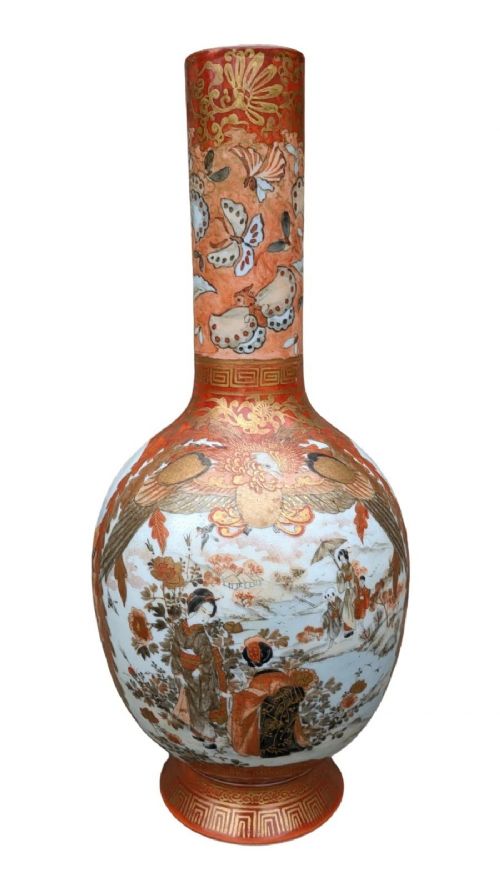
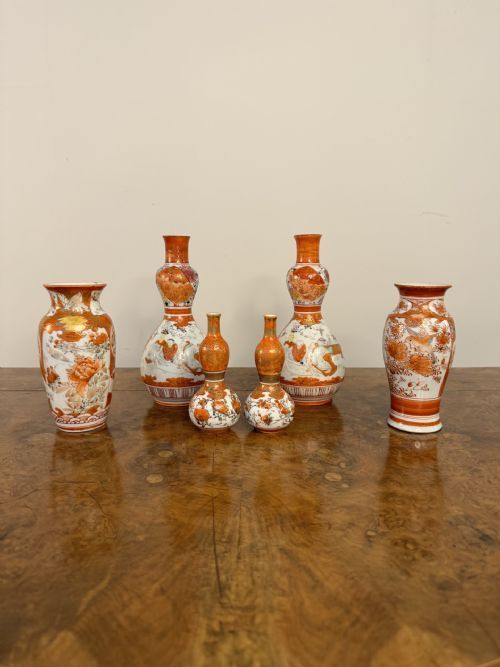


Orange Kutani Vase
An orange kutani vase brings rich Meiji period colour and hand painted detail into a room.
Orange Kutani Vase
An orange kutani vase is a Japanese export ceramic shaped as a vessel, often decorated in red and orange enamel alongside gold leaf. The pieces available here span the nineteenth century, including the Meiji period, and extend into the Taisho period around nineteen twenty.
The selection includes single vessels, pairs of vases, shaped vases, and larger floor vases, occasionally mounted as table lamps or accompanied by wooden stands. Some examples feature moulded lion handles and moriage decoration.
Buyers will most frequently encounter nineteenth century porcelain pieces from the Meiji period, ranging from small hand painted items to large decorative vases.
How they were made
These pieces are constructed from porcelain and finished with enamel and glaze, frequently incorporating gold leaf accents for added detail. The surfaces are hand painted, utilising traditional Japanese export techniques from the nineteenth and early twentieth centuries.
Certain examples feature moriage work, which builds up raised enamel patterns on the body of the vase, alongside applied elements such as lion handles formed during manufacture.
Listings feature porcelain vessels utilising enamel, gold leaf, wood, and brass across nineteenth-century and Meiji period styles.
What varies in quality
Quality in an orange kutani vase rests upon the fineness of the hand painted detail and the balance of the enamel and gold leaf decoration. Larger examples and pairs demonstrate greater ambition in scale and execution.
The Orange Kutani Vase Glossary
- Kutani
- A style of Japanese porcelain originating from the Kaga province, known for vibrant enamels and gold decoration. These pieces were widely produced for export during the nineteenth century.
- Meiji Period
- The era of Japanese history lasting from eighteen sixty-eight to nineteen twelve, characterised by extensive ceramic exports to Western markets. Pieces from this time often display intricate hand painted motifs.
- Moriage
- A decorative ceramic technique using piped clay to create raised relief patterns beneath the glaze and enamel. This adds a tangible texture to the surface of the vase.
- Taisho Period
- The period following the Meiji era, spanning from nineteen twelve to nineteen twenty-six. Ceramics from this phase continue traditional export styles.
- Enamel
- Vitreous material applied to the porcelain surface to provide rich colour before firing. It forms the primary palette for the characteristic orange tones seen on these vessels.
Orange Kutani Vase: Frequently Asked Questions
What is an orange kutani vase?
An orange kutani vase is a Japanese porcelain vessel decorated with distinctive orange and red enamel, often paired with gold leaf. These pieces were largely produced for export during the nineteenth and early twentieth centuries.
They appear in various forms, from small hand painted table vessels to large floor-standing display pieces and converted lamps.
How do I date an orange kutani vase?
Dating relies on stylistic markers associated with periods such as the Meiji or Taisho eras, alongside the nature of the porcelain and enamel work. Nineteenth-century examples often carry specific export characteristics.
Evaluating the complexity of the hand painting and techniques like moriage helps place a vessel within its historical production window.
Were these vases made for export?
Yes, the majority of kutani pieces found in Western collections were created specifically for the export market during the Meiji period and subsequent decades. They were designed to appeal to international tastes for Japanese craftsmanship.
This export focus accounts for the wide distribution of vases, jars, and lamps found outside Japan today.
How should I display an orange kutani vase?
These vases suit placement where their bright enamel colours and gold leaf details can catch natural light. Some larger examples benefit from dedicated wooden stands.
When paired or converted into table lamps, they function as focal points within traditional and eclectic interiors alike.