


Oriental Porcelain Covered Vase
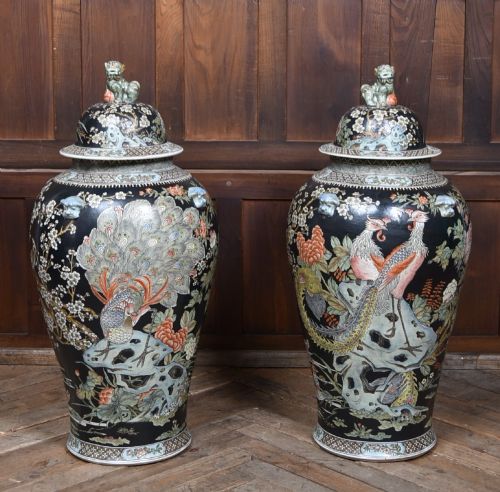
These oriental porcelain covered vases combine intricate painting with bold scale, offering a striking focal point for a room.
Oriental Porcelain Covered Vase
An oriental porcelain covered vase is a lidded vessel originating from Asian kilns, designed primarily for display rather than holding flowers. Buyers searching this phrase meet substantial jars and baluster vases created in China and Japan.
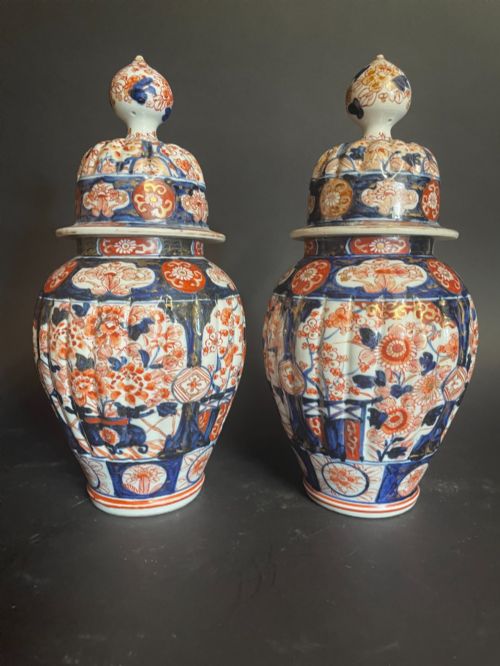
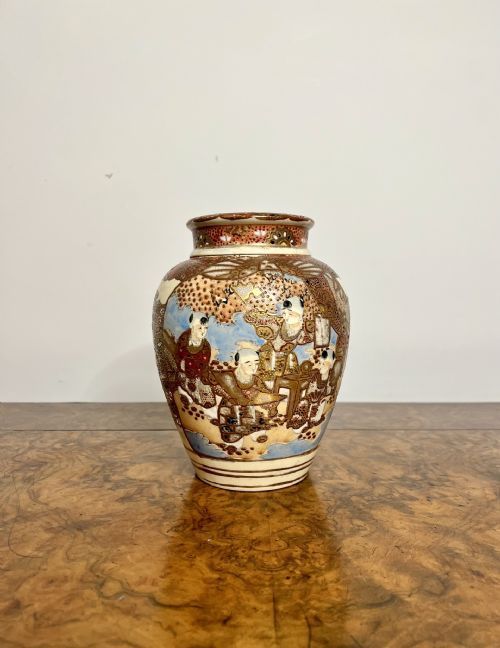
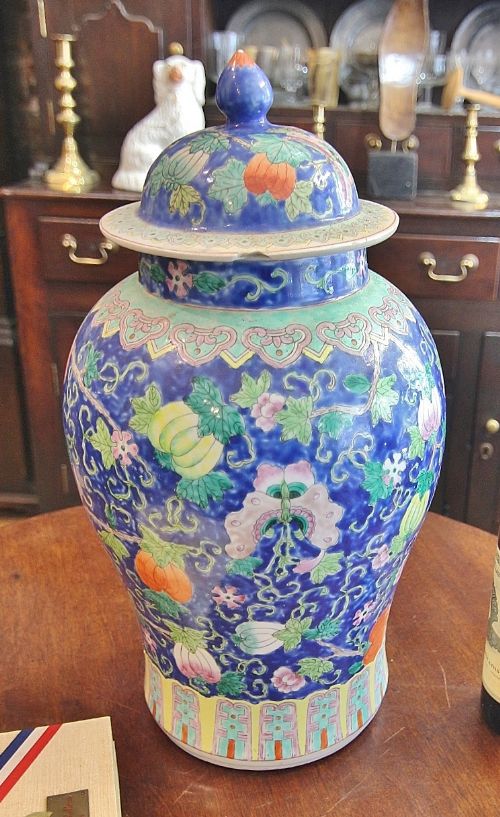
The selections here span centuries of production, featuring forms such as ginger jars, palace floor jars, and octagonal baluster vases. Many examples date from the nineteenth century, including pieces decorated in the Imari palette and the Satsuma style.
Originating from traditions spanning the Qing Dynasty to the Meiji period, these vessels serve as decorative focal points. The grouping includes pairs and single monumental pieces finished with matching covers.
What varies in quality
Quality depends upon the precision of the hand-painted decoration and the crispness of the porcelain body. Stronger examples display deep, controlled colour application and well-balanced forms in the Japanese Imari or Chinese blue and white styles.
The presence of fine gilding, intact matching covers, and distinct signatures from established workshops elevate a piece. Heavier, larger palace floor jars and monumental baluster vases represent a higher tier of production.
Several eighteenth-century Japanese Imari vases were actually created by European factories like Samson to satisfy an insatiable western demand.
Yamashu·Samson
The Oriental Porcelain Covered Vase Glossary
- Imari
- A style of Japanese porcelain featuring a palette of underglaze blue, iron red, and gold. This decorative scheme originated in Arita and gained popularity across Europe.
- Satsuma
- Earthenware pottery decorated with fine crackle glaze and detailed polychrome enamels and gilding. These pieces often depict landscapes and figures.
- Ginger jar
- A ceramic vessel with a broad body and a domed cover, originally used for storage. Later examples served purely decorative purposes in domestic interiors.
- Ormolu
- Gilded bronze mounts attached to ceramic bodies for decorative or structural enhancement. This technique appeared on European adaptations of Asian porcelain.
- Baluster
- A vase form characterised by a swollen lower portion that tapers towards the neck. This silhouette provides stability for large decorative vessels.
Oriental Porcelain Covered Vase: Frequently Asked Questions
What is an oriental porcelain covered vase?
An oriental porcelain covered vase is a ceramic container with a matching lid, produced in East Asia for export and domestic use.
These pieces range from ginger jars to large palace floor vases, often painted with floral, landscape, or figurative designs in distinct regional palettes.
How were these lidded vases used?
Historically, lidded jars stored dry goods, spices, or ginger, while larger floor vases decorated grand halls.
Over time, many of these vessels transitioned into purely decorative objects, and some nineteenth-century examples were converted into lamps.
How do I date a Japanese Imari vase?
Dating relies on stylistic clues, porcelain weight, and the vibrancy of the iron red and cobalt blue pigments.
Pieces from the seventeenth and eighteenth centuries differ in potting technique from nineteenth-century Meiji period exports, though later copies also exist.
Where should I place a large floor vase?
Large floor vases and palace jars require stable placement on the floor in corners, entryways, or wide alcoves.
Because of their height and weight, these vessels need protection from foot traffic and unstable surfaces.