



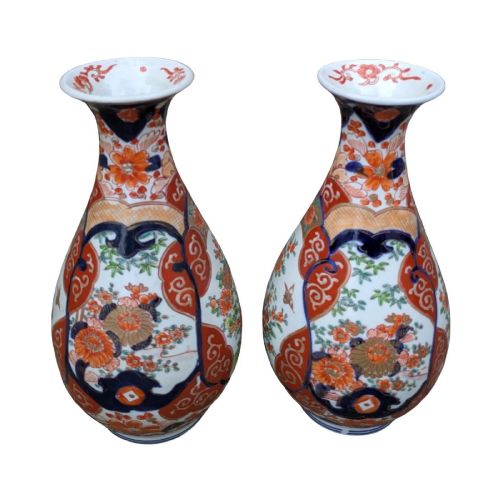
Orange Blue Japanese Ceramics
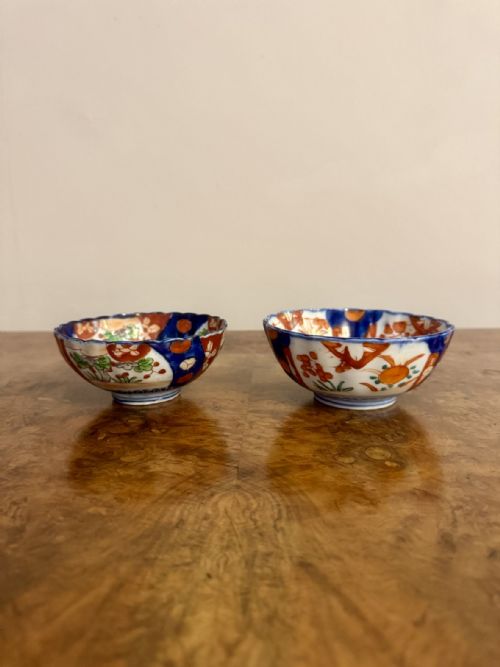
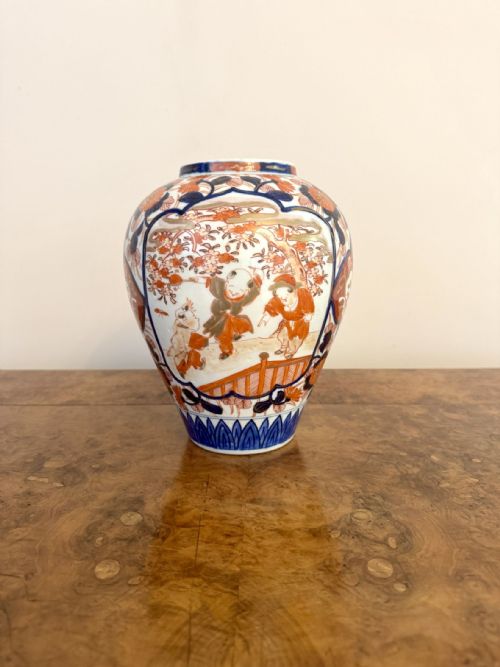
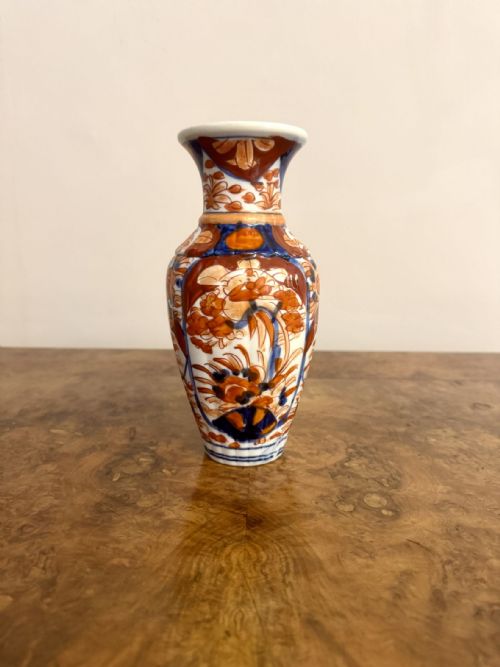
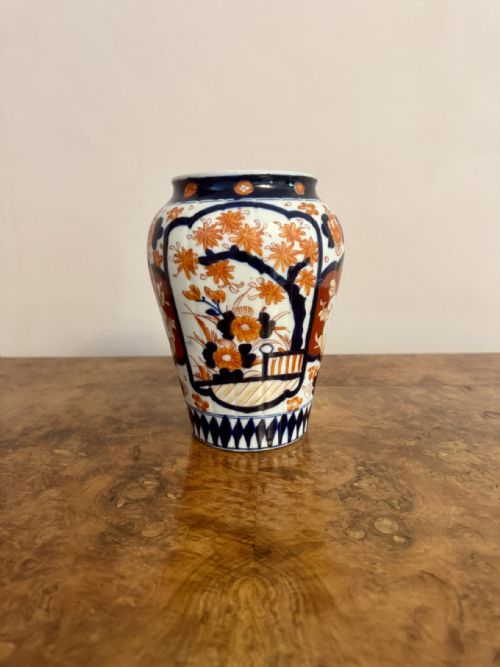
These orange blue japanese ceramics bring vibrant palettes and traditional forms from Arita kilns into domestic spaces.
Orange Blue Japanese Ceramics
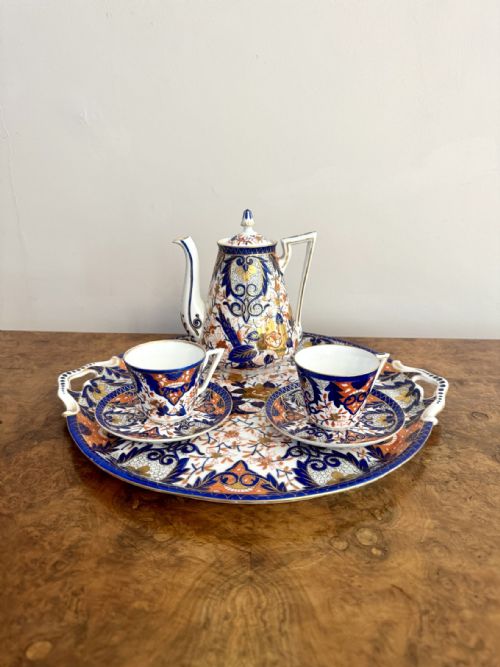
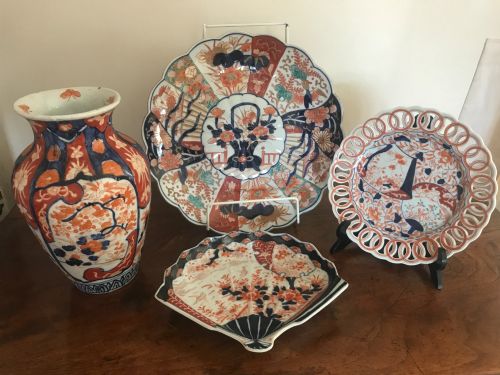
When you search for orange blue japanese ceramics, you encounter porcelain decorated in the distinct Imari palette of cobalt underglaze blue and iron red enamel, often heightened with gold leaf. These pieces span centuries, originating in the Edo period and extending through the Meiji period into Victorian imports.
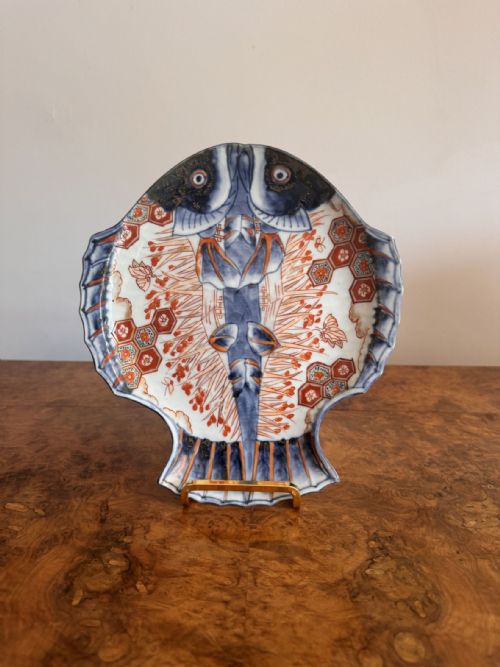
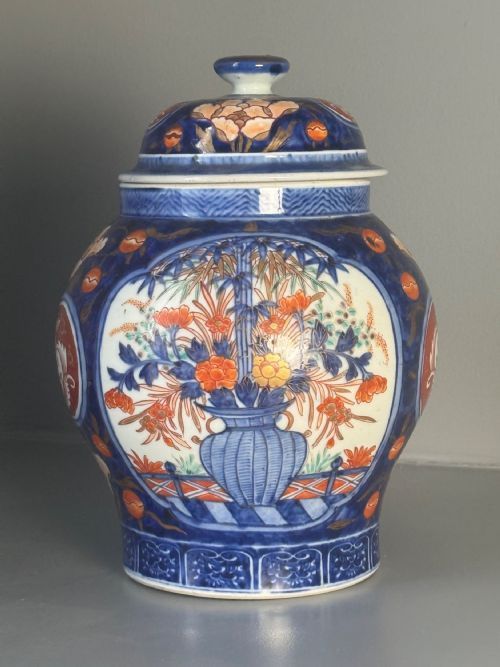
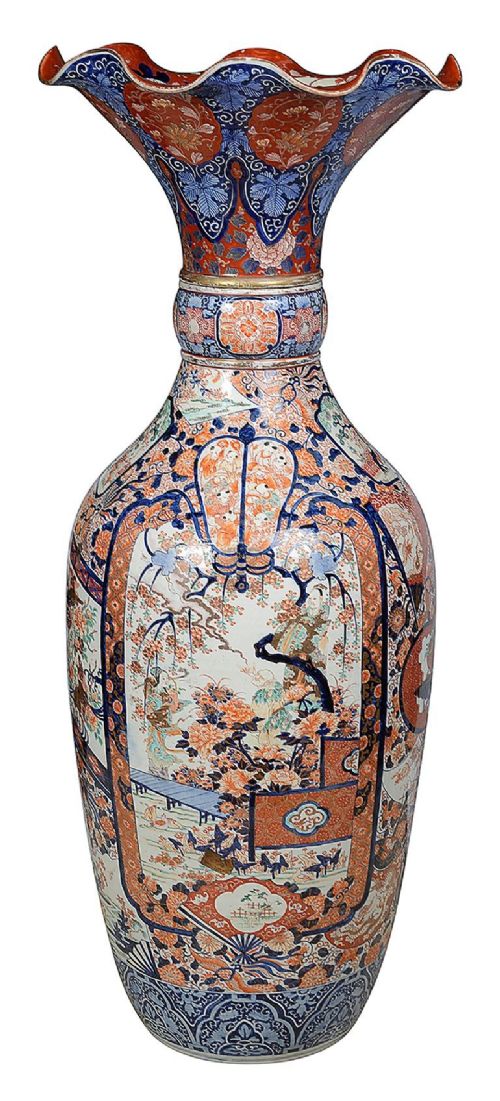
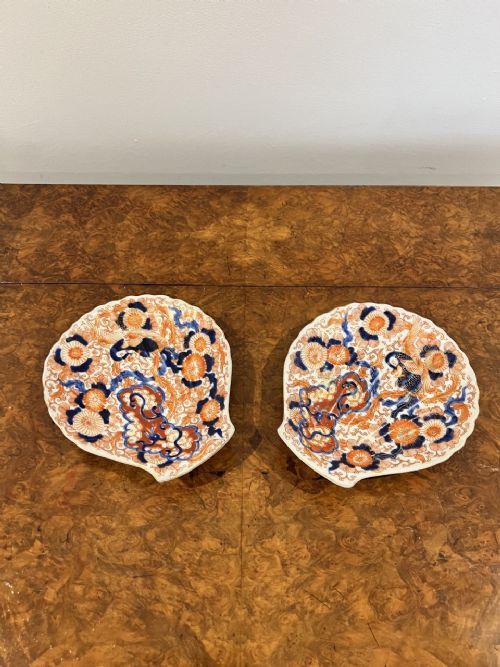
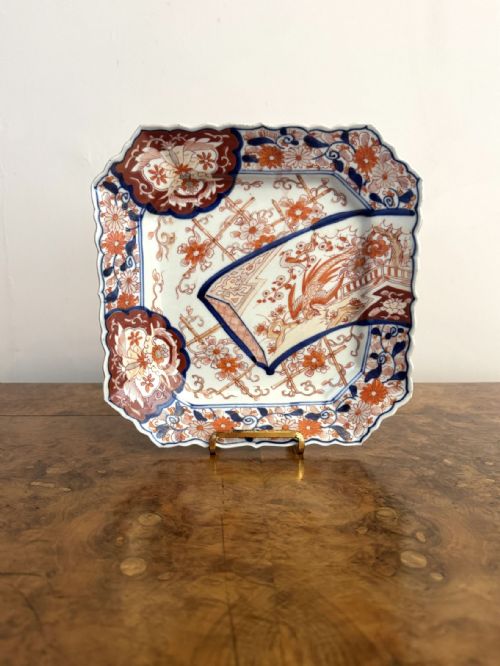
The objects take varied forms designed for both display and utility, including large chargers, decorative plates, deep bowls, covered ginger jars, and monumental vases. Plates frequently feature scalloped edges, fish shapes, or square profiles rather than standard circular formats.
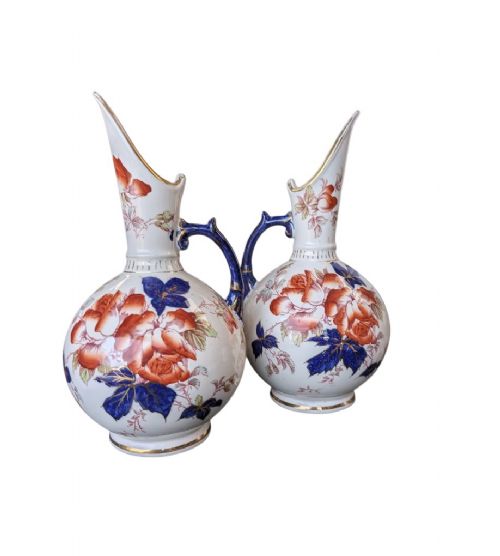
Vases and planters appear in singular examples, matched pairs, or larger garnitures, alongside specialised vessels such as double gourds and jardinières. Many items reflect the output of Arita kilns, where potters mastered hard-paste porcelain production.
Materials and construction
The foundation of these objects is hard-paste porcelain, shaped by hand or moulded before receiving cobalt blue pigment beneath a clear ceramic glaze. After an initial firing, artisans apply iron red enamel and gilding by hand, returning the vessel to the kiln at a lower temperature to fix the overglaze colours.
Surface decoration relies on precise brushwork to delineate intricate motifs such as flora, fauna, and traditional figures like the Seven Lucky Gods. The combination of underglaze blue and contrasting red enamel defines the visual rhythm of Imari wares across the centuries.
Current listings feature pieces spanning the 18th century, Victorian era, and Meiji period, executed in hard-paste porcelain with enamel and gold leaf.
Judging quality
Quality rests upon the crispness of the cobalt blue underglaze and the stability of the iron red enamel, alongside the generous application of gold leaf. Superior examples display balanced compositions and finely controlled brushwork that remain sharp across complex surface patterns.
Form and proportion separate standard domestic items from exceptional studio pieces, particularly in moulded shapes like fish plates or hexagonal bowls. The weight of the porcelain and the clarity of the white ground beneath the glaze further indicate the skill of the original workshop.
The Orange Blue Japanese Ceramics Glossary
- Arita
- The Japanese town and surrounding region where porcelain production originated in the seventeenth century. Kilns here produced the vast majority of traditional blue and red wares.
- Meiji Period
- The era of Japanese history lasting from 1868 to 1912, associated with increased export of decorative arts to Western markets.
- Edo Period
- The period of Japanese history spanning from 1603 to 1867, marked by the initial development of distinct export ceramic styles.
- Hard-paste porcelain
- A dense, vitrified ceramic material fired at high temperatures, composed of kaolin and petuntse. It forms a durable base that resists scratching and moisture.
Orange Blue Japanese Ceramics: Frequently Asked Questions
How do I identify Imari porcelain?
Look for the characteristic combination of cobalt blue underglaze with iron red overglaze enamel, frequently accented with gold leaf. Designs often cover the entire surface in dense geometric and floral patterns.
Many pieces originate from the Arita kilns and date from the Edo or Meiji periods, reflecting centuries of traditional Japanese ceramic techniques.
Can I use these bowls for food?
Antique ceramic vessels are generally intended for decorative display rather than daily culinary use. The overglaze enamels and gold leaf can wear down with frequent washing and acidic foods.
Protect the historic surfaces by keeping these plates and bowls on stable shelves or tables away from heavy daily friction.
What is a charger?
A charger is a large decorative plate or dish designed primarily for display on a wall, cabinet, or stand rather than for serving food at a table. These pieces showcase the most intricate painted scenes.
In Japanese ceramics, chargers often feature complex motifs like figures, landscapes, or detailed borders utilising the full Imari palette.
How do I date these ceramics?
Dating relies on stylistic markers, potting techniques, and historical periods such as the Edo or Meiji eras, alongside Victorian import records. Earlier pieces often show heavier potting and deeper cobalt tones.
Later Victorian and 1900s export items frequently exhibit refined moulding techniques, such as scalloped or fish-shaped rims produced for Western collectors.