

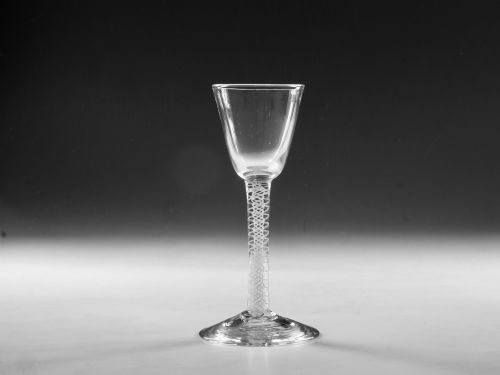
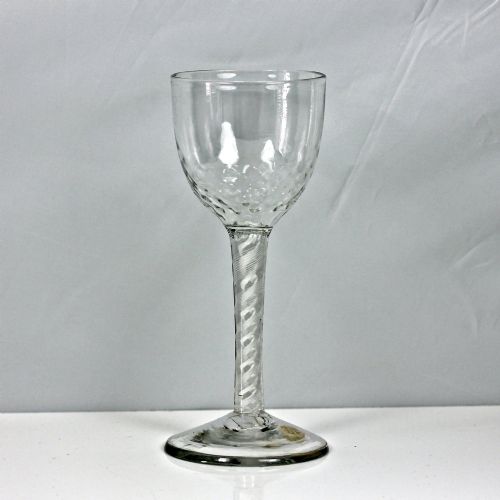
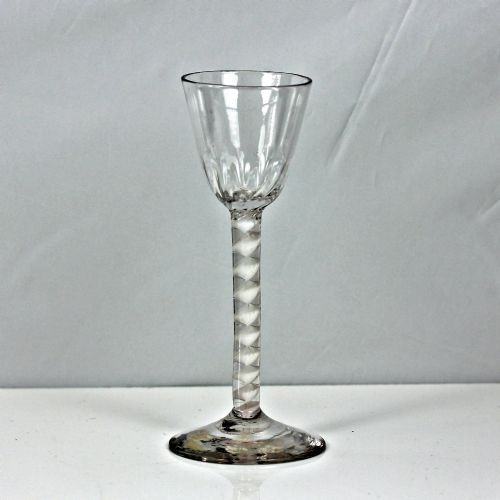
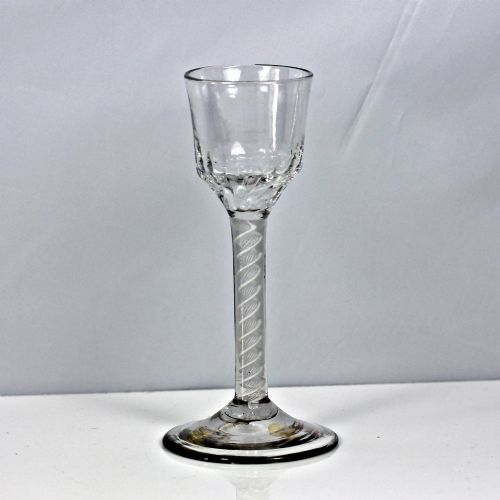
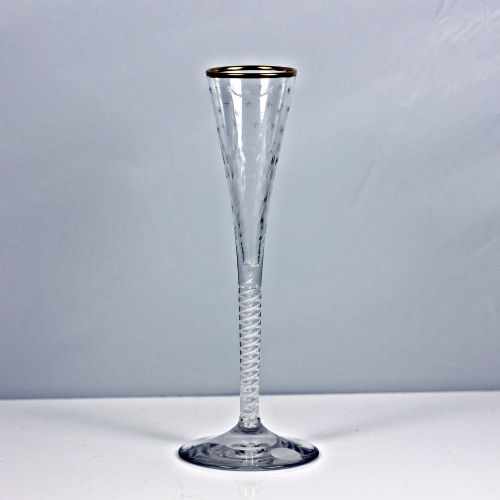
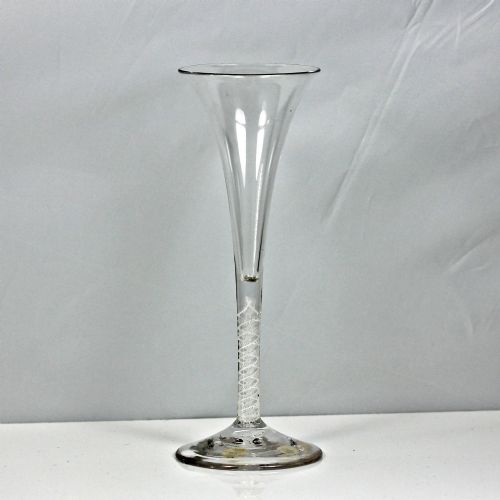
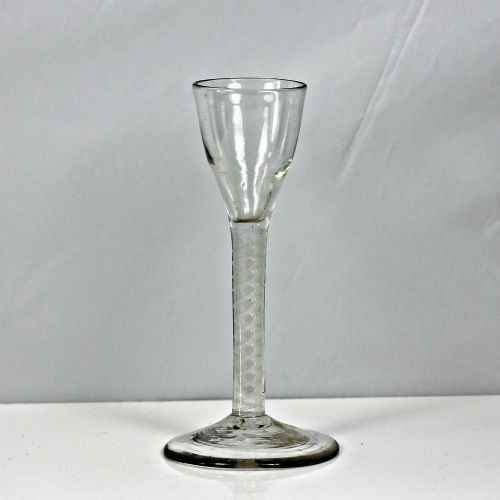

Opaque Twist Stem Goblet
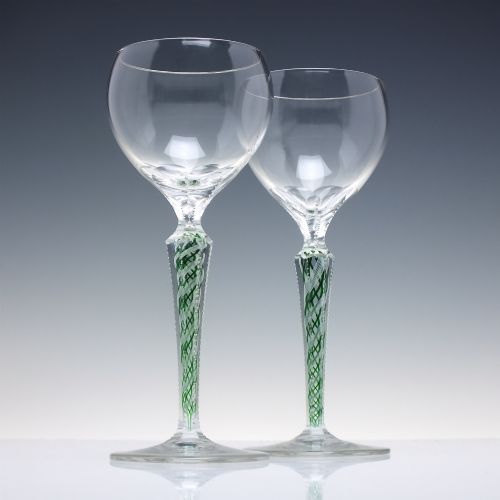
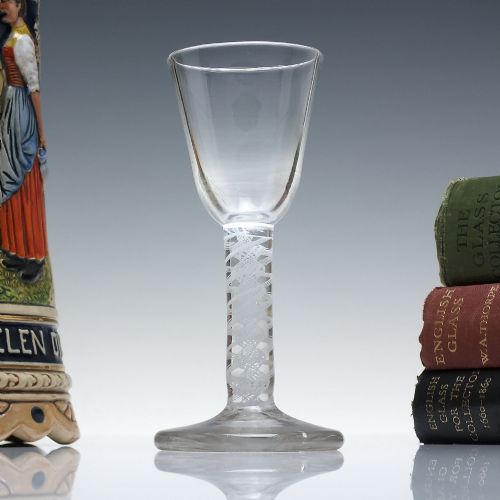
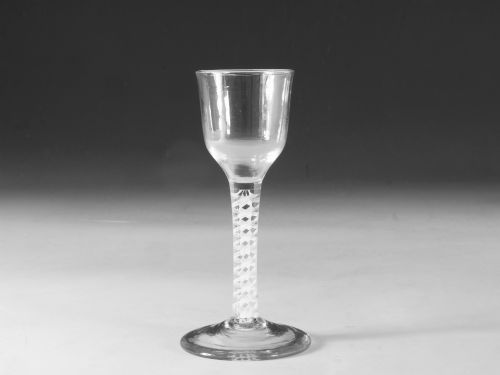
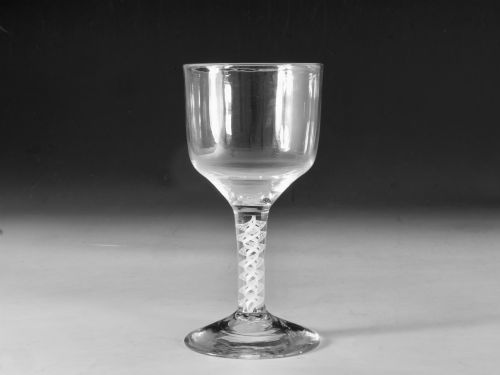
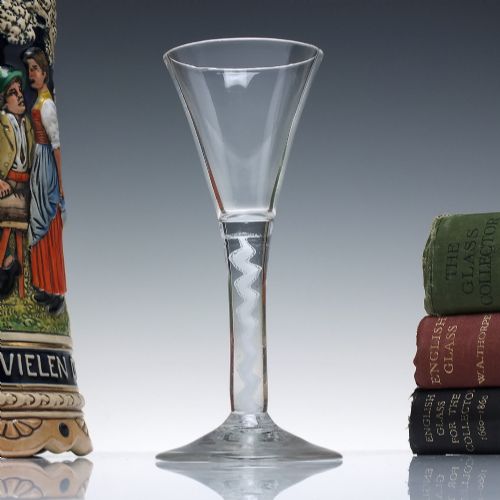
These elegant drinking vessels carry bright white threads enclosed within clear lead glass stems, bringing eighteenth-century tavern and dining tables vividly to life.
Opaque Twist Stem Goblet
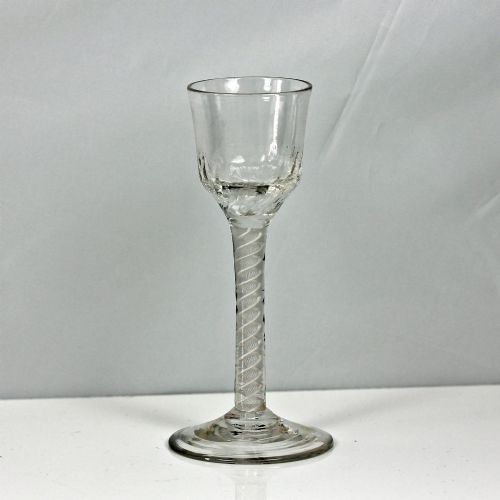
When searching for an opaque twist stem goblet, a buyer looks at eighteenth-century drinking vessels originating from the Georgian period. Most pieces met on this page belong to the eighteenth century, featuring slender lead glass stems enclosing white enamel filaments.
The forms span various drinking vessels including wine glasses, champagne flutes, ale glasses, sweetmeat glasses, and ratafia glasses. Bowls appear in multiple shapes such as ovoid, trumpet, funnel, and ogee configurations, often resting on plain or firing feet.
English glasshouses produced these items using lead crystal glass, incorporating single, double, or multi-spiral twists inside the stem. Alongside standard wine glasses, buyers encounter specialised cordial and ale glasses with moulded or engraved decoration.
How they were made
Glassmakers formed these stems by drawing out lead crystal glass containing white enamel rods, twisting the molten metal before cooling. This technique produced precise internal threads known as opaque twists, ranging from single spirals to complex multi-series combinations.
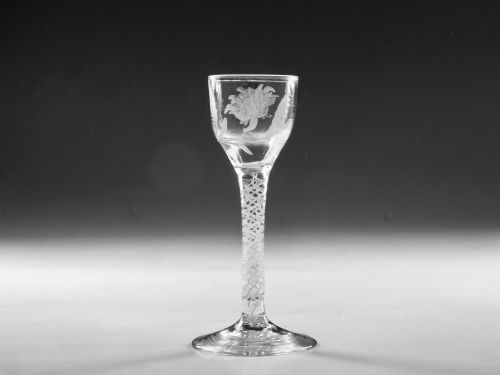
Bowls and feet were fashioned separately from clear lead glass before being joined to the prepared stem while hot. Many pieces display moulded bowl details such as wrythen patterns, fluting, or ribbing, while others receive surface engraving and gilding.
Opaque Twist Stem Goblet Retail Price Guide 2026
Typical asking prices for opaque twist stem goblet among the pieces listed under this phrase on Sellingantiques today, from the lower quarter to the upper quarter. They describe what is for sale here now, not the wider market.
Some firing feet are so thickly built they sound like small bells when tapped, designed for hammering tables in eighteenth-century toasts.
What varies in quality
The refinement of the internal white enamel threads dictates much of the visual appeal, with tightly drawn, symmetrical twists showing superior craftsmanship. Clarity of the lead crystal and absence of heavy bubbling within the metal also distinguish finer examples from standard workshop output.
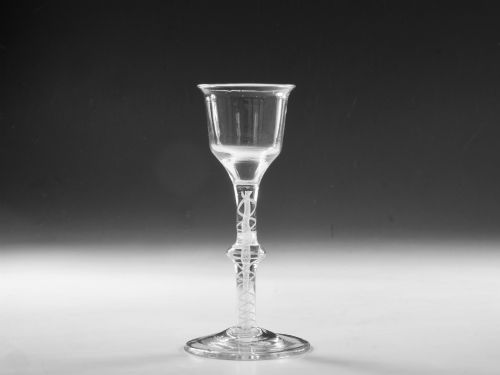
Complexity of form elevates certain items, particularly those featuring multi-series twists, knops along the stem, or specialised bowl mouldings. Engraved decoration and unusual vessel types such as ratafia or sweetmeat glasses further separate standard tavern pieces from more ambitious specimens.
The Opaque Twist Stem Goblet Glossary
- Opaque twist
- A stem containing white enamel glass threads set inside clear lead crystal. This decorative technique became prominent in English glassware during the eighteenth century.
- Double series
- A stem formation enclosing two distinct sets of opaque white twists, usually combining an outer spiral with an inner core of threads.
- Ogee bowl
- A bell-shaped drinking vessel curving inward at the rim and outward near the base. This profile appears frequently on eighteenth-century wine glasses.
- Firing foot
- A thickened glass base designed to withstand the heat of eighteenth-century tavern tables. These sturdy feet prevent cracking when glasses were placed down sharply.
- Wrythen moulded
- A twisted or spiralling pattern impressed into the body of a glass bowl. This technique adds texture and light reflection to the vessel.
Opaque Twist Stem Goblet: Frequently Asked Questions
What is an opaque twist stem goblet?
An opaque twist stem goblet is a drinking vessel featuring a clear lead glass stem enclosing white enamel threads. These pieces date primarily to the eighteenth century during the Georgian era.
Craftsmen manipulated molten glass to trap white enamel filaments inside the stem in various spiral patterns. They served elite dining and social functions across Georgian Britain.
How do single and double series twists differ?
A single series twist contains one set of opaque enamel threads within the stem, often forming a simple spiral. A double series twist incorporates two distinct sets of internal elements, such as a central gauze surrounded by outer threads.
Double series stems require greater technical skill to produce during glassblowing. This complexity generally creates a more visually dense and intricate internal pattern.
Were these goblets used for wine?
While many function as wine glasses, eighteenth-century makers produced similar stems for ale, champagne, cordials, and sweetmeats. Specialised vessels featured taller bowls for ale or shallower flutes for sparkling beverages.
Capacity and bowl shape often dictated the specific drink served. Tapered funnel or trumpet bowls suited wines, while straight-sided flutes accommodated effervescent drinks.
How should I display an antique twist glass?
Display these pieces in a stable cabinet away from direct sunlight and heavy vibrations. Lead glass benefits from secure shelving that supports the base and stem evenly.
Avoid stacking glasses or placing them near heat sources. Proper ambient lighting highlights the internal white enamel threads without stressing the historic material.
How can I tell a Georgian glass from a later revival piece?
Georgian glass exhibits the weight, tool marks, and pontil scars characteristic of eighteenth-century hand manufacture. The lead metal often shows subtle surface wear consistent with age.
Revival pieces made around nineteen hundred typically display more uniform machine-like symmetry and different glass coloration. Examining the pontil mark on the base helps determine the period of manufacture.