



Office Filing Chest
An office filing chest organises paperwork with period character, offering robust storage built from timbers like oak and mahogany.
Office Filing Chest
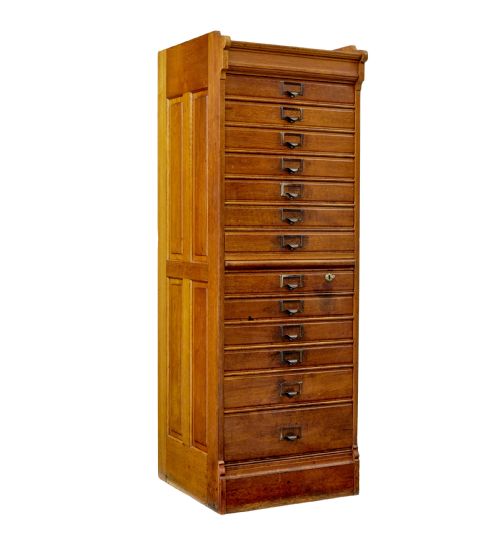
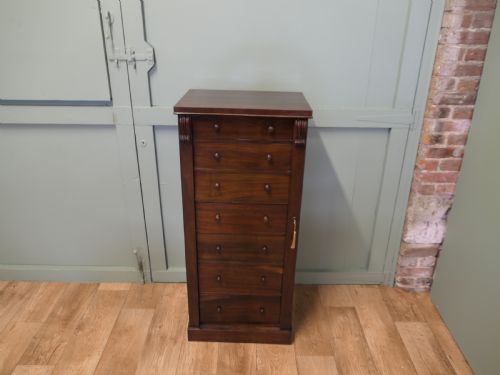
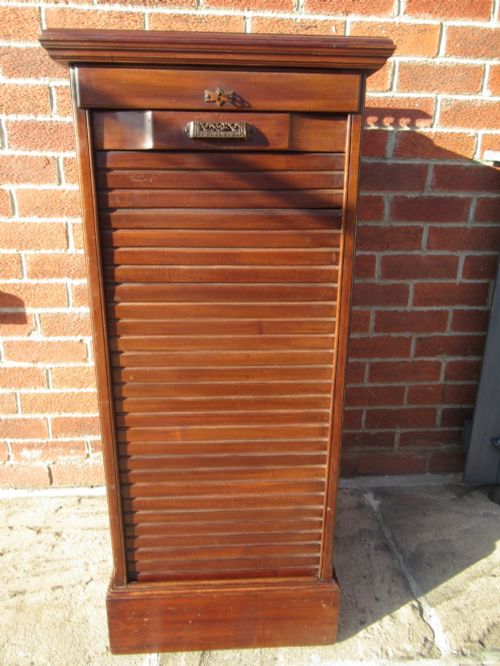
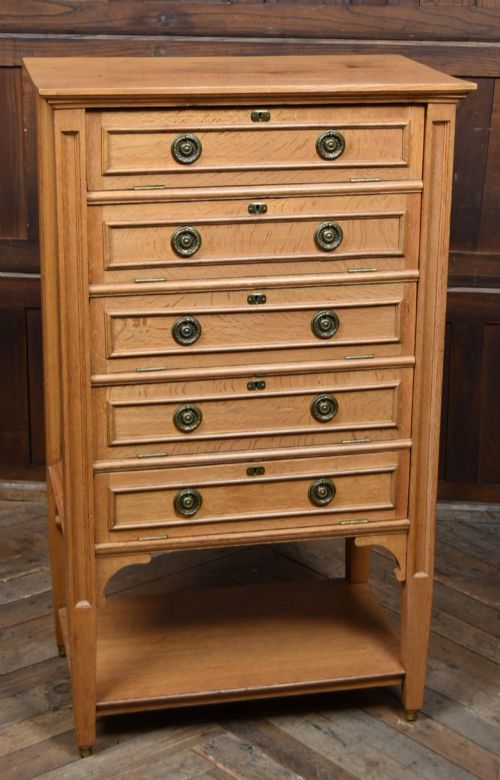
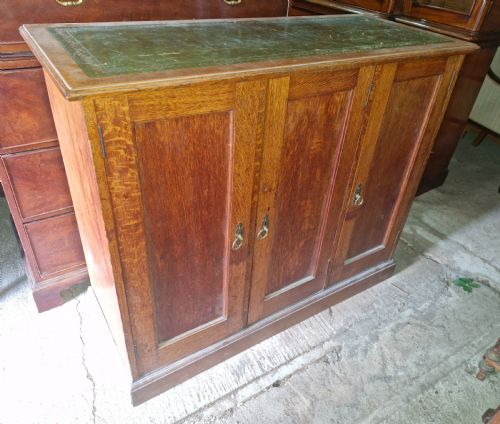
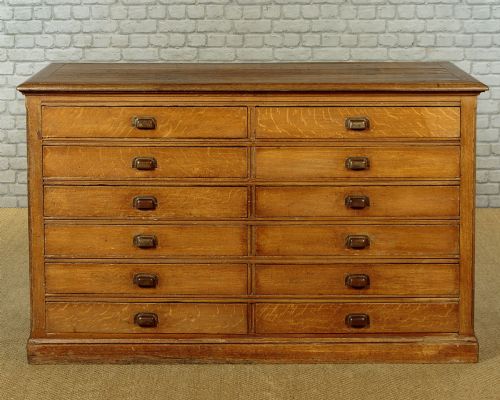
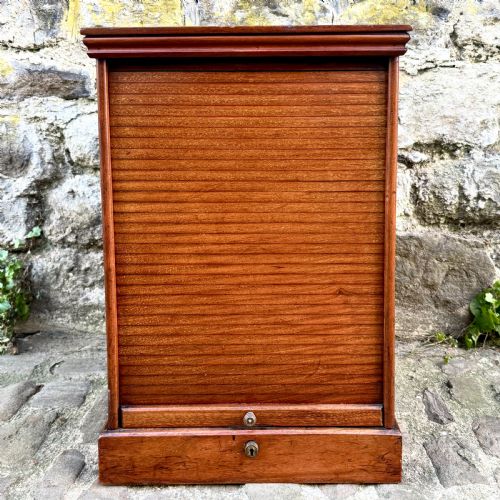
An office filing chest provides practical storage through banks of drawers, tambour fronts, and cabinet doors designed for sorting documents and correspondence. These pieces appear across periods from the Victorian era and Edwardian years through to the 1930s, reflecting changing workplace needs in both domestic studies and commercial premises.
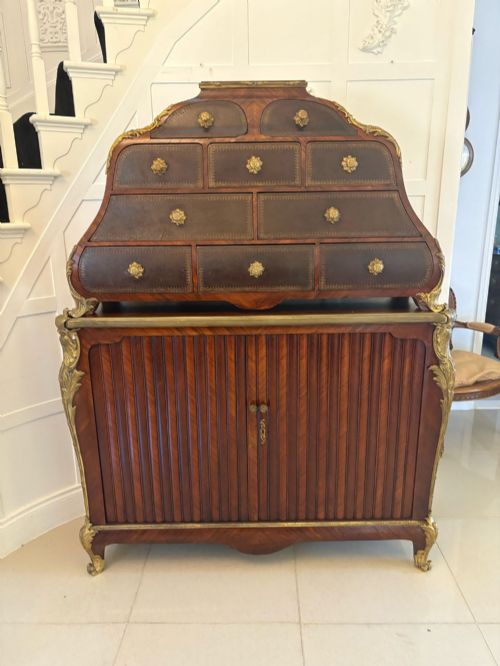
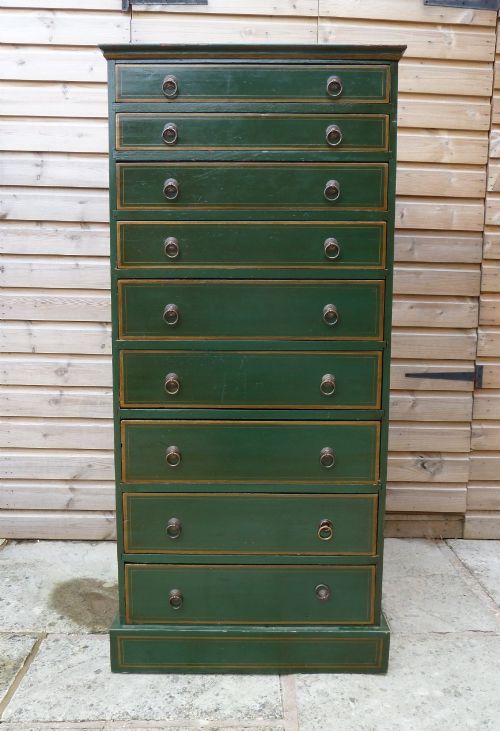
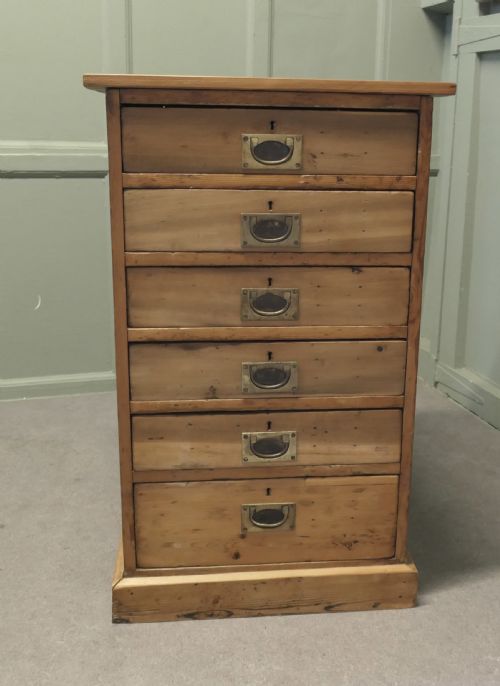
The selections available here span British, French, and Anglo-Indian origins, demonstrating varied regional cabinetry traditions. Common configurations range from shallow pine drawers and multi-drawer banks to specialised cartonnieres and patent letter files.
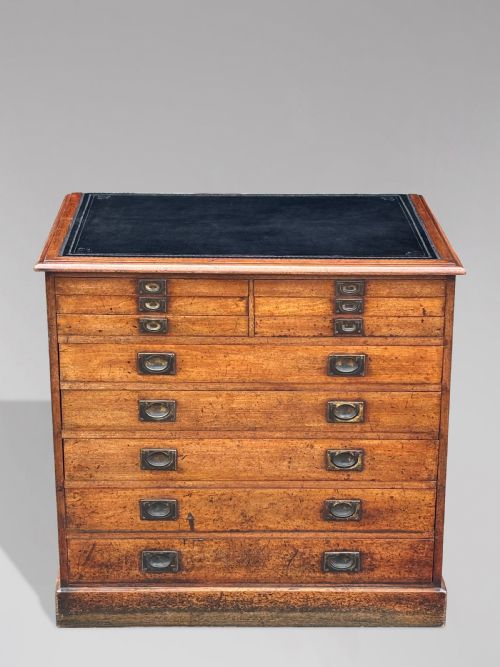
Buyers will encounter items constructed for specific administrative tasks, such as plan chests, music cabinets, and robust bankers' pedestals. Each form adapts timber and metal hardware to the daily demands of document organisation.
Materials and Technique
Cabinetmakers utilised sturdy hardwoods including oak, mahogany, and walnut alongside utilitarian pine, constructing carcasses designed to withstand heavy daily use. Tambour doors required precise individual slats glued to fabric backings to slide smoothly within curved tracks.
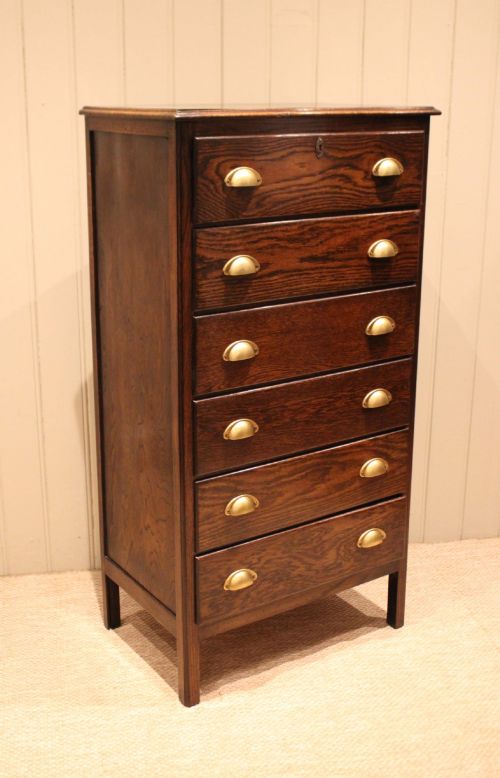
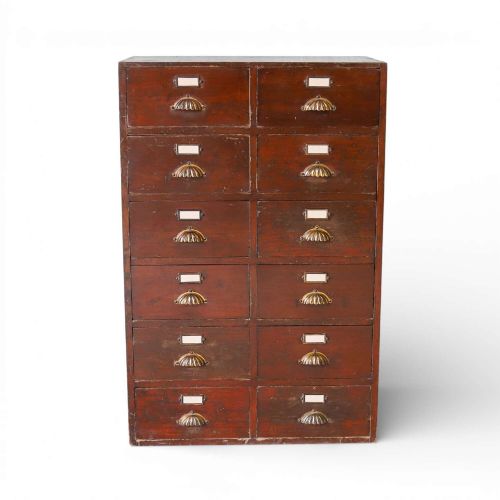
Hardware details such as brass shell pulls, label holders, and patent locking mechanisms integrated functional utility directly into the design of the drawers. Secondary woods and dovetailed joints reveal the underlying structural methods employed by period workshops.
Office Filing Chest Retail Price Guide 2026
Typical asking prices for office filing chest among the pieces listed under this phrase on Sellingantiques today, from the lower quarter to the upper quarter. They describe what is for sale here now, not the wider market.
Listings feature oak, mahogany, walnut, pine, brass, and iron across Victorian, Edwardian, and 1930s periods.
Build and Finish
Quality rests upon the integrity of the timber selection and the precision of the drawer construction, notably the tightness of the dovetailing and the smoothness of the runners. Pieces featuring retained original hardware, such as designated brass label holders and working locks with keys, demonstrate superior preservation.
The sophistication of the mechanism distinguishes standard storage from finer examples, especially in complex tambour fronts or patent letter file systems that operate without binding. Surface finishes range from polished walnut and figured mahogany to painted pine, where the depth and condition of the polish dictate visual appeal.
Maple and Co
The Office Filing Chest Glossary
- Tambour
- A flexible door made from narrow wooden slats attached to canvas, allowing it to slide around a curved track to enclose cabinet shelving.
- Cartonnier
- A piece of furniture fitted with multiple horizontal compartments or drawers specifically designed for storing papers and documents, often French in origin.
- Shell Pull
- A stamped or cast brass handle shaped like a semi-circular shell, frequently incorporating a pocket to hold a paper identification label.
- Bank of Drawers
- A large cabinet comprising numerous stacked or multi-columned drawers intended for systematic sorting and filing.
- Plan Chest
- A wide, shallow set of drawers designed originally to keep architectural blueprints and large maps flat and protected.
Office Filing Chest: Frequently Asked Questions
What is a tambour front filing cabinet?
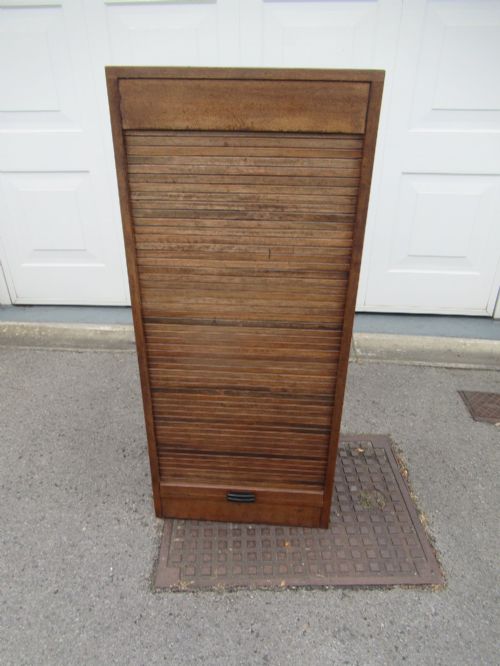
A tambour front cabinet conceals its interior storage behind a flexible slatted wooden door that slides along a recessed track. This mechanism allows the door to disappear into the side of the cabinet when opened.
Such designs saved valuable floor space in busy Edwardian and Victorian offices where traditional swinging doors would obstruct narrow walkways.
How do I identify a Victorian filing chest?
Victorian examples typically employ dense hardwoods like mahogany, walnut, or oak, often featuring hand-cut dovetail joints and substantial brass hardware. Their proportions tend to be heavy and formal, reflecting period interior aesthetics.
Makers from this era frequently incorporated panelled sides, fielded drawer fronts, and functional additions like locking stiles that secured every drawer simultaneously.
Can I use an antique office chest at home?
These pieces integrate easily into modern home studies, living rooms, or hallways as practical storage for contemporary stationery and paperwork. Their deep drawers and compartments accommodate modern A4 folders and tech accessories.
Placing them in contemporary spaces introduces tactile warmth through traditional wood grains and patinated brass pulls.
What is the difference between a cartonnier and a filing chest?
A cartonnier is traditionally a French piece featuring open pigeonhole compartments or shallow document boxes designed for unbound papers. A standard filing chest relies predominantly on enclosed drawers for storage.
Both serve administrative functions, but cartonnieres often incorporate leather accents and decorative mounts suited for display in a formal library.