
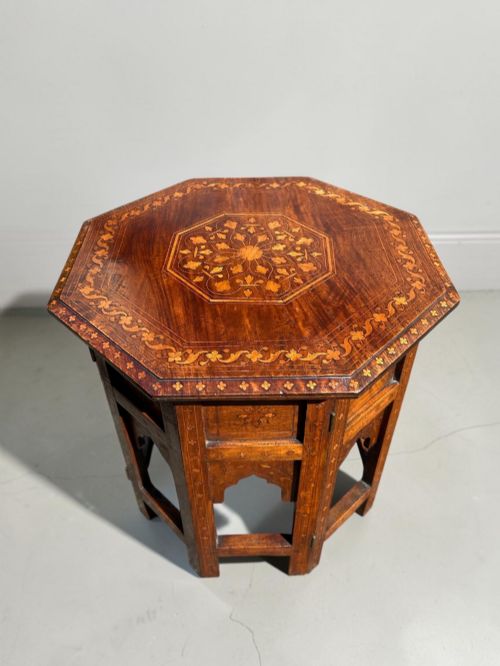
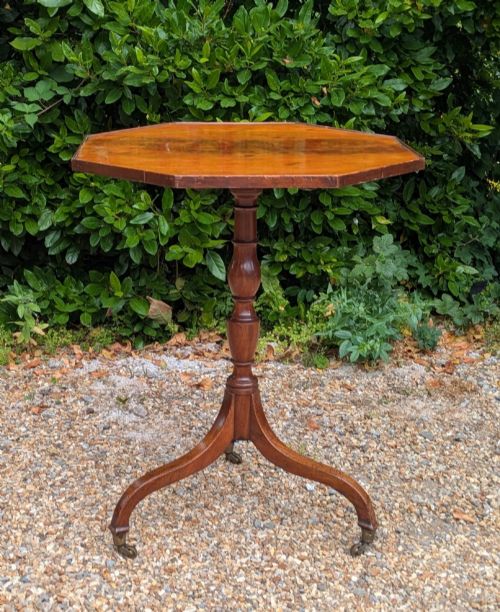
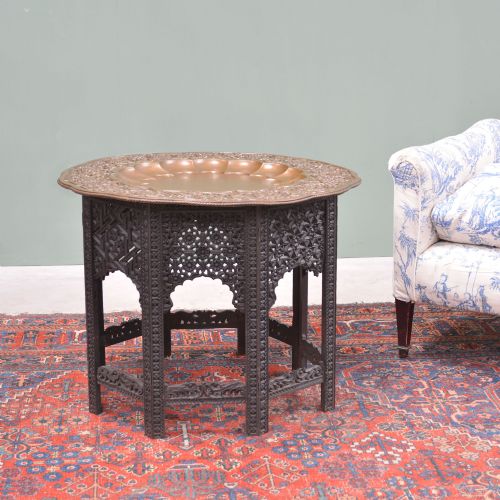
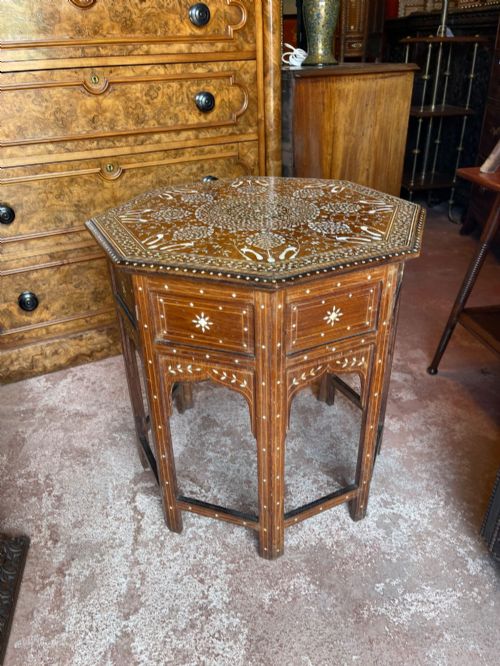
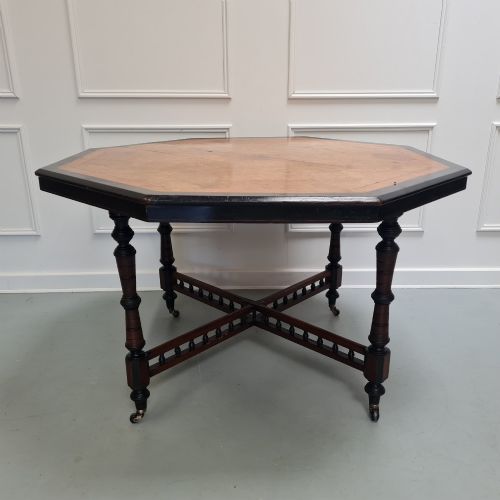
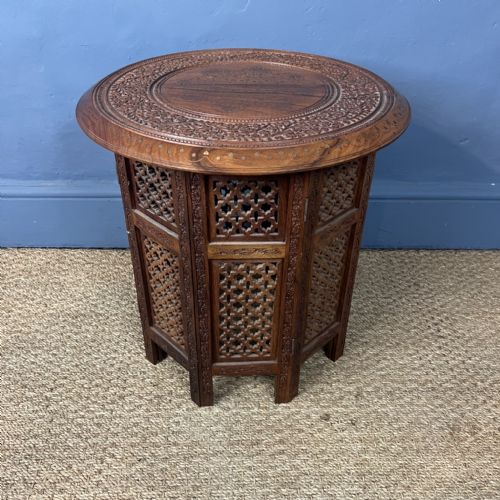
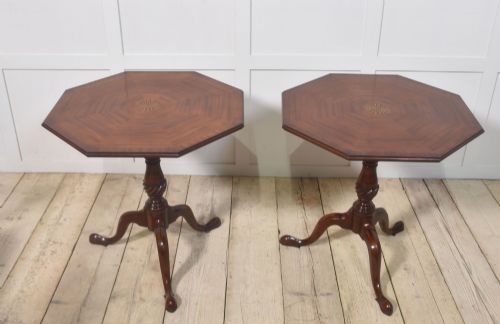
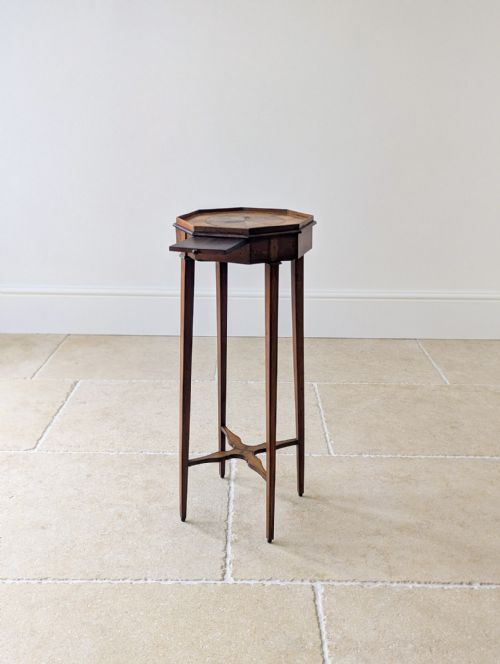
Octagonal Wooden Tea Table
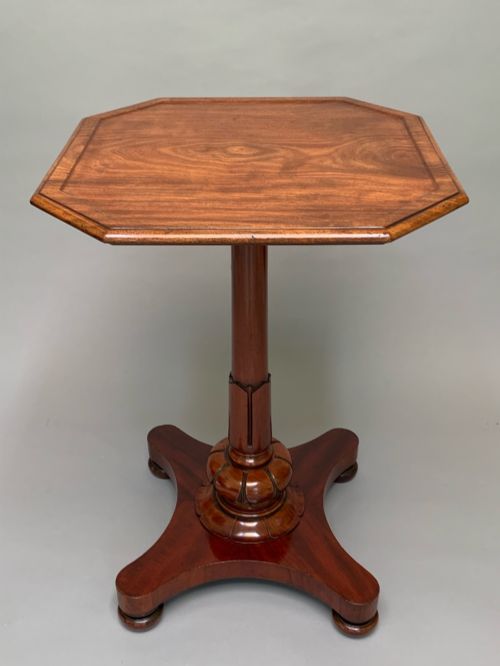
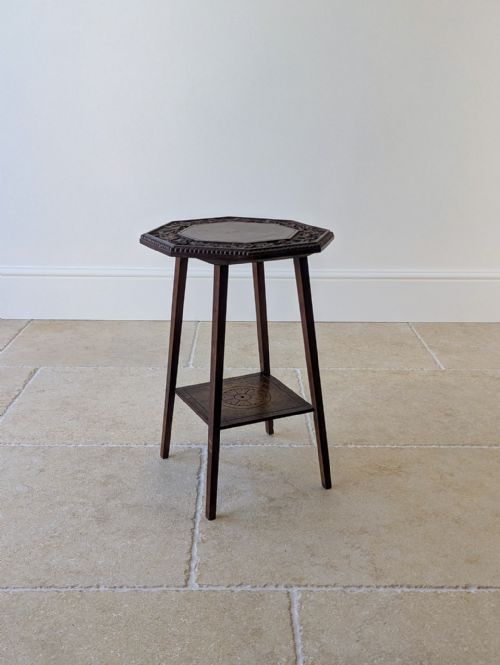
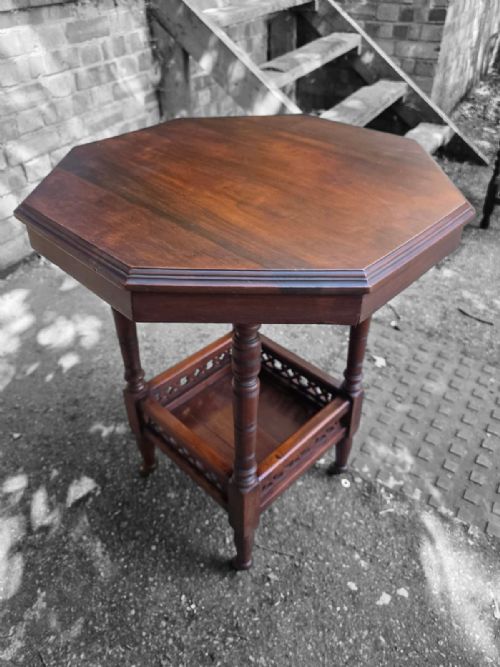
An octagonal wooden tea table brings geometric warmth and intricate carving into a room, serving as a versatile spot for lamps or afternoon cups.
Octagonal Wooden Tea Table
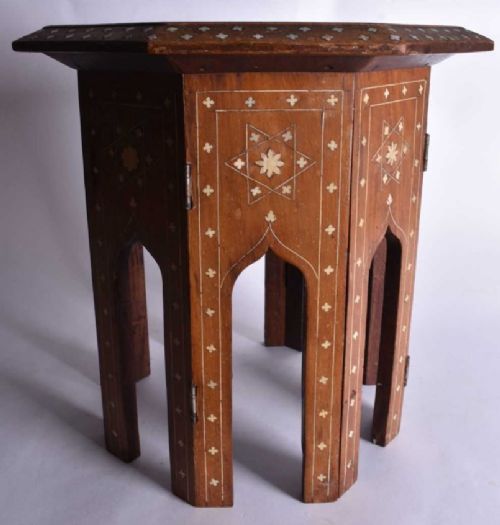
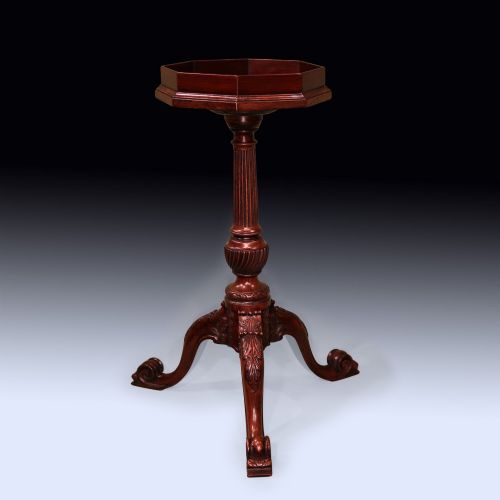
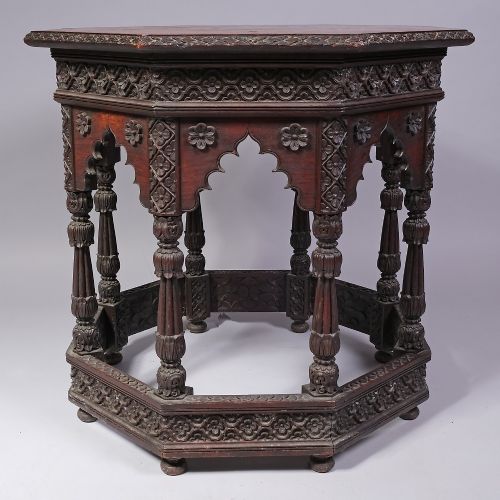
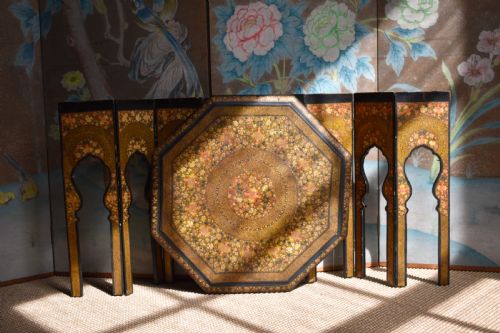
The octagonal wooden tea table appears in various regional styles and periods, ranging from Victorian iterations to intricate Anglo-Indian workshop creations.
Buyers seeking this phrase most frequently encounter folding or fixed occasional pieces featuring eight-sided tops, often linked to nineteenth-century global trade and domestic revival movements.
Makers utilised exotic hardwoods and dense domestic timbers to construct these low and occasional stands, adapting traditional geometric silhouettes for British homes.
Materials and Construction
Craftsmen shaped dense timbers such as teak, mahogany, padauk and walnut into folding frames and rigid pillar supports.
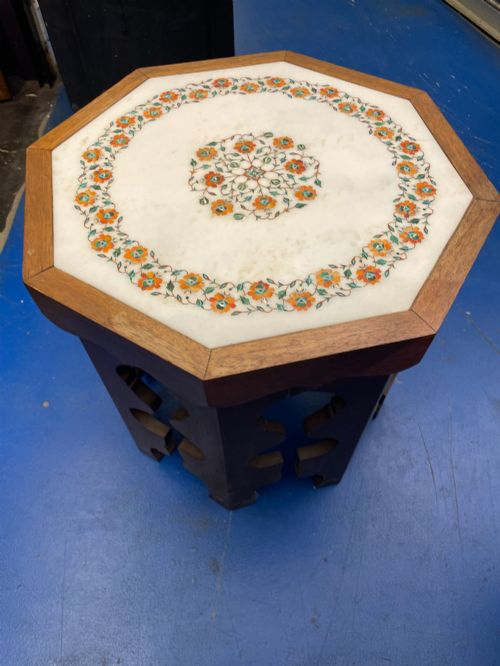
Surfaces frequently display elaborate hand carving, supplemented by contrasting inlay work using bone, brass, copper and mother of pearl.
Many examples employ traditional joinery alongside folding hinges, allowing the octagonal top to detach or fold flat for storage.
Several tables incorporate secret folding mechanisms and intricate animal carvings, including hidden dragons and elephants guarding the tea.
Judging Quality and Execution
The distinction between standard domestic production and superior execution rests upon the crispness of the hand carving and the precision of the geometric inlay.
Richer pieces demonstrate tight, stable joinery in dense hardwoods like padauk or teak, whereas lesser items rely on softer secondary woods with simpler surface decoration.
The complexity of the regional motifs, from Hoshiarpur floral carving to intricate Damascus geometric patterns, dictates the visual weight and artistic merit of the surface.
The Octagonal Wooden Tea Table Glossary
- Octagonal
- Having eight sides and eight angles. This geometric top shape defines the primary profile of these tables.
- Teapoy
- A small table traditionally used for holding tea equipment. These pieces often feature specialised tops or folding bases.
- Inlay
- A technique where materials such as brass, bone or mother of pearl are embedded into the wood surface to create decorative patterns. This ornament adds textural contrast to the dark timber.
- Tray top
- A tabletop with a raised rim designed to prevent items from sliding off. This feature appears frequently on folding occasional tables.
- Campaign table
- Portable furniture designed for easy dismantling and transport. Many nineteenth-century examples incorporate folding bases for mobility.
Octagonal Wooden Tea Table: Frequently Asked Questions
How were octagonal wooden tea tables used historically?
These pieces functioned primarily as movable stands for serving tea, displaying ornaments or holding portable lighting in Victorian and Edwardian reception rooms.
Their compact footprints allowed servants to reposition them easily as social habits shifted throughout the day.
What is an Anglo-Indian octagonal table?
An Anglo-Indian table combines British furniture forms with traditional Indian woodworking techniques, typically featuring dense carving from regions like Hoshiarpur.
Artisans constructed these pieces using teak, padauk or shesham, often incorporating folding frames for export to Britain.
Are these tables sturdy enough for daily use?
Solid hardwood construction makes most examples remarkably durable for contemporary placement as lamp stands or coffee tables.
Care should be taken with folding mechanisms and intricate inlay work to prevent accidental snagging or pressure damage.
How do I care for inlaid wooden surfaces?
Maintain the timber and delicate bone or brass inlays by applying occasional appropriate wax polish with a soft cloth.
Avoid placing these tables in direct sunlight or near heat sources to prevent the wood from shrinking and loosening the decorative elements.
How can I tell the period of a table?
Dating relies on examining the timber species, construction fasteners, tool marks on the underside and the prevailing decorative style.
Victorian and Edwardian pieces often show machine-sawn backing boards or modern brass screws alongside traditional hand-carved elements.