

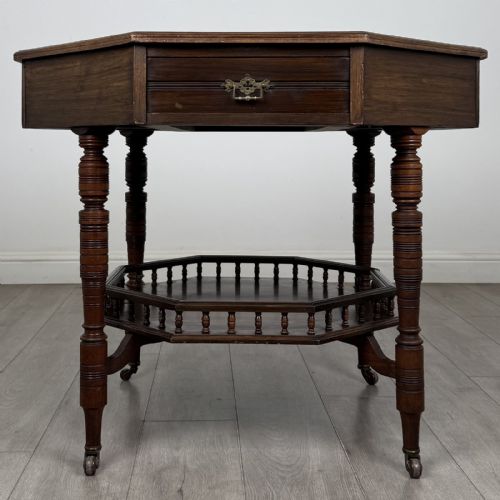
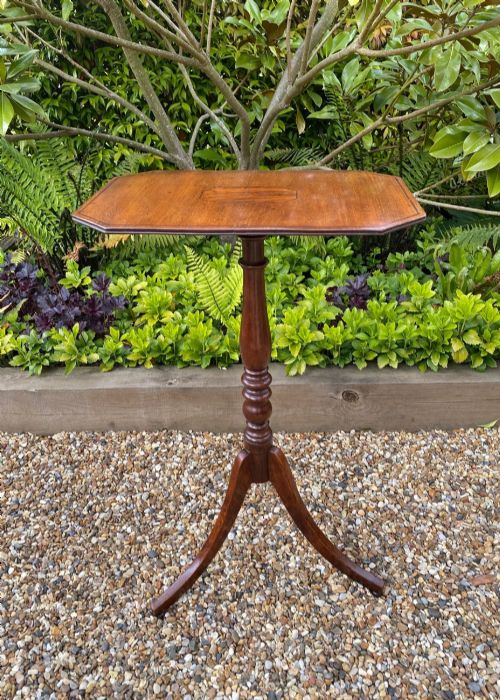
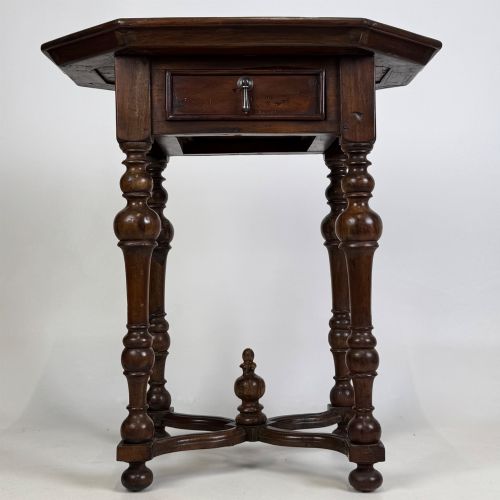
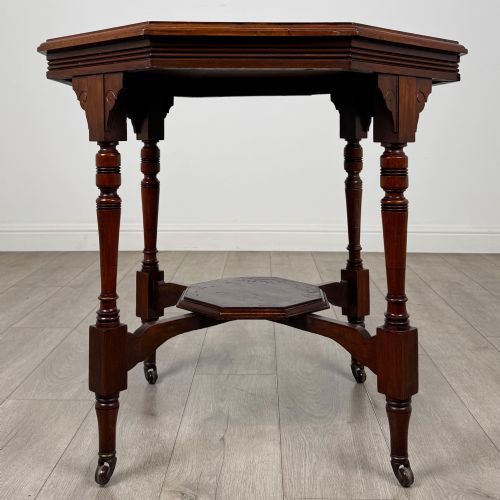
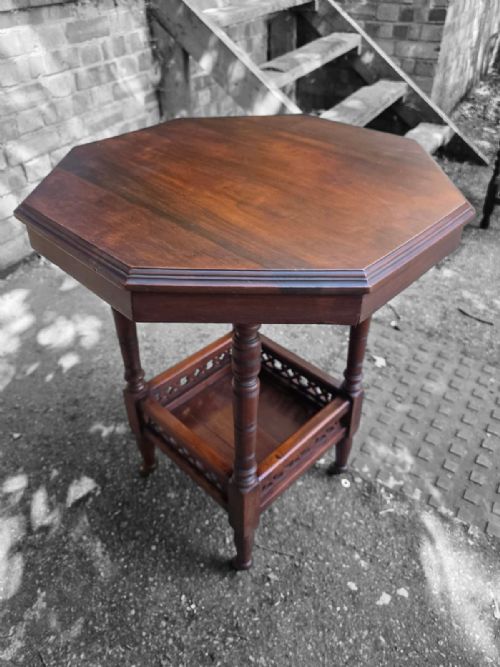
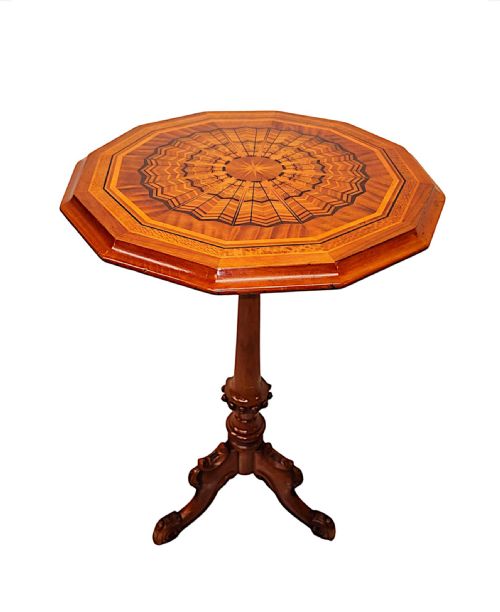
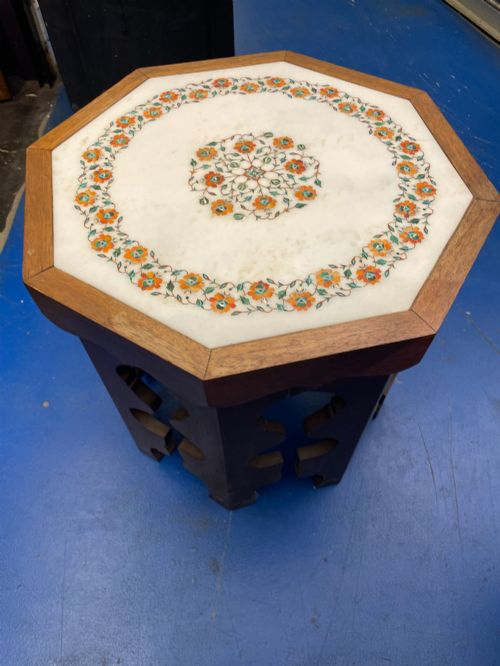
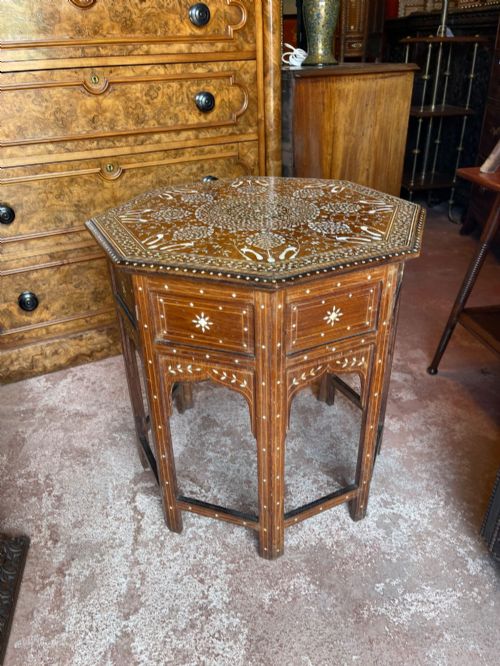
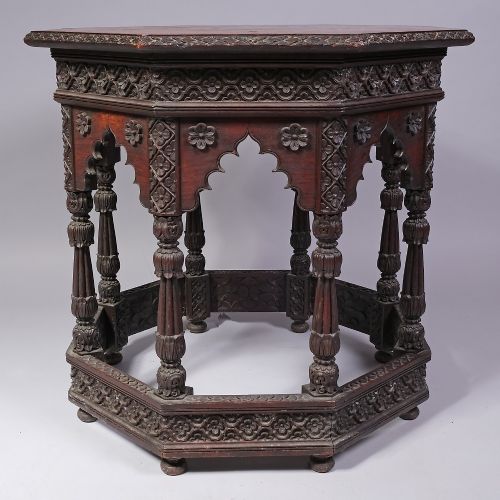

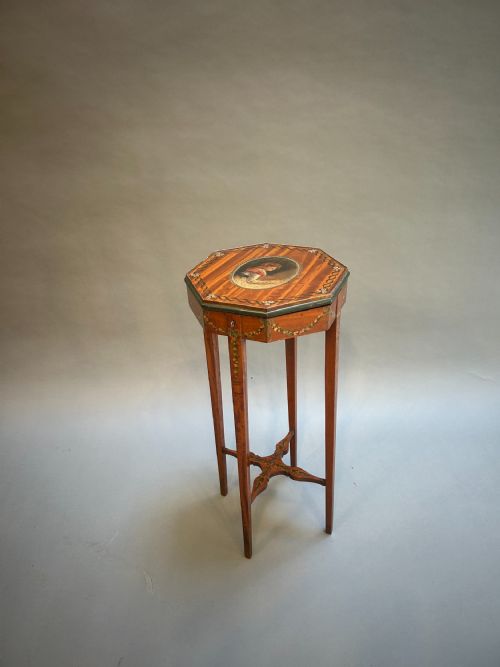

Octagonal Wooden Accent Table
These octagonal wooden accent table selections bring eight-sided geometry and timber warmth into domestic rooms.
Octagonal Wooden Accent Table
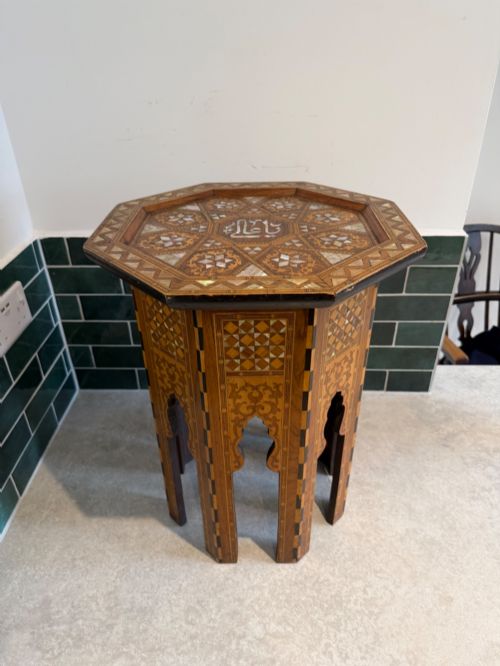
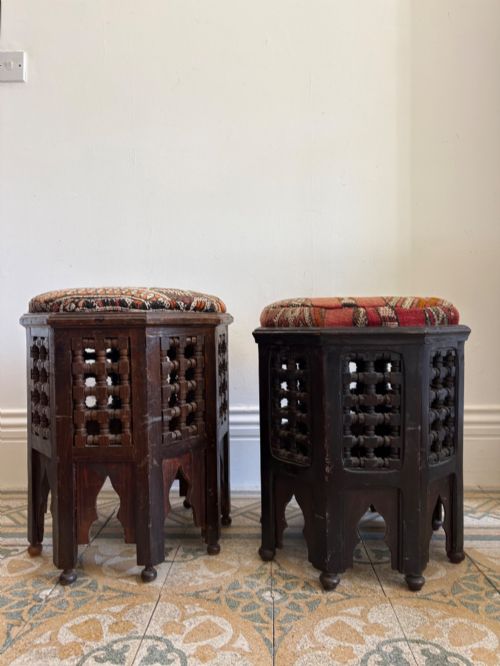
An octagonal wooden accent table provides a distinct eight-sided surface suited to placement beside seating or in hallways, functioning as an occasional table, plant stand, or lamp table. The pieces found here span multiple periods, from the eighteenth century through the Victorian and Edwardian eras into the nineteen-thirties.
Makers working within distinct design movements produced these eight-sided forms, leading to diverse visual results. Examples range from British vernacular mahogany and walnut pieces to imported hardwood items from India and Burma.
The domestic role of these tables shifted according to their period. Earlier examples often served as candle stands or wine tables, whilst later Victorian and Edwardian versions acted as general occasional surfaces or display tables.
Materials and construction methods
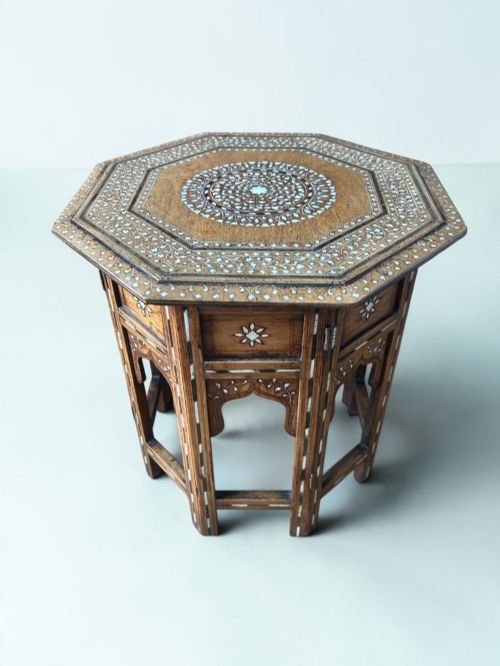
Cabinet makers utilised a range of timbers including oak, mahogany, walnut, teak, padauk, and satinwood. Construction methods varied from traditional joinery in British workshops to intricate relief carving and inlay work in Anglo-Indian and Moorish examples.
Surface decoration on these tables frequently involved contrasting elements such as bone inlay, parquetry patterns, specimen wood mosaics, or painted finishes. Ebonised and lacquered treatments also appear on later pieces from the twentieth century.
Octagonal Wooden Accent Table Retail Price Guide 2026
Typical asking prices for octagonal wooden accent table among the pieces listed under this phrase on Sellingantiques today, from the lower quarter to the upper quarter. They describe what is for sale here now, not the wider market.
Listings feature oak, mahogany, walnut, teak, and padauk timbers across pieces spanning the eighteenth to twentieth centuries.
Distinctions in construction and design
The standard of an octagonal wooden accent table depends upon the crispness of its geometric angles and the precision of any surface carving or inlay. Finely executed relief work and tight joinery separate standard production items from master-carved regional pieces.
Timber selection and grain matching influence visual weight, with dense hardwoods like padauk and rosewood offering different textural qualities compared to native British oak and mahogany. The integrity of the underlying structure determines long-term stability.
Gillows·Liberty and Co
The Octagonal Wooden Accent Table Glossary
- Occasional table
- A small movable table designed for periodic use in various rooms rather than a fixed dining or writing purpose.
- Torchere
- A tall decorative stand or candle holder, often featuring a slender pillar and tripod base.
- Parquetry
- Geometric patterns formed by fitting small pieces of wood together into a parquet surface.
- Anglo-Indian
- Furniture made in India by native craftsmen using local timbers for the British colonial market.
- Specimen wood
- Furniture constructed using numerous different decorative timbers, often showcasing native varieties.
Octagonal Wooden Accent Table: Frequently Asked Questions
What is an octagonal wooden accent table used for?
These tables provide a compact surface for lamps, books, or decorative objects within a living space or hallway. Their eight-sided tops fit neatly beside armchairs or into corners where round or square tables take up more visual room.
Throughout the nineteenth and twentieth centuries, domestic interiors utilised these surfaces as plant stands, smoking tables, or lamp supports. Their manageable size allows them to move easily between rooms as household needs change.
How do I identify a Victorian octagonal table?
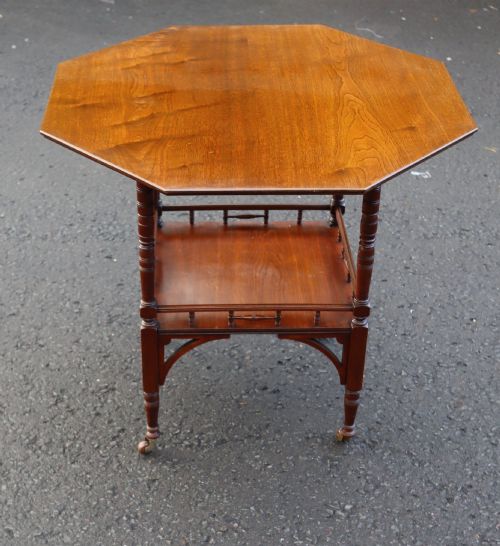
Victorian examples often display heavy timbers such as mahogany or walnut, frequently paired with turned pedestals or carved aprons. Many incorporate tilt mechanisms or elaborate surface decoration typical of the later nineteenth century.
Construction details like hand-cut joinery and aged timber patination help separate Victorian pieces from later reproductions. Examining the underside and fixing methods reveals the manufacturing techniques of the period.
What distinguishes Anglo-Indian tables?
Anglo-Indian pieces feature dense tropical hardwoods like teak or padauk adorned with deep relief carvings of foliage, dragons, or geometric motifs. These tables often incorporate folding bases designed for transport.
Craftsmen in regions such as Hoshiarpur produced these works for export to Britain during the nineteenth century. Their construction combines traditional Indian carving traditions with European furniture forms.
How do I care for antique wood tables?
Maintain timber surfaces by dusting with a dry lint-free cloth and avoiding exposure to direct sunlight or sudden temperature shifts. Natural waxes help nourish older wood and preserve the original finish without building up heavy residues.
Keep these tables away from heat sources and radiators to prevent the timber from drying out or splitting. Use protective pads under lamps and heavy objects to protect the polish.