
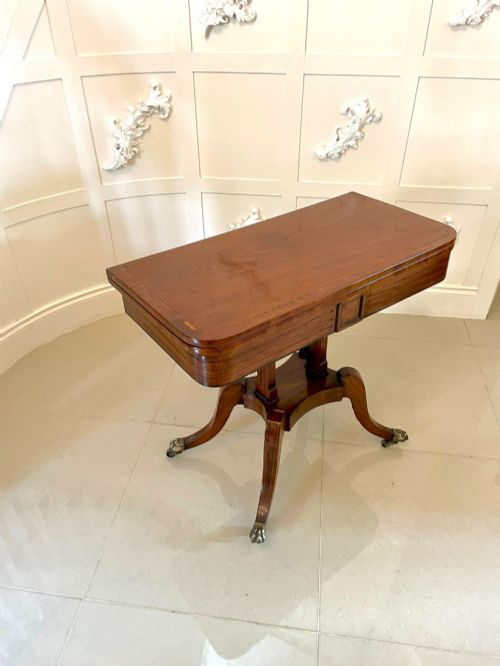
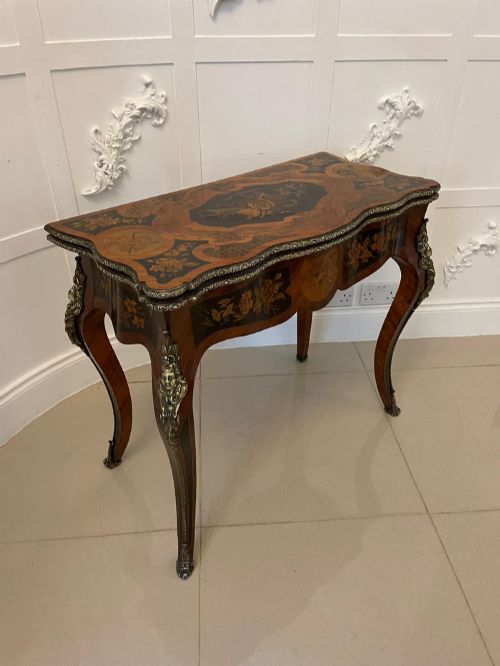
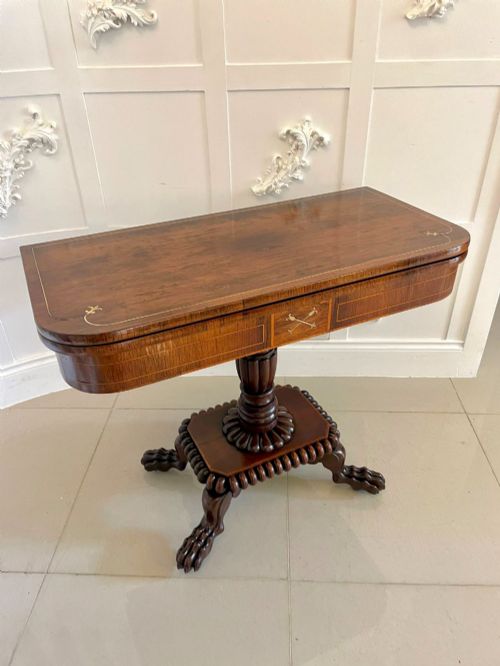
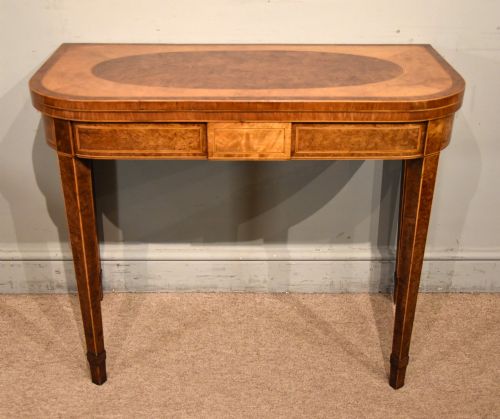
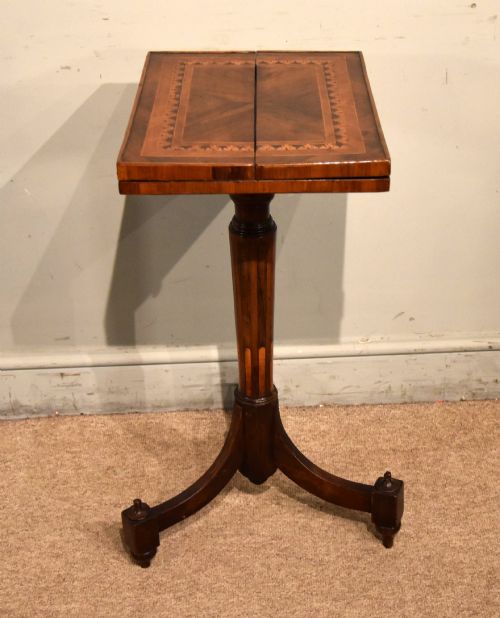


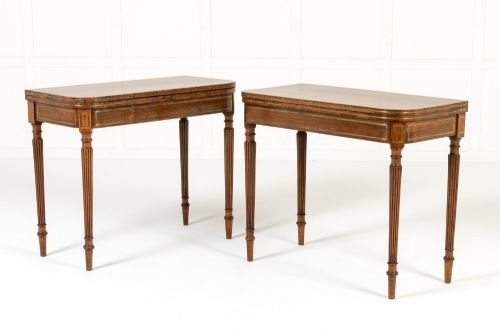
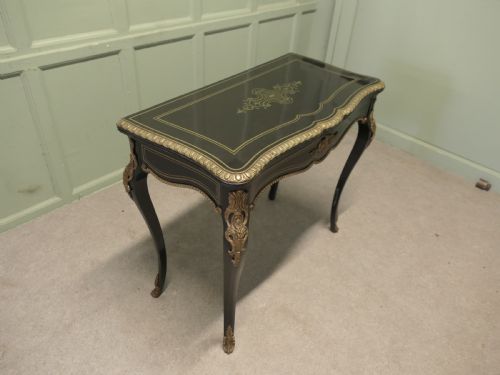
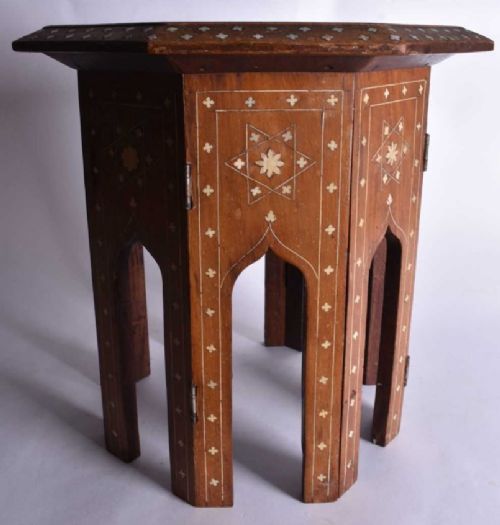
Inlaid Folding Side Table
An inlaid folding side table brings ingenious mobility and intricate surface work together across periods from the Georgian era to the Edwardian decades.
Inlaid Folding Side Table
An inlaid folding side table combines surface decoration with versatile movement, spanning card, tea, games, and occasional forms.
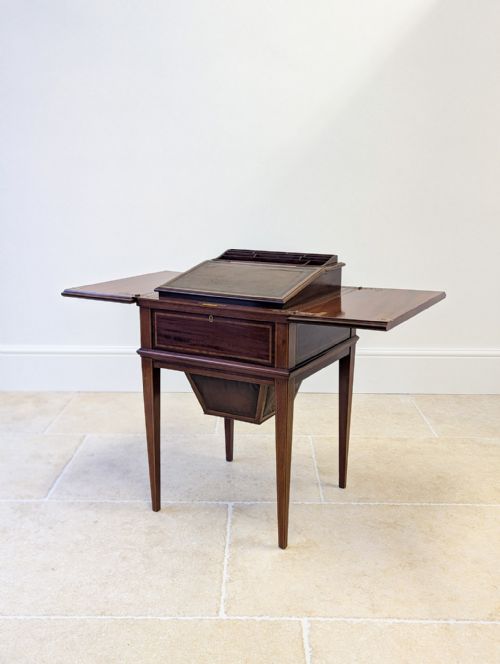
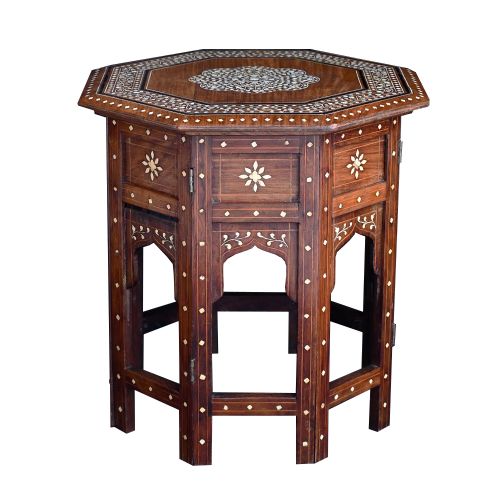
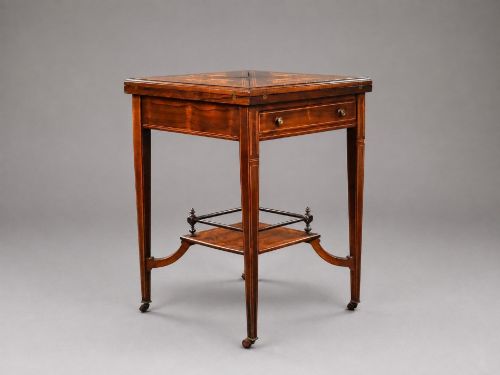
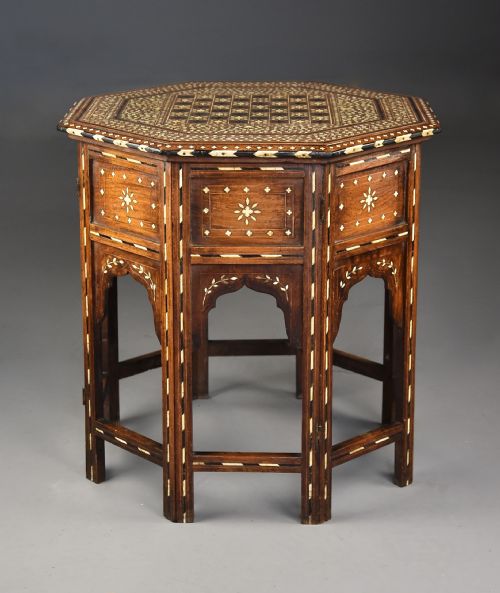
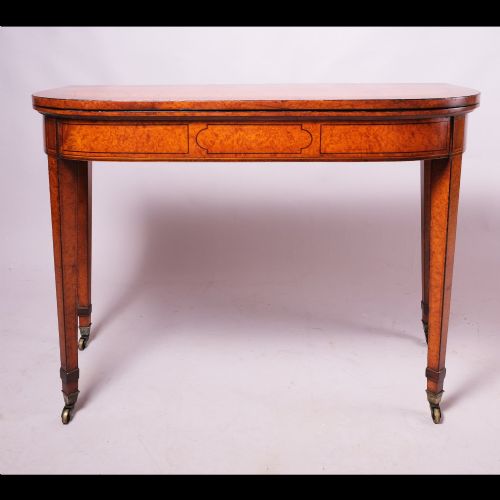
The Edwardian and nineteenth-century examples dominate the selection, often taking the shape of envelope, Sutherland, or octagonal folding tables.
Makers from various regional traditions, including Anglo-Indian Hoshiarpur workshops, Sorrento, and British cabinet makers, produced these adaptable pieces for domestic use.
Materials and Construction
Cabinet makers utilised dense hardwoods such as mahogany, walnut, rosewood, and kingwood as foundations for detailed surface decoration.
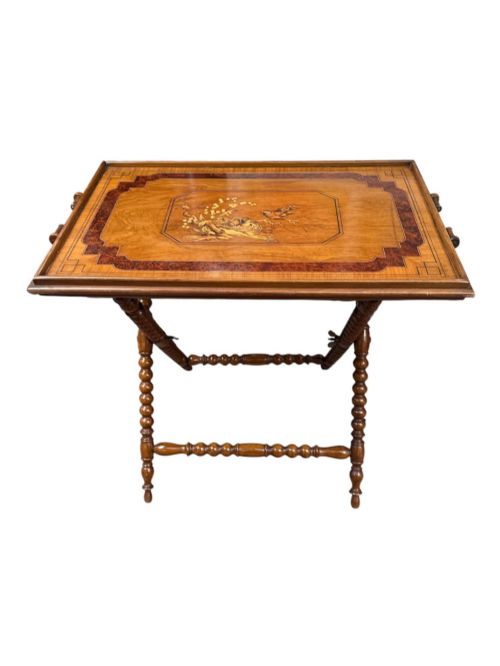
Inlay and marquetry techniques incorporate contrasting timbers like satinwood and boxwood, alongside brass, bone, and mother-of-pearl.
Folding mechanisms rely on clever pivoting frames, envelope leaves, or collapsible stands that allow surfaces to expand and contract.
Listings feature woods like mahogany, rosewood, walnut, and satinwood paired with brass, bone, and mother-of-pearl inlay across Georgian, Victorian, and Edwardian periods.
Craftsmanship and Execution
The precision of the wood inlay or metal marquetry determines the visual impact, distinguishing sharp geometric and floral patterns from simpler work.
Structural integrity in the folding hinges and swivel tops dictates how smoothly the table transitions between its compact and expanded states.
The choice of figured timber veneers, such as burr walnut or Honduras mahogany, sets finer examples apart from standard production.
Hoshiarpur
The Inlaid Folding Side Table Glossary
- Marquetry
- The art of forming decorative patterns using fitted pieces of veneer. This technique creates pictorial or geometric surfaces on tabletops.
- Sutherland table
- A narrow drop-leaf table with hinged flaps supported by pivoting legs. It folds flat for storage against a wall.
- Envelope table
- A card table with a square top that folds open by rotating the leaves diagonally. This reveals a baize-lined playing surface.
- Hoshiarpur
- A North Indian centre known for intricate woodwork. Tables from here feature dense wood and bone inlay in geometric motifs.
- Pembroke table
- A table with hinged leaves on either side and a drawer. It functions as a flexible side or writing piece.
Inlaid Folding Side Table: Frequently Asked Questions
How do folding mechanisms work?
Many tables utilise a swivel top that rotates ninety degrees to reveal a well before folding out a secondary leaf. Others employ drop leaves or pivoting leg frames to support extended surfaces.
Card tables often feature concertina actions or swing legs that move outward to bear the weight of the open leaf safely.
Where were these tables used?
Owners placed them in drawing rooms and parlours where space required adaptable furniture that could serve multiple daily functions.
They acted as side or occasional surfaces during social calls and transformed into card tables or tea tables when hosting guests.
What are the common inlay materials?
Cabinet makers combined light satinwood and boxwood with dark mahogany, rosewood, or walnut to create high-contrast geometric borders and floral motifs.
Eastern and European workshops also integrated brass wire, carved bone, and iridescent mother-of-pearl into the wooden surfaces.
How do I date an Edwardian piece?
Edwardian pieces typically date from the late nineteenth century up to the First World War, displaying lighter satinwood or mahogany frames with refined stringing.
They often favor revival styles and clever metamorphic designs intended for modern, compact town houses.