





Vintage Bone Inlay Stand
A vintage bone inlay stand brings intricate geometric craftsmanship and tactile warmth into a room, offering both functional surface space and decorative presence.
Vintage Bone Inlay Stand
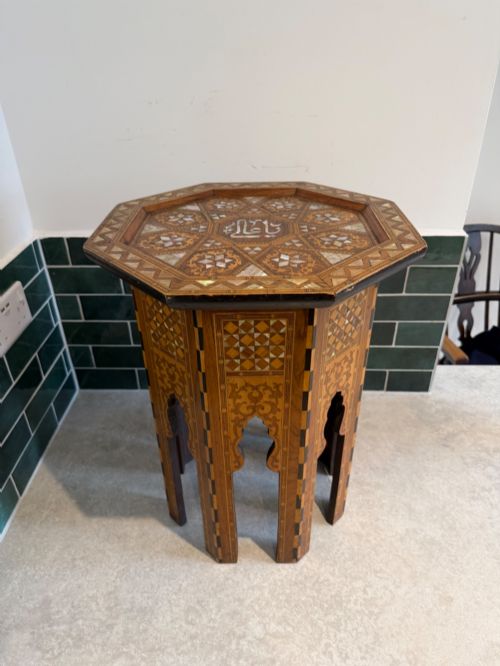
When searching for a vintage bone inlay stand, buyers encounter a variety of occasional tables, side tables, and floor lamps spanning periods from the nineteenth century through the 1930s. These pieces originate from distinct stylistic traditions including Anglo-Indian, Moorish Revival, and Japanese Export, reflecting global artisanal influences of their respective eras.
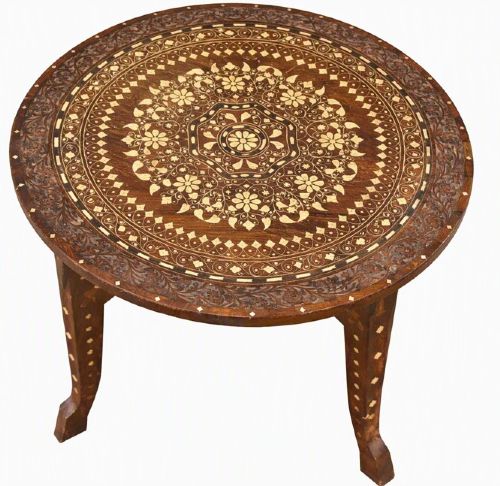
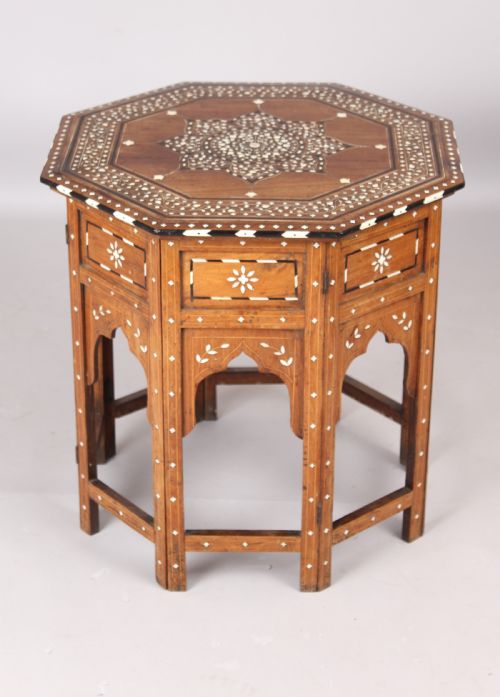
The most common forms on this page are occasional and side tables, often featuring octagonal or circular tops supported by carved wooden frames. Examples range from simple tripod stands to more elaborate Hoshiarpur tables incorporating intricate panels.
Materials vary widely across these stands, combining dense tropical hardwoods with lighter organic inlays that create high-contrast geometric and floral patterns.
How they were made
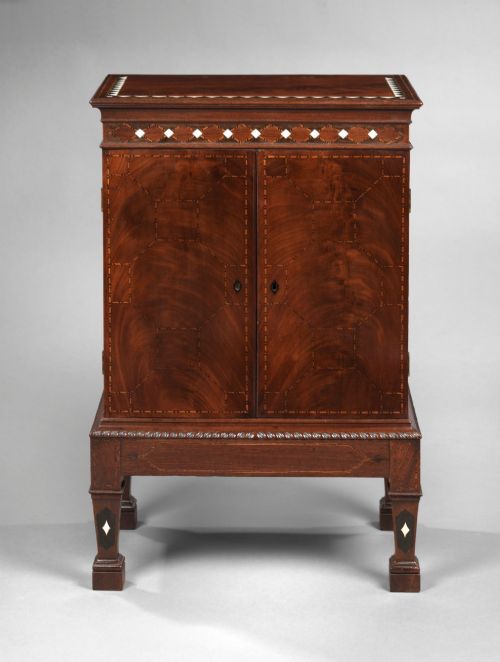
Artisans constructed the structural framework of these stands using solid timbers such as teak, mahogany, rosewood, walnut, and general hardwood. These woods provided a dark, stable base that contrasted sharply with the pale, carved ornamentation applied to the surfaces.
Craftsmen shaped small pieces of bone and mother-of-pearl by hand, setting them individually into recessed channels carved directly into the wooden substrate. The surrounding spaces were frequently filled with dark resin or intricate micro-mosaic woodwork to lock the individual pieces into place.
Vintage Bone Inlay Stand Retail Price Guide 2026
Typical asking prices for vintage bone inlay stand among the pieces listed under this phrase on Sellingantiques today, from the lower quarter to the upper quarter. They describe what is for sale here now, not the wider market.
What varies in quality
The standard of a vintage bone inlay stand depends heavily on the density and precision of the surface decoration, where tightly interlocking geometric patterns demand greater skill than sparse floral motifs. Finer examples maintain an even, flush surface where the bone and wood meet without excessive filler.
Structural integrity also separates standard items from superior pieces, particularly in the joinery of folding mechanisms, tripod legs, and the carved aprons supporting the table tops.
Liberty & Co
The Vintage Bone Inlay Stand Glossary
- Bone Inlay
- A decorative technique where small fragments of animal bone are shaped and pressed into a wooden base to form intricate patterns. This method creates a durable surface with a distinct matte texture.
- Hoshiarpur
- A historic centre in the Punjab region renowned for intricate woodwork and inlay craft. Pieces originating from this tradition often feature dense botanical and geometric motifs.
- Moorish Revival
- An architectural and decorative style popular in the nineteenth and early twentieth centuries that adopted elements of traditional Islamic design. It frequently incorporates horseshoe arches and complex geometric lattice work.
- Octagonal
- Having eight sides and angles. This geometric form is particularly common in tables designed for flexible placement in domestic interiors.
Vintage Bone Inlay Stand: Frequently Asked Questions
What is a vintage bone inlay stand used for?
These stands serve primarily as occasional or side tables to hold lamps, decorative objects, or cups in a living space. Their compact footprints make them suitable for smaller corners or beside seating.
Some larger examples also function as central display pieces or floor lamp standards, combining illumination with decorative utility.
How do I date a bone inlay table?
Dating relies on examining the timber species, the style of carving, and construction methods used in the frame. Nineteenth-century examples often display heavier, denser hardwoods and hand-cut joinery.
Later pieces from the early twentieth century may incorporate lighter construction or specific regional styles like Anglo-Indian Hoshiarpur work.
Are these stands made from real bone?
Yes, traditional pieces utilise authentic animal bone, which has a distinct organic grain and takes on a subtle patina over time. Craftsmen carved these materials by hand before setting them into the timber.
Mother-of-pearl is also frequently integrated alongside the bone to add iridescent contrast to the geometric patterns.
How should I care for a bone inlay surface?
Keep the wood and bone nourished by avoiding direct sunlight and excessive moisture, which can cause the timber to expand or dry out. Dust gently with a dry, soft cloth rather than using liquid polishes.
Natural materials respond best to stable indoor humidity levels that prevent the delicate inlay from lifting.