



Octagonal Wood Coffee Table
An octagonal wood coffee table brings geometric warmth and intricate global craftsmanship into a room, spanning Victorian and Art Deco eras.
Octagonal Wood Coffee Table
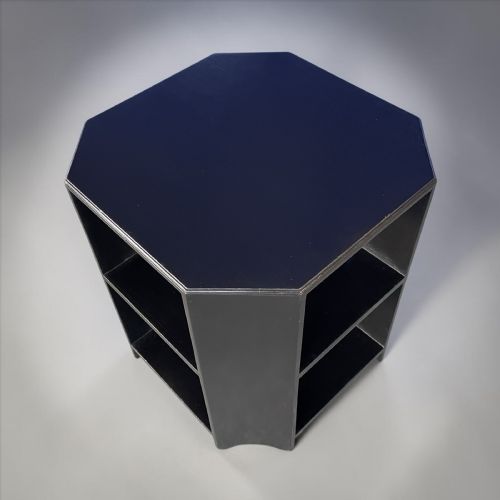
When searching for an octagonal wood coffee table, you encounter diverse forms ranging from nineteenth-century Anglo-Indian and Moorish pieces to Art Deco walnut designs. These tables serve as low surfaces or occasional tables, featuring distinctive eight-sided tops.
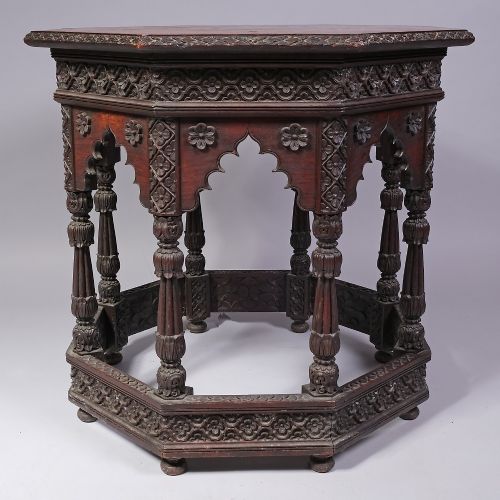
The most common examples on this page hail from nineteenth-century Indian workshops or late Victorian production, often displaying dense surface carving, inlaid materials, or folding bases.
Makers utilised various regional timbers and stylistic idioms, connecting domestic British interiors of the Victorian and Edwardian periods with global export traditions.
How they were made
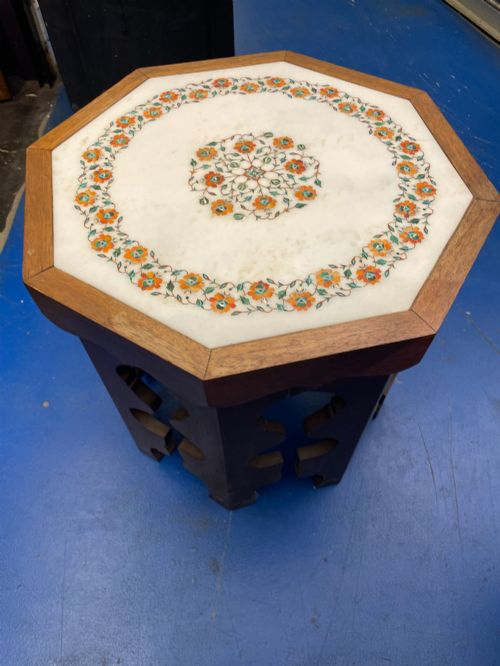
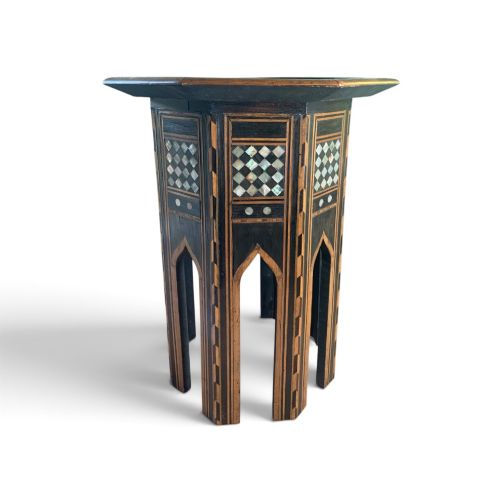
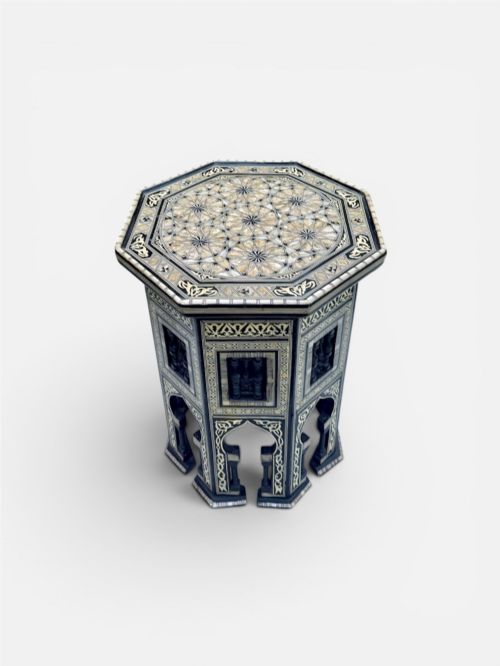
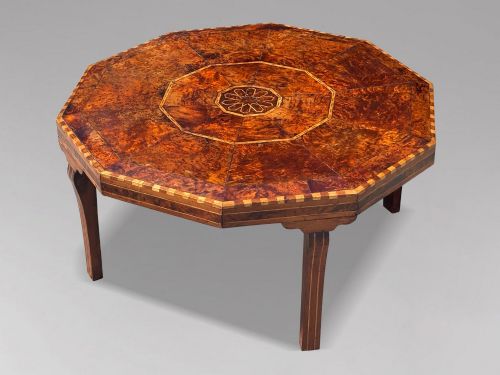
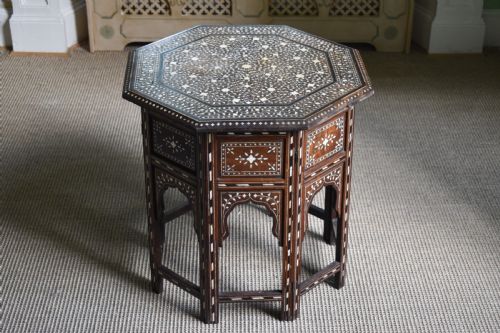
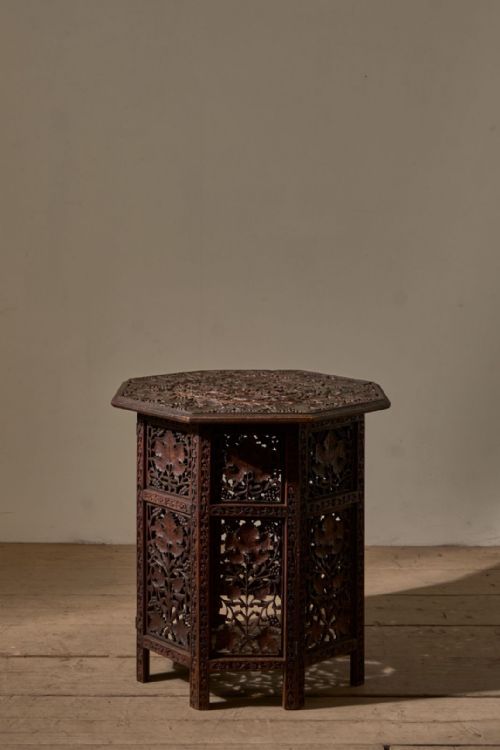
Construction relies heavily on dense hardwoods such as teak, padauk, walnut, and rosewood, carved by hand with floral, geometric, or animal motifs. Many pieces incorporate contrasting inlay materials including brass, copper, bone, and mother of pearl set directly into the wooden surface.
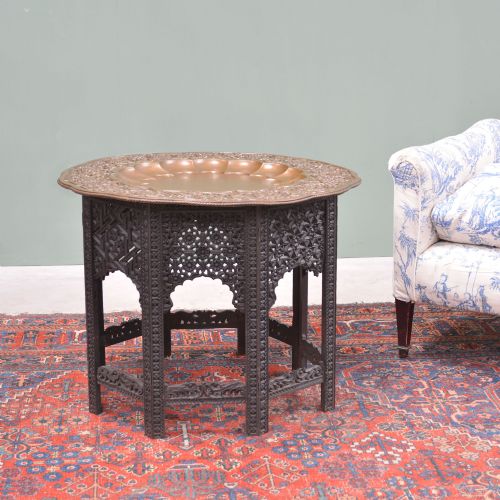
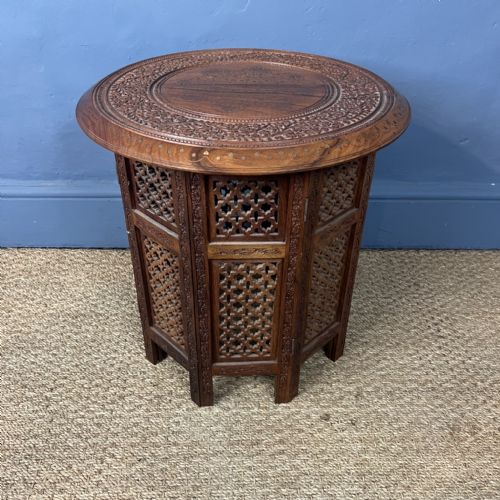
Moorish and Anglo-Indian examples frequently employ intricate pierced fretwork and collapsible folding bases, allowing the octagonal top to be removed for transport.
Materials documented across the collection include hardwood, teak, walnut, rosewood, padauk, burr yew, brass, copper, bone, and mother of pearl.
What varies in quality
Quality separates through the crispness of the hand-carved detail and the precision of the contrasting inlay work. Finely executed geometric bone or brass patterns demonstrate superior workshop skill compared to simpler, coarser incisions.
The choice of timber underpins the overall integrity, with dense exotic hardwoods and well-figured burr yew or walnut representing the finer end of production.
Liberty and Co·Heals
The Octagonal Wood Coffee Table Glossary
- Anglo-Indian
- Furniture made in India during the British colonial period, often specifically for export to European markets using local timbers and traditional carving methods.
- Hoshiarpur
- A North Indian city renowned for intricate woodwork, specifically tables featuring dense inlay of brass, copper, or bone into hardwood surfaces.
- Moorish Revival
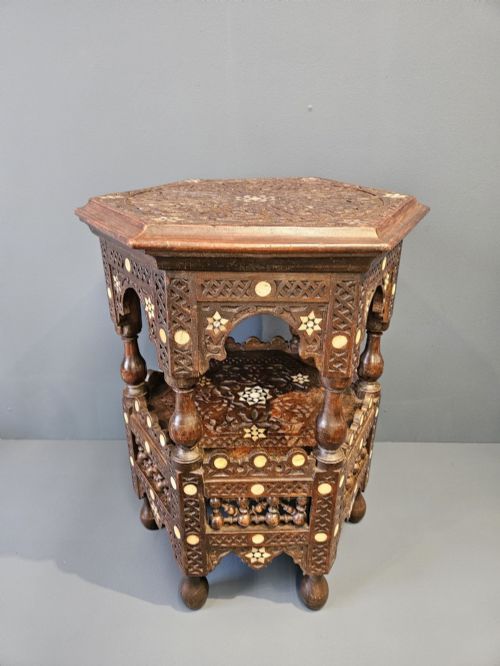
- A nineteenth-century design style inspired by Islamic architecture and decorative arts, characterised by intricate geometric lattice work and horseshoe arches.
- Pietra Dura
- A technique of inlaying cut and fitted polished coloured stones into a stonework or wooden base to create pictorial designs.
- Padauk
- A heavy tropical hardwood valued for its durability and rich reddish-brown tone, frequently utilised in nineteenth-century colonial furniture.
Octagonal Wood Coffee Table: Frequently Asked Questions
How do I use an octagonal table as a coffee table?
These pieces function well in front of a sofa, where their eight-sided geometry breaks up the linear lines of a room.
Ensure the height suits your seating arrangement, as many period examples originated as occasional or side tables rather than purpose-built low tables.
What woods were used in these tables?
Cabinet makers and regional artisans utilised a range of timbers including teak, walnut, rosewood, padauk, and ebonised hardwood.
Many pieces also incorporate contrasting decorative elements of brass, copper, bone, and mother of pearl.
How do I identify a Moorish style table?
Moorish style tables typically display complex geometric carving, pierced fretwork panels, and multi-sided or folding bases.
They reflect late nineteenth-century British enthusiasm for Islamic and North African decorative arts.
Are the folding bases original?
Many Anglo-Indian and Moorish occasional tables were specifically constructed with removable octagonal tops and folding wooden bases designed for easy dismantling.
These collapsible frames are generally contemporary with the top and form an integral part of the piece's construction.