


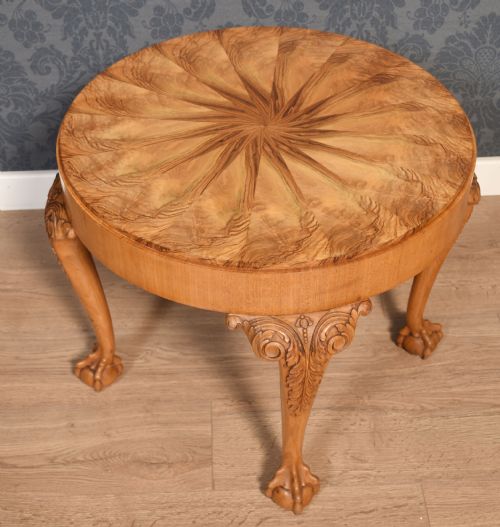


Walnut Veneer Coffee Table
A walnut veneer coffee table brings rich figure and period warmth to a room, centring the space with distinct grain patterns.
Walnut Veneer Coffee Table
When you search for a walnut veneer coffee table, you are looking at low tables designed for reception spaces, originating primarily from the early decades of the twentieth century. These pieces appear frequently in Art Deco forms, alongside Edwardian and Georgian revivals, functioning as coffee tables, occasional tables, side tables, lamp tables, and centre tables.
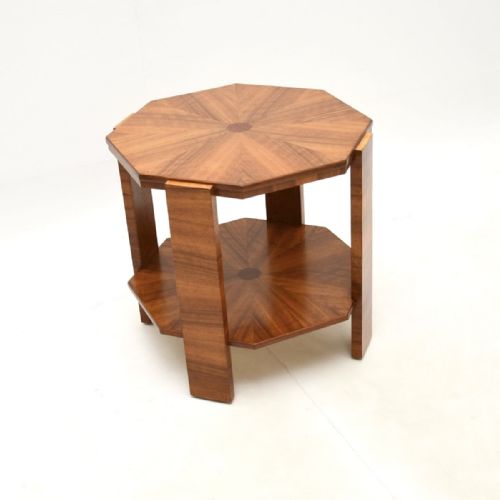
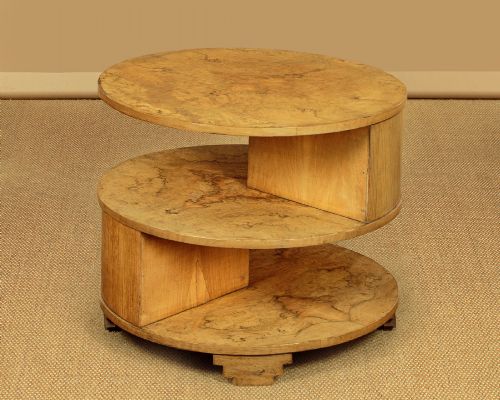
The version you are most likely to meet on this page is an Art Deco piece dating from around nineteen thirty. These tables often utilise highly figured veneers, sometimes incorporating two tiers, and span periods from nineteen hundred up to nineteen thirty.
How they were made
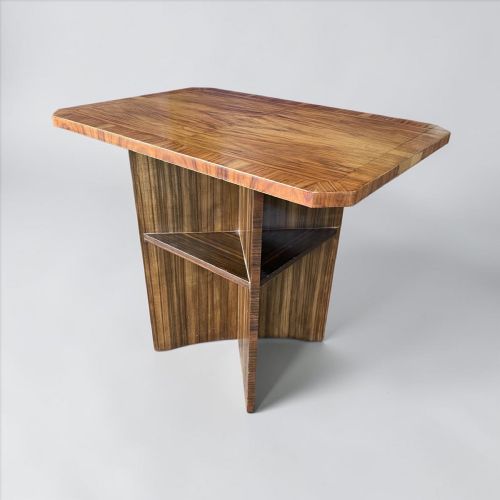
Makers constructed these tables using a hardwood or timber core overlaid with decorative sheets of walnut or burr walnut veneer. This technique allowed craftsmen to display striking, highly figured grain patterns across flat surfaces that solid timber could not match.
Some examples combine walnut with maple to create contrasting tones within two-tier designs, while other pieces feature ebonised wood details. The underlying construction relies on sturdy timbers to support the veneered surfaces.
Listings span periods from 1900 to 1930, uniting Art Deco styling with Georgian and Edwardian revivals.
What varies in quality
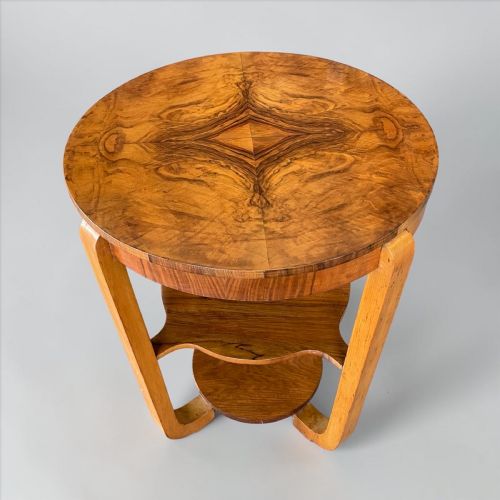
The visual impact of the timber sets one piece apart from another, depending entirely on the choice of veneer. Highly figured burr walnut displays complex, swirling grain formations that command attention, whereas plainer walnut surfaces present a more restrained appearance.
Construction complexity also divides the range, moving from simple single-surface occasional tables to architectural two-tier forms that demand greater joinery skill. The precision in handling contrasting woods, such as maple or ebonised elements, marks out the more ambitious examples.
The Walnut Veneer Coffee Table Glossary
- Walnut veneer
- A thin slice of walnut timber applied over a secondary wood core. This method creates decorative surfaces while conserving scarce or highly figured wood.
- Burr walnut
- Wood taken from a growth on a walnut tree where the grain has grown in a deformed, swirling manner. It yields highly prized, mottled patterns.
- Art Deco
- A design style dominant in the nineteen twenties and thirties. It favours geometric shapes, clean lines, and streamlined modern forms.
- Two-tier
- A table construction featuring a primary top surface and a lower shelf. This design provides additional display or storage space.
- Ebonised wood
- Timber treated with a finish to make it dark and glossy, mimicking ebony. It provides sharp contrast against lighter walnut veneers.
Walnut Veneer Coffee Table: Frequently Asked Questions
How do I date a walnut veneer coffee table?
Dating relies heavily on the stylistic clues present in the legs, overall silhouette, and construction methods. Pieces from the nineteen thirties typically display geometric Art Deco lines, whereas items from the early twentieth century often draw on earlier revival styles.
Examining the underlying timber and veneer application also helps establish the era of manufacture. Comparing the form against documented examples from the same decade clarifies the timeline.
What is burr walnut?
Burr walnut comes from a tree growth that produces intricate, swirling grain patterns rather than straight lines. This material was sliced into thin veneers to cover table tops.
Because every burr growth is unique, no two tables share the exact same grain configuration. This distinct patterning makes burr walnut surfaces visually arresting.
How do I clean a veneered table?
Cleaning requires a soft, dry cloth to remove dust without disturbing the delicate surface. Moisture should be kept away from the edges where the veneer meets the core.
Avoiding harsh chemical polishes preserves the original finish and the integrity of the adhesive beneath the veneer. Occasional application of appropriate wax maintains the lustre of the wood.
Were these always coffee tables?
Many low tables from the early twentieth century began life as occasional tables, side tables, or lamp tables rather than designated coffee tables. The lower height suited the changing social habits of the period.
Over time, buyers adapted these versatile occasional and centre tables to function as coffee tables in modern living spaces. Their proportions make them well suited for this role today.