

Octagonal Carved Accent Table
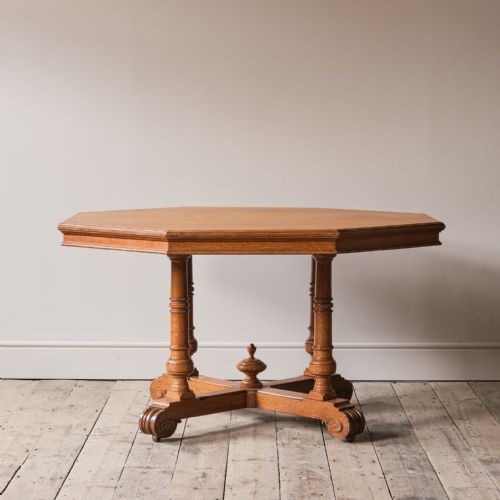
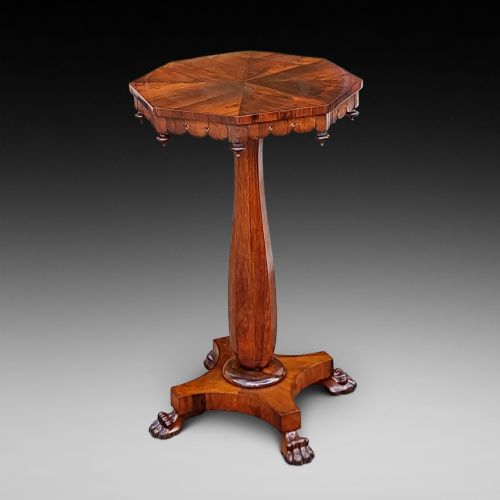
An octagonal carved accent table brings distinctive geometry and intricate handwork to a room, offering versatile surfaces from the nineteenth and early twentieth centuries.
Octagonal Carved Accent Table
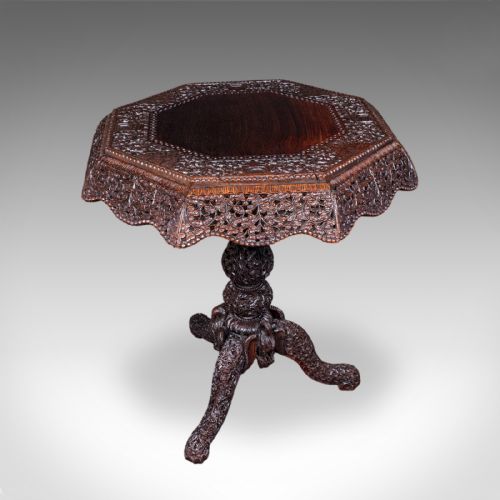
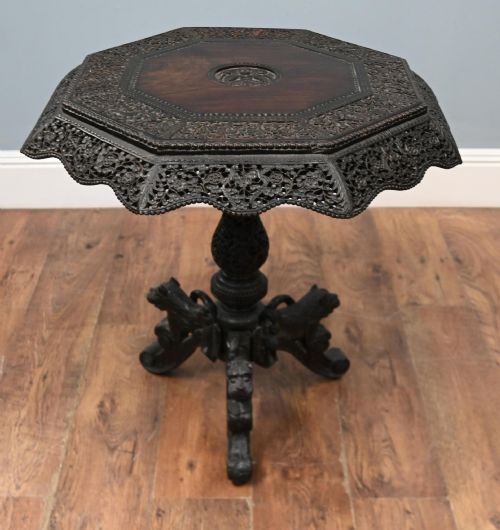
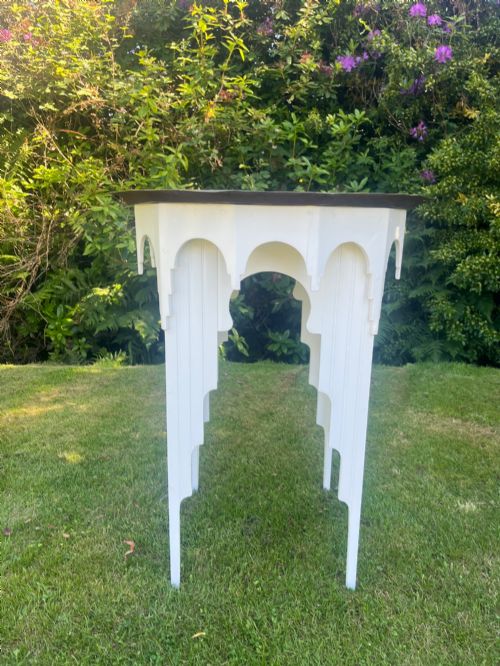
An octagonal carved accent table appears in various regional traditions, most notably within Anglo-Indian, Moorish, and British domestic furniture from the nineteenth century onwards. These pieces function as side tables, occasional tables, centre tables, and coffee tables within diverse interior schemes.
Materials span from dense tropical hardwoods like teak, rosewood, and padauk to European oaks and walnuts. Regional craft traditions define the character of each piece, linking British aesthetic movements with overseas workshops.
Materials and Construction Methods
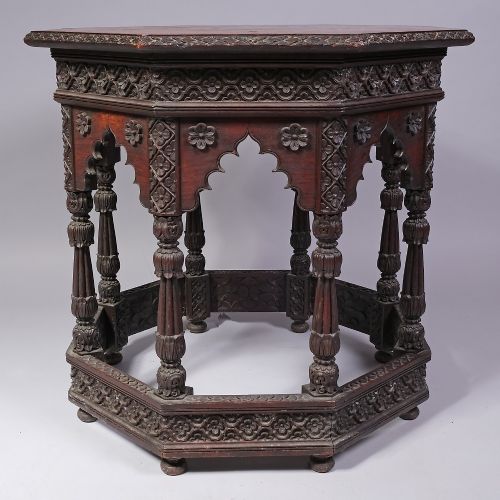
Joiners and carvers utilised solid timber substrates, selecting woods such as teak, oak, walnut, and padauk for their structural stability and capacity for deep relief carving. Artisans shaped eight-sided tops alongside folding bases and turned legs.
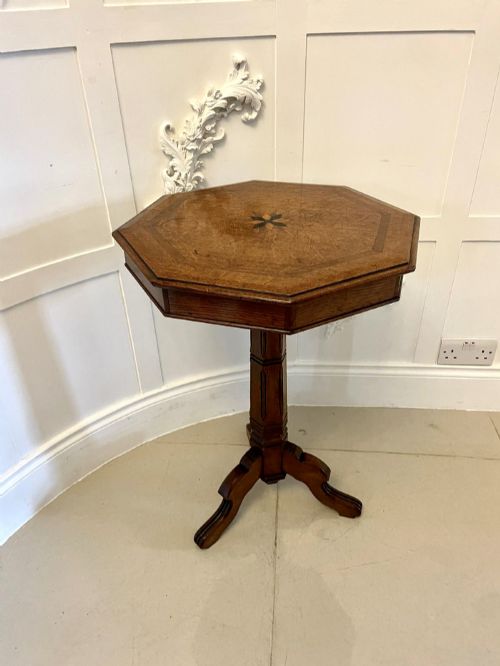
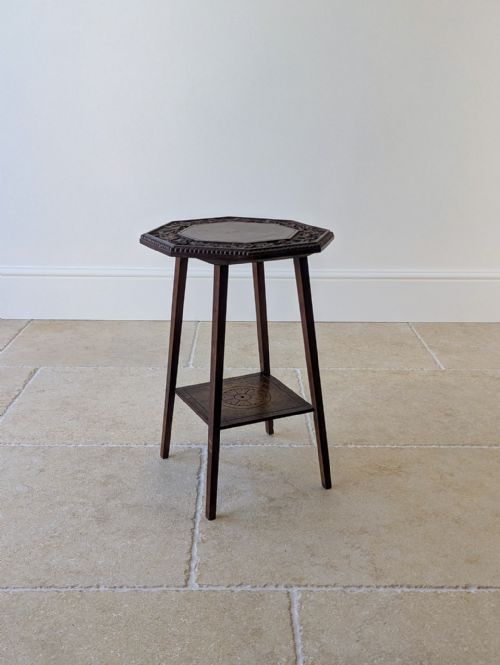
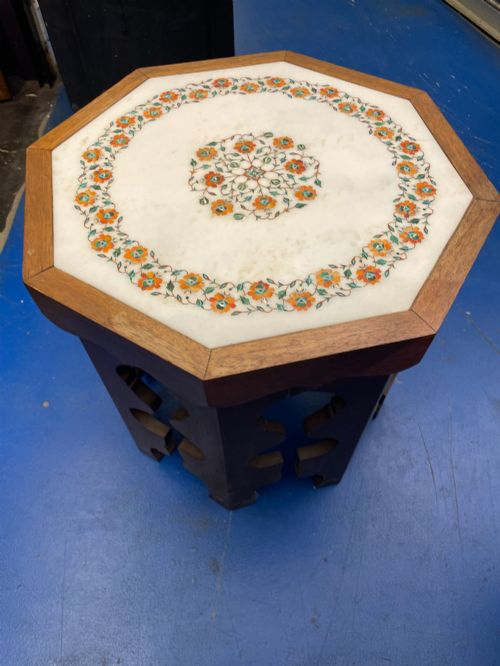
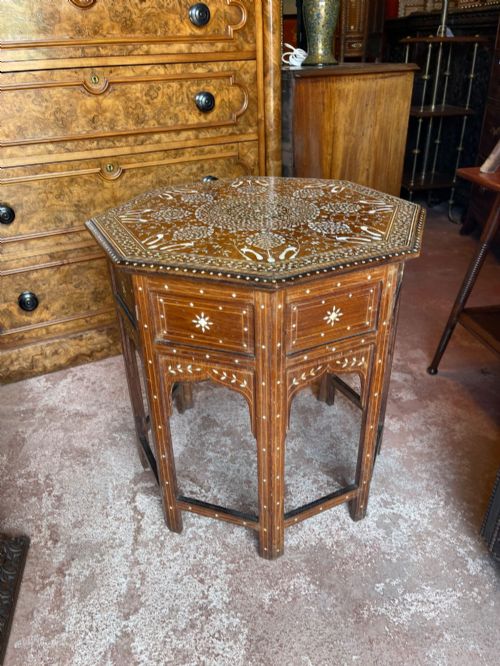
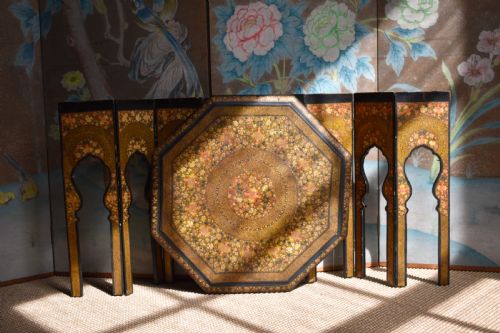
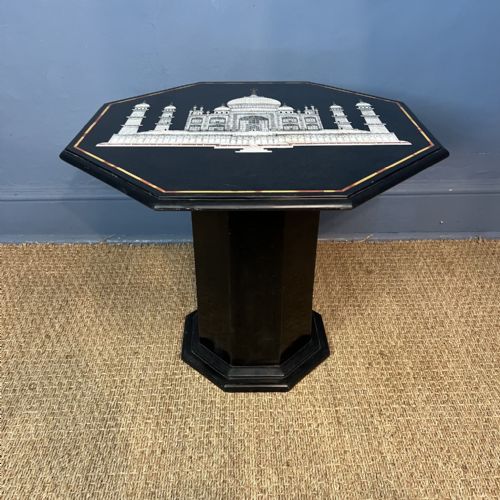
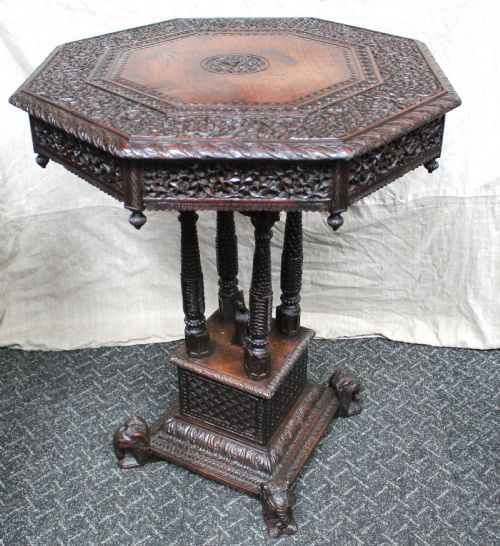
Surface ornamentation involved intricate hand carving depicting foliage, dragons, and geometric motifs, occasionally enhanced with bone, mother-of-pearl, brass inlay, or marble inserts. Certain regional pieces incorporate lacquering or painted decoration directly onto the hardwood surface.
Listings span periods from the eighteenth century through the 1930s, incorporating Victorian, Edwardian, and Regency revivals alongside Arts and Crafts designs.
Evaluating Craftsmanship and Condition
Depth and crispness of the hand carving distinguish superior examples from simpler production, particularly in dense timbers like padauk and teak where intricate relief requires immense skill. The integration of inlaid elements such as bone or brass demands precise fitting into the surrounding wood.
Structural integrity of the eight-sided top and its support mechanism determines longevity, with folding tables requiring sound hinges and rigid joints. The choice of timber grain and the preservation of original surface finishes further divide standard utility pieces from exceptional collector items.
Liberty & Co.
The Octagonal Carved Accent Table Glossary
- Anglo-Indian
- Furniture made in India during the British colonial period, often combining traditional local carving techniques with British furniture forms. These pieces frequently utilise dense tropical hardwoods.
- Hoshiarpur
- A style of intricate woodwork originating from the Punjab region, characterised by dense surface carving and geometric inlay using materials such as bone or brass.
- Moorish Revival
- An architectural and decorative style popular in the nineteenth century that influenced furniture design through horseshoe arches, intricate lattice work, and geometric surface patterns.
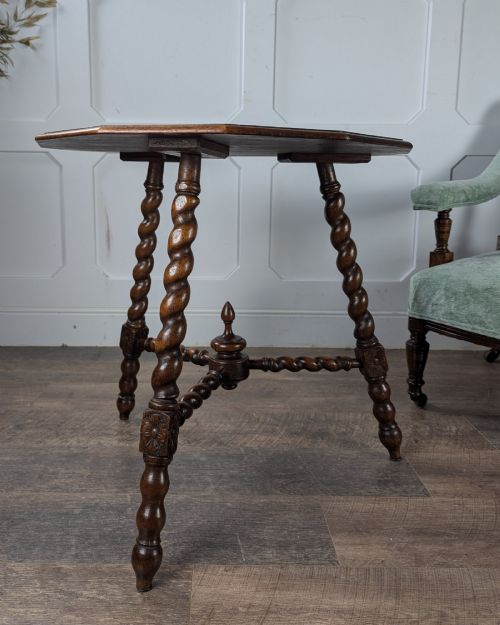
- Barley Twist
- A turned furniture leg or column shaped to resemble a spiralling rope or barley stalk, common in seventeenth-century English work and revived during the Victorian era.
Octagonal Carved Accent Table: Frequently Asked Questions
Where do these octagonal tables originate?
The listings encompass both British domestic workshops of the Victorian and Edwardian eras and overseas production centres, particularly from the Indian subcontinent and Burma. Regional styles reflect local carving traditions merged with British demand for exotic occasional furniture.
Buyers find English oak and walnut examples alongside heavily carved teak and padauk pieces from colonial workshops. This dual origin creates a diverse selection of geometric tables with distinct cultural histories.
How do I use an octagonal table at home?
An eight-sided surface fits easily beside armchairs, sofas, or as a central lamp table in a reception room. Their compact proportions allow them to function as versatile occasional furniture without dominating the floor space.
Folding variants offer practical flexibility for temporary placement or storage. Heavier centre tables anchor a room with rich wood tones and elaborate carving.
What woods were used for these tables?
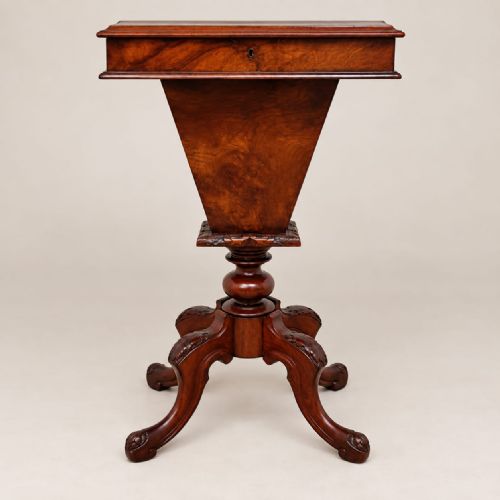
Makers employed a wide variety of timbers depending on the origin of the piece. European examples typically feature oak, walnut, or mahogany.
Colonial and imported pieces rely on dense tropical hardwoods such as teak, rosewood, padauk, and assorted regional hardwoods. These durable woods supported deep relief carving and intricate inlay work.
How can I tell the period of a carved table?
Dating relies on timber selection, carving style, and construction methods associated with specific decades from the nineteenth and early twentieth centuries. Victorian pieces often combine Gothic or Arts and Crafts influences with dark oak or walnut.
Later Victorian and Edwardian examples frequently show colonial influence through dense botanical carving or bone inlay. Documentation or stamps from retail firms like Liberty & Co. further help establish precise timeframes.