




Asian Export Furniture
Asian export furniture brings together dense hardwoods, intricate carving, and lacquered surfaces made for Western markets during the nineteenth and early twentieth centuries.
Asian Export Furniture
Asian export furniture comprises pieces made in China and Japan specifically for international markets across the nineteenth and early twentieth centuries, spanning periods from the Qing Dynasty to the Meiji era. When exploring asian export furniture, buyers encounter forms ranging from nests of tables and occasional tables to cabinets, desks, and benches.
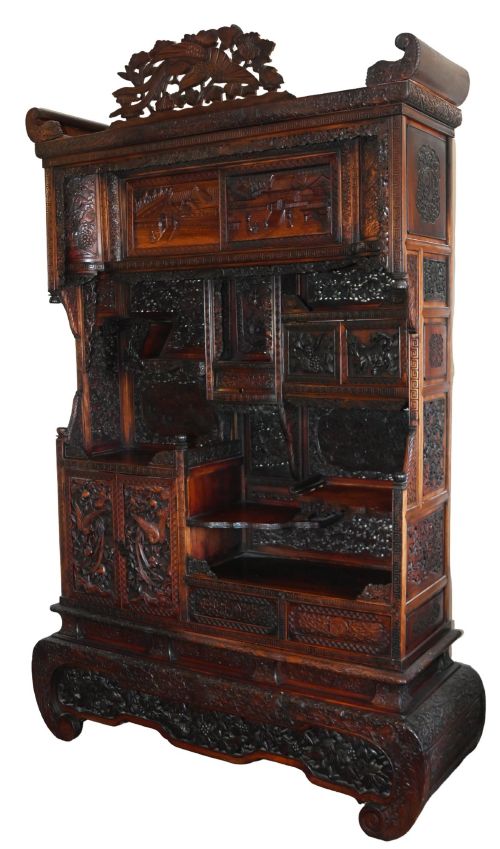
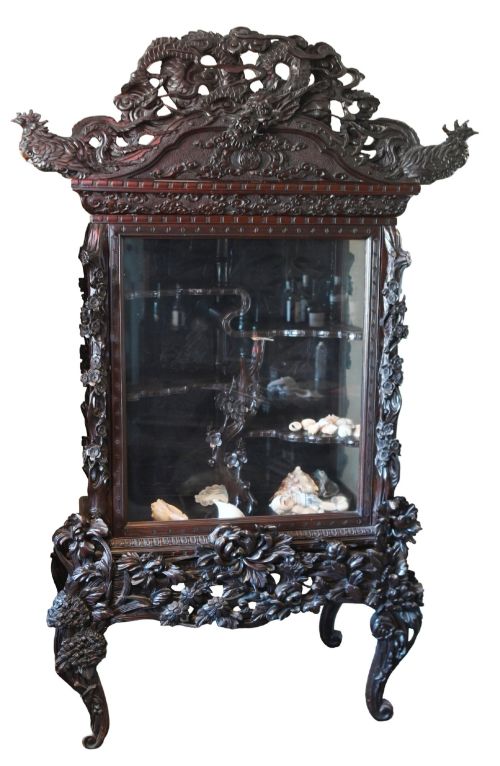
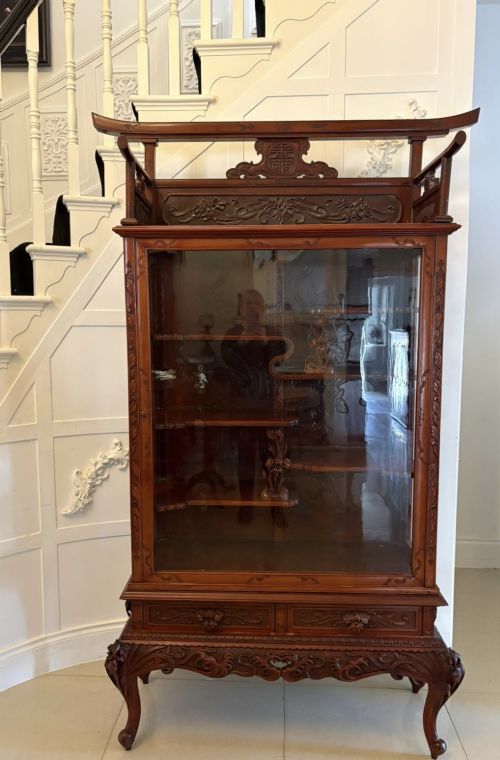
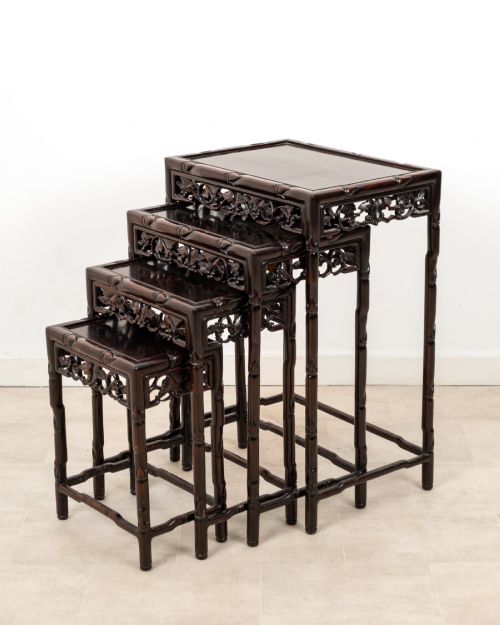
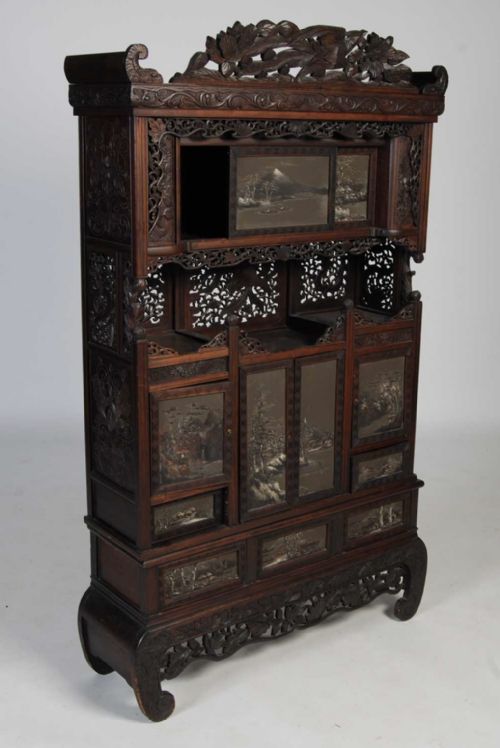
The most common forms on this page are nests of four tables and small display cabinets, often described as Shodana or table cabinets. These pieces combine traditional Eastern construction with forms familiar to Western interiors of the period.
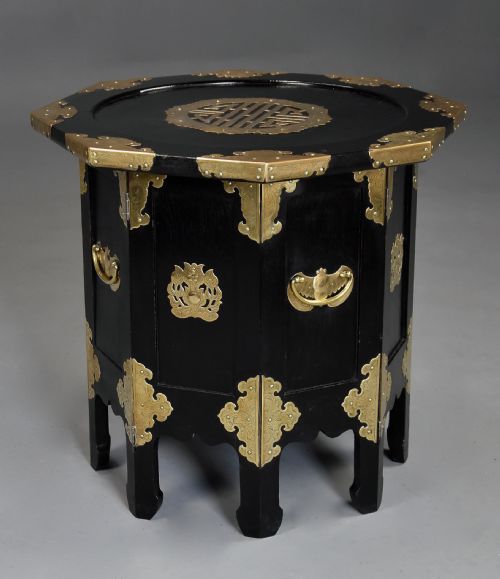
Origins include Chinese workshops producing hard wood and lacquered pieces alongside Japanese makers working during the Meiji period. Materials such as hongmu, rosewood, and ebonised wood dominate the selection, frequently enhanced by hand carving and brass details.
Distinguishing Quality
Quality in these pieces rests upon the crispness of the hand carving and the selection of timber. Dense hardwoods like hongmu and well-figured burrwood denote superior production compared to plainer, softer woods.
The complexity of the form also dictates the standard of the piece, distinguishing standard occasional tables from graduated nests of four or multi-tiered Shodana cabinets with intricate joinery. Surface preservation, particularly on lacquered and ebonised finishes, marks the difference between well-maintained examples and those that have lost their original definition.
Listings feature pieces spanning the nineteenth century through to the 1930s, constructed from hardwoods, lacquer, rosewood, and brass.
The Asian Export Furniture Glossary
- Hongmu
- A dense, dark tropical hardwood favoured in Chinese furniture making for its heavy weight and capacity for fine carving. It translates literally to red wood.
- Shodana
- A traditional Japanese display cabinet featuring asymmetrical shelving and small cupboards, popular during the Meiji period. These cabinets were designed to showcase small objects of art.
- Chinoiserie
- European interpretation and imitation of Chinese artistic traditions, applied to furniture and decorative arts. It reflects Western fascination with Eastern design motifs.
- Ebonised
- Wood treated with a dark finish to imitate expensive ebony. This technique was frequently used on nineteenth-century occasional tables and decorative items.
- Quartetto
- A matched set of four graduated tables designed to slide neatly beneath one another. This form became particularly popular in late nineteenth-century export production.
Asian Export Furniture: Frequently Asked Questions
What is Asian export furniture?
Asian export furniture refers to decorative and functional pieces made in East Asia during the nineteenth and early twentieth centuries for Western buyers. These objects blend traditional local craftsmanship with European room layouts and domestic requirements.
Items range from nests of tables and writing desks to display cabinets and hall benches, utilising woods like rosewood and hongmu alongside lacquer finishes.
What are nests of four tables?
Nests of four tables are sets of graduated occasional tables designed to fit progressively beneath the largest top table. They served as versatile furniture for entertaining in nineteenth and early twentieth-century drawing rooms.
Makers frequently constructed these sets from carved Chinese hardwoods or hongmu, allowing the tables to be deployed individually as needed.
Where were these pieces made?
These pieces were manufactured in workshops and urban centres across China and Japan during the nineteenth century and the early decades of the twentieth century. Cities and coastal ports acted as hubs where goods were prepared specifically for export to European and American markets.
The materials reflect local timber availability, utilising regional hardwoods and lacquers adapted to foreign tastes.