




Carved Dragon Occasional Table
A carved dragon occasional table brings fierce mythological detail and dense regional craftsmanship straight into a room.
Carved Dragon Occasional Table
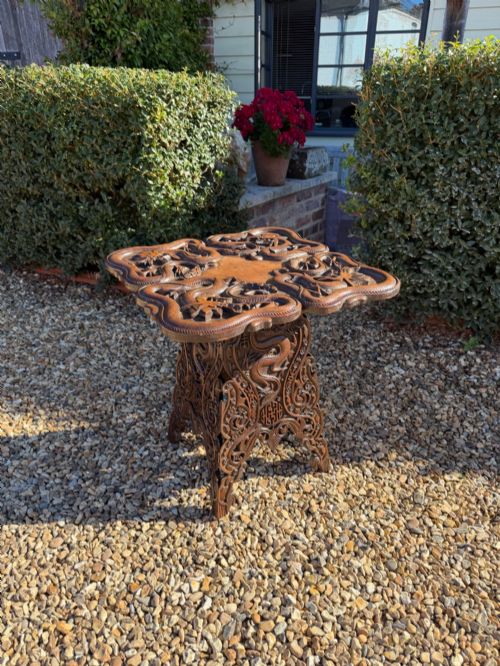
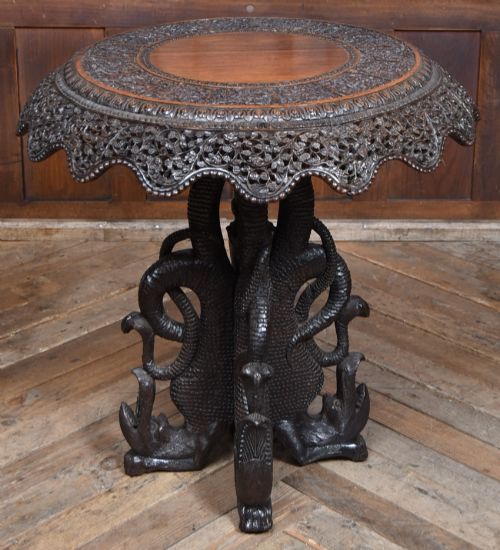
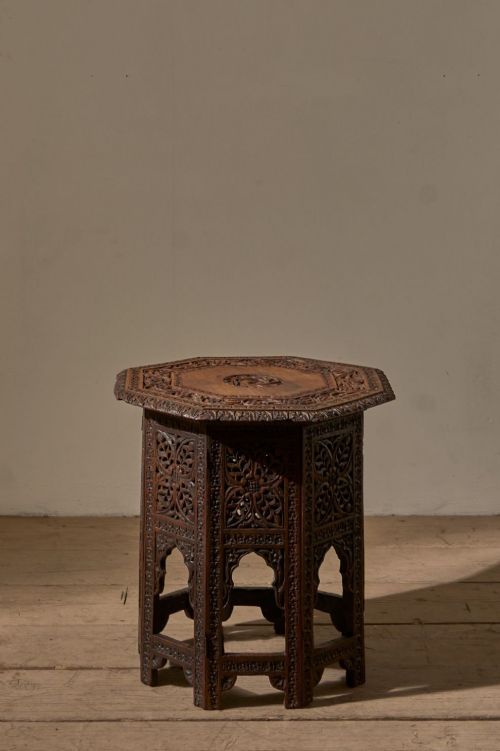
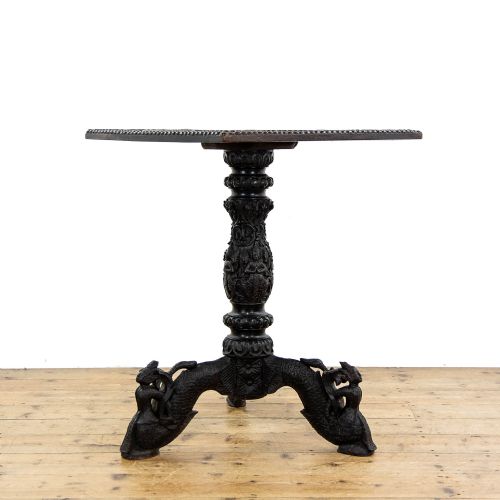
A carved dragon occasional table is a compact surface defined by deep relief work depicting traditional serpentine dragons, appearing across nineteenth-century and early twentieth-century Asian export and Anglo-Indian designs. Buyers hunting for this specific form generally encounter side tables, octagonal tables, and nested sets featuring vigorous surface ornamentation. These items served as functional display pieces for the home, combining utility with distinct cultural motifs.
The selections recorded here span from the mid-nineteenth century through the nineteen-twenties, incorporating Chinese export, Anglo-Burmese, and Chinoiserie styles. Forms range from single centre tables and marble-topped occasional pieces to nests of four tables that stack neatly when not in use. Hardwood construction dominates the offerings, with occasional variants featuring glazed cinnabar lacquer or glass inserts.
How they were made
Makers utilised dense tropical timbers such as padauk wood, rosewood, and general hardwood, chosen for their ability to hold intricate, deep-relief carving without splintering. Artisans carved the sinuous bodies of dragons, scales, and cloud scrolls directly into the solid timber or applied lacquer techniques over structural cores.
Insets of marble or glass frequently provide a smooth, flat surface set within the heavily carved wooden frames of the tables. Construction methods combined traditional joinery with intensive hand-chiselling, requiring skilled labour to articulate the complex scales and claws of the dragon motifs.
Listings feature items dated from eighteen-forty up to nineteen-twenty, predominantly utilising hardwood, rosewood, and padauk wood.
What varies in quality
The depth and undercut definition of the dragon carving separates standard production from superior examples, where scales and claws possess sharp, distinct edges rather than a softened, summary finish. Superior pieces show careful proportioning between the bustling decorative surface and the structural integrity of the legs and apron.
Material selection also dictates the hierarchy, with heavy, figured padauk wood and rich rosewood commanding greater visual weight than simpler soft hardwoods. The integration of contrasting elements, such as fitted marble slabs or intact cinnabar lacquer, further distinguishes the upper tier of these tables.
Liberty
The Carved Dragon Occasional Table Glossary
- Padauk wood
- A heavy, durable tropical timber with a reddish hue favoured for fine nineteenth-century Asian export furniture. It provides a stable base for deep, sculptural carving.
- Cinnabar lacquer
- A technique where multiple layers of vermilion-pigmented lacquer are built up on a core and carved away to reveal intricate designs. It appears on select surface panels of Asian tables.
- Chinoiserie
- European stylistic interpretation of Chinese and East Asian artistic motifs, popular in British and colonial furniture design. It often blends regional construction with fantastical decorative elements.
- Anglo-Indian
- Furniture made in India by local craftsmen adapting traditional British forms to local materials and ornamentation. These pieces frequently incorporate dense regional carving traditions.
- Nest of tables
- A set of graduated tables designed to slide neatly underneath one another to save space. They became particularly popular in nineteenth-century export production.
Carved Dragon Occasional Table: Frequently Asked Questions
What is a carved dragon occasional table?
A carved dragon occasional table is a small decorative stand decorated with traditional East Asian or colonial dragon motifs. These pieces typically function as side tables or display surfaces.
They reflect nineteenth and early twentieth-century export trade and regional craftsmanship, utilising dense tropical hardwoods.
How were these tables used originally?
These tables served as functional display surfaces for lamps, ornaments, or tea wares within domestic interiors. Their compact sizes allowed them to be moved easily around a room as needed.
Nested variants provided extra surface space when entertaining guests and stored compactly away afterward.
How do I care for a hardwood table?
Keep hardwood and lacquer surfaces away from direct heat sources and strong sunlight to prevent timber movement or finish cracking. Dust gently with a dry, soft cloth rather than using harsh chemical polishes.
Maintain stable room humidity to protect both the dense structural timbers and any delicate carved details.
How can I tell the period?
Dating relies on examining the timber species, joinery methods, and the specific stylistic crossover of the carving. Nineteenth-century examples typically feature heavier, hand-chiseled tropical hardwoods.
Later pieces from the early twentieth century often show shifts toward lighter framing or standardised export production techniques.