
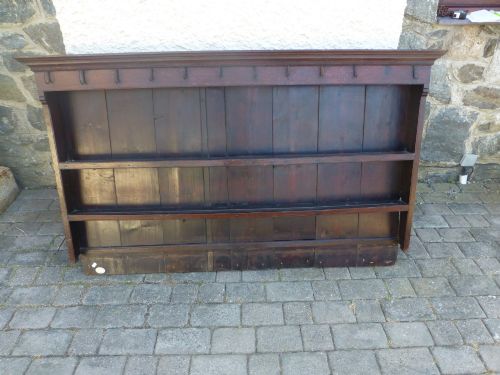
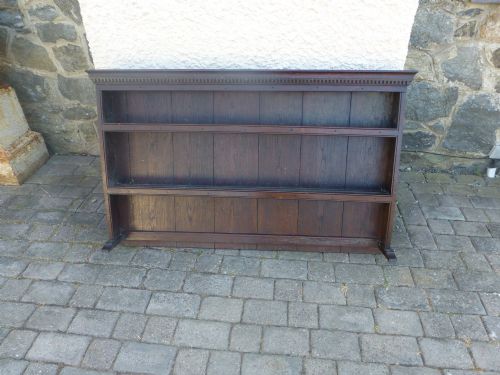
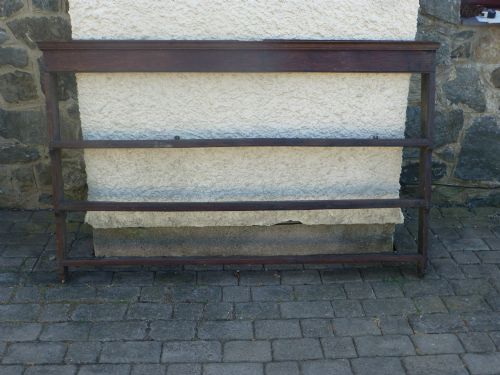
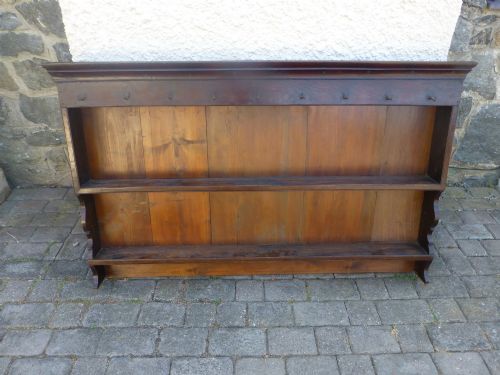
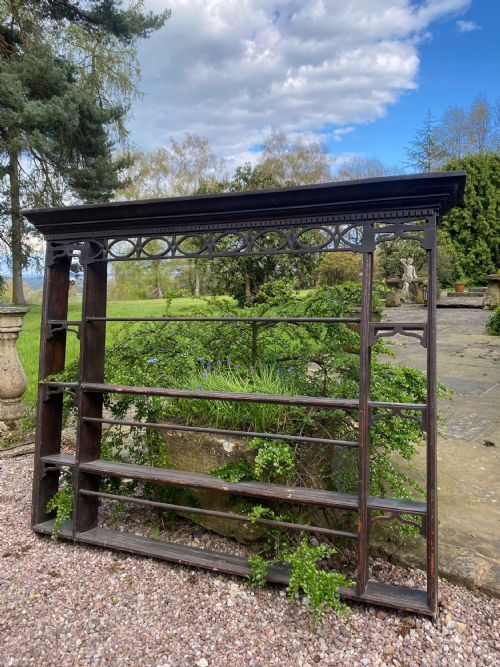
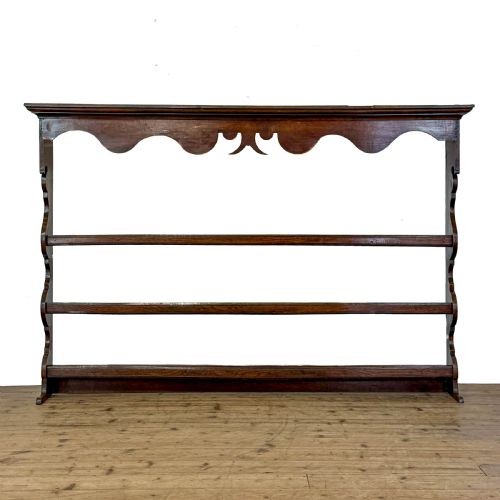
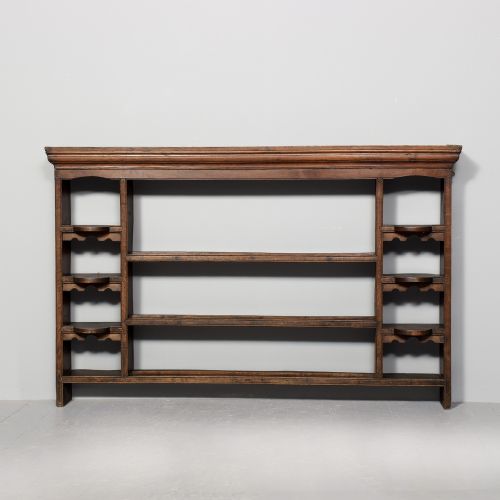


Oak Wall Plate Rack
An oak wall plate rack is a functional timber display shelf designed to hold ceramics safely off the floor.
Oak Wall Plate Rack
An oak wall plate rack provides practical vertical storage for earthenware and ceramic plates in traditional interiors. These pieces appear frequently in 18th-century and Georgian iterations, often identified simply as delft racks or hanging shelves.
Most examples originate from country workshops and domestic settings rather than grand cabinet makers. They mount directly to kitchen or dining room walls to keep everyday tableware within arm's reach.
The layout typically combines slatted plate grooves with open shelving, occasionally featuring auxiliary iron cup hooks along the base framework. Such configurations reflect the daily storage needs of period households.
Materials and construction methods
Timbers are predominantly solid oak, sometimes accompanied by secondary woods like pine for backboards or shelves. Carpenters used simple peg and tenon joints alongside straightforward housing joints to build sturdy load-bearing walls.
Surface hardware often includes forged iron or brass elements such as hanging brackets and cup hooks. These utilitarian fittings were shaped by local blacksmiths to support heavy ceramic plates without flexing.
Materials across the inventory include solid oak, secondary pine, forged iron, and brass fittings.
Distinguishing quality in older racks
Timber selection dictates the baseline character of a rack, with dense grain and rich surface patination setting better examples apart. Proportion and depth also matter, as shallower profiles hold plates securely while heavier mouldings offer architectural presence.
Integrity of the structural frame remains essential, particularly where plate rails meet side uprights. Original backboards, period brass or iron fixtures, and minimal timber replacement preserve the historical utility of the piece.
The Oak Wall Plate Rack Glossary
- Delft rack
- A specialised wall-mounted shelf designed specifically to display glazed earthenware plates upright. These shelves feature frontal wooden retaining rails or strings to prevent crockery from sliding.
- George III
- The stylistic period spanning the mid to late 18th century, characterised by robust proportions and restrained country joinery. Pieces from this era display honest construction methods and practical utility.
- Arts and Crafts
- A design movement emphasising handcraftsmanship and simple vernacular forms, visible in later oak wall shelves. These later pieces often exhibit honest joinery and unadorned surfaces.
- Corinthian column
- A classical architectural detail occasionally incorporated into regional country furniture uprights. It demonstrates how makers adapted formal architectural motifs for domestic wall fittings.
Oak Wall Plate Rack: Frequently Asked Questions
How do I hang a heavy oak plate rack?
These pieces require secure fixing directly into wall studs or masonry using appropriate heavy-duty brackets. Because loaded plates add substantial weight, relying on standard picture wire is insufficient.
Ensure the structure of the rack itself is sound before mounting. Professional installation guarantees the frame bears the downward load safely.
Can these shelves hold modern dinner plates?
Older plate racks were built for specific historical ceramic sizes, which can differ from contemporary tableware. Measure the depth of the plate slots before attempting to display thick modern dinnerware.
Standard side plates and bowls usually fit comfortably within Georgian and 18th-century rail spacings. Deeper display ledges accommodate larger chargers securely.
How do I clean and maintain antique oak?
Dust the timber regularly with a dry, soft cloth to prevent particulate buildup in the grain. Avoid silicone sprays or modern furniture polishes that leave artificial residues on the surface.
Feed dry wood occasionally with traditional beeswax to preserve the natural finish. Keep the rack away from direct heat sources to prevent timber splitting.
Were these racks originally painted?
Many country oak pieces spent centuries in working kitchens and may have received coats of paint or protective wax over generations. Surviving examples often display dark patination accumulated from domestic use.
Stripping older surfaces removes historical evidence of wear, so conservation rather than restoration is generally preferred by collectors.