
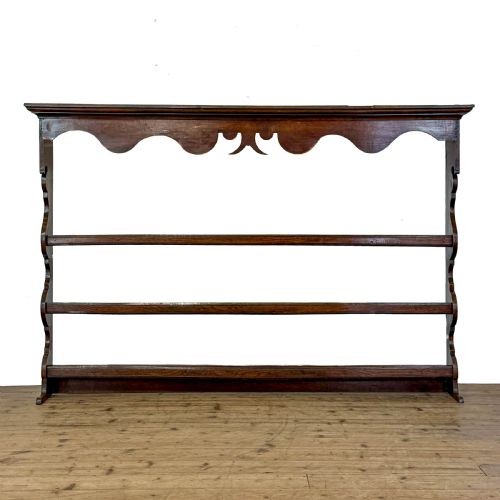


Hanging Oak Plate Rack
A hanging oak plate rack brings warmth and honest utility to a kitchen, holding earthenware and displaying family plates with simple English charm.
Hanging Oak Plate Rack
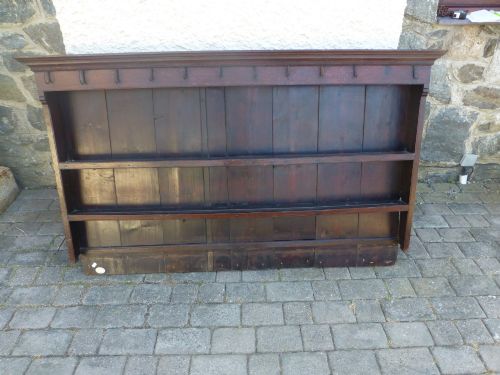
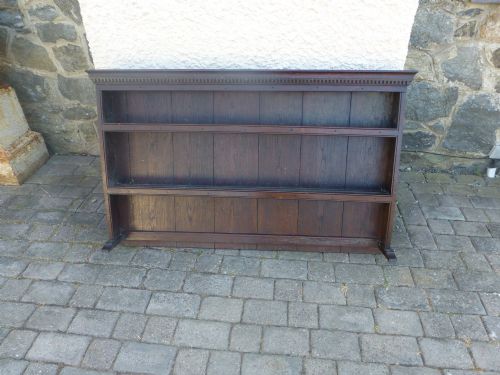
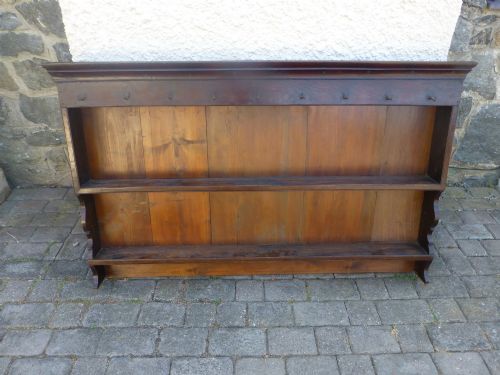
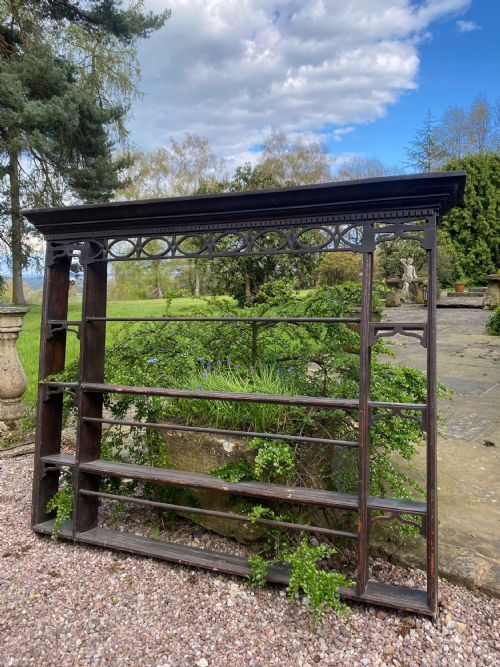
A hanging oak plate rack is a wall-mounted storage fixture designed to display plates and platters upright on slatted shelves. The examples seen on this page primarily date from the seventeenth, eighteenth, and nineteenth centuries, reflecting long domestic traditions of kitchen display and organisation.
Most pieces encountered here belong to the Georgian and eighteenth-century periods, often associated with delftware display above dressers or directly on cottage walls. These functional items combine open shelving with vertical slats or retaining bars to keep plates secure while making them visible.
Beyond the standard Georgian forms, the evidence shows nineteenth-century variants including Arts and Crafts designs, Gothic Revival details, and simpler wall-hanging shelves. These later pieces adapt the traditional format for smaller domestic spaces while retaining the core character of exposed timber.
Materials and Construction
The primary material across these pieces is solid oak, complemented by occasional elements of mahogany, stained oak, or general wood. Joinery relies on traditional carpentry methods suitable for wall-mounted weight-bearing furniture.
Metal components recorded in the evidence include iron and brass, often appearing as structural hardware, hanging brackets, or original cup hooks. These utilitarian metals provide necessary strength and contrast against the warm tones of aged timber.
Some antique racks retain their original iron cup hooks, ready for hanging morning tankards just as they did centuries ago.
Judging Quality
Quality in a hanging oak plate rack rests on the integrity of the timber, the depth of the natural patina, and the balance of its proportions. Pieces with well-preserved surface textures and original structural elements show superior character.
Finer examples demonstrate thoughtful carpentry in the arrangement of slats and plate rails, avoiding heavy-handed restoration. The presence of period fixings, such as original iron cup hooks, adds authenticity to the overall assembly.
The Hanging Oak Plate Rack Glossary
- Delft
- Tin-glazed earthenware commonly displayed on these racks during the seventeenth and eighteenth centuries. These colourful plates created a striking visual contrast against dark oak woodwork.
- Dresser rack
- The upper shelf section of a traditional kitchen dresser, frequently adapted or found as an independent wall-hanging unit. It provides tiered storage specifically dimensioned for shallow tableware.
- Gothic Revival
- A nineteenth-century architectural and decorative style incorporating pointed arches and medieval motifs. Pieces from this period apply ecclesiastical design elements to domestic wall furniture.
- Arts and Crafts
- A late nineteenth-century movement emphasising hand craftsmanship and simple structural honesty. Wall shelves from this era feature clean lines and visible construction methods.
Hanging Oak Plate Rack: Frequently Asked Questions
How do I hang a heavy oak plate rack safely?
Securing a heavy wooden wall fixture requires locating solid wall studs or using heavy-duty wall anchors rated for the combined weight of the timber and ceramics. The mounting points must bear both the static load of the rack and the shifting weight of loaded plates.
Professional installation is recommended for older pieces that lack modern hanging brackets. Distributing the weight evenly across multiple fixing points prevents structural strain on the antique frame.
Can these racks hold modern dinner plates?
Older plate racks were built for historic tableware dimensions, which often meant shallower plates and smaller diameters than many modern sets. Checking the depth of the retaining slats and the spacing between shelves ensures contemporary crockery fits securely.
Some eighteenth-century racks accommodate varied plate sizes through graduated shelf heights. Measuring your largest platters before purchase prevents clearance issues against the upper rails.
How do I tell an 18th-century rack from a 19th-century one?
Eighteenth-century examples typically show hand-sawn timber marks, pegged joints, and darker patinas developed through generations of kitchen use. Their construction details reflect regional vernacular traditions using native oak.
Nineteenth-century pieces, including Arts and Crafts or Gothic Revival variants, often display more uniform machining and machine-cut fixings. Stylistic ornamentation from later periods also helps distinguish Victorian interpretations from Georgian originals.