


Dark Wood Plate Shelf
A dark wood plate shelf displays earthenware and timber grain together, offering both utility and character on any kitchen or dining room wall.
Dark Wood Plate Shelf
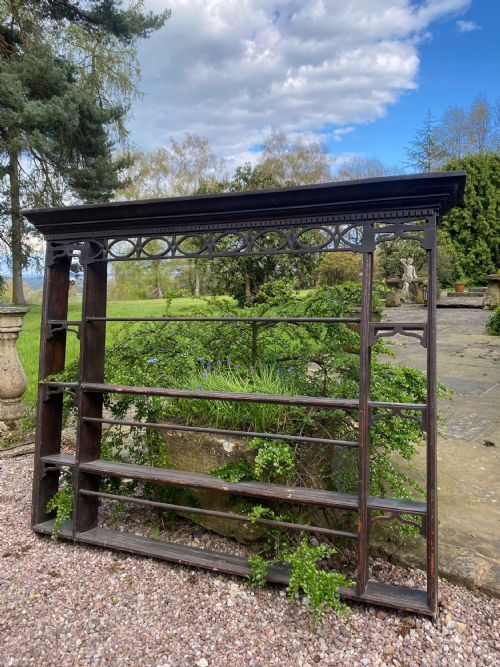
A dark wood plate shelf serves primarily to display ceramics while keeping everyday tableware accessible within domestic spaces. These pieces range from simple wall-hanging racks to the upper sections of larger dressers and cabinets.
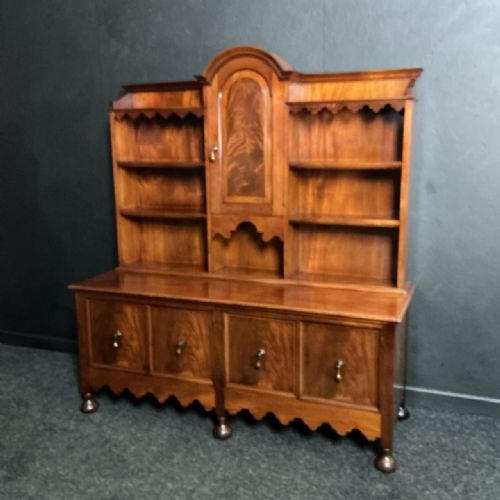
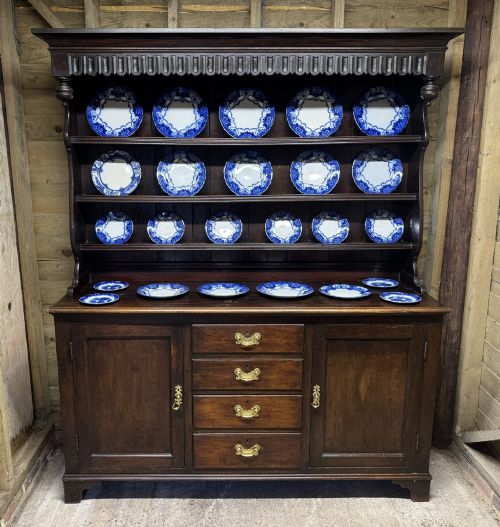
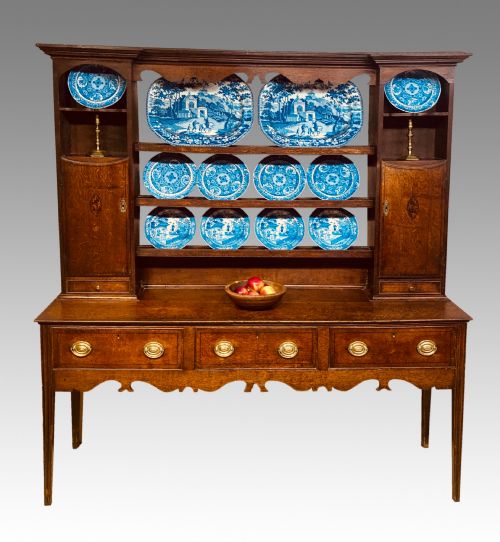
The selections encountered here span several centuries, drawing heavily on English country traditions and formal Georgian cabinet-making. Oak and mahogany dominate the offerings, appearing both as standalone wall racks and as integrated dresser tops.
Early examples from the seventeenth and eighteenth centuries often feature pegged construction and rich patination acquired through generations of domestic use. Later nineteenth-century interpretations bring varied styles including Gothic Revival and Edwardian craftsmanship to the form.
Materials and Construction
Makers relied predominantly on native oak and imported mahogany, selecting timber for strength and grain pattern. Oak appears frequently in country pieces, whilst mahogany lends itself to more formal Georgian and Victorian hanging shelves.
Joinery methods involved traditional pegged mortise and tenon joints, dovetailing in drawer sections where present, and straightforward rebated housing for fixed shelves. Iron and brass fittings such as hanging brackets and hooks provided structural support and functional hardware.
Listings feature woods such as oak, mahogany, and flame mahogany, alongside metal hardware in brass and iron.
Assessing Quality and Character
The distinction between standard utility items and superior examples lies in the depth of timber patination and the crispness of any carved enrichment. Hand-carved details on seventeenth and eighteenth-century oak racks demonstrate a higher tier of craftsmanship than plain functional boards.
Proportion and timber selection drive the overall presence of the piece, with well-figured flame mahogany or richly grained old oak setting finer items apart. Surface preservation, including original finishes beneath centuries of wax, dictates the historical integrity of the piece.
The Dark Wood Plate Shelf Glossary
- Delft plate rack
- A wall-mounted wooden rack designed specifically to display tin-glazed earthenware plates upright against vertical slats.
- Hanging shelves
- Open wooden shelving units built with back panels or brackets intended to be secured directly to a wall.
- Dresser rack
- The upper open-shelved superstructure of a kitchen dresser, sometimes separated and hung independently as a plate shelf.
- Patina
- The surface sheen and darkening acquired by wood over centuries through handling, light exposure, and polishing.
- Flame mahogany
- A veneer cut from the fork of a mahogany tree showing a distinctive fiery, rippling grain pattern.
Dark Wood Plate Shelf: Frequently Asked Questions
How do I hang a heavy wooden plate shelf safely?
These shelves require secure fixing directly into wall studs or masonry using appropriate heavy-duty screws and wall anchors. Given the combined weight of timber and heavy ceramic plates, reliable load-bearing support is essential.
Professional installation ensures the piece remains stable and secure under daily use.
Can these shelves support heavy modern dinnerware?
Historic plate shelves were built to hold traditional earthenware and pewter, which differ in weight and thickness from modern stoneware. Distributing heavier items thoughtfully across the lower boards prevents undue strain on older joints.
Checking the rigidity of the back panels and fixing brackets provides peace of mind when loading the shelves.
How do I tell an 18th-century rack from a later reproduction?
Eighteenth-century examples show hand-cut joinery marks, irregular tool signatures, and natural timber shrinkage over centuries. The presence of hand-forged iron nails or pegged joints rather than modern screws points to genuine age.
Patina also offers a reliable indicator, showing deep integration into the wood fibres rather than a uniform modern surface finish.
How should I clean and maintain dark wood shelves?
Regular dusting with a dry, soft cloth prevents particle buildup without harming the historical surface. Feeding the timber occasionally with a traditional beeswax polish maintains the moisture and lustre of the old wood.
Avoid liquid cleaners and placement near direct heat sources to prevent the timber from drying out or splitting.