
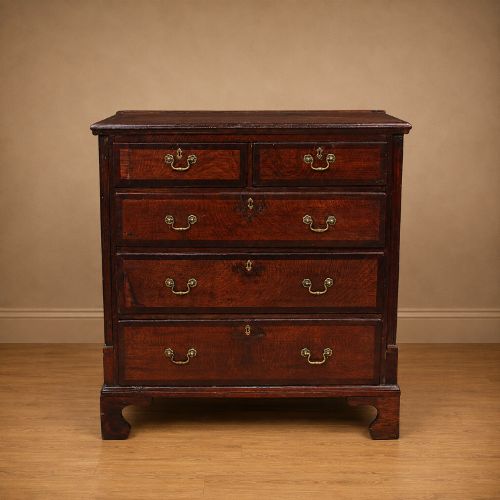
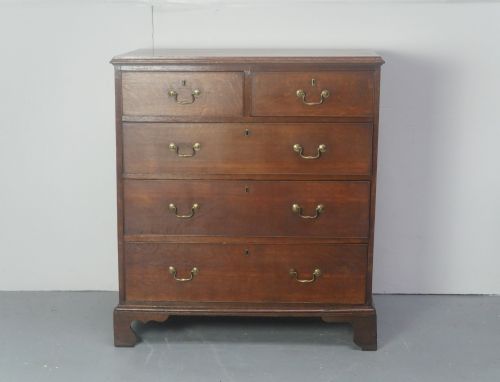
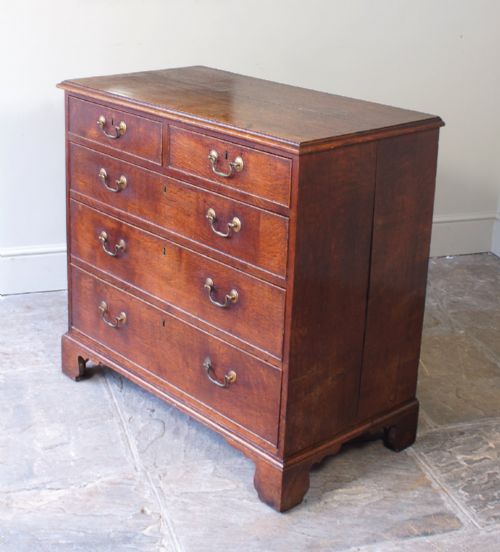
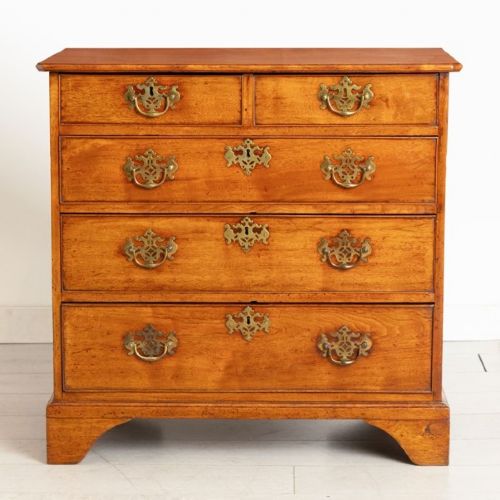
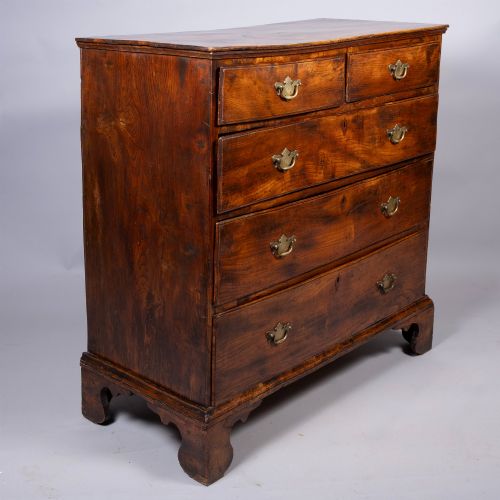
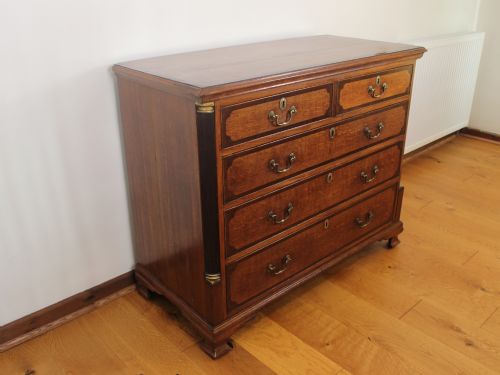

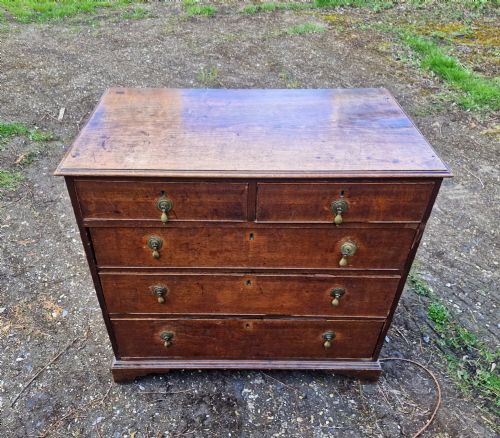
Oak Two Over Three
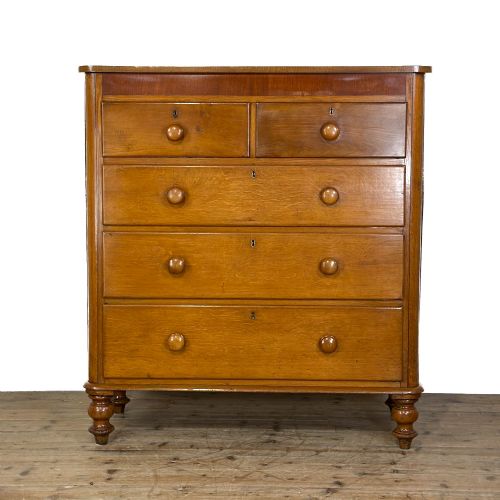
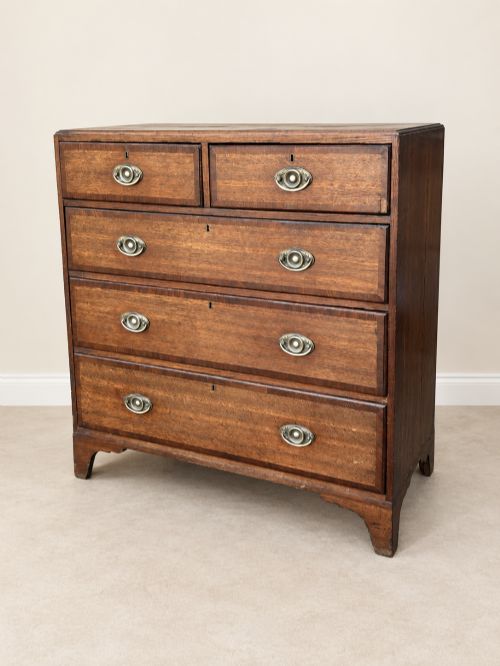
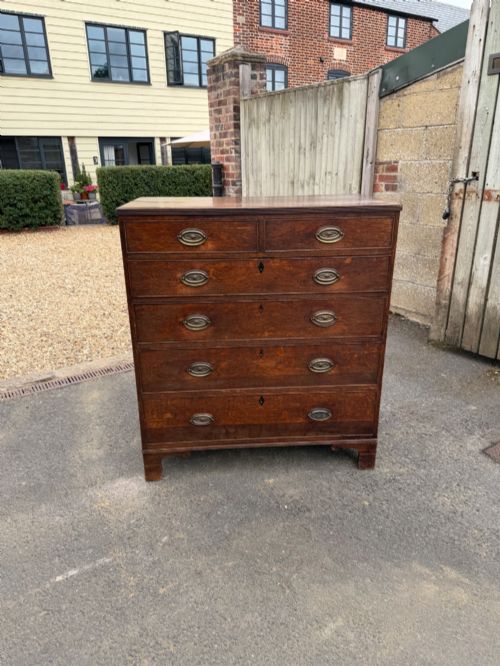
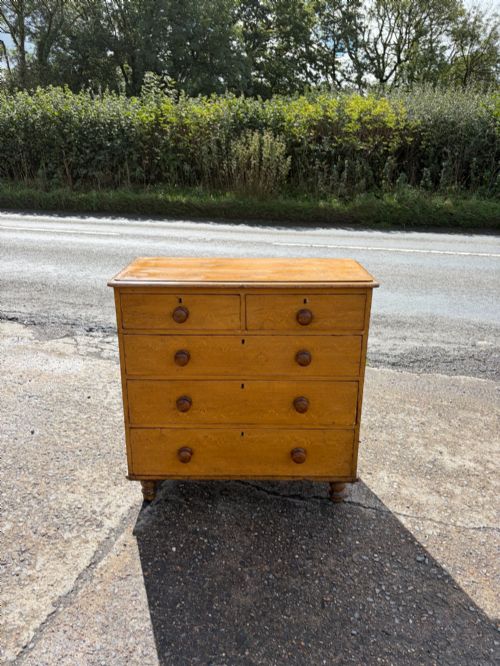
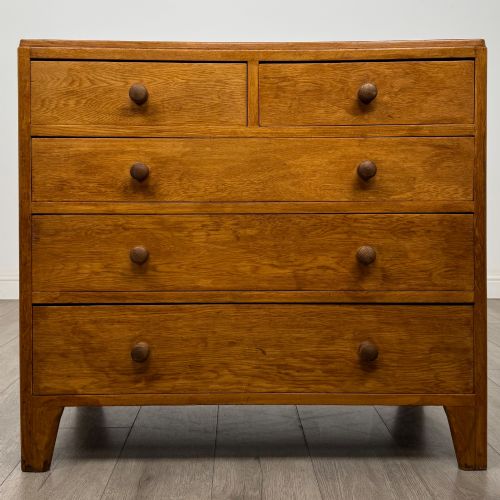
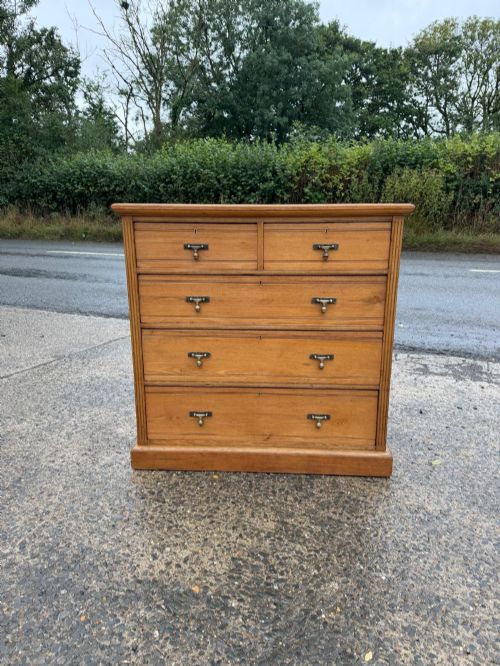
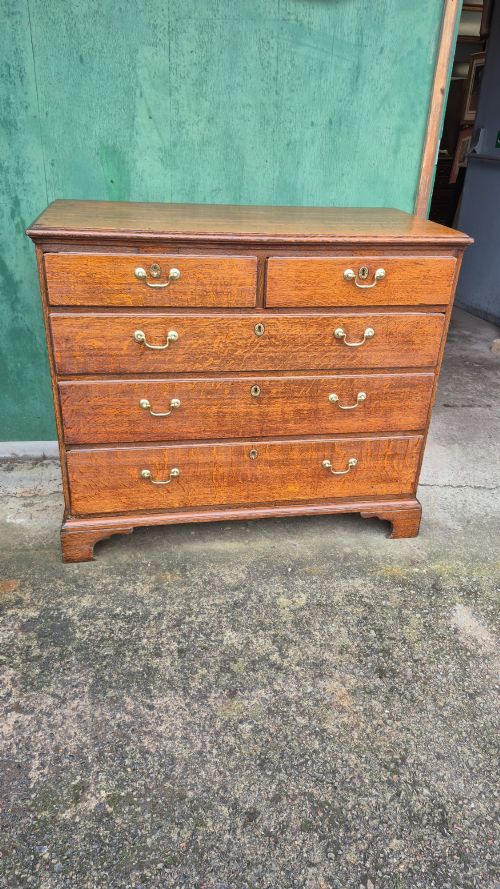
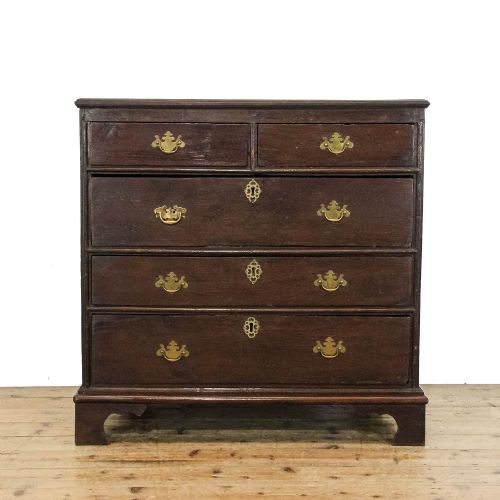
Oak two over three chests of drawers offer robust storage with two small upper drawers above three large ones.
Oak Two Over Three
An oak two over three chest of drawers presents a practical arrangement of two smaller drawers positioned above three graduating full-width drawers below. This specific configuration forms a balanced facade that has remained useful for centuries.
The pieces on this page span the 17th century through the Georgian and Regency periods, showing how cabinet makers adapted the form over generations. Most examples you encounter here rely on solid oak timber and date from the 18th century.
Chest of drawers forms range from standard straight fronts to narrow proportions with splayed feet. Regional English country workshops as well as more formal Georgian makers produced these utilitarian storage items.
Construction and Materials
Makers built these carcases primarily using solid oak, occasionally incorporating secondary timbers such as elm, fruitwood inlay, and walnut. Timber selection depended on regional availability and the desired finish of the workshop.
Cabinet makers enhanced surface appearance through mahogany crossbanding and contrasting stringing on drawer fronts. Drawers frequently retained original brass hardware and stood upon bracket feet or splayed feet.
Oak Two Over Three Retail Price Guide 2026
Typical asking prices for oak two over three among the pieces listed under this phrase on Sellingantiques today, from the lower quarter to the upper quarter. They describe what is for sale here now, not the wider market.
Current listings feature pieces spanning the 17th century through to the Regency period, predominantly constructed from oak with occasional mahogany crossbanding.
Assessing Quality and Proportion
Quality in these chests rests upon timber selection, such as figured elm or golden oak, and the crispness of secondary crossbanding. Finer examples display careful attention to drawer linings and timber grain continuity across the front.
Proportions also dictate distinction, separating standard utility pieces from smaller, narrower formats or those retaining untouched bracket feet and original handles. The integration of decorative inlays elevates the visual presence of the carcase.
The Oak Two Over Three Glossary
- Crossbanding
- A decorative border of veneer laid around the perimeter of a drawer front with the grain running perpendicular to the centre panel. This technique frames the primary timber and adds visual contrast.
- Bracket foot
- A simple foot formed by two pieces of wood mitred together at the corner of a case piece, shaped in profile as an ogee or simple bracket. It supports the weight of the chest above floor level.
- Splayed foot
- An angled foot flaring outward slightly from the base of the chest, commonly seen on later Georgian and Regency designs. It provides stability while lightening the visual mass of the furniture.
- Figured timber
- Wood grain containing natural distortions such as curls or ripples that create distinctive patterns when polished. Cabinet makers prized such logs for prominent drawer fronts.
Oak Two Over Three: Frequently Asked Questions
What is an oak two over three chest?
An oak two over three chest is a drawer unit featuring two smaller drawers side by side at the top and three wider drawers stacked underneath. This classic layout provides versatile storage for garments and smaller items.
The arrangement became standard during the 18th century and persisted into the Regency era. It remains a practical choice for bedrooms and living spaces today.
Are these chests suitable for daily use?
These chests were originally built for heavy domestic storage and remain robust enough for daily use. The deep lower drawers accommodate bulky garments easily.
Drawer runners and internal guides may require occasional maintenance by a conservator to ensure smooth operation. Proper humidity control in the home protects the antique oak timber.
What is crossbanding?
Crossbanding is a decorative technique where a border of veneer is applied to the edges of a drawer front. The grain runs across the width of the band rather than following the main panel.
This method highlights the craftsmanship of the piece and creates a framed effect. Mahogany was frequently used to crossband oak carcases during the Georgian period.