




Early Nineteenth Century Chest
An early nineteenth century chest is a sturdy timber storage piece built for practical use, carrying the rich patination of Georgian, Regency, and Victorian workmanship.
Early Nineteenth Century Chest
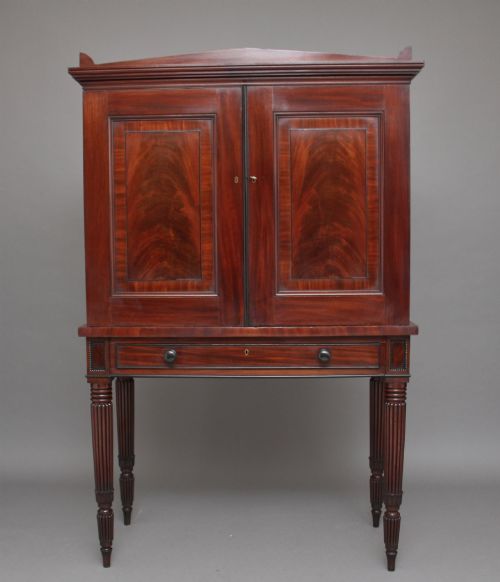
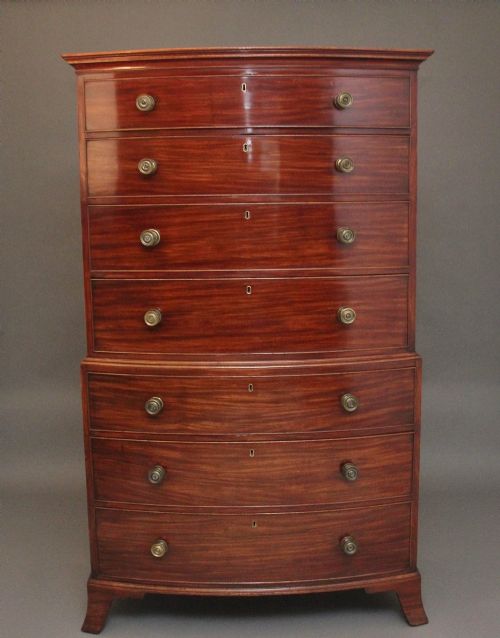
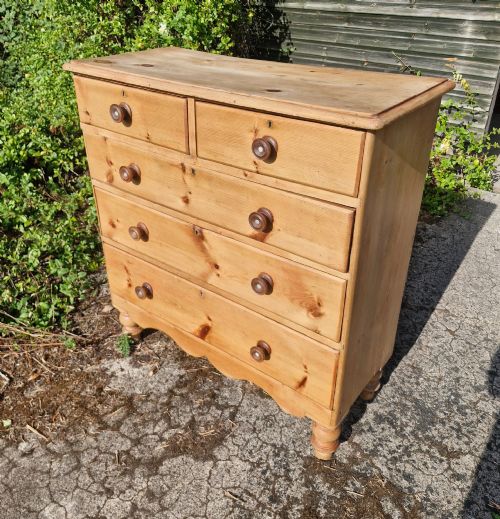
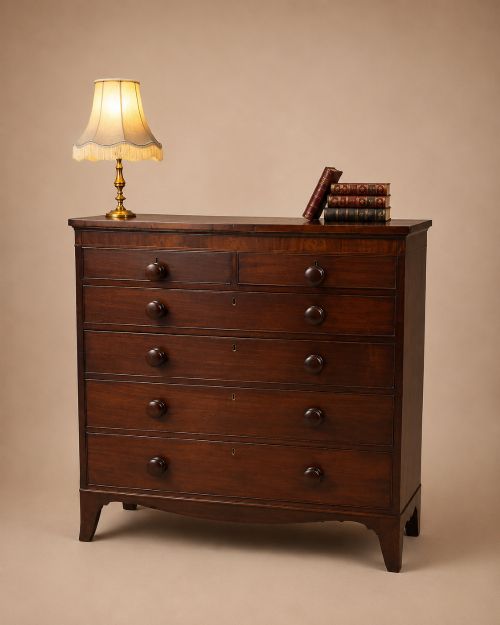
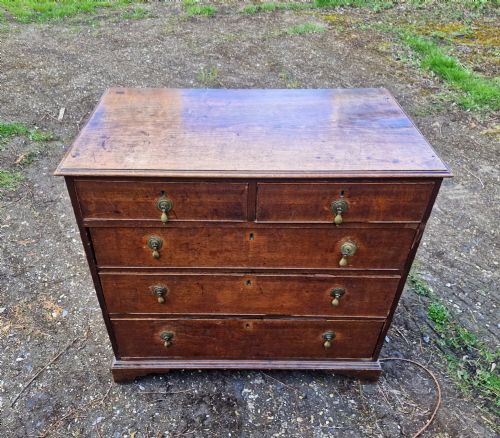
An early nineteenth century chest serves as a primary storage vessel, bringing solid proportions and heavy timber construction into domestic spaces. These pieces emerge across Georgian, Regency, and Victorian periods, taking forms from simple five-height drawer configurations to bowfronts and tallboys.
The version most commonly met on this page is the mahogany chest of drawers, often featuring a bowfront profile or traditional cockbeaded drawer edges. Alongside standard bedroom drawers, the selection encompasses specialised pieces like oak storage chests, satin birch examples, and painted pine seaman's trunks.
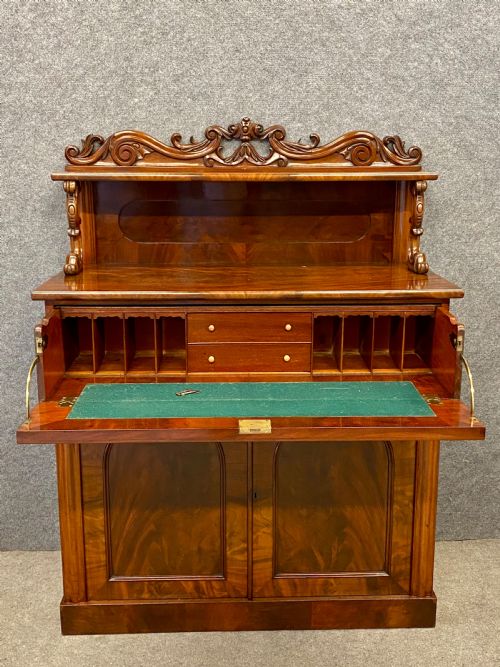
Regional variations and stylistic cross-currents appear frequently among these listings, including Swedish provincial oak, Scottish formatting, and Biedermeier secretaire commodes. Each piece reflects the specific domestic requirements of its era, utilising dense native and imported woods to ensure longevity.
Indicators of superior execution
Quality rests upon the selection of timber and the precision of the joinery, particularly in the tightness of the dovetails and the grain matching across drawer fronts. Superior examples maintain their original brass fittings, backboards, and sliding mechanisms without modern interventions or replacement timbers.
The integrity of the structural carcass and the depth of the natural wax finish dictate the standing of a piece. Finer chests display careful attention to internal secondary woods and uniform drawer running, whereas lesser examples show compromises in timber selection or heavy structural alterations.
Some seaman's chests carry painted inscriptions like 'Emblem of Liberty', offering a glimpse into the personal sentiments of early nineteenth-century sailors.
Hutchings of Winchester
The Early Nineteenth Century Chest Glossary
- Bowfront
- A curved front profile that projects outward in an arc, popular in cabinet making during the Regency and Georgian periods. This shape requires specialised joinery to bend or shape solid timber and veneers accurately.
- Tallboy
- A tall chest of drawers consisting of one chest stacked upon another, maximising vertical storage capacity. These pieces often combine a narrower upper section with a broader base.
- Secretaire
- A desk disguised as a chest of drawers or commode, featuring a drop-down writing flap that conceals small drawers and pigeonholes. It provides dual functionality for writing and general storage.
- Cockbeading
- A narrow, rounded moulding applied to the edges of drawer openings to frame the front and conceal shrinkage gaps. This detail adds both structural definition and visual neatness.
- Teapoy
- A small box or chest supported on a central pillar or legs, originally designed to store loose tea leaves. They often contain internal compartments and mixing bowls.
Early Nineteenth Century Chest: Frequently Asked Questions
How do I identify a Regency chest?
A Regency chest generally exhibits clean architectural lines, often utilising figured mahogany veneers, rosewood, or brass inlay alongside swept bracket feet or ring turned legs.
Proportions tend to be crisp and restrained, reflecting the neoclassical design influences popular during the early decades of the nineteenth century.
How should I care for mahogany timber?
Maintain mahogany surfaces by applying traditional beeswax sparingly and buffing with a soft cloth to preserve the natural grain and deep patination.
Keep these chests away from direct heat sources and rapid humidity shifts to prevent timber splitting and veneer lifting.
What distinguishes a tallboy from a standard chest?
A tallboy stacks two distinct chest sections vertically, creating a commanding piece of furniture with significantly greater height than width.
This format provides extensive vertical storage without occupying a large floor footprint in domestic settings.