


Oak Student Bureau
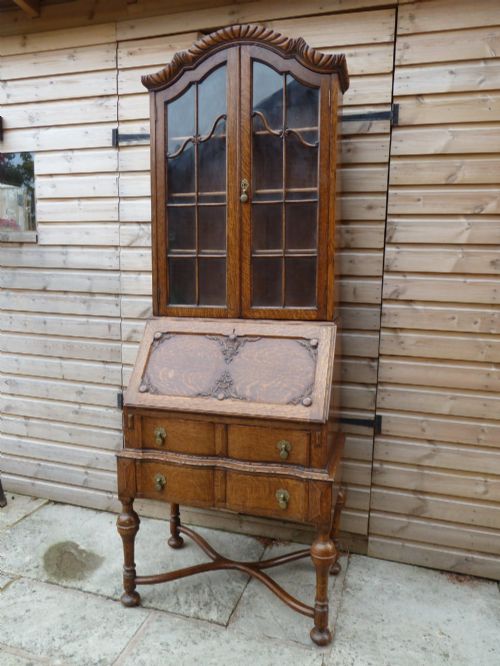
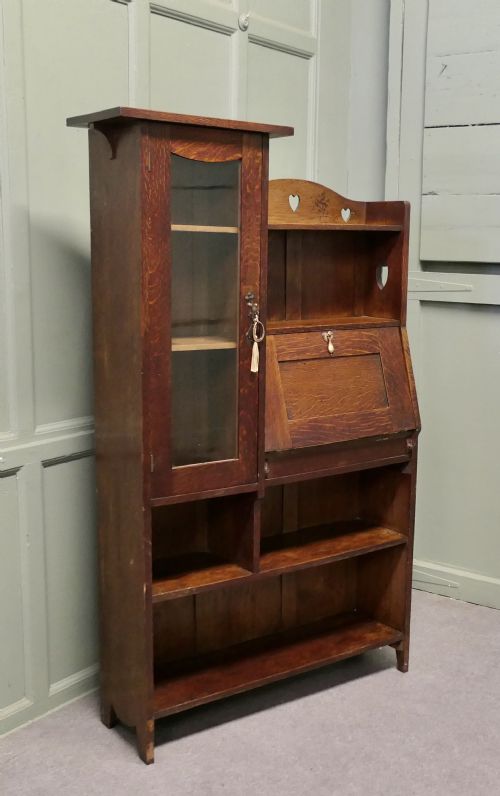
An oak student bureau is a compact writing desk combining storage and workspace, most often found in golden oak from the Edwardian period or Arts and Crafts movement.
Oak Student Bureau
The search for an oak student bureau brings up compact writing desks designed for smaller spaces, typically combining a fall-front writing surface with lower shelving or bookcase sections. These pieces mostly date from the late Victorian and Edwardian eras, alongside the wider 1900 to 1920 period.
Most examples on this page reflect the aesthetic of the Arts and Crafts movement or Jacobean Revival styles, using solid timber or oak veneers. They range from narrow writing desks to larger bureau bookcases with fitted interior compartments for stationery.
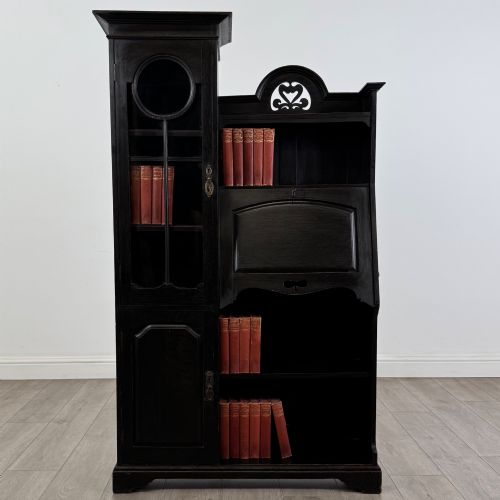
Buyers encounter variations such as golden oak student bureaus, rustic finishes, and ebonised details. Bureau bookcases provide extra height and display space through leaded glass doors above the writing flap.
How they were made
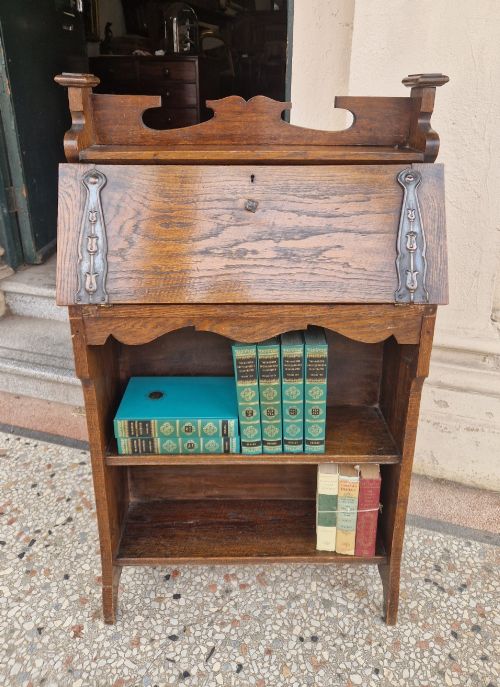
Makers utilised solid oak and oak veneers, shaping the timber to serve both utilitarian student needs and decorative Arts and Crafts or Jacobean revival tastes. Metal hardware such as brass handles and copper details were incorporated for functional strength and visual contrast.
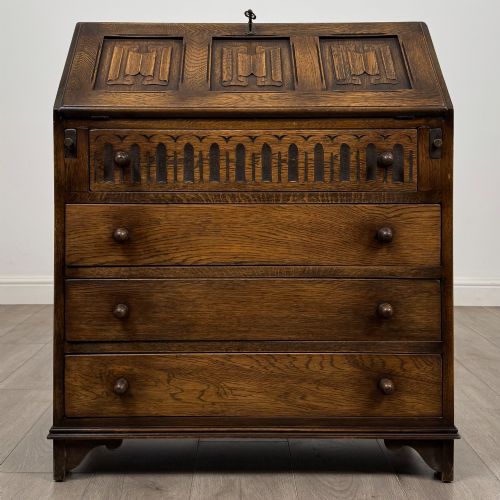
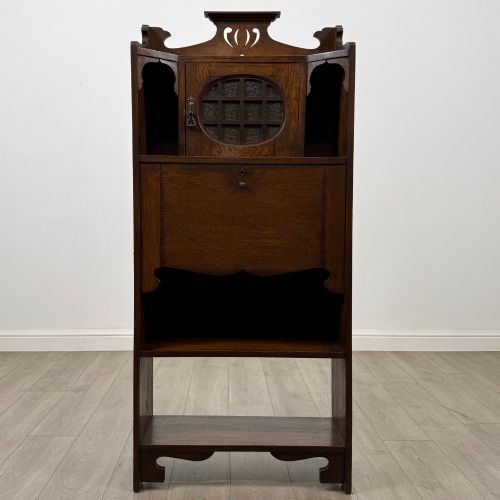
Some bureau bookcases integrated glass panels, leaded framing, and iron fittings to complete the upper cabinet doors. Carved motifs such as linenfold patterns and applied geometric mouldings added surface texture to the structural framing.
Some student bureaus manage to pack a desk, a bookcase, and enough hidden pigeonholes to make anyone feel like an Edwardian scholar.
What varies in quality
Construction methods dictate durability, distinguishing solid timber carcases and well-fitted internal pigeonholes from lighter pieces built with simpler joints. The integration of maker details, such as named firm stamps, marks out superior workshops.
Decorative execution separates standard production items from finer examples, visible in the depth of carved linenfold panels, the handling of ebonised finishes, and the quality of stained or leaded glasswork in the bookcase doors.
Harris Lebus·James Shoolbred & Co
The Oak Student Bureau Glossary
- Bureau
- A writing desk featuring a sloping hinged flap that opens to reveal a fitted interior of pigeonholes and small drawers. This form provides a concealed workspace when closed.
- Student bureau
- A compact variant of the standard writing desk, often incorporating open shelving or a small bookcase beneath or above the writing surface. These pieces were built for limited interior spaces.
- Bureau bookcase
- A tall combination piece uniting a sloping writing desk base with an upper cabinet enclosed by doors. The upper section frequently incorporates glass or leaded panels for book storage.
- Arts and Crafts
- A design movement prioritising traditional craftsmanship, simple forms, and visible construction methods over mass-produced ornamentation. It heavily influences the oak furniture of this era.
- Linenfold
- A style of relief carving used on wooden panels to imitate folded cloth or linen. It appears frequently on the fall-fronts and doors of period furniture.
- Jacobean Revival
- A style drawing inspiration from seventeenth-century English design, characterised by dark oak finishes, geometric mouldings, and robust turned supports.
Oak Student Bureau: Frequently Asked Questions
What is an oak student bureau?
An oak student bureau is a compact writing desk featuring a drop-down writing flap and built-in shelving or a bookcase.
These pieces were designed for smaller studies and domestic spaces during the late Victorian and Edwardian periods.
How do I date an oak student bureau?
Dating relies on stylistic markers such as Arts and Crafts simplicity, Jacobean revival mouldings, or Edwardian proportions.
Materials like brass and leaded glass also help place pieces within the late nineteenth and early twentieth centuries.
Where should I place a student bureau?
These compact desks suit living rooms, studies, or hallways where floor space is limited.
The combination of a workspace and shelving makes them practical for daily writing and book storage.
What styles are common for these desks?
Arts and Crafts designs predominate, often featuring clean lines in golden or light oak.
Other examples draw on Jacobean Revival styles with dark oak finishes and carved linenfold details.