
Oak Storage Settle
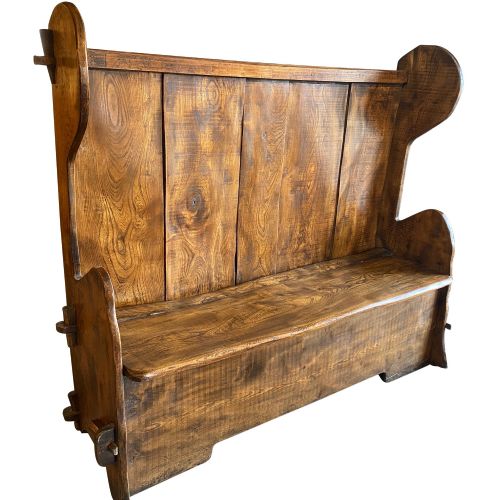
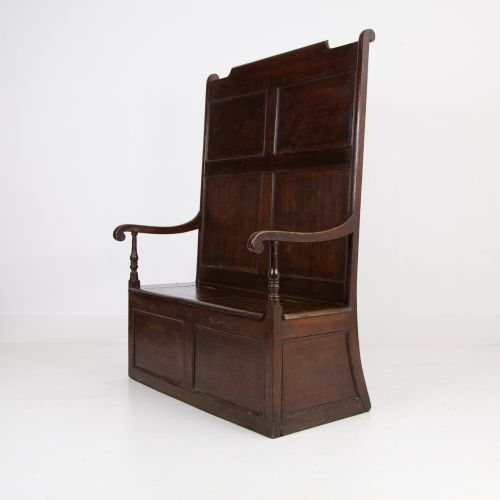
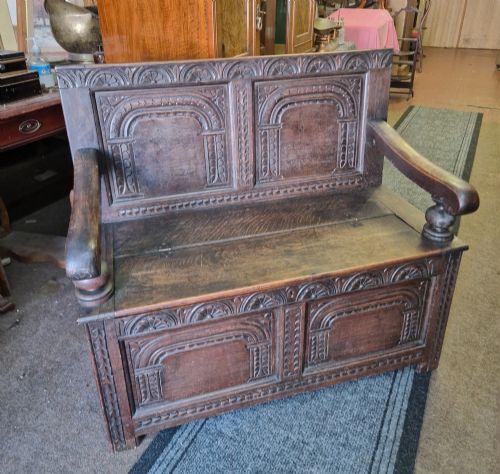
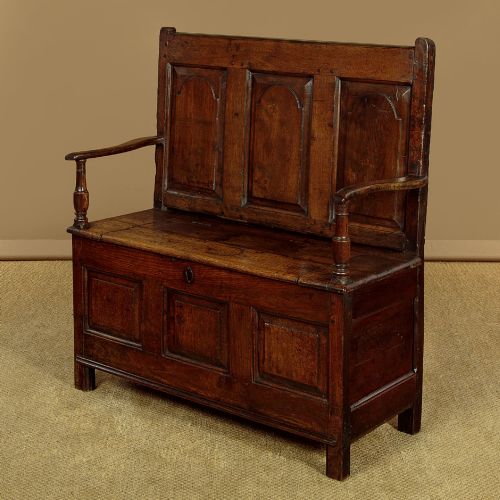
An oak storage settle is a substantial wooden seat combining a high back with a lidded box base, providing both a place to sit and a concealed compartment.
Oak Storage Settle
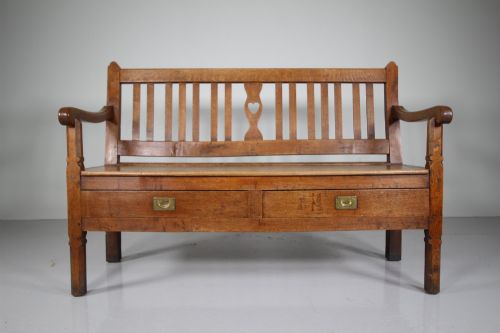
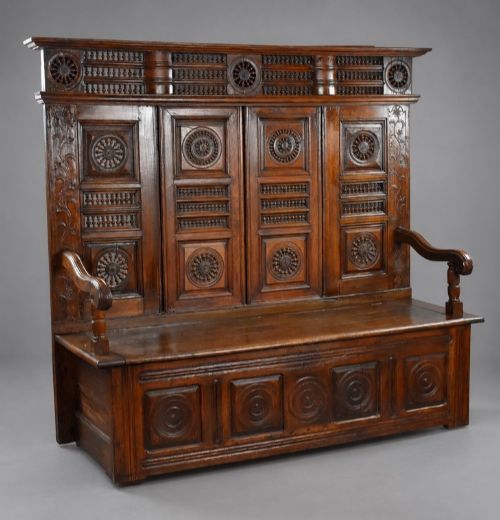
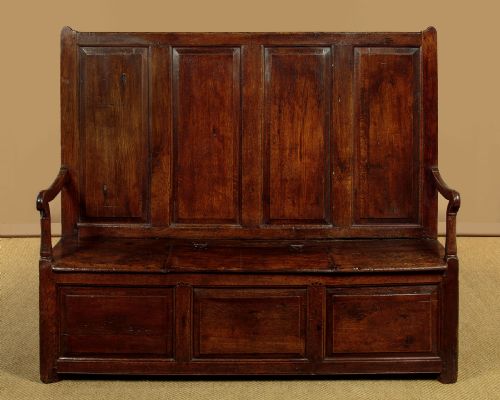
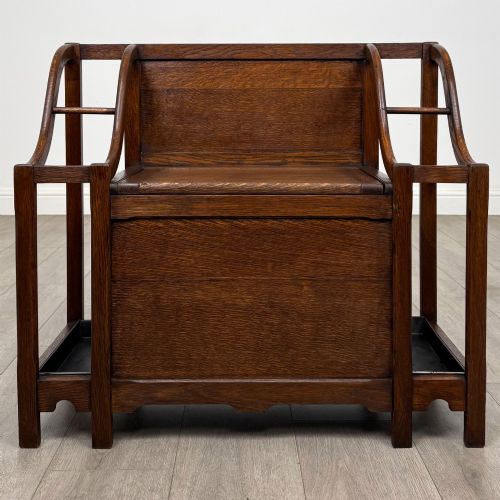
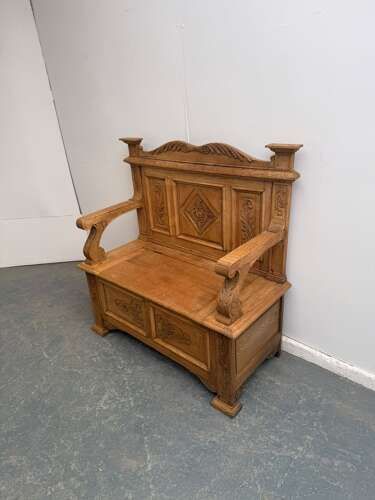
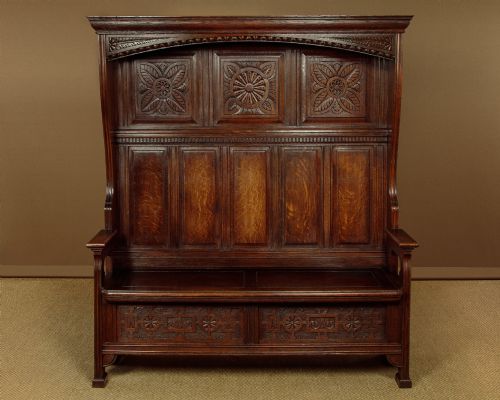
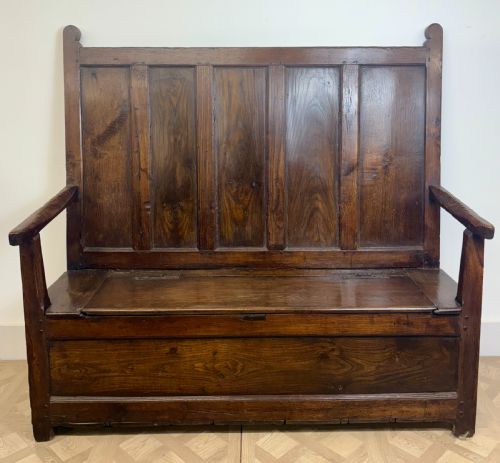
An oak storage settle serves as a traditional dual-purpose seating and container unit, found primarily in hallways and living spaces across several historical eras. When searching for an oak storage settle, a buyer encounters pieces originating from the seventeenth century through to the twentieth century, including styles such as Jacobean Revival, Georgian, Victorian, and Edwardian.
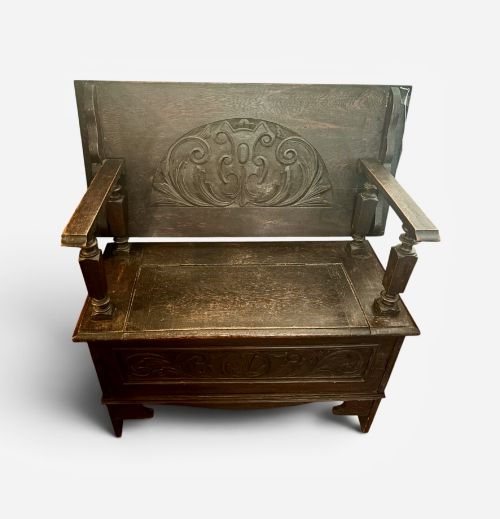
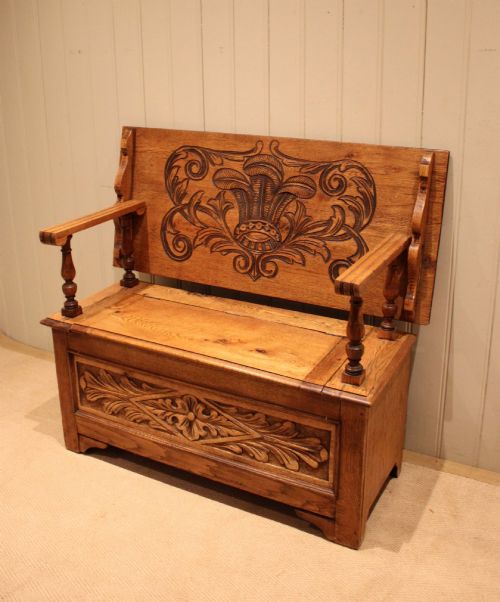
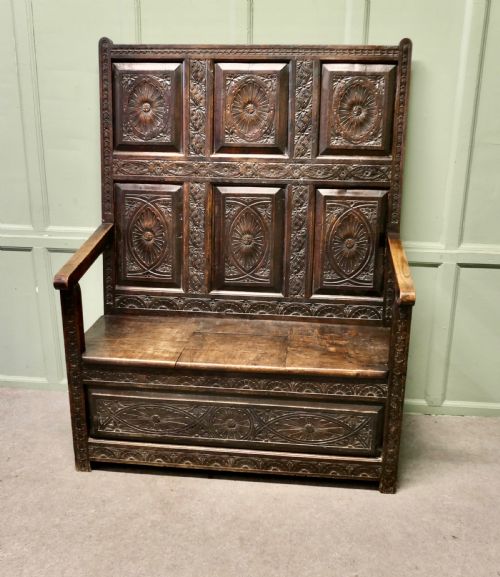
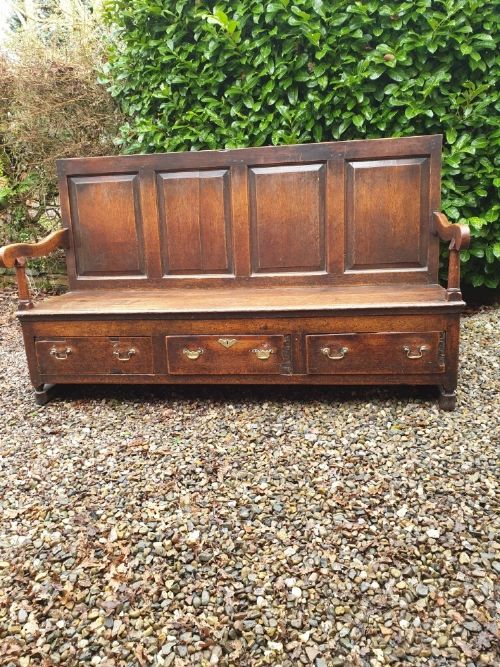
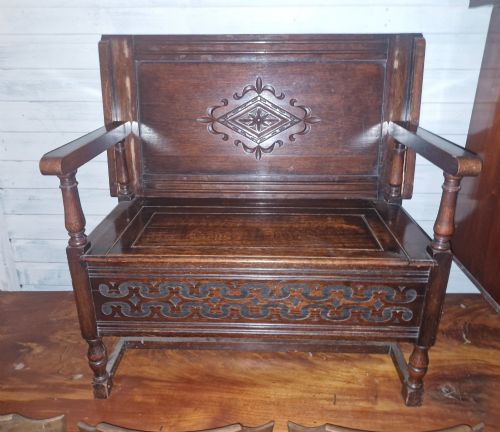
The most common forms on this page include high-back box settles, panelled seats, and convertible monk's benches that double as tables. These items frequently display regional variations, such as Welsh and North Country constructions, alongside country house and Gothic revival designs.
Makers utilised timber to build robust domestic furniture designed to withstand heavy daily use in communal areas. The integration of lift-up lids, drawers, and cupboard backs allows these benches to function as practical storage for boots, coats, and household goods.
How they were made
Craftsmen built these settles using solid timber framing, predominantly oak, supplemented by secondary woods like ash, elm, and metal hinges or brass fittings. Panels were traditionally held within grooved frames to allow for natural wood expansion and contraction over centuries.
Construction techniques evolved from early seventeenth-century heavy framework and pegged joinery towards lighter Victorian and Edwardian production methods. Surface finishing ranged from plain waxed timber to elaborate relief carving, panelled backs, and applied decorative mouldings.
Several Victorian examples feature fierce Green Man carvings, quietly glaring at everyone who drops their keys on the lid.
What varies in quality
Quality in these seating units rests upon the integrity of the timber, the depth and crispness of any carved decoration, and the survival of original structural elements like the box base and hinges. Earlier seventeenth and eighteenth-century examples often display superior joinery and rich patination developed through centuries of handling.
Later nineteenth and twentieth-century revival pieces vary according to the weight of the solid oak used and the precision of the panel assembly. Pieces retaining their original configuration without extensive timber replacement command greater appreciation among collectors.
Shapland & Petter·Liberty
The Oak Storage Settle Glossary
- Settle
- A wooden bench with a high back, solid arms, and a closed base. It was historically positioned near firesides to block draughts.
- Box settle
- A variant featuring a hinged seat lifting to reveal a storage compartment underneath. This design maximised utility in domestic interiors.
- Monk's bench
- A convertible piece of furniture featuring a folding back that tilts forward to form a table top over a box seat. It is commonly associated with later revival periods.
- Panelling
- Wooden sheets fitted within a surrounding frame to form decorative backrests or sides. This technique provided structural stability to large furniture.
- Patina
- The surface sheen and deep colour developed by timber over years of handling, polishing, and ageing. It serves as an indicator of genuine antiquity.
- Wingback
- A style of seating where the upper sides of the backrest extend forward. This feature deflected cold air in large, draughty halls.
Oak Storage Settle: Frequently Asked Questions
What is an oak storage settle used for?
These pieces provide a dual function of seating and enclosed storage within an interior space. Historically placed in hallways or kitchens, the lidded box compartment held heavy textiles, boots, and household supplies.
The high back also served a practical purpose by blocking cold draughts in large rooms before central heating existed. Today, they function as focal points in entryways while continuing to provide concealed storage.
How do I date an oak settle?
Dating relies upon examining construction methods, timber characteristics, and stylistic details. Seventeenth-century examples typically feature pegged frame-and-panel construction with heavy proportions and simple mouldings.
Later Victorian and Edwardian interpretations often incorporate machine-sawn timber, crisper relief carving, and revival motifs such as Green Man masks or Gothic tracery. Examining the interior of the storage box reveals tool marks and wear patterns consistent with specific eras.
Are these benches comfortable to sit on?
Traditional wooden settles have upright, rigid backs and flat seats designed for utility rather than lounging. They were intended for brief seating periods in communal areas rather than extended relaxation.
Buyers often add loose cushions or pads to the seat base to improve comfort for modern daily use. The solid wooden arms and high back remain supportive for use in an entrance hall.