
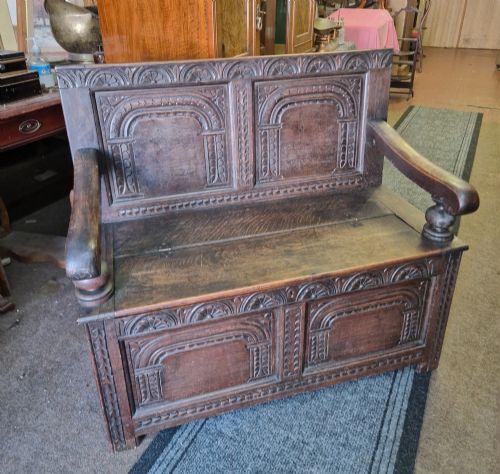
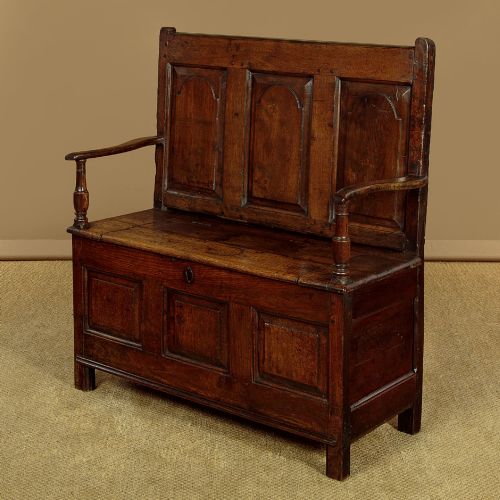
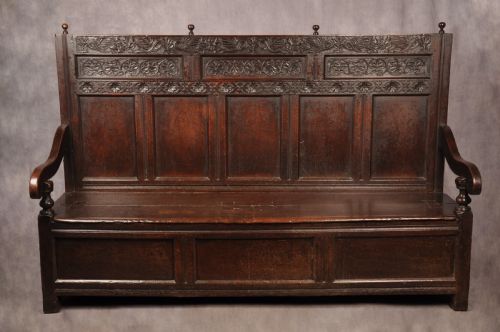

Oak Coffer Seat
An oak coffer seat combines sturdy timber storage with a sturdy place to sit.
Oak Coffer Seat
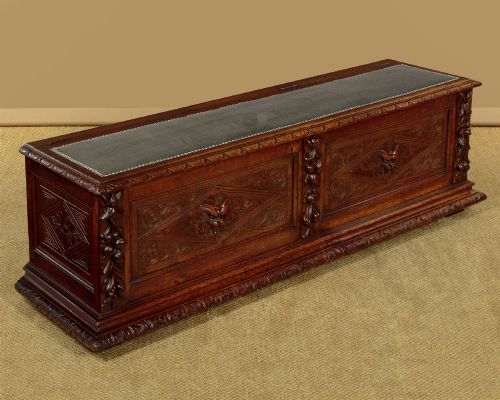
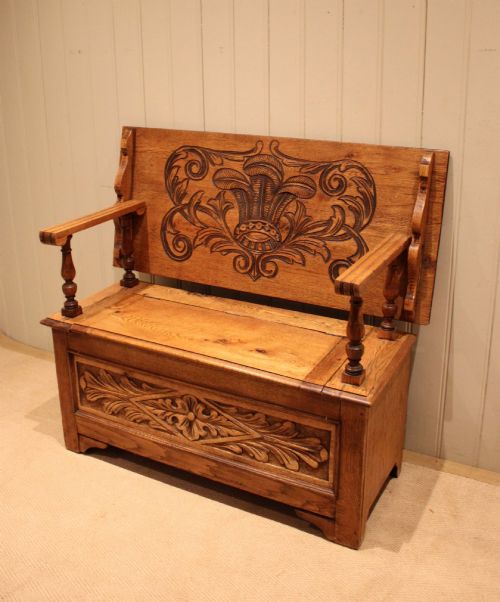
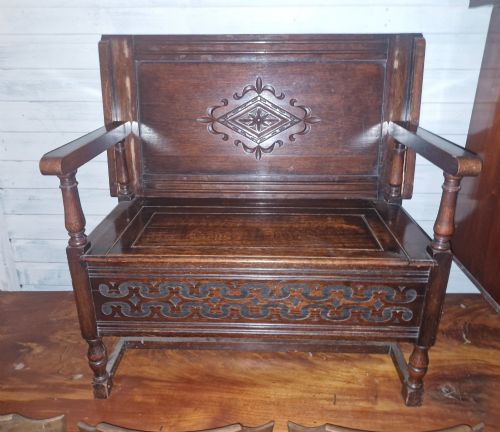
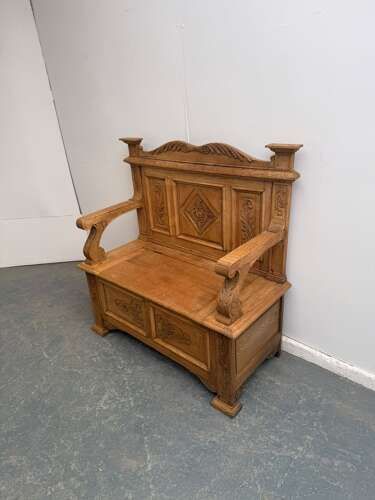
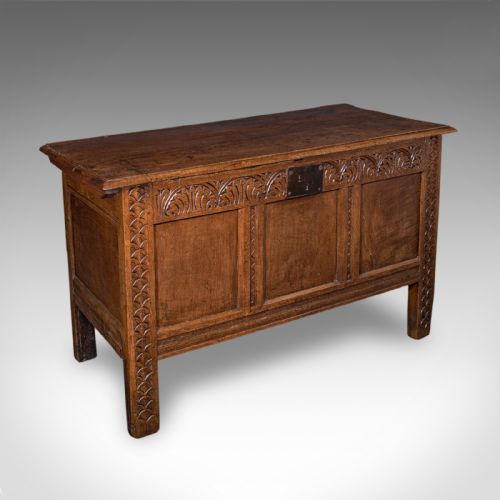
An oak coffer seat serves as a dual-purpose item of furniture, functioning primarily as a storage chest with an integrated bench or hinged top for seating. These pieces bridge the gap between traditional blanket chests and hallway seating.
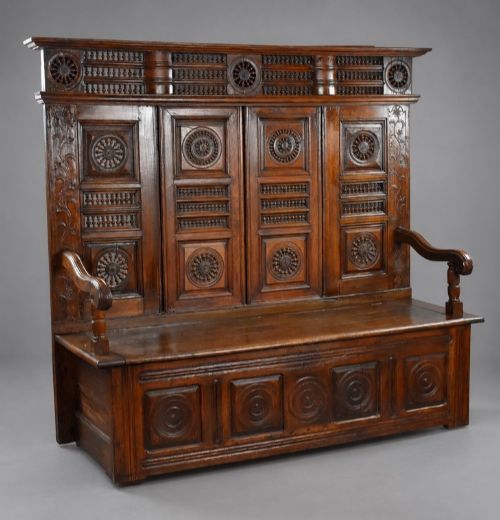
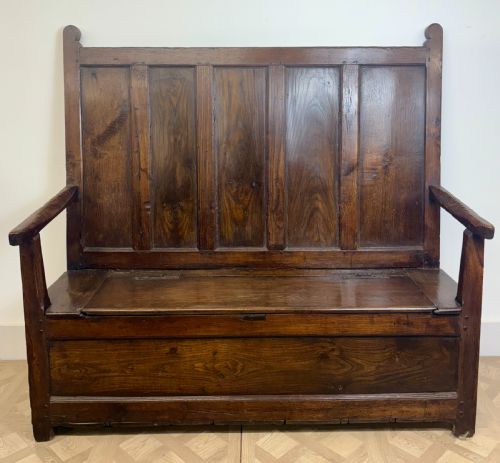
Most examples found here range from the seventeenth century through the Victorian era, spanning regional vernacular designs and revival styles. High-back settles and smaller box seats dominate the selection.
Originating largely from English, Welsh, Scottish, and French workshops, these items reflect domestic utility in domestic halls and living quarters. The primary timber used across the board is solid oak, often paired with secondary woods like ash.
Materials and Construction
Makers relied primarily on solid oak, chosen for its durability and resilience in heavy-use domestic settings. Secondary timbers such as ash and sycamore occasionally appear in internal framing or lesser-seen structural components.
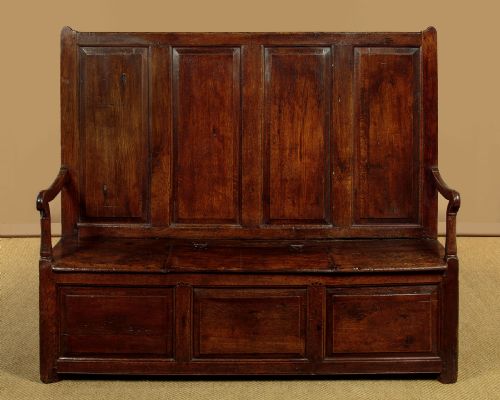
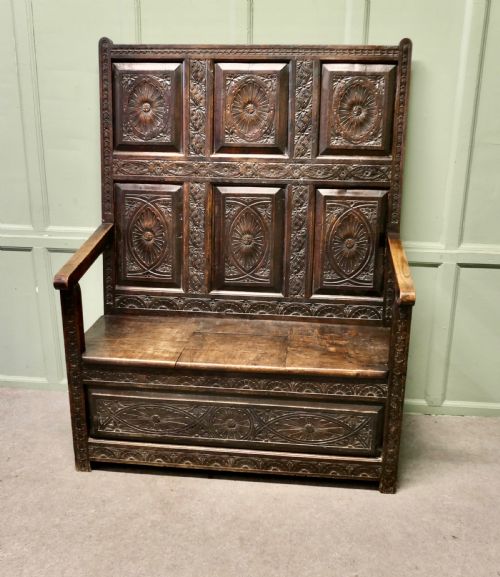
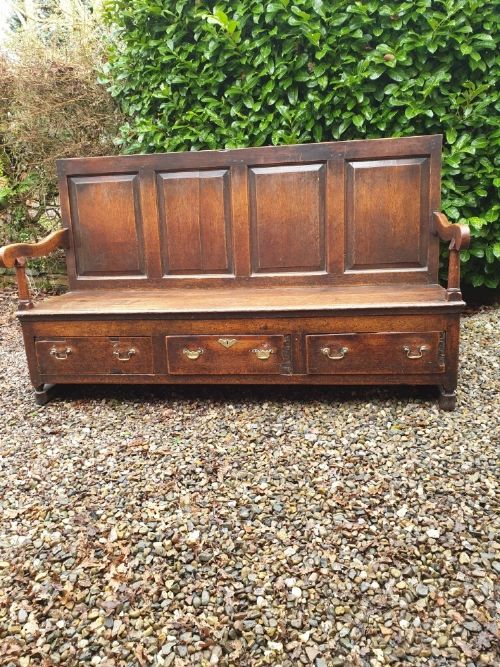
Joinery methods typically involved pegged mortise and tenon frames surrounding heavy panelled boards. Iron and brass hardware, including strap hinges and locks, secured the moving lids and heavy doors.
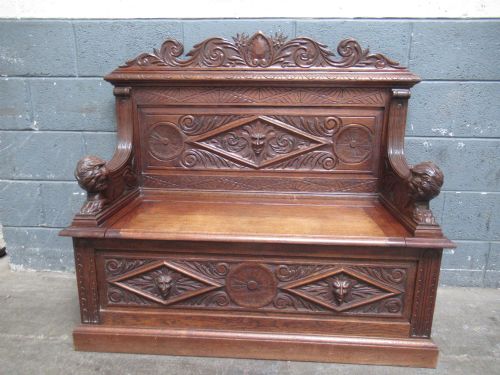
Surface treatments range from waxed finishes to natural patination built up over centuries of daily handling. Carved ornamentation, where present, was worked directly into the thick oak panels rather than applied as separate veneers.
The inventory includes regional vernacular furniture styles such as Welsh and Scottish box settles alongside Renaissance and Gothic revivals.
Distinctions in Quality
The depth and crispness of the carved detailing separate standard workshop output from exceptional examples. Deeper relief work, particularly on high-back panels or figurative elements like Green Man motifs, indicates superior craftsmanship.
Structural integrity depends upon the original thickness of the timber boards and the survival of early panel joints. Pieces retaining their original hinges, baseboards, and uncompromised internal compartments hold greater integrity.
Proportion and scale influence desirability, as smaller or unusually configured pieces require greater joinery skill to remain stable. The quality of the timber selection, visible in the grain pattern and medullary rays of the oak, dictates the visual presence.
The Oak Coffer Seat Glossary
- Coffer
- A large wooden chest traditionally used for storing valuables, linen, or documents. When fitted with a flat lid, it doubles as a bench seat.
- Settle
- A wooden bench with a high back, solid arms, and often a storage compartment beneath the seat. It protected sitters from draughts in older homes.
- Monk's bench
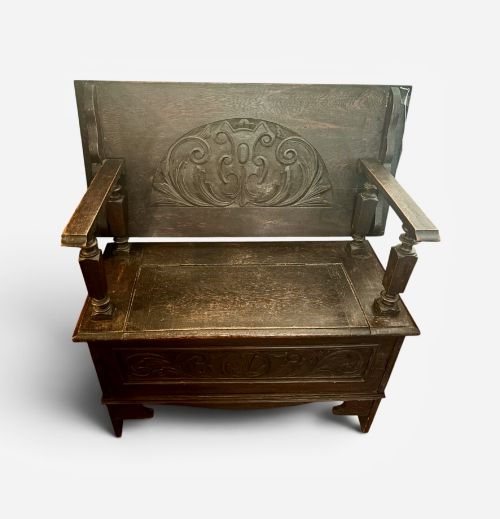
- A convertible piece of furniture featuring a hinged top that folds down over the arms to form a table. It served multiple functions in compact spaces.
- Panelling
- Framework constructed from fitted wooden styles and rails surrounding thinner floating panels. This technique accommodates seasonal wood movement without splitting.
- Vernacular
- Furniture made by local craftsmen for everyday use rather than following strict high-style architectural designs. These pieces often display regional characteristics specific to their area of origin.
Oak Coffer Seat: Frequently Asked Questions
What is an oak coffer seat?
An oak coffer seat is a traditional storage chest featuring a flat top designed for sitting, or a high-backed settle with a compartment beneath the seat.
These pieces served functional roles in hallways and living spaces across centuries of domestic life.
Where were these pieces placed?
They typically stood in entrance halls, reception rooms, or near fireplaces to block cold draughts while providing boot and blanket storage.
In modern homes, they function well as hallway benches or window seats.
How do I date an oak coffer?
Dating relies on examining construction techniques, joinery marks, and the style of any carved decoration present on the panels.
Early pieces from the seventeenth century display hand- split oak and primitive pegged joints, while Victorian examples often feature heavier machine-sawn timber and revival motifs.
Are these seats comfortable?
Original oak seats are solid timber and lack built-in cushioning, though many owners add loose fabric pads for comfort.
The upright backs and solid arms provide firm support rather than deep lounge seating.