
Oak Storage Seat
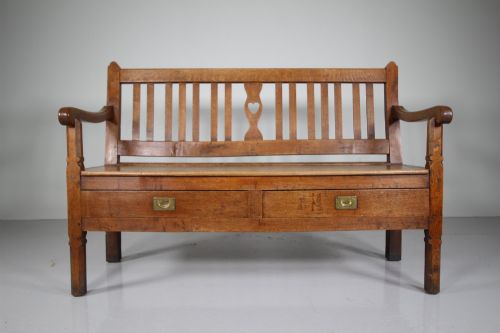
An oak storage seat combines seating with a concealed compartment, offering practical utility and period character for a hallway or living space.
Oak Storage Seat
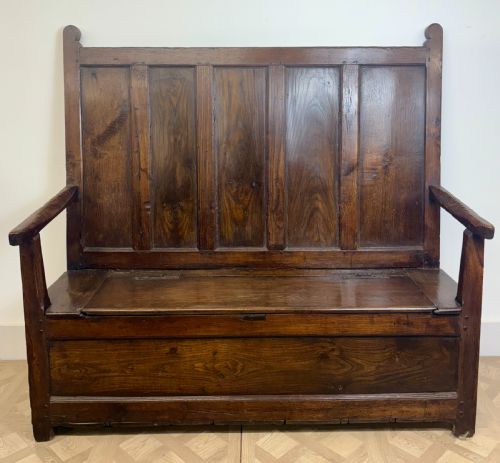
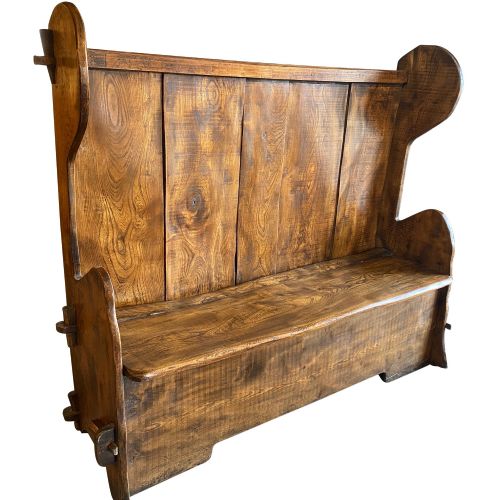
When you search for an oak storage seat, you encounter a diverse group of practical timber furniture designed for utility and seating. These pieces span from the seventeenth century through to the twentieth century, encompassing regional country styles and revival movements.
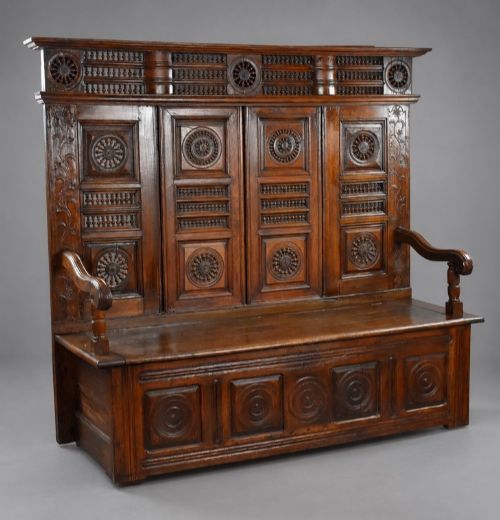
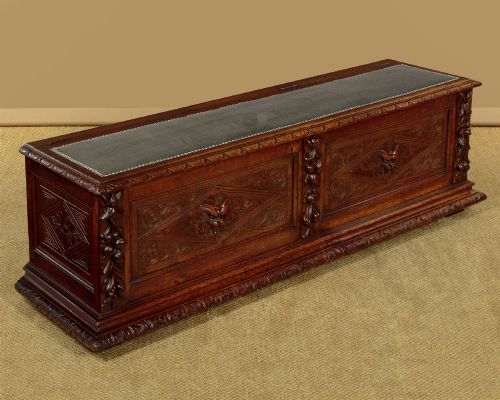
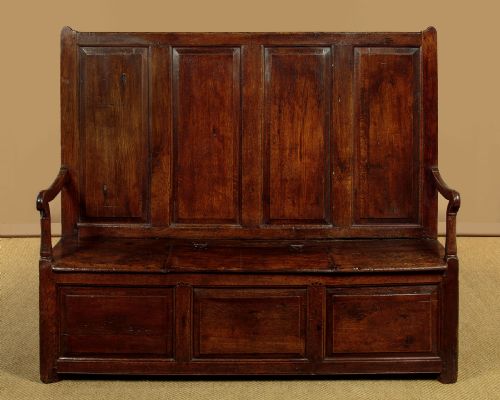
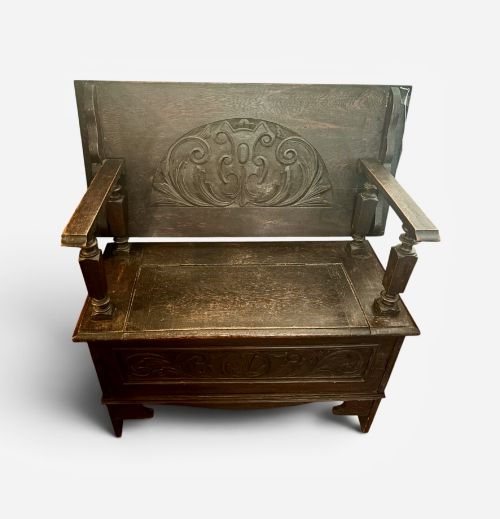
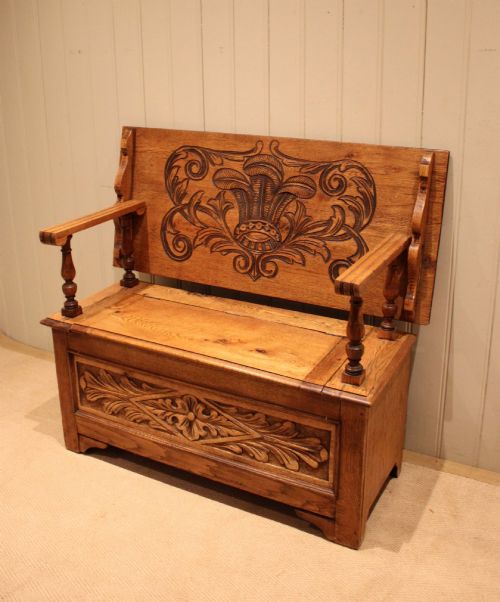
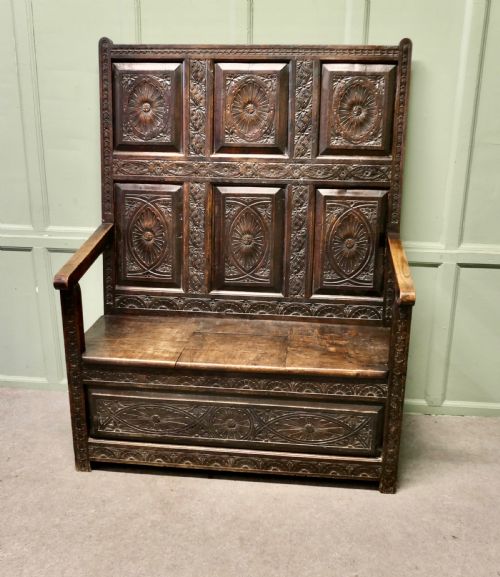
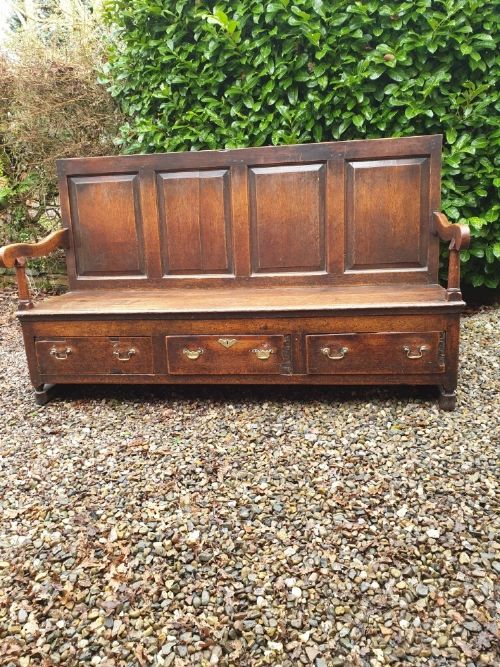
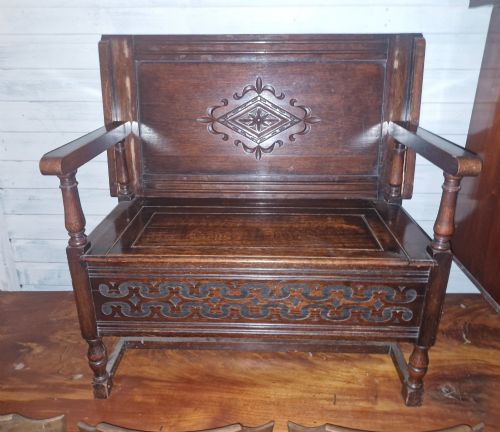
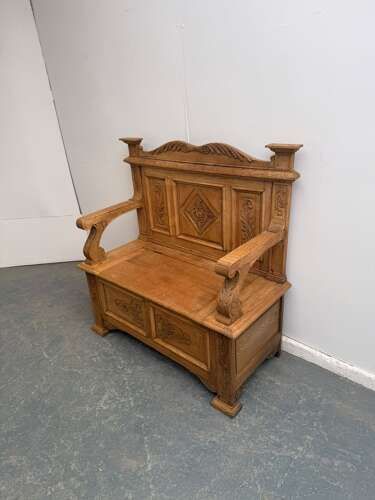
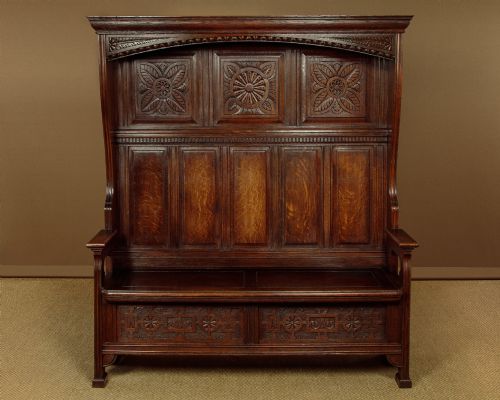
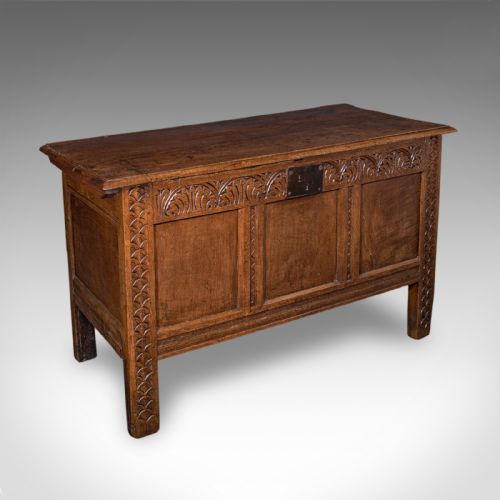
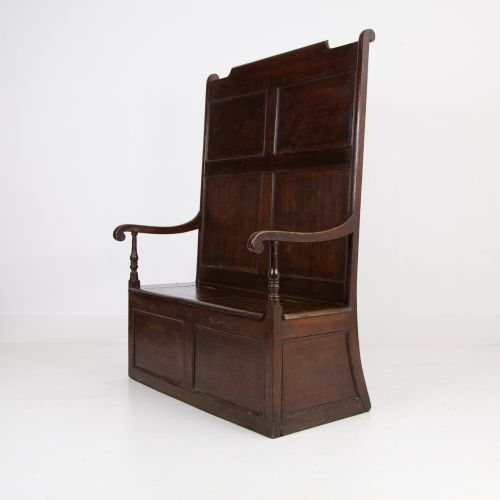
The most frequent forms met on this page include box settles, monk's benches, hall benches with lift-up lids, and coffer-style window seats. They bridge the gap between traditional joinery and domestic storage needs, originating primarily from British and European country houses.
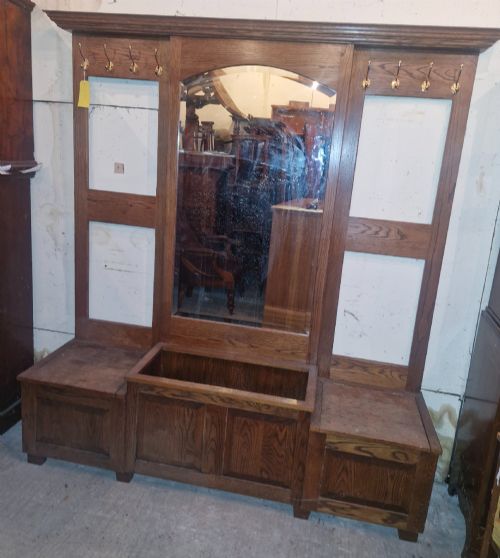
Earlier examples typically display panelled construction and high backs designed to block draughts in large halls, whilst later Victorian and Edwardian variations often incorporate carved details, umbrella stands, or fold-over table tops.
How they were made
The primary material across the selection is solid oak, frequently supplemented by secondary timbers such as ash, elm, and deal for interior framing or subsidiary panels. Cabinet makers utilised traditional mortise and tenon joinery, securing panels to allow for the natural seasonal expansion and contraction of timber.
Surface treatment relies heavily on hand waxing, oiling, or traditional polishing methods that highlight the medullary rays in quarter-sawn oak. Iron and brass hardware, including strap hinges, latches, and occasional coat hooks, provide structural reinforcement and functional operation.
Listings feature periods ranging from the 17th century through the Victorian era to the 1920s, constructed primarily in oak alongside elm, ash, iron, and brass.
What varies in quality
Quality in these pieces is dictated by the integrity of the timber selection and the depth of hand-carved detailing. Uniformity of grain, robust corner construction, and original hardware distinguish superior examples from standard regional utility pieces.
Proportion and architectural balance set the finer specimens apart, particularly where panels retain crisp relief carving rather than shallow, mechanical finishing. The condition of the internal storage base and the stability of the hinged lid reflect the original standards of workshop assembly.
The Oak Storage Seat Glossary
- Settle
- A wooden bench with a high back, solid arms, and a box compartment beneath the seat. This form provided shelter from cold draughts in historical domestic interiors.
- Monk's bench
- A multi-functional form featuring a hinged back that folds down to convert the seat into a table. It is frequently encountered in revival and twentieth-century interpretations.
- Coffer
- A large wooden chest used historically for storing valuables, linen, or documents. Many function effectively as window seats when placed within domestic bays.
- Panelling
- A construction method utilising vertical stiles and horizontal rails enclosing thin timber panels. This technique prevents warping while adding decorative depth to the backrests.
- Hall stand
- A combined item of furniture providing seating, storage, coat hooks, and umbrella receptacles. These pieces became particularly popular during the Victorian and Edwardian periods.
Oak Storage Seat: Frequently Asked Questions
How do I use an oak storage seat today?
These items suit entrance halls, boot rooms, and living areas where they provide both a place to sit and concealed storage for shoes, blankets, or household items.
Their robust timber construction ensures they withstand daily domestic use while maintaining a distinct historical focal point in a room.
How can I tell the period of an oak storage seat?
Dating relies on observing construction marks, joint types, and stylistic motifs such as Jacobean strapwork, Victorian linenfold, or Arts and Crafts simplicity. Hand- cut joinery and pegged tenons typically indicate earlier seventeenth or eighteenth-century origin.
Later pieces from the Victorian revival or Edwardian eras often display machine-sawn timber elements and standardised iron hardware.
Are these seats suitable for small hallways?
Certain compact forms, such as small table-top benches, narrow box seats, and low window chests, fit into restricted spaces without dominating a room. Measuring the clearance needed for lift-up lids or fold-over table tops ensures the piece functions smoothly in a confined area.