
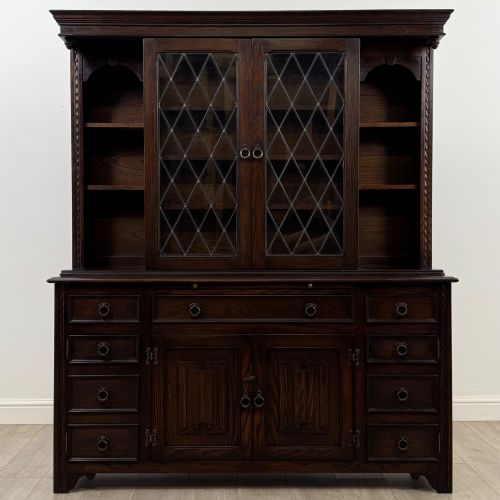
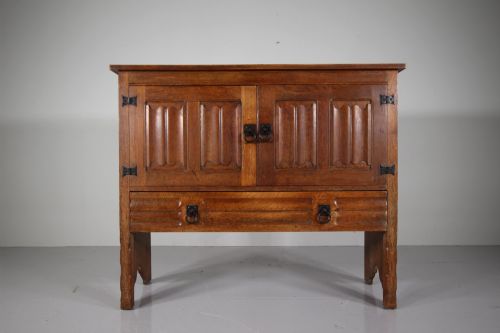
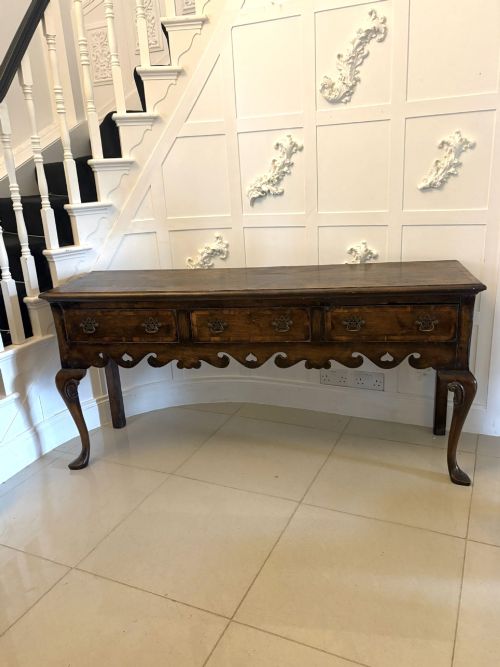
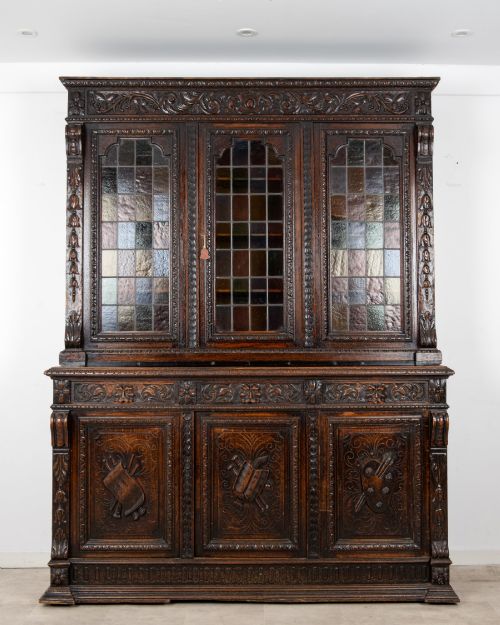
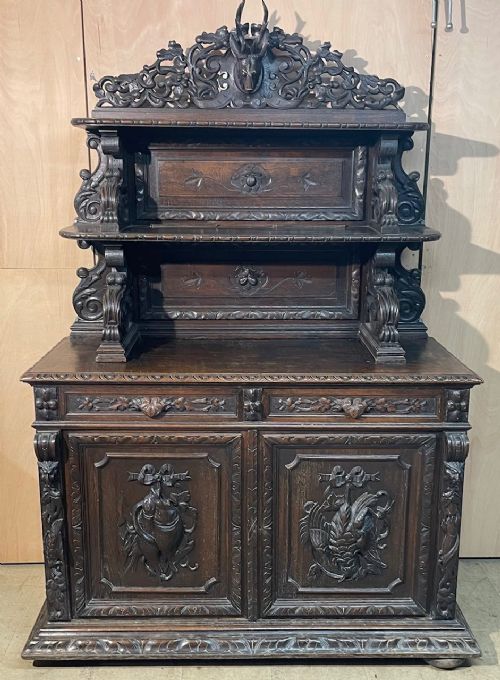


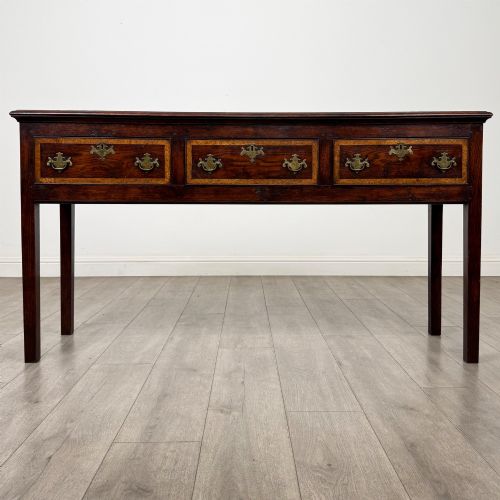
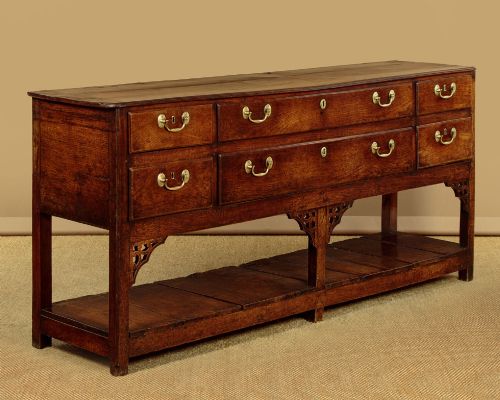
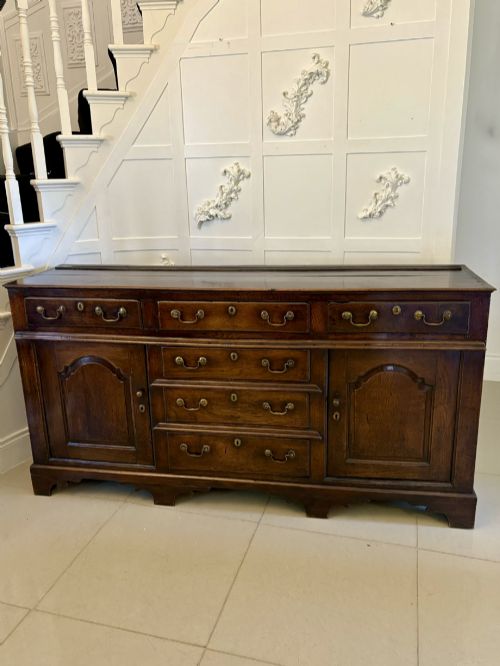
Oak Sideboard Dresser
An oak sideboard dresser combines utilitarian storage with vernacular presence, offering deep drawers and broad top surfaces shaped by centuries of regional joinery.
Identifying an oak sideboard dresser
An oak sideboard dresser brings together sturdy timber frames and capacious storage, bridging the functional needs of the kitchen and the formal presentation of the dining room. When you search for an oak sideboard dresser, you encounter pieces spanning from the mid-eighteenth century through to the early twentieth century.
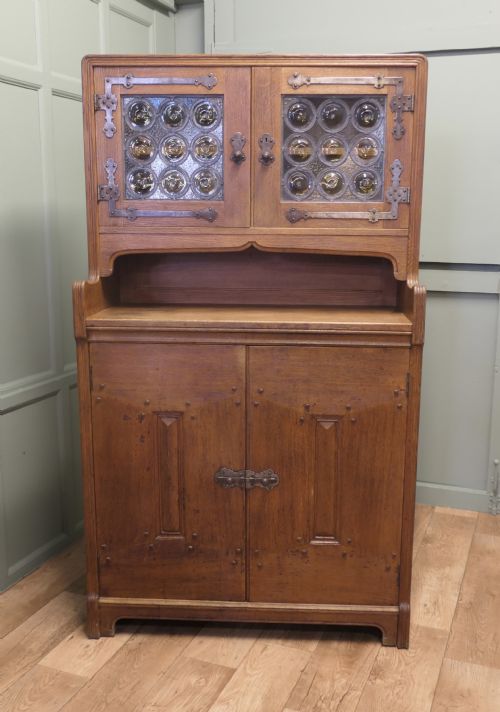
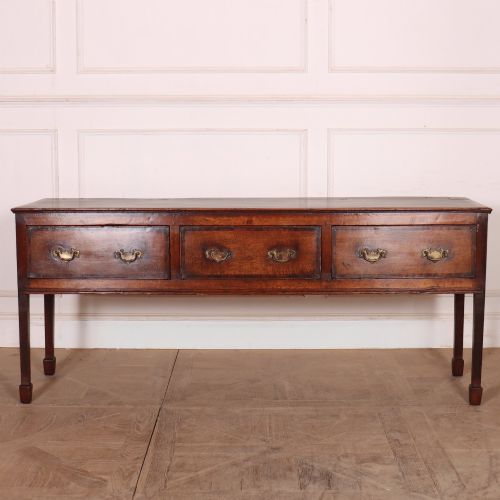
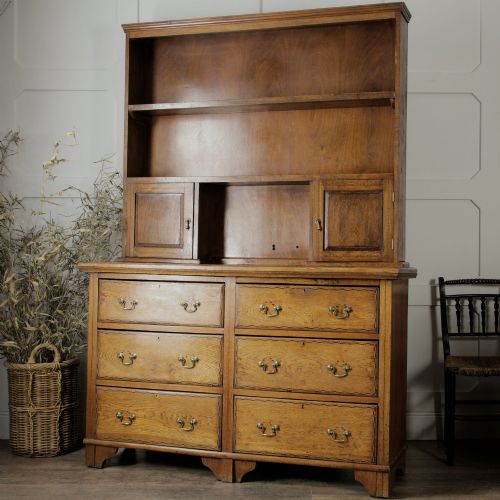
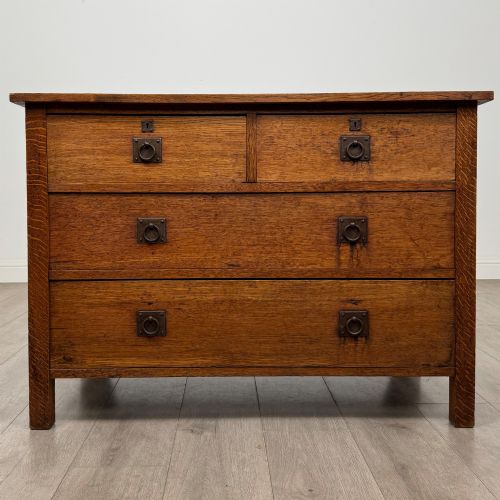
The form appears most frequently in robust Georgian configurations, featuring low dresser bases with multiple drawers, alongside later Arts and Crafts interpretations that emphasise honest construction. Regional variations from Wales and English border counties often incorporate open pot boards or plate racks, while Edwardian and 1900s examples lean towards streamlined utility.
Materials and construction methods
Makers relied primarily on solid English oak, selected for its density and durability, frequently complemented by secondary timbers like mahogany and walnut in regional pieces. Structural integrity depended on traditional joined framing, mortise and tenon joints, and hand-cut dovetails for drawer construction.
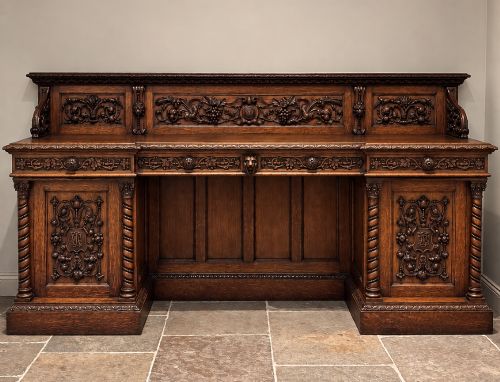
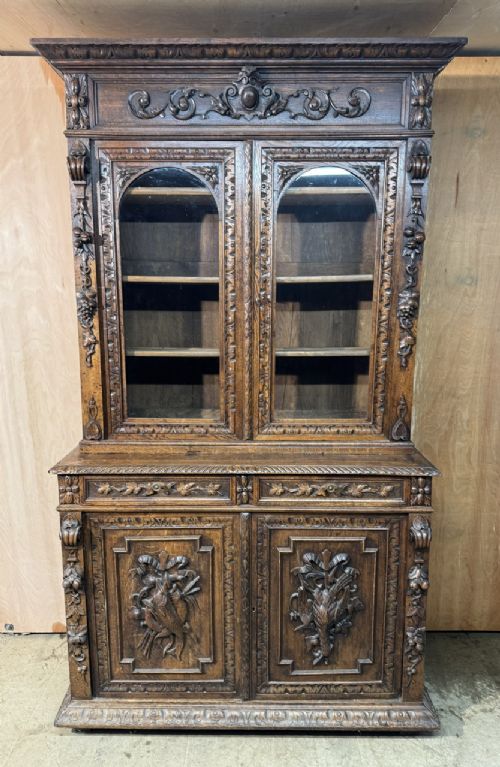
Surface detailing incorporated brass drop handles, iron hardware, and copper accents, particularly in later Arts and Crafts and Art Nouveau iterations. Decorative embellishments ranged from subtle wood inlay and marquetry to carved fielded panels and polished mirror glass.
Retail Price Guide 2026
Typical UK retail prices for oak sideboard dresser, calculated from the Sellingantiques database of over a million retail prices indexed since 2003. This retail price guide relies exclusively on Sellingantiques data; no external sources or auction records are used, so the figures do not describe the wider market.
The listings span multiple eras, encompassing Georgian proportions, Edwardian utility, and Arts and Crafts design alongside Art Nouveau decorative details.
Distinctions in craftsmanship and origin
Superior examples derive their standing from untouched original surfaces, patination developed through generations of use, and the retention of period hardware. The distinction between workshop pieces and vernacular farmhouse furniture lies in the precision of the joinery and the selection of figured timber, such as pollard or burr oak.
Makers identified with progressive design movements, like Ambrose Heal or Shapland and Petter, introduced refined proportions and purposeful lines that elevate standard storage furniture into notable examples of decorative arts history.
Ambrose Heal for Heal & Son·Shapland and Petter·Gordon Russell·Wolfe and Hollander
The Oak Sideboard Dresser Glossary
- Dresser base
- The lower section of a dresser, functioning as a sideboard with cupboards and drawers beneath a broad top surface.
- Pot board
- An open lower shelf fitted between the legs of a traditional Welsh dresser, originally designed for storing heavy pots and pans.
- Marquetry
- Decorative veneer work arranged in geometric or pictorial patterns across drawer fronts and cupboard doors.
- Arts and Crafts
- A design movement of the late nineteenth and early twentieth centuries championing hand craftsmanship, vernacular traditions, and simple construction.
Frequently Asked Questions
What is an oak sideboard dresser?
An oak sideboard dresser is a substantial storage piece featuring a combination of drawers, cupboards, and sometimes an upper plate rack, constructed predominantly from oak timber.
These pieces served as the central storage and display units in domestic dining rooms and kitchens across British homes for centuries.
How do I date an oak dresser?
Dating relies on examining construction methods, such as hand-cut dovetails, tool marks on the timber, and the style of hardware used on the drawers and doors.
Earlier pieces from the eighteenth century typically display vernacular regional characteristics, whereas nineteenth and twentieth-century examples incorporate distinct revival styles or modernist influences.
Where were these dressers made?
Many traditional pieces originated in rural workshops across Wales and English border counties, where local joiners utilised native timber stocks.
Later examples emerged from metropolitan workshops and influential design houses in London and the Cotswolds during the Arts and Crafts period.
How should I care for antique oak?
Antique oak benefits from stable room temperatures away from direct heat sources and strong sunlight, which can dry out and warp the timber.
Regular dusting with a dry cloth and occasional application of traditional beeswax help maintain the natural lustre and protective finish of the wood.