

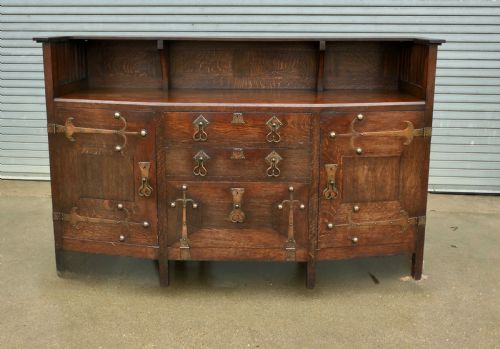
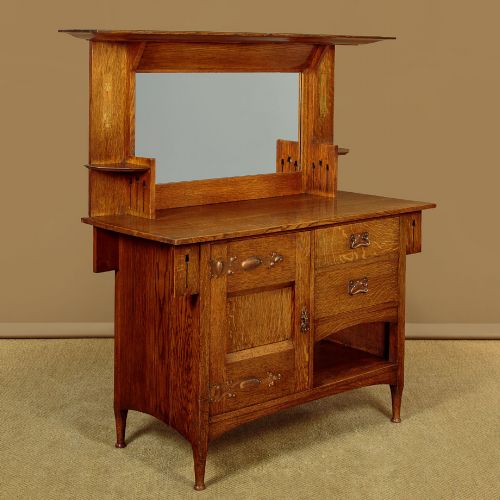


Craftsman Oak Sideboard
A craftsman oak sideboard brings honest construction and solid timber directly into your dining room or hallway.

Craftsman Oak Sideboard
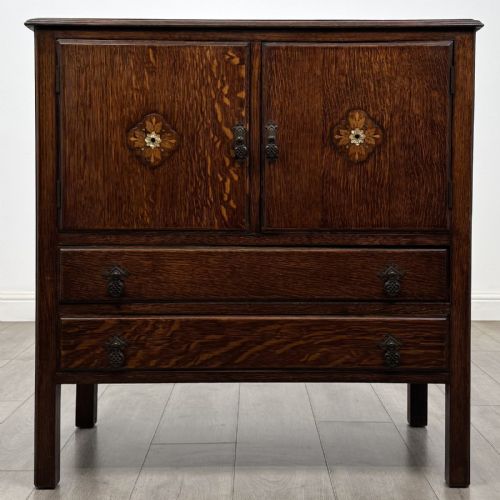
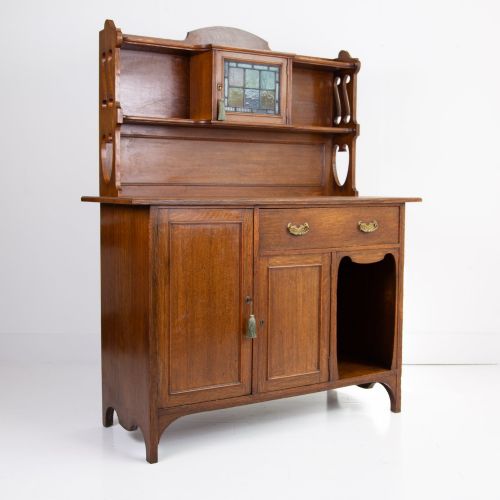
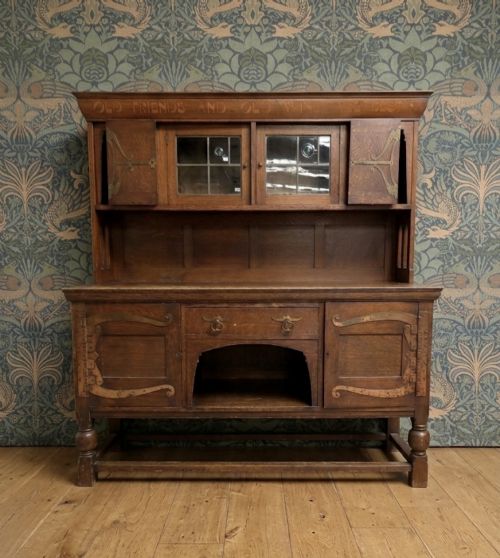
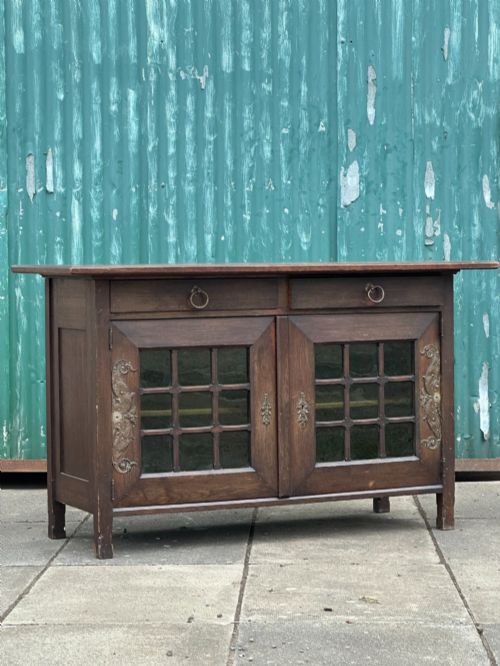
A craftsman oak sideboard provides substantial storage through cupboards and drawers while displaying the distinctive grain of natural timber. You will frequently encounter examples tied to the Arts and Crafts movement, alongside later Edwardian interpretations and Cotswold School pieces.
The forms range from low side cabinets and slim cottage dressers to larger sideboards featuring open plate racks and deep lower cupboards. These pieces bridge utility and design, serving as functional furniture and focal points within a room.
Originating largely from the late nineteenth and early twentieth centuries, these items reflect a period when cabinetmakers prioritised solid construction over applied veneer. The listings span decades from the 1880s through to the 1930s, showing a clear lineage of vernacular and designer-led woodworking.
How they were made
Makers relied primarily on solid English oak, chosen for its durability and strong medullary rays that appear naturally when quarter-sawn. This timber formed the main carcass and structural members of every sideboard and dresser.
Decoration remained restrained, often limited to subtle wood inlay, marquetry, and exposed joinery rather than heavy carving. Cabinetmakers complemented the timber using brass, copper, and iron hardware for hinges and handles.
Craftsman Oak Sideboard Retail Price Guide 2026
Typical asking prices for craftsman oak sideboard among the pieces listed under this phrase on Sellingantiques today, from the lower quarter to the upper quarter. They describe what is for sale here now, not the wider market.
Behind closed cupboard doors, some sideboards still retain faint traces of pipe smoke from Edwardian dining rooms.
What varies in quality
Quality separates workshop-produced furniture from standard commercial output through the integrity of the joinery and the selection of timber. Pieces carrying attribution to known makers or specific design movements typically demonstrate superior proportion and refined detailing.
The treatment of secondary materials, such as the choice of copper or brass fittings and the execution of subtle marquetry inlay, dictates the overall refinement of the piece. Subtleties in grain selection and the hand-finishing of the oak surface distinguish standard domestic cupboards from exceptional commissions.
Ambrose Heal·Heal & Son·Leonard Wyburd·Liberty & Co.·Shapland and Petter
The Craftsman Oak Sideboard Glossary
- Arts & Crafts
- A design movement spanning the late nineteenth and early twentieth centuries that valued traditional craftsmanship, simple forms, and natural materials over mass production. This style heavily influences the proportions and details found on these sideboards.
- Cotswold School
- A regional offshoot of the Arts and Crafts movement rooted in hand-tooling and solid wood construction. Pieces from this tradition display straightforward joinery and an honest appreciation for timber.
- Quarter-sawn oak
- A method of cutting the log perpendicular to the growth rings that produces distinct figuring, known as medullary rays, across the board. Cabinetmakers utilised this cut to strengthen panels and enhance visual appeal.
- Marquetry inlay
- The technique of fitting small pieces of veneer into a prepared surface to form decorative patterns. This method adds subtle ornamentation without disrupting the flat planes of the sideboard doors.
- Dresser
- A piece of furniture combining storage cupboards or drawers below with open shelving above for plates. These forms appear alongside standard sideboards in cottage and Edwardian settings.
Craftsman Oak Sideboard: Frequently Asked Questions
How do I care for a vintage oak sideboard?
Keep the timber away from direct heat sources and sudden humidity changes to prevent the solid oak panels from splitting or warping.
Feed the wood occasionally with a traditional beeswax polish to maintain the natural finish without building up heavy synthetic layers.
What is the difference between a sideboard and a dresser?
A sideboard consists strictly of a low cabinet featuring drawers and cupboards, designed primarily for storing dining utensils and serving food.
A dresser includes an upper section of open shelves or plate racks mounted above the lower storage base, providing display space for ceramics.
How do I date an Arts and Crafts sideboard?
Examine the construction methods, handle styles, and any applied maker marks or stamps found inside the drawers or on the backboards. Earlier pieces from the 1880s and 1890s typically exhibit hand-cut joinery and heavy copper hardware, while 1930s examples show simpler, cleaner lines.
Comparing the hardware and timber selection against documented workshop designs helps narrow down the production decade.
Will an antique oak sideboard fit a modern dining room?
The warm tones of natural oak and straightforward proportions allow these pieces to anchor both traditional and contemporary interior schemes.
Measure your available wall space carefully, noting that taller dresser tops require adequate ceiling clearance compared to low sideboards.