

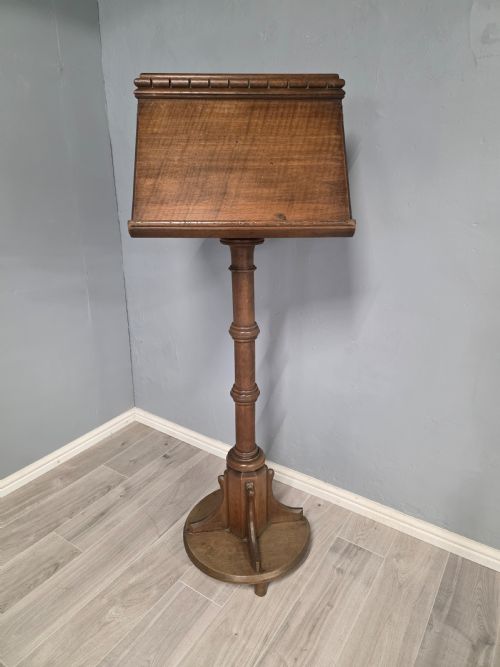


Oak Pulpit Lectern
These oak pulpit lectern pieces bring ecclesiastical history straight into a room, offering sturdy architectural presence and carved wooden character for domestic or commercial spaces.
Oak Pulpit Lectern
An oak pulpit lectern is a substantial wooden stand originally built for churches and chapels to hold service books. These pieces reflect centuries of ecclesiastical design, ranging from strictly religious furnishings to repurposed furniture.
Buyers browsing this selection will most frequently encounter nineteenth-century examples. Victorian interpretations and Gothic Revival creations dominate the inventory, bringing heavy carved timber and ecclesiastical solemnity into modern spaces.
Beyond traditional church settings, these stands appear in diverse forms including restaurant reception greeters and home bars. The underlying timber remains predominantly oak, often paired with pine or brass fittings.
How they were made
Construction relies heavily on solid oak timbers, chosen for durability and deep grain texture. Workshops frequently supplemented structural framework with pine for concealed sections or internal supports.
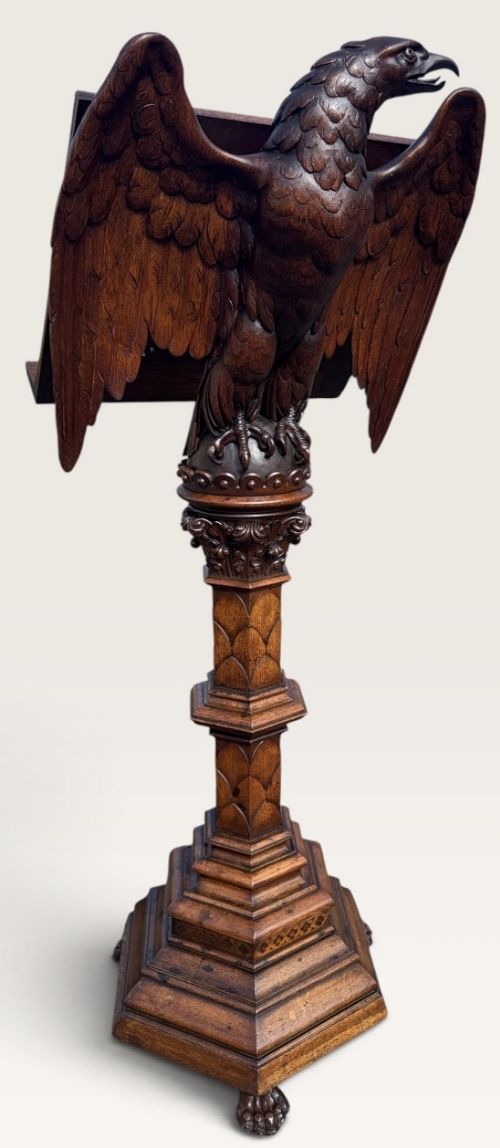
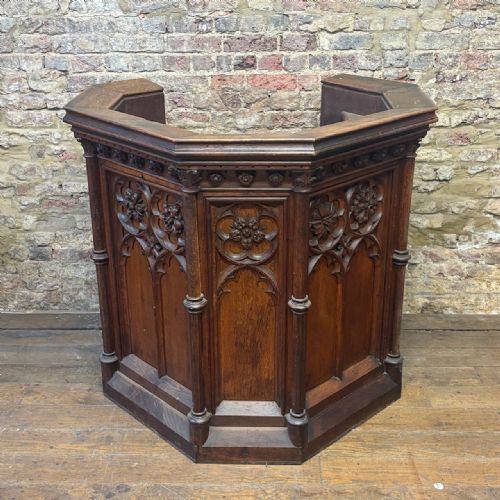
Carving defines the surface artistry, particularly within Gothic Revival traditions. Artisans utilised hand chisels to shape intricate tracery, linenfold panels, and occasionally detailed figurative elements such as eagles.
Listings span from the year eighteen-hundred through nineteen-ten, encompassing Victorian and Arts and Crafts movements.
What varies in quality
Depth and crispness of the carved ornamentation separate standard production from exceptional craftsmanship. Superior examples display sharp undercut details rather than shallow, mechanical impressions.
Proportion and architectural balance dictate the overall success of the piece. The finest stands maintain harmonious lines between the reading desk, the central column, and the tiered base.
The Oak Pulpit Lectern Glossary
- Gothic Revival
- An architectural and decorative style drawing inspiration from medieval forms. It heavily influences nineteenth-century church furniture with pointed arches and trefoil motifs.
- Arts and Crafts
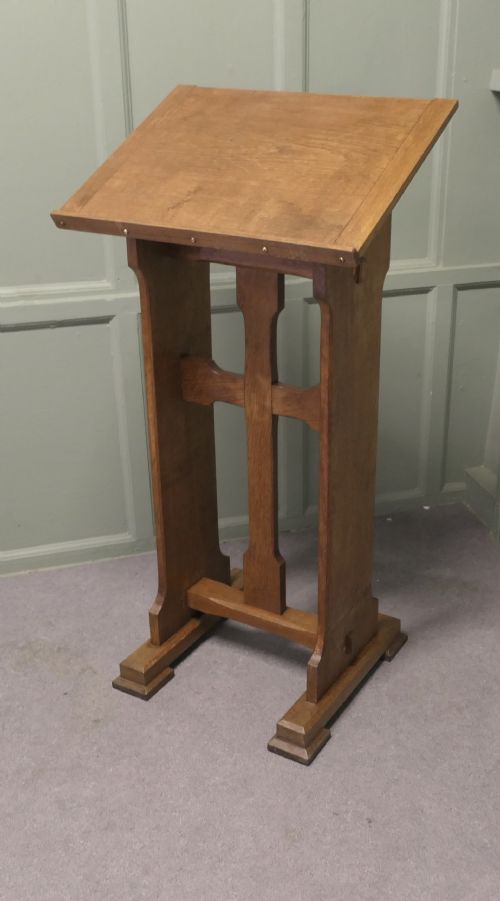
- A design movement prioritising traditional craftsmanship and visible construction. Pieces from this era focus on honest materials like golden oak.
- Lectern
- A reading desk with a slanted top designed to hold books or notes for a speaker. They stand independently on a floor pedestal.
- Pulpit
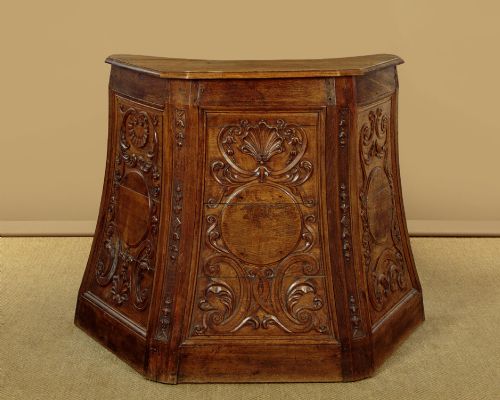
- An elevated platform or enclosed stand used for preaching in a church. Elements from these structures often find a second life in freestanding stands.
Oak Pulpit Lectern: Frequently Asked Questions
How were these used originally?
Clergy utilised these stands to hold large Bibles and service books during church liturgy. Their elevated design ensured the speaker could be heard clearly across the nave.
Over time, secular spaces adopted similar stands for public speaking, lectures, and readings. Today, they serve equally well as reception desks or dramatic architectural accents.
Are these pieces strictly Victorian?
While the majority date from the nineteenth century, production spans from eighteen-hundred through the early twentieth century. Victorian Gothic Revival stands represent the most common stylistic grouping.
Makers continued producing ecclesiastical-style woodwork well into the nineteen-tens. Each decade brought subtle shifts in carving depth and finish colour.
How do I live with one?
An oak pulpit lectern requires generous floor space to command a room properly. Position it in a hallway, study, or corner where the carved details catch natural light.
The sloping top makes an ideal surface for displaying open art books or historical volumes. It also functions effectively as a standing desk for modern writing.
What woods besides oak appear?
Oak serves as the primary structural and visual timber across all recorded examples. Workshops frequently integrated pine into secondary internal components or backing boards.
Brass hardware also appears in supporting brackets, hinges, or candle attachments. This metal contrast highlights the dark grain of the aged timber.