


Oak Pendulum Floor Clock
An oak pendulum floor clock marks the passing hours with traditional weight-driven movements housed inside tall wooden cases.
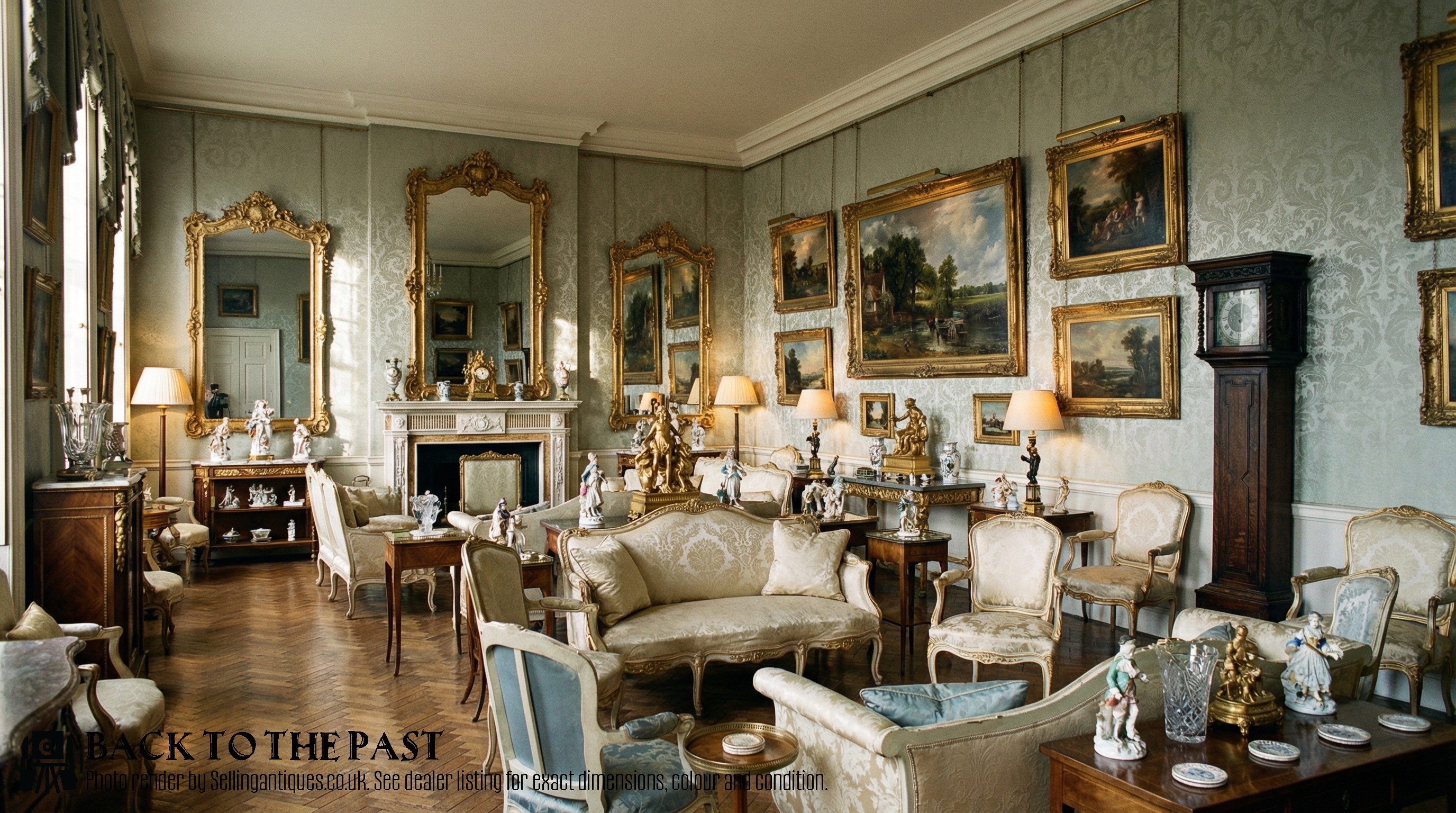
Oak Pendulum Floor Clock
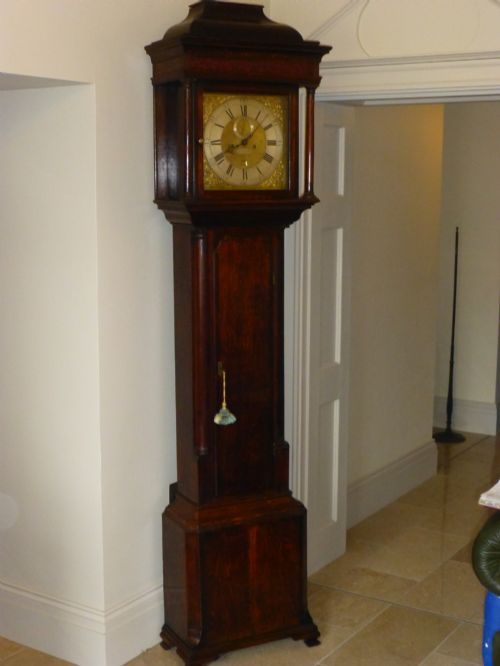
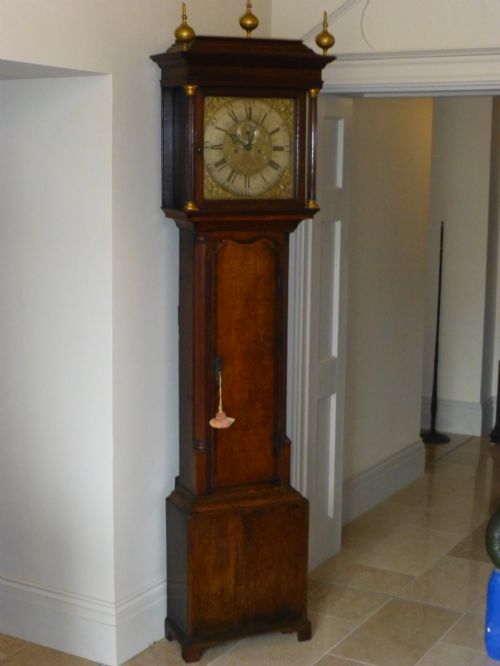
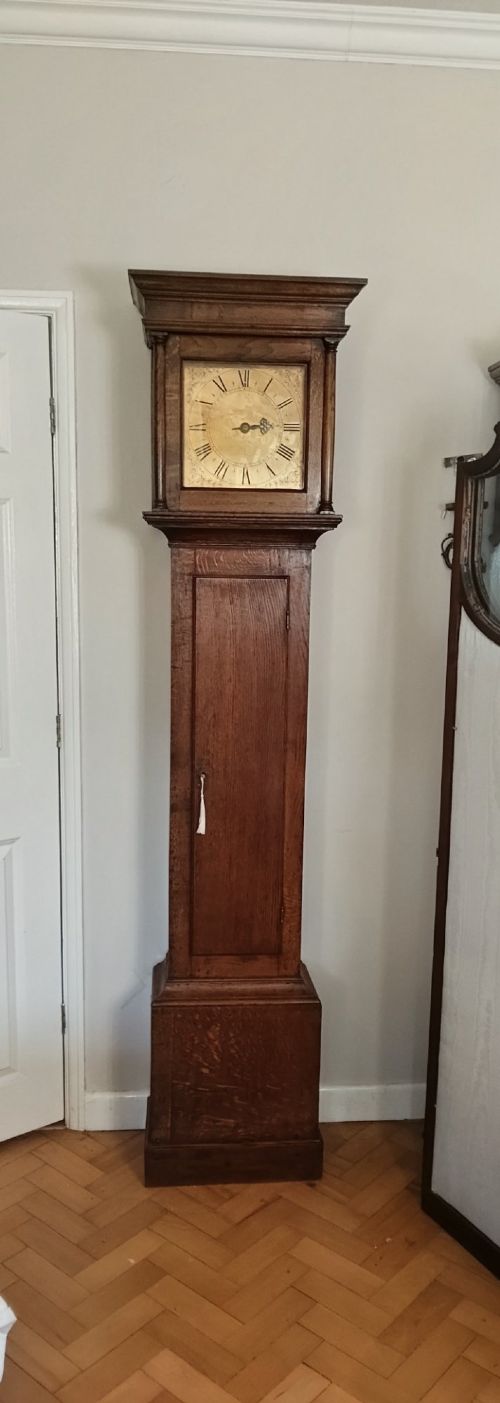
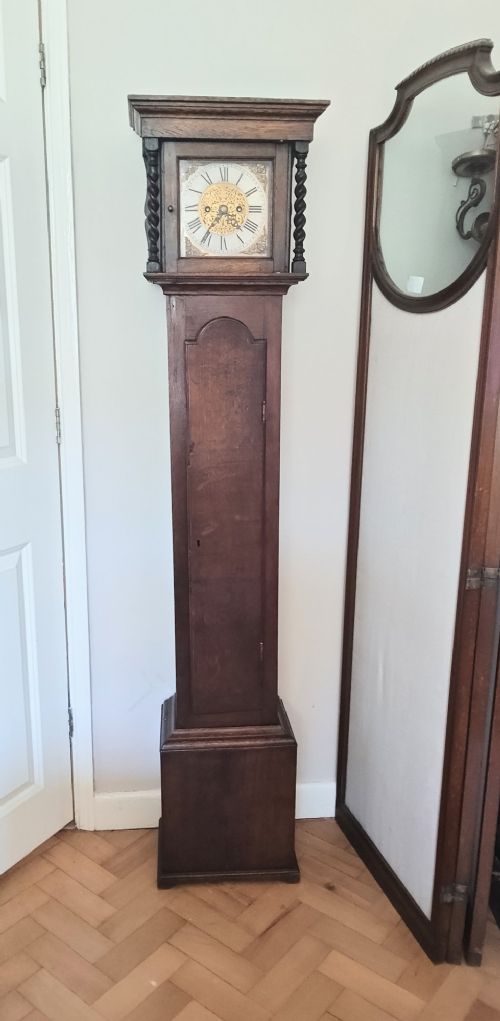
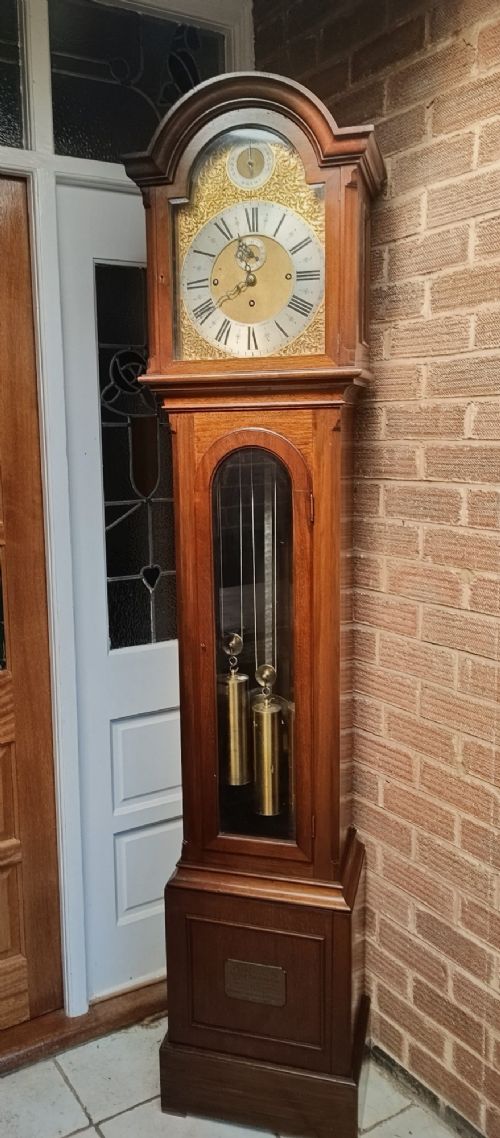
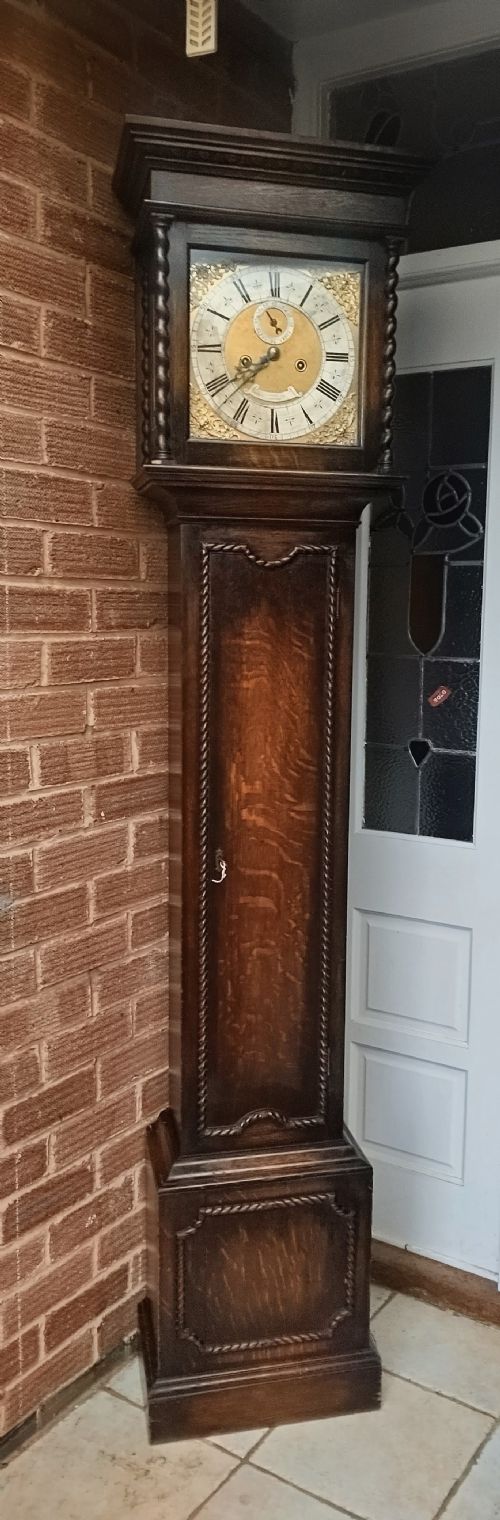
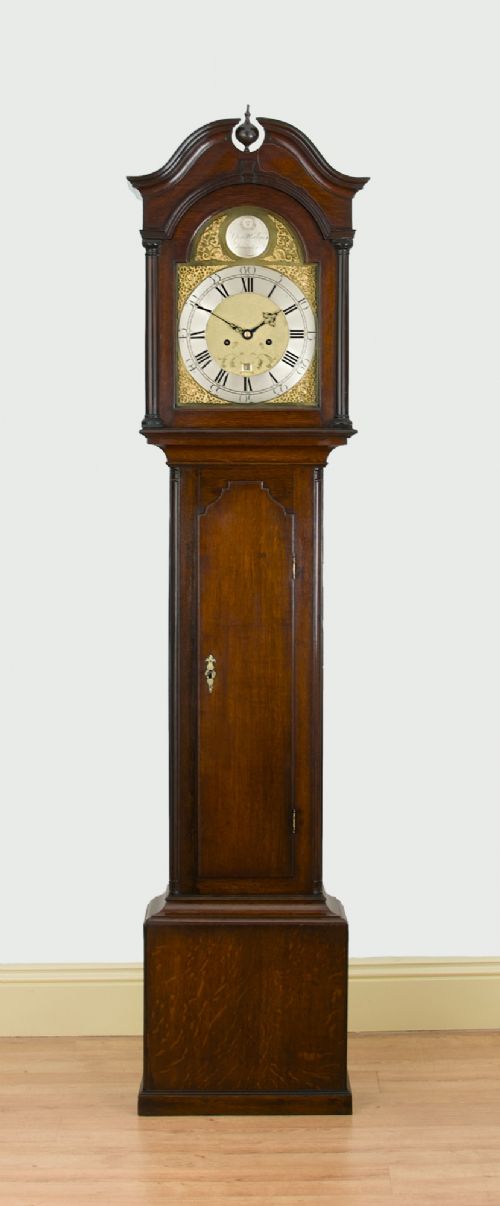
An oak pendulum floor clock, frequently termed a longcase or grandfather clock, stands upright to enclose the dial, weights, and swinging pendulum. These pieces emerge primarily from Georgian, 18th Century, and 19th Century periods, spanning styles from Early Georgian to Edwardian and Victorian.
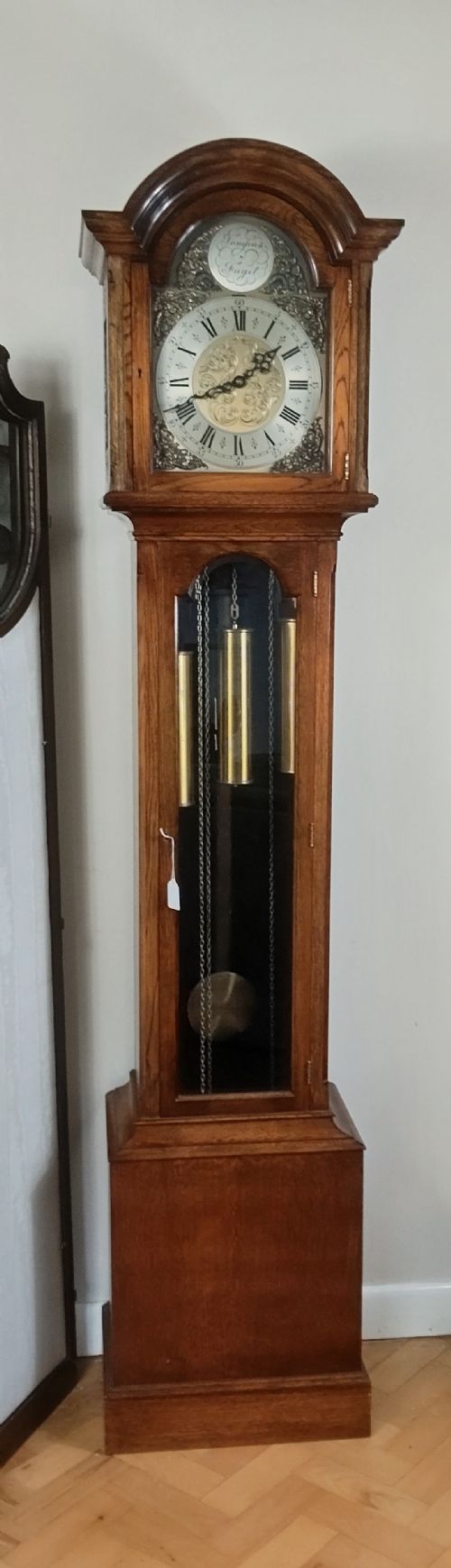
The physical forms on this page include tall grandfather clocks alongside smaller grandmother clocks and musical variants. Cases appear in plain oak as well as combinations involving mahogany, walnut, and metal fittings.
Regional variations surface through maker signatures and dial configurations, linking specific pieces to centres such as Chester, London, Nottingham, and Stockport.
Materials and construction
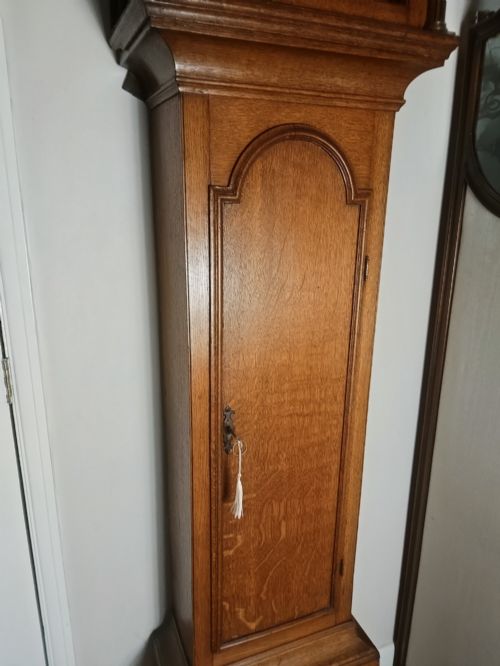
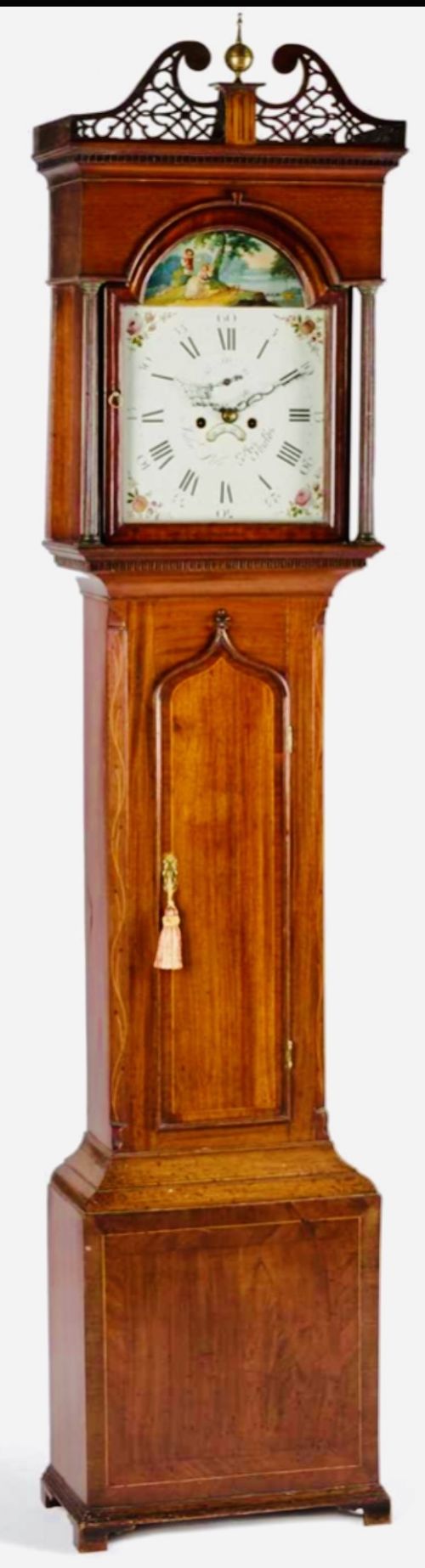
Cabinetmakers built these tall cases predominantly from solid oak, frequently incorporating secondary woods like mahogany and walnut for crossbanding and decorative contrast. Glass protects the dial face, while iron and brass form the internal gear trains and exterior hardware.
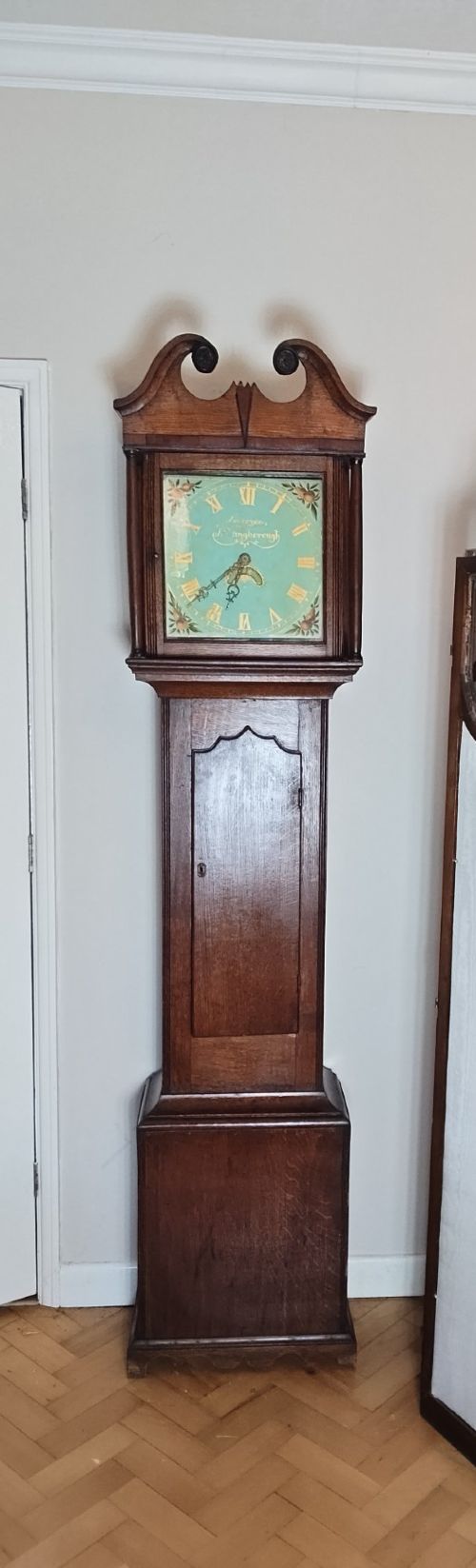
Movements rely on hanging weights and a controlling pendulum, driven either by thirty-hour lines or eight-day cordage. Painted iron and brass dials display the time, occasionally featuring subsidiary seconds or lunar phases.
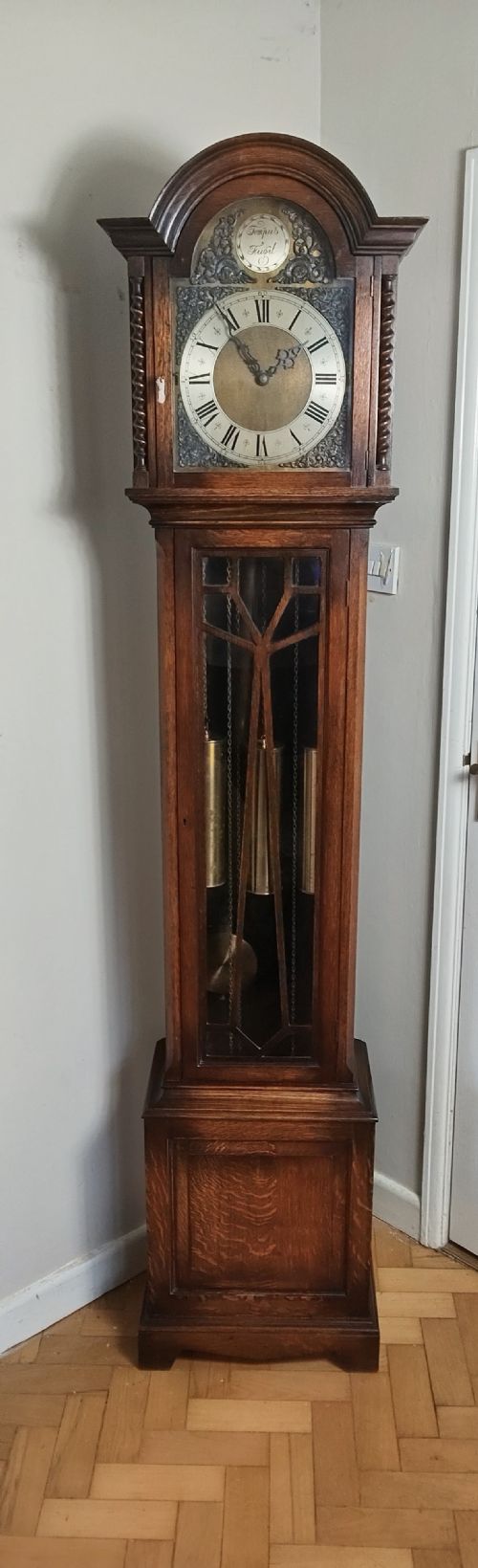
Some models squeeze musical mechanisms and multiple bells into a miniature grandmother case to chime the quarters.
Judging construction standards
Quality resides in the crispness of the case joinery, the fidelity of the timber grain, and the execution of brass dial engravings. Superior examples display balanced proportions with well-fitted hood doors and clean wood matching.
The sophistication of the internal movement dictates functional standing, distinguishing basic time-only or strike mechanisms from quarter-chiming and musical regulators with multiple bells or gongs.
Richard Corless of Stockport·Smith of Chester·George Hallifax Of Doncaster·Edward White Birmingham·David Craig Ford Path head·Richard Prew Of Tewksbury·John Wylde Nottingham·Mappin & Webb London
The Oak Pendulum Floor Clock Glossary
- Longcase clock
- A tall pendulum clock standing directly on the floor. This term encompasses grandfather and grandmother clocks.
- Grandfather clock
- A large floor-standing pendulum clock typically exceeding six feet in height. These tall cases house eight-day or thirty-hour movements.
- Grandmother clock
- A smaller, more compact version of the traditional longcase clock produced during later periods. They occupy less floor space while retaining weight-driven pendulum mechanics.
- Moon phase
- A dial mechanism showing the lunar cycle through a rotating disc. This complication tracks the phases of the moon behind a shaped aperture.
- Quarter chiming
- A movement capability to play musical notes or strike bells at every quarter hour. Such mechanisms require multiple weights or springs to operate.
Oak Pendulum Floor Clock: Frequently Asked Questions
How do eight-day movements differ from thirty-hour ones?
Thirty-hour movements require winding daily by pulling up the hanging chains or cords. This simpler mechanism suits modest domestic settings.
Eight-day movements operate for over a week between windings, utilising heavier weights and more intricate gear trains to sustain the pendulum arc longer.
Where should I place a floor clock?
Position the clock on a stable, level floor against a secure wall to prevent vibrations from disturbing the pendulum swing. Avoid placing the wood near direct heat sources or damp areas.
Sufficient vertical clearance is essential, as these tall cases require adequate room from base to crown.
How do I date a longcase clock?
Dating relies on stylistic details of the oak case, dial materials, and maker signatures inscribed on the face. Early examples feature square brass dials, while arched painted iron faces emerge later.
Crossbanding materials and hood pillar designs further help narrow down the period of production.