
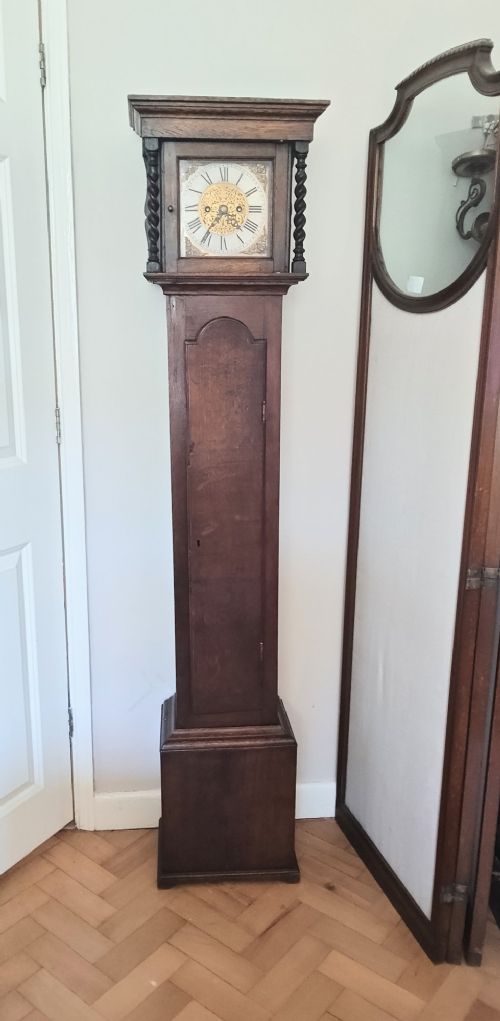
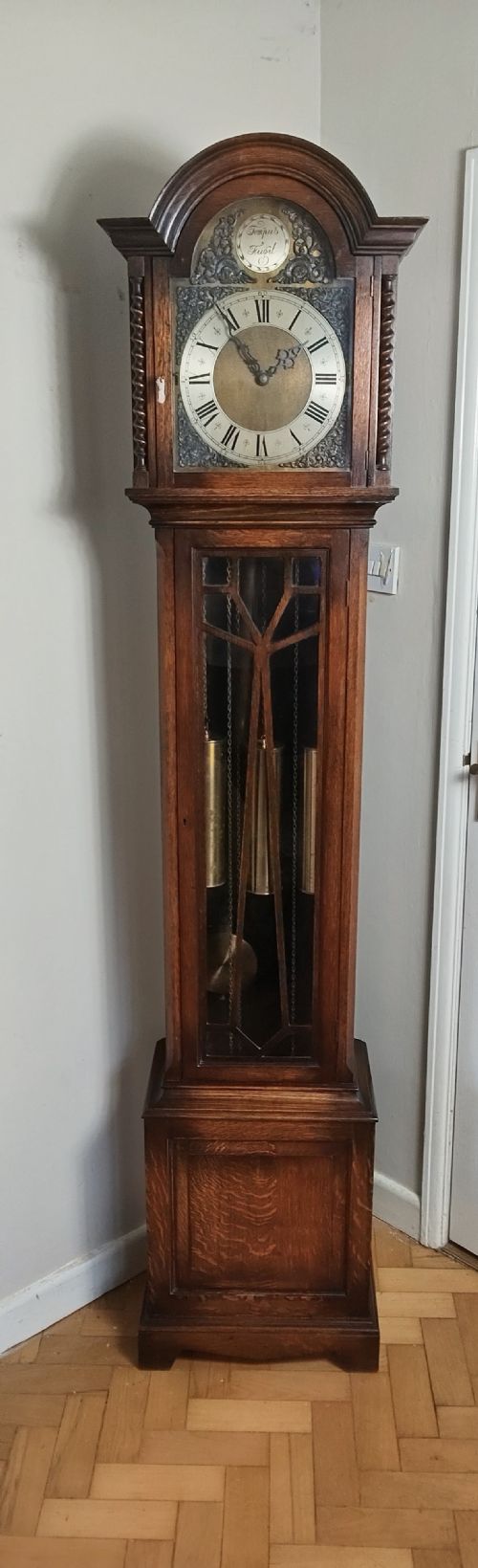
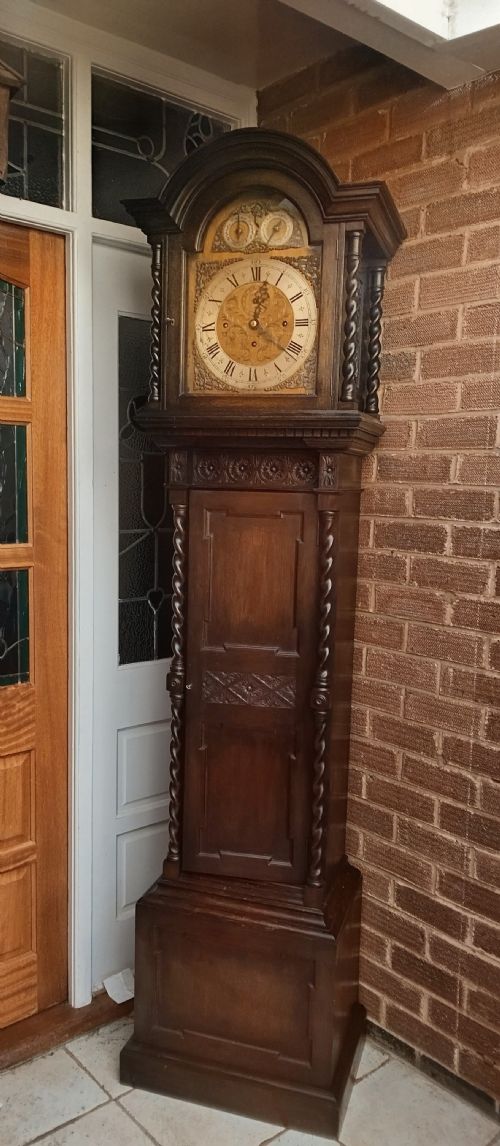
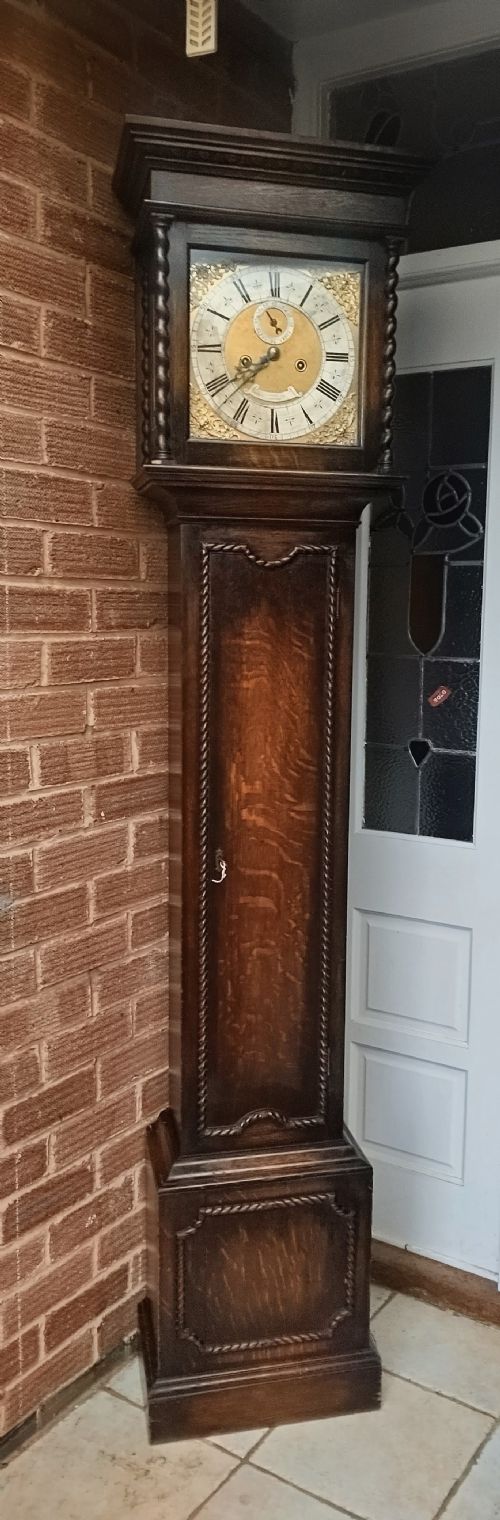
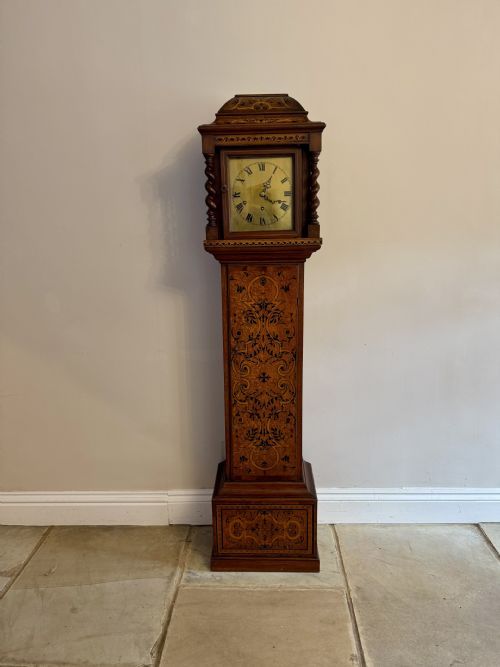


Barley Twist Floor Clock
A barley twist floor clock stands as a commanding tall timepiece, offering both intricate mechanical movement and striking vertical presence to a room.
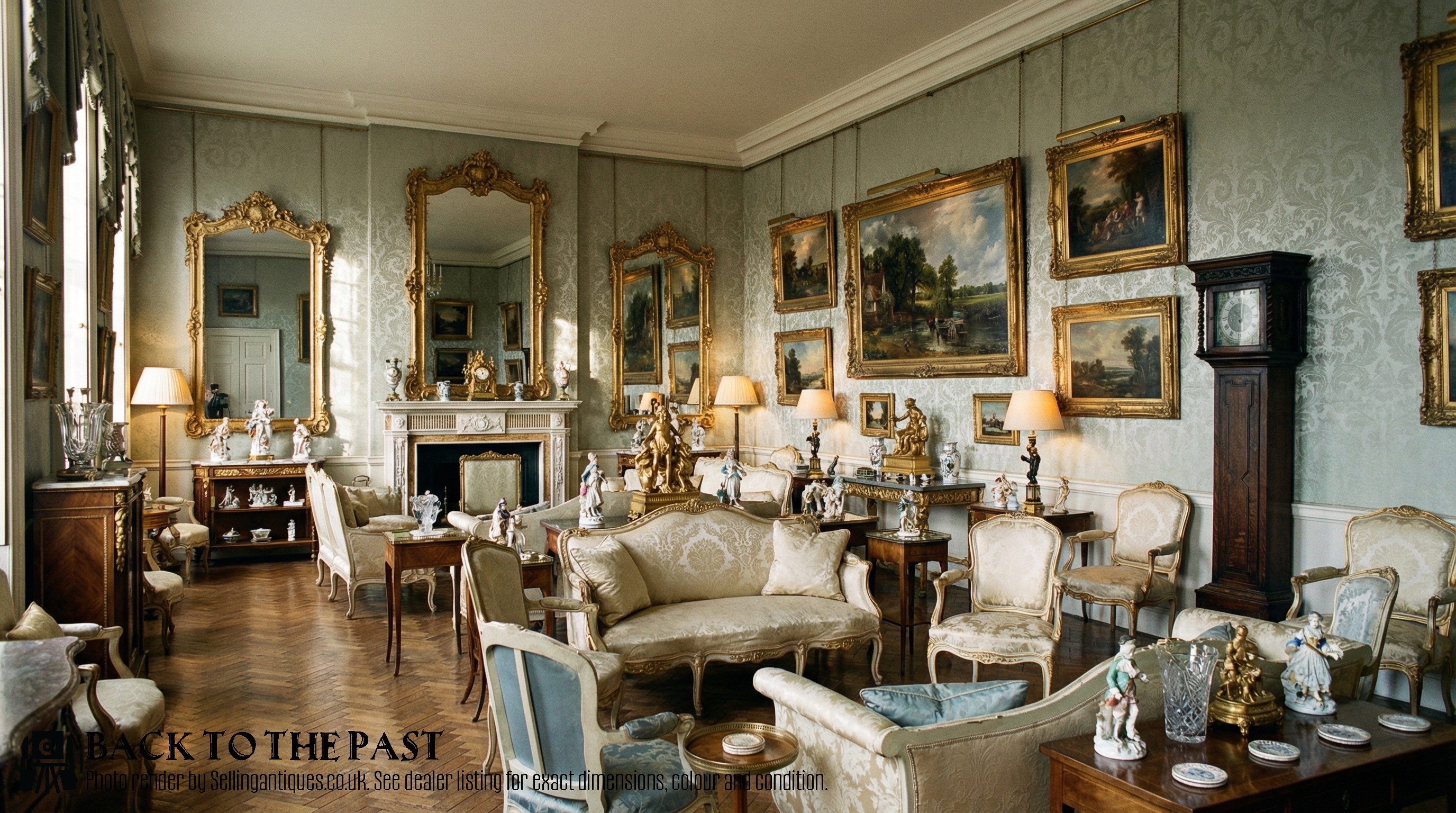
Barley Twist Floor Clock
When you search for a barley twist floor clock, you encounter tall timepieces designed to house weighted movements within a vertical wooden case. These pieces manifest across various historical periods, including the seventeenth century, Victorian era, and Edwardian period.
The selections available range from grand longcase clocks to smaller grandmother clocks and grandfather clocks. Common regional iterations and revivals include Jacobean Revival, William and Mary, and Scottish Regency styles.
You will frequently meet examples fashioned in oak, walnut, and mahogany. These floor clocks combine functional horology with distinct decorative woodworking traditions.
Materials and Construction
Cabinetmakers utilised solid timbers such as oak, walnut, mahogany, and maple to build the tall wooden cases. Marquetry inlay, satinwood details, and panelled ebony frequently decorate the exterior surfaces.
Internal engineering incorporated brass movements, painted iron dials, and glass door panels to protect the weights and pendulum. Tubular bells and musical chiming apparatuses added complex acoustic capability to select mechanisms.
Listings feature woods including oak, walnut, mahogany, satinwood, maple, and ebony alongside brass, glass, and painted iron.
Assessing Quality and Craftsmanship
Quality rests upon the precision of the clockmaker's movement and the execution of the timber casework. Signed dials by notable makers elevate the significance of a piece considerably.
Finer examples demonstrate careful attention to wood selection, such as figured walnut or quarter-sawn oak, alongside intricate marquetry and well-balanced proportions.
Edward East·Joseph Knibb·John Drew·Henry Massy
The Barley Twist Floor Clock Glossary
- Longcase clock
- A tall, weight-driven pendulum clock enclosed in a vertical wooden case, commonly known as a grandfather clock.
- Grandmother clock
- A smaller, more slender version of the traditional longcase clock, typically produced during the twentieth century.
- Marquetry
- Decorative veneer work using various woods to create elaborate pictorial patterns and designs on the case surface.
- Regulator clock
- A precision pendulum clock designed to maintain high accuracy and serve as a standard for timekeeping.
- Jacobean Revival
- A nineteenth and twentieth century architectural and decorative style drawing inspiration from seventeenth century English design.
Barley Twist Floor Clock: Frequently Asked Questions
What is a barley twist floor clock?
A barley twist floor clock is a tall timepiece featuring spiral-turned wooden columns on its case. These clocks measure time using internal weights and a pendulum.
Such pieces date from various periods, including the seventeenth century and the Edwardian era, constructed primarily in woods like oak and walnut.
How do I tell a grandfather clock from a grandmother clock?
A grandfather clock refers to the standard full-size longcase clock standing over six feet tall. Grandmother clocks are noticeably smaller and more slender.
Both forms utilise similar weight-driven mechanisms, but the grandmother clock suits smaller domestic spaces.
What woods were used for these clocks?
Cabinetmakers utilised durable hardwoods such as oak, walnut, and mahogany for the main structure. Maple, satinwood, and ebony also appear in specific decorative details and panel work.
Makers often enhanced these timbers with marquetry inlay or polished finishes.
How do mechanical movements differ?
Movements range from standard time-and-strike systems to complex mechanisms featuring multiple weights, musical chimes, and tubular bells. London makers produced specialised movements like the regulator.
Signed dials often indicate the specific workshop responsible for the horological work.