

Oak Low Dresser Base
An oak low dresser base brings sturdy utility and rich period character to a modern dining room or hallway.
Oak Low Dresser Base
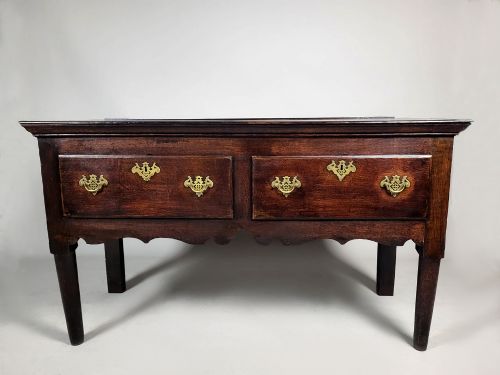
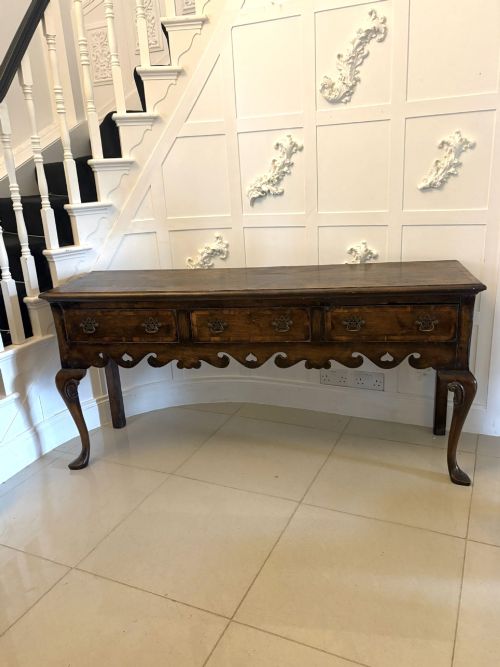
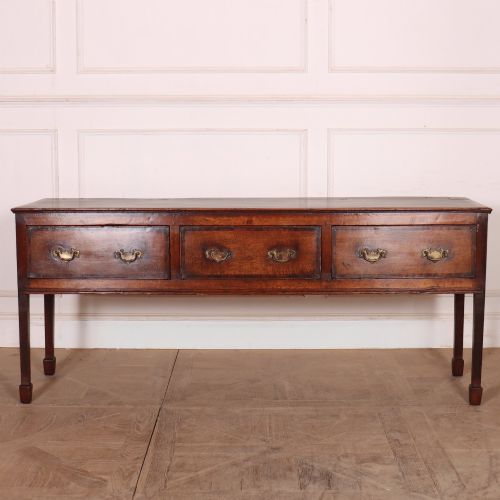
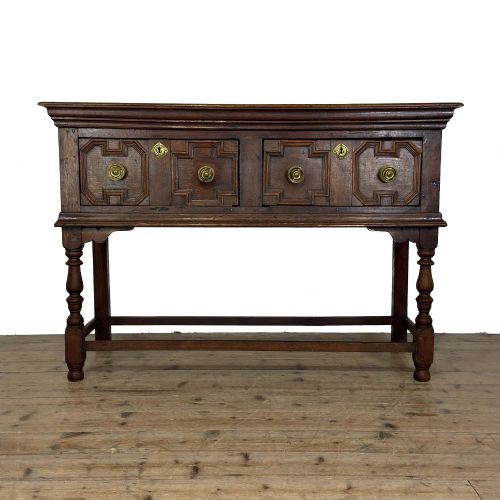
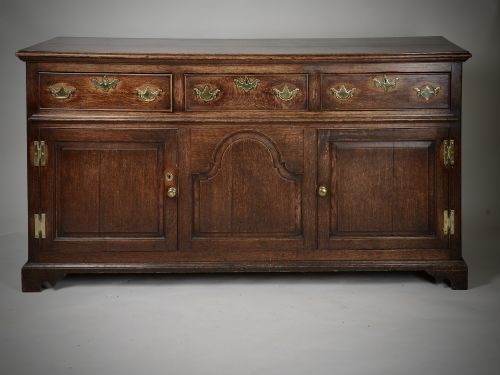
An oak low dresser base serves as a heavy, low-slung sideboard originally designed for domestic food preparation and serving in country houses. Most examples found here originate from the eighteenth century, frequently carrying regional attributions from Welsh or English border counties.
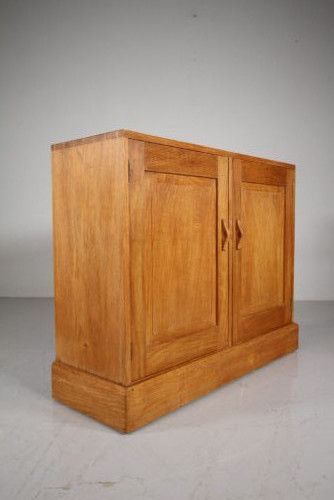
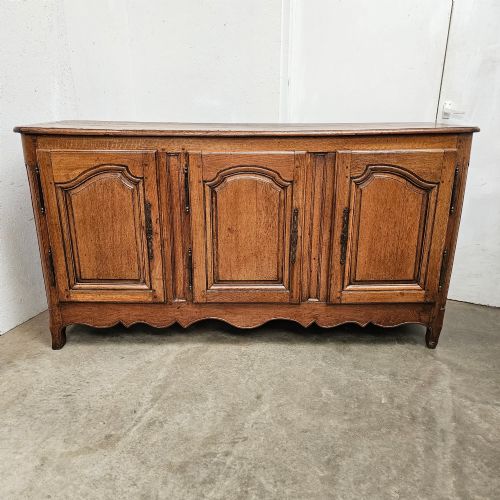
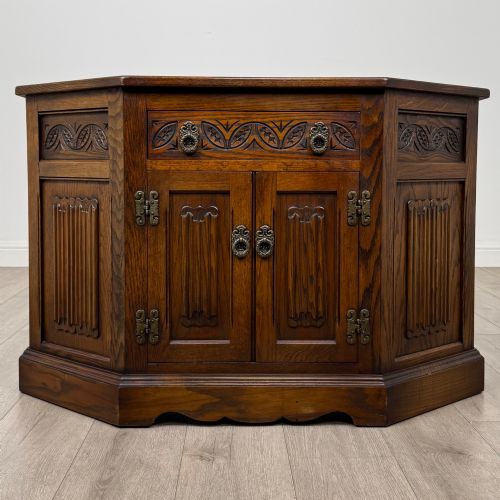
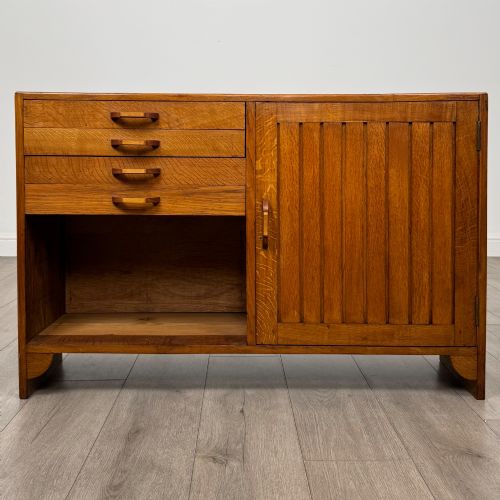
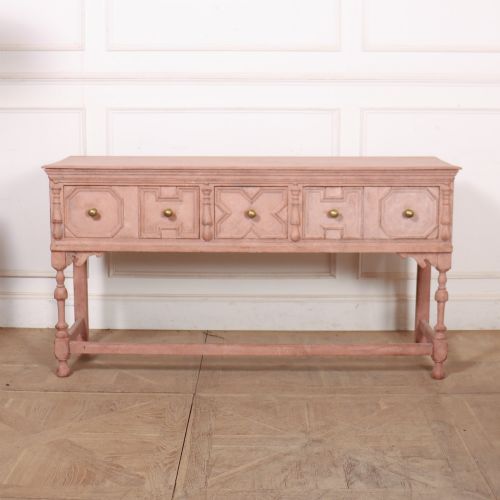
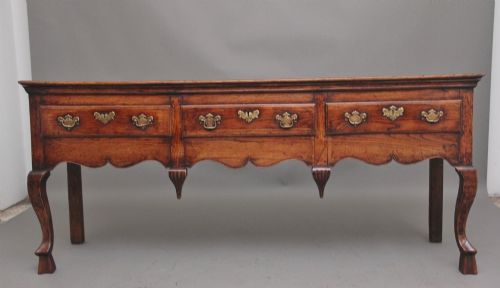
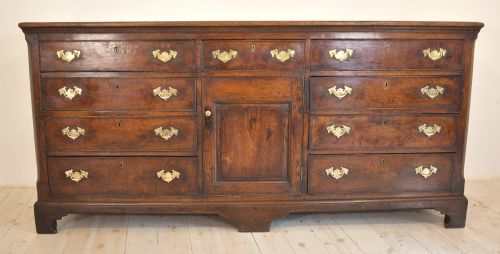
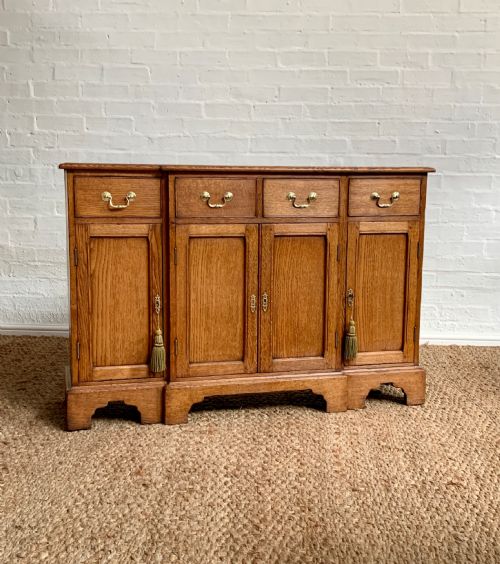
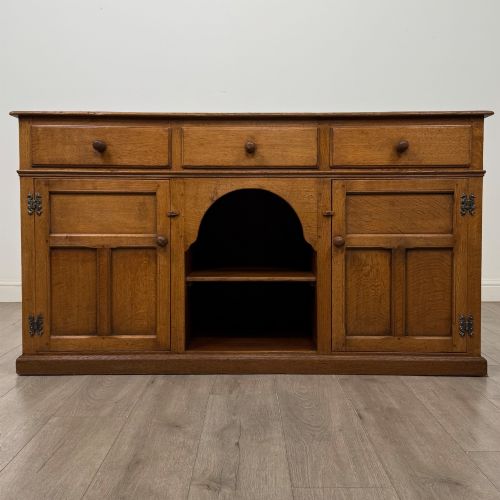
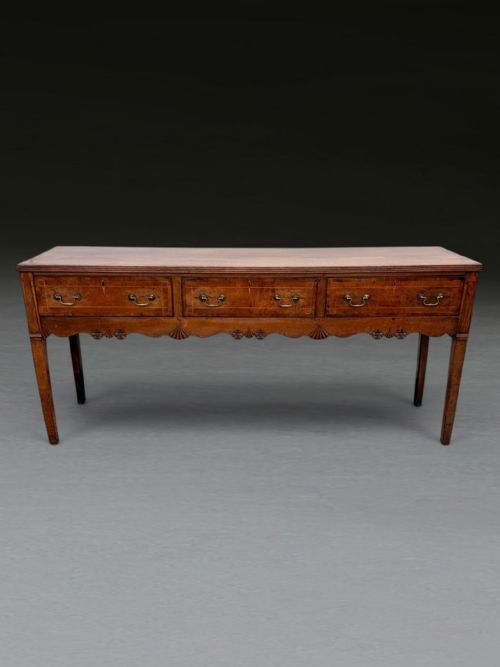
The standard configuration relies on a solid timber top above a run of drawers, often supported by turned legs framing an open lower shelf known as a potboard. Variations include closed cupboard doors, fruitwood secondary timbers, and later revival styles influenced by earlier centuries.
Materials and construction
Joiners built these pieces primarily from native English oak, utilising joined frame-and-panel construction for stability and longevity. Secondary timbers such as elm, fruitwood, and pine appear in drawer linings and internal divisions.
Hardware consists of brass drop handles or backplates fixed with pins, alongside iron hinges and locks on cupboard doors. Surfaces display natural wax finishes or traces of historic paint rather than modern synthetic varnishes.
Secondary timbers recorded across the collection include elm, fruitwood, pine, and painted finishes alongside traditional English oak.
Assessing quality
Proportion and timber figure dictate the standing of a piece, with well-balanced drawer arrangements commanding greater attention. Heavily figured oak grain and undisturbed original brassware elevate the desirability of eighteenth-century examples.
Structural integrity depends on the retention of original feet, unaltered potboards, and minimal timber shrinkage. Later nineteenth-century revivals and twentieth-century interpretations generally exhibit lighter construction and simpler surface patination.
The Oak Low Dresser Base Glossary
- Potboard
- The lower open shelf positioned near the floor, originally intended for storing heavy pots and pans. This platform sits raised on the feet of the dresser base.
- Dresser base
- The lower section of a kitchen or dining dresser, manufactured without the upper plate rack. It functions independently as a low sideboard.
- Joined
- A method of cabinet making utilising mortise and tenon joints secured with wooden pegs rather than metal nails. This technique underpins seventeenth and eighteenth-century oak furniture.
- Enfilade
- A long sideboard or cabinet featuring a series of doors, commonly associated with continental European dining rooms. These pieces offer substantial enclosed storage space.
- Brass drop handle
- A pivoting metal pull suspended from a backplate, typical of drawer fronts on eighteenth-century furniture. Original examples show natural wear and patination over time.
Oak Low Dresser Base: Frequently Asked Questions
What is an oak low dresser base?
An oak low dresser base is a heavy, functional storage unit featuring a low profile, multiple drawers, and frequently an open lower shelf. It served historic kitchens and dining areas for food preparation and serving.
Today, these pieces function well as sideboards in dining rooms or entrance halls, providing surface space and deep drawers for tableware and linens.
How do I date an oak dresser base?
Dating relies on examining construction methods, timber choice, and hardware styles. Eighteenth-century pieces typically feature hand-cut dovetails in the drawer construction and pegged joints.
Later nineteenth and twentieth-century revivals often display standardised fixings, machine-sawn timber elements, and lighter golden oak tones without historic patination.
What is a potboard shelf?
A potboard shelf is the open lower platform fixed close to the floor between the legs of a dresser base. Historic households used this space to keep heavy earthenware and metal pots off damp flagstone floors.
In modern homes, this lower shelf provides an ideal display area for large ceramic platters, baskets, or collections of vintage books.
How should I care for antique oak?
Antique oak benefits from simple maintenance using natural beeswax applied sparingly with a soft cloth. Avoid placing these pieces near direct heat sources or in fluctuating humidity to prevent timber splitting.
Regular gentle dusting preserves the natural finish and builds upon the deep patination developed over centuries of domestic use.