
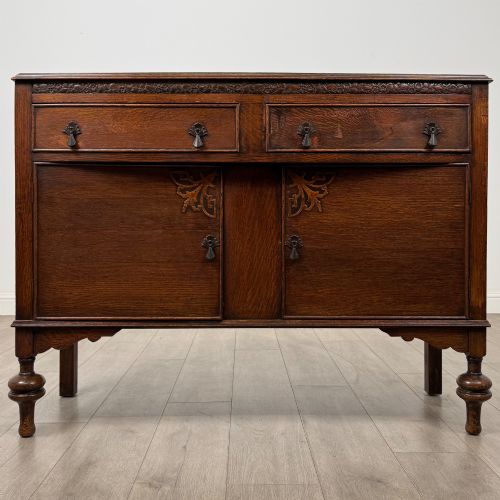
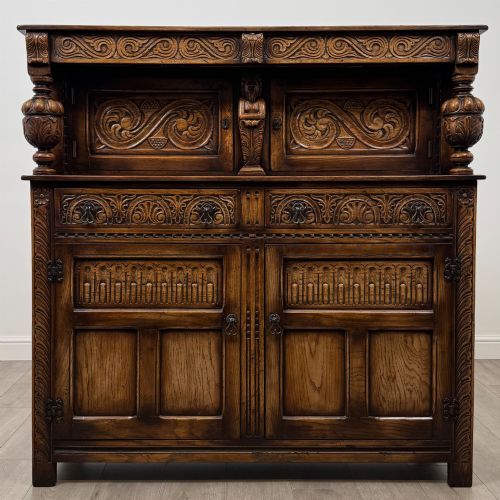
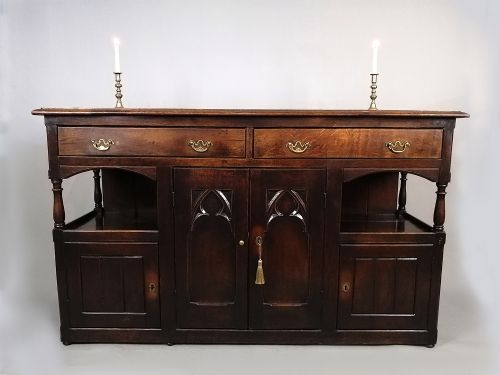
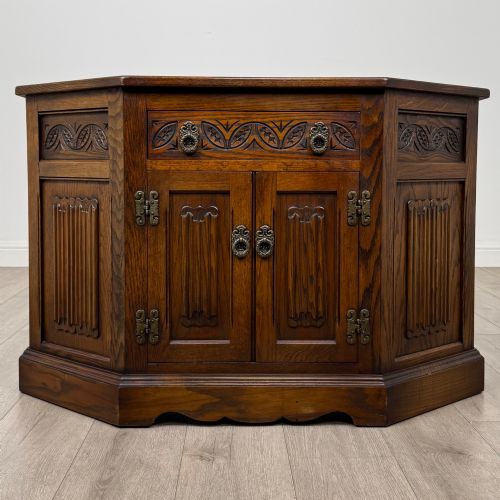
Vintage Oak Sideboard Server
When you search for vintage oak sideboard server, you are looking at substantial storage furniture built from timber, most commonly found in Edwardian and nineteenth-century forms.
Vintage Oak Sideboard Server
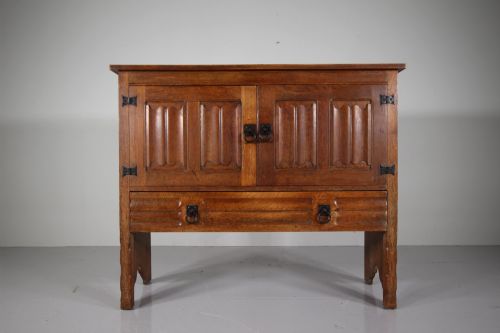
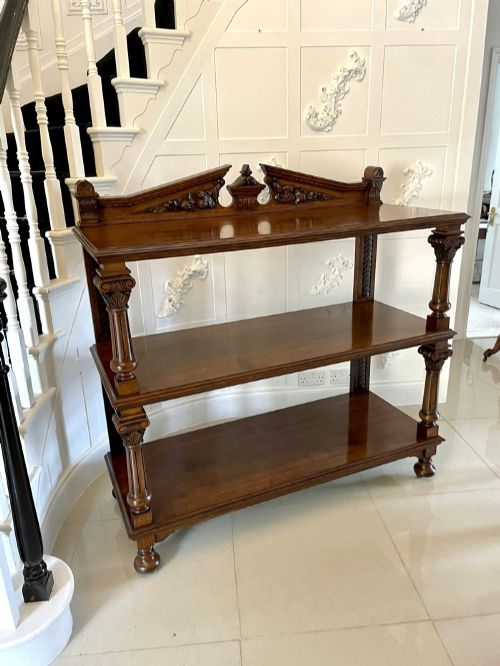
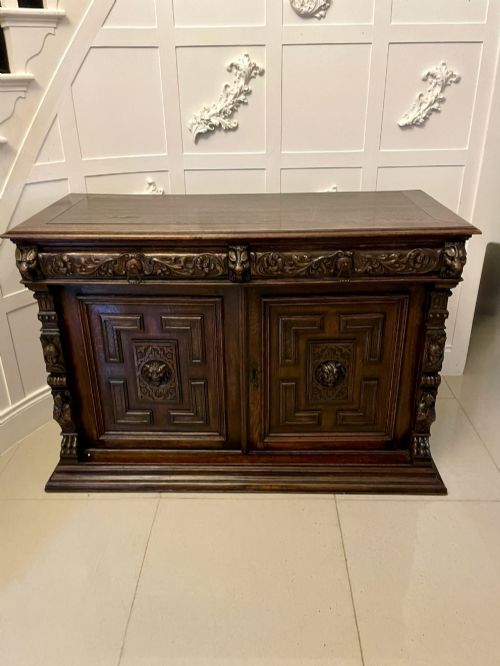
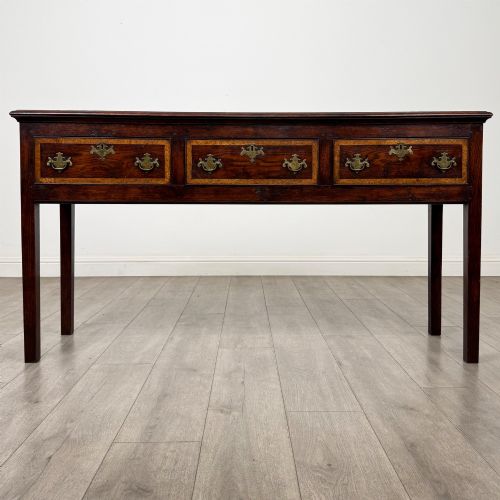
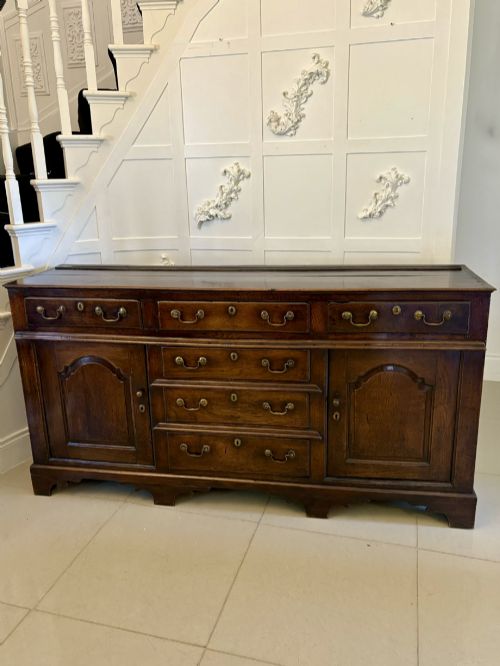
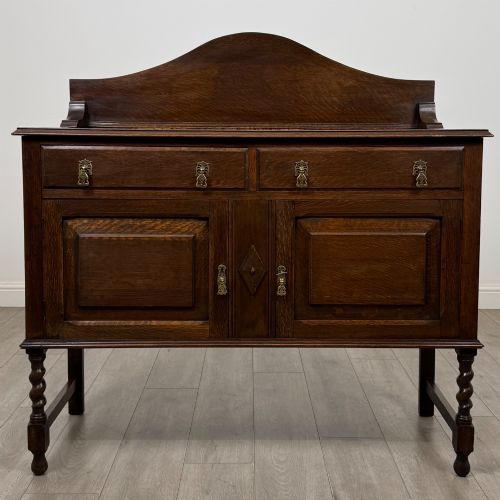
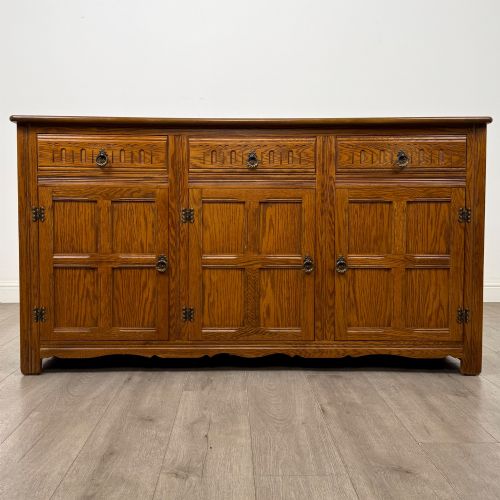
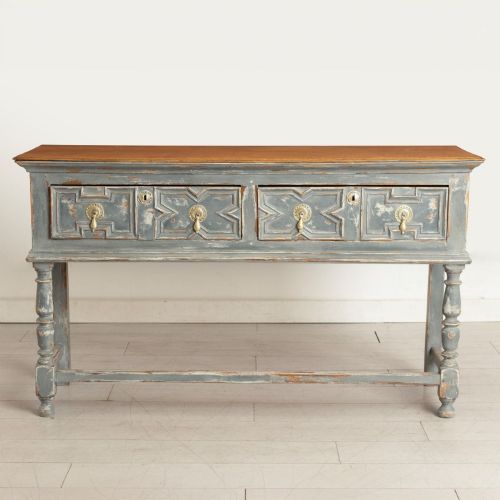
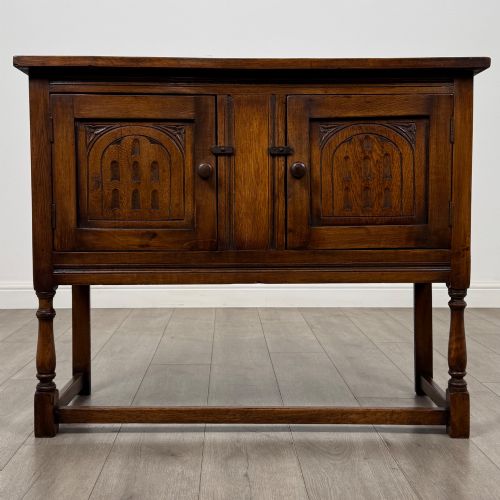
A vintage oak sideboard server combines practical storage with domestic history, appearing across this page in forms such as dresser bases, court cupboards, and serving tables. These pieces originated to serve dining rooms and kitchens, providing surfaces for food preparation and storage for crockery.
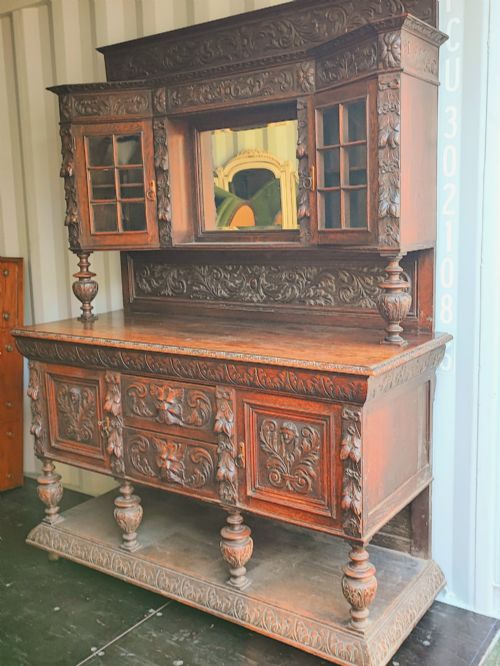
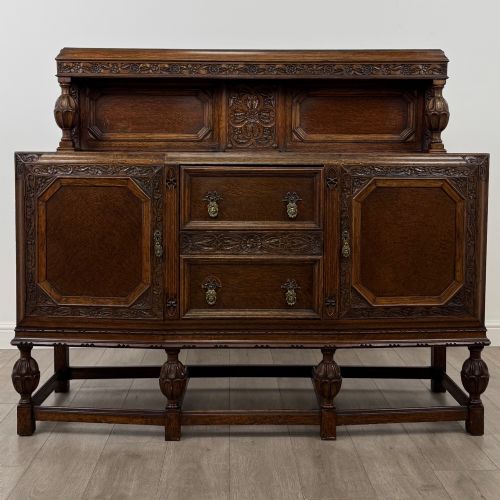
The versions you are most likely to meet on this page date from the Edwardian era and the nineteenth century, though earlier eighteenth-century examples and later 1930s designs also appear. They range from simple English country furniture to heavily carved revival styles.
How they were made
Construction relies primarily on oak timber, frequently augmented with brass, iron, or glass hardware, and occasionally paired with walnut or fruitwood. Joinery methods include traditional framing and paneling, designed to support heavy use over generations.
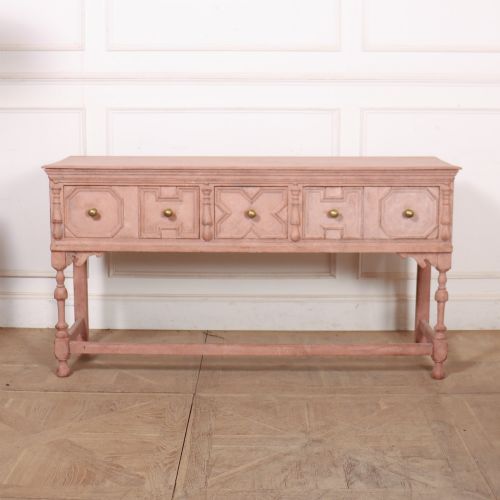
Surface decoration involves carved details, linenfold panels, and painted finishes, alongside turned supports such as barley-twist legs. Bleaching and distressing techniques also appear on selected pieces to alter the natural tone of the wood.
House maids once relied on these cupboards to store linens before the pieces retired to modern dining rooms.
What varies in quality
The standard of a vintage oak sideboard server depends on the crispness of its carved ornamentation and the selection of the timber grain. Pieces utilising golden oak or burr walnut veneers demonstrate more deliberate material choices by the maker.
Proportion and structural integrity distinguish finer examples, particularly where turned supports like barley-twists or potboard bases are executed with precise symmetry and balance. The integration of period hardware, such as brass pulls, also marks the distinction between standard and superior pieces.
Gomme
The Vintage Oak Sideboard Server Glossary
- Dresser base
- A low wooden storage unit with drawers and sometimes a lower shelf, designed for domestic use in kitchens and dining rooms.
- Potboard
- An open lower shelf fitted beneath a dresser base, originally intended for storing pots and pans.
- Linenfold
- A style of carved wooden paneling resembling folded cloth, popular in revival furniture.
- Barley-twist
- A turned furniture support carved in a spiral shape resembling a twist of barley.
- Court cupboard
- A heavy wooden storage cabinet featuring enclosed upper and lower sections, often richly carved.
Vintage Oak Sideboard Server: Frequently Asked Questions
How do I identify an Edwardian piece?
Edwardian examples often feature lighter golden oak finishes, Arts and Crafts influences, or revival details like linenfold panels. They reflect the domestic interior trends of the early twentieth century.
These pieces tend to be more straightforward in construction compared to heavier seventeenth or eighteenth-century models, prioritising practical storage for contemporary homes.
What is a dresser base?
A dresser base is the lower section of a traditional dresser, comprising a flat serving surface above multiple drawers and cupboards. They were used for food preparation and storing dining utensils.
Unlike tall dressers with plate racks, these low units function well as sideboards in modern dining rooms and hallways.
Where were these pieces used?
They originated in kitchens, dining rooms, and great halls as utility furniture for serving meals and storing tableware. Country houses and provincial homes relied on them for daily domestic organisation.
Today, their proportions make them suitable for living rooms, kitchens, and hallways as functional storage units.
How do I care for oak furniture?
Maintain oak surfaces by dusting regularly with a dry cloth and avoiding placement near direct heat sources or strong sunlight. Natural oils and waxes help preserve the timber finish over time.
Protect the wood from moisture by using coasters and mats beneath glasses and serving dishes.