
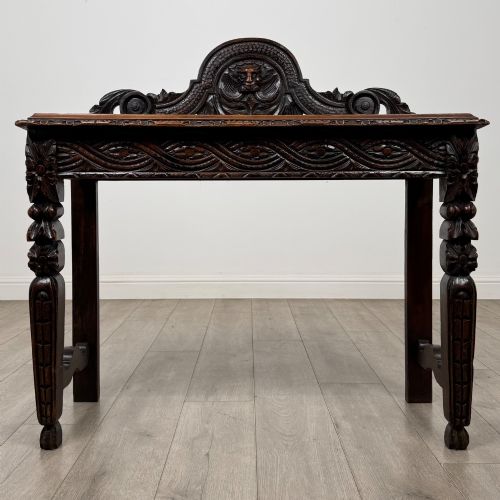
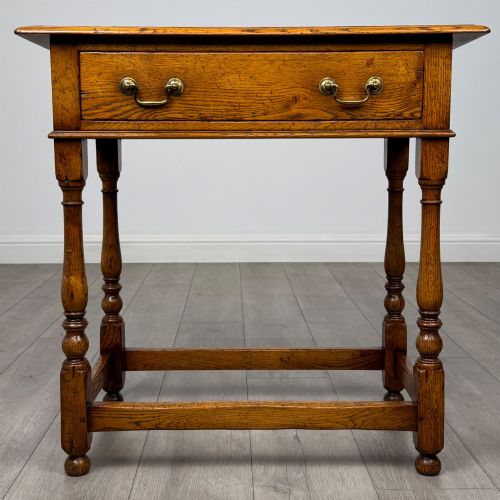
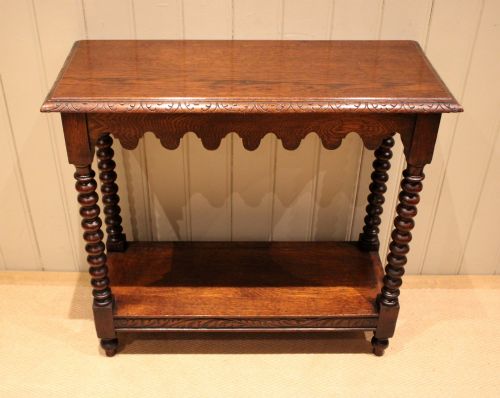
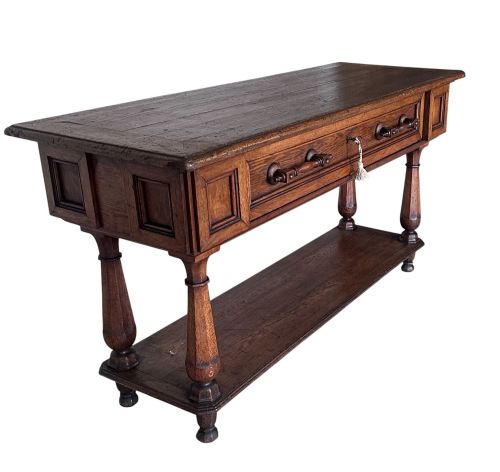
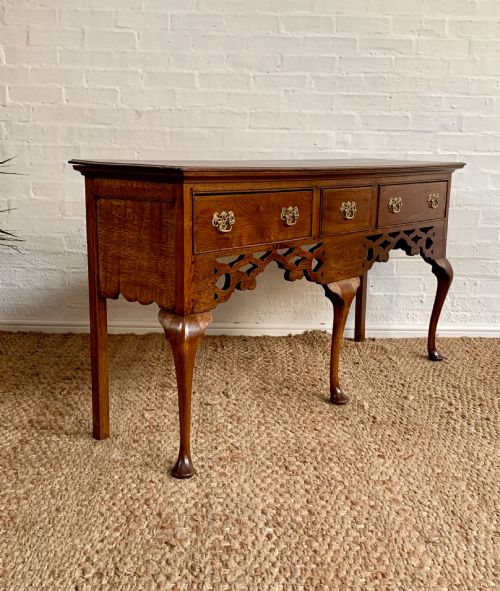
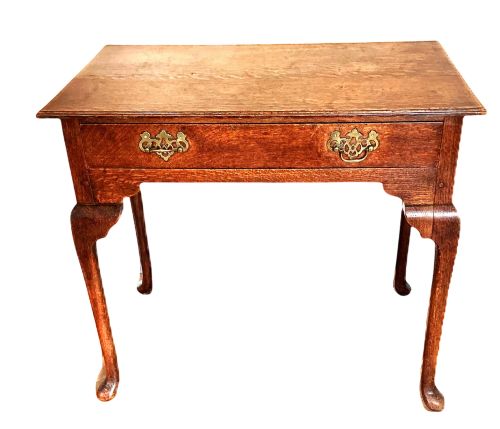
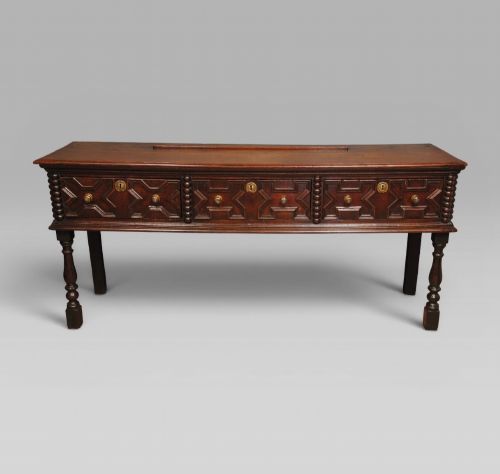
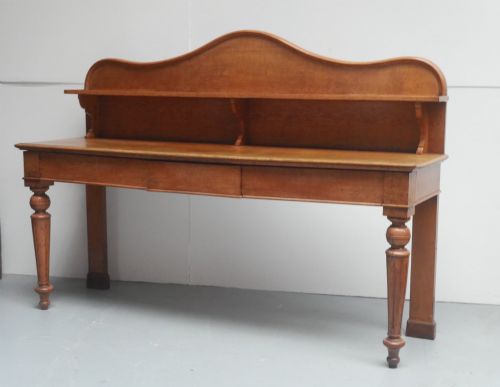
Oak Hallway Console Table
These oak hallway console table examples bring solid construction and rich grain to an entrance, offering both surface space and period character.
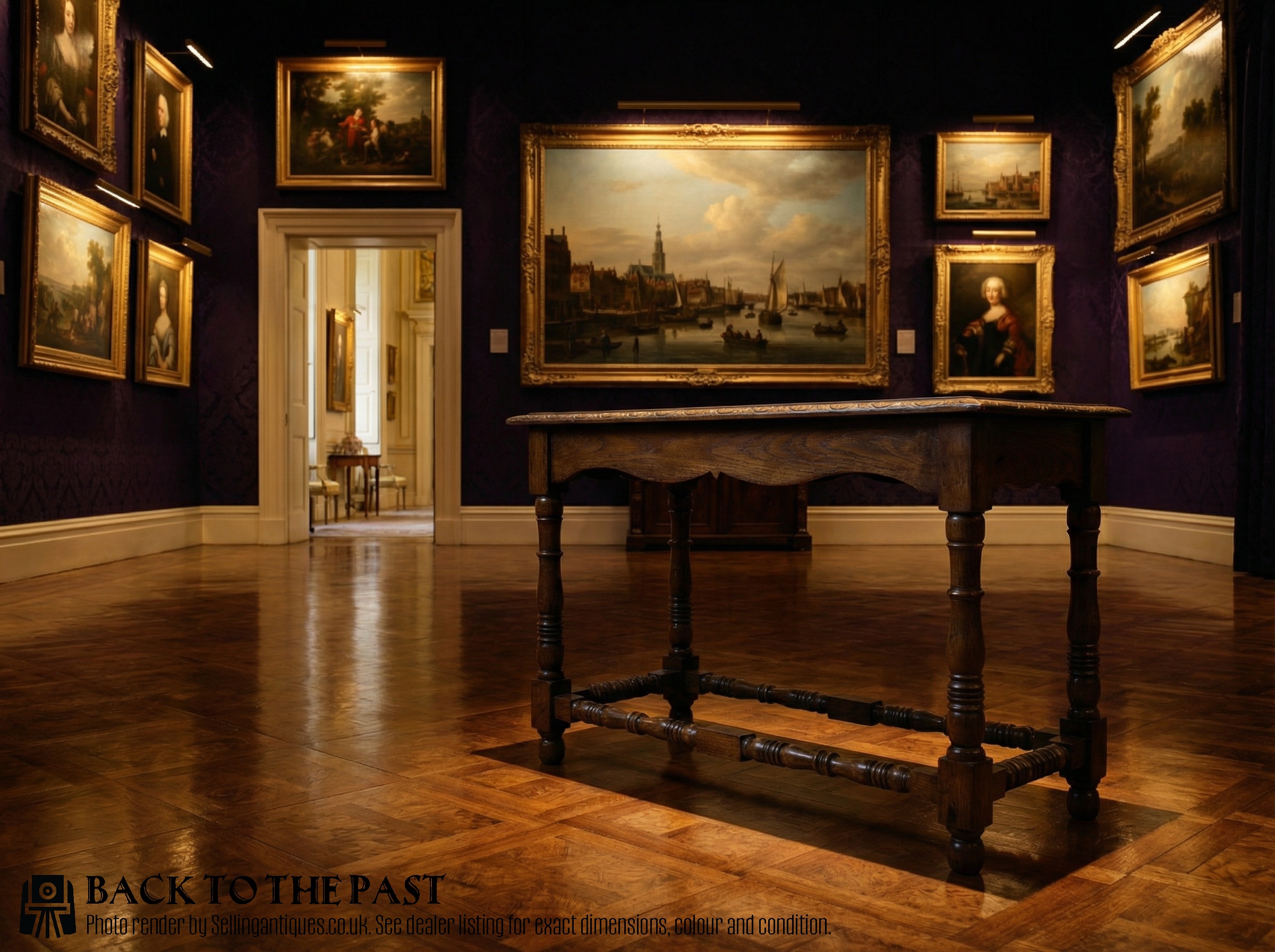
What They Are
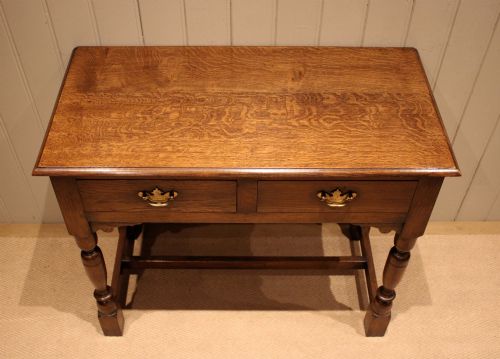
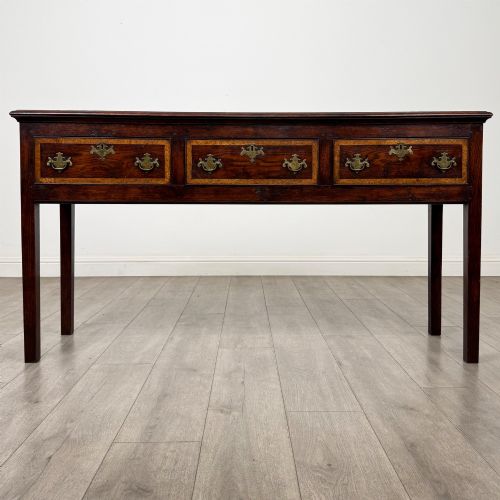
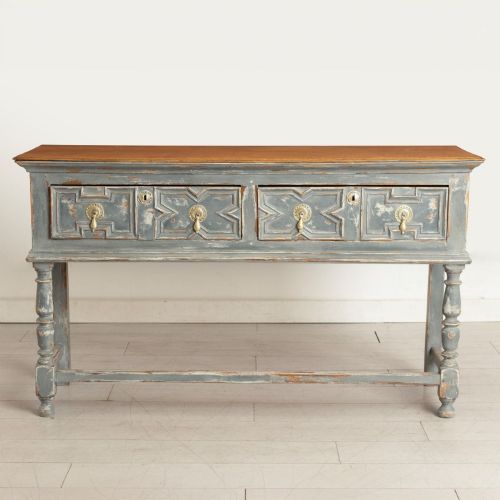
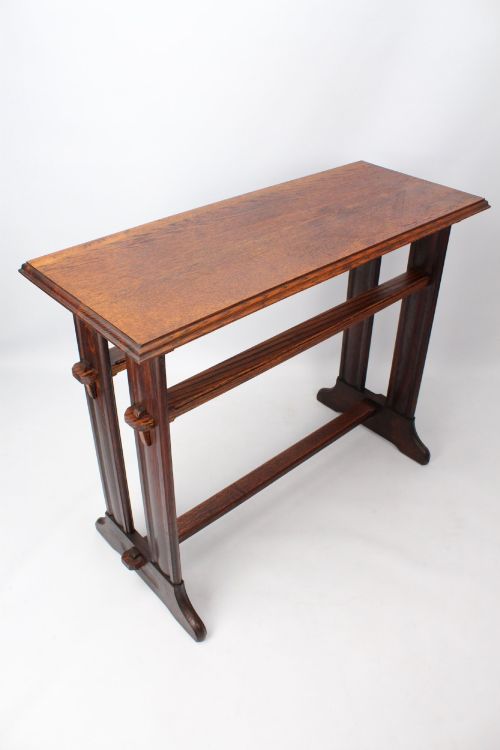
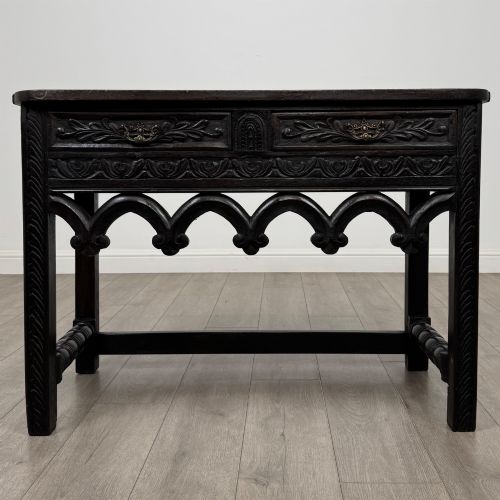
An oak hallway console table is a practical piece designed for narrow spaces, drawing on forms like side tables, sideboards, and servers. The examples available span the Victorian era, Victorian Gothic Revival, Jacobean Revival, Edwardian period, and the early twentieth century.
Buyers encounter narrow side tables alongside larger serving tables in these listings. English Country and specific revival styles shape the appearance of these hall pieces.
Origins vary across the period selections, featuring pieces such as a large Scottish oak serving table alongside English examples. Each piece serves the traditional function of providing surface space in an entryway.
How They Were Made
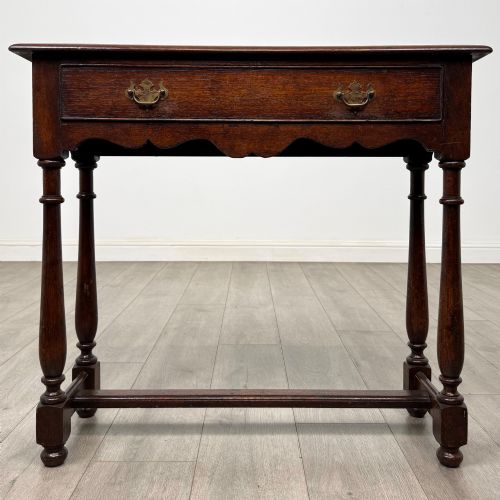
Cabinet makers utilised solid oak as the primary timber, yielding heavy, durable frames suited to high-traffic entrance spaces. Metal fittings, specifically brass, appear on certain pieces to complement the timber.
Retail Price Guide 2026
Typical UK retail prices for oak hallway console table, calculated from the Sellingantiques database of over a million retail prices indexed since 2003. This retail price guide relies exclusively on Sellingantiques data; no external sources or auction records are used, so the figures do not describe the wider market.
One determined Scottish serving table from 1850 stands ready to host every single set of keys in the postcode.
What Varies in Quality
The degree of hand carving separates standard side tables from elaborately worked Victorian Gothic Revival or Jacobean Revival pieces. Timber selection and the depth of the oak grain influence the visual weight of the console.
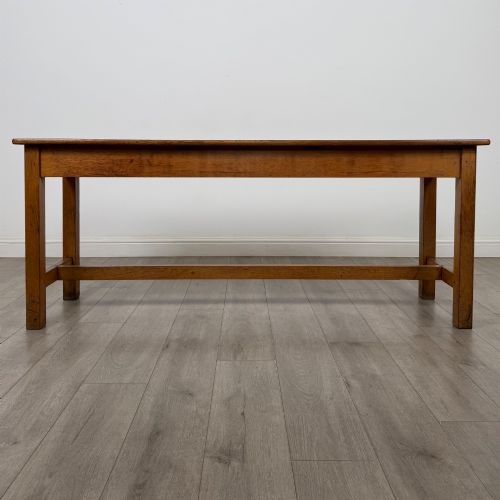
Proportion dictates utility, with narrow Edwardian side tables offering a different spatial economy compared to larger Scottish serving tables. Construction integrity in the joints and the preservation of original brass elements define the upper tier.
The Oak Hallway Console Table Glossary
- Oak
- A hard, durable timber with a distinct grain pattern, used extensively in these tables for strength and traditional appearance.
- Console Table
- A narrow table designed to stand against a wall, typically placed in a hallway or entrance.
- Sideboard
- A larger dining or serving piece that shares functional traits with the larger servers found in these listings.
- Jacobean Revival
- A style popular in British furniture design that reinterprets seventeenth-century motifs, often featuring heavy turnings and panels.
- Victorian Gothic Revival
- A nineteenth-century design movement incorporating medieval architectural elements and deep carving into domestic furniture.
Frequently Asked Questions
What is an oak hallway console table used for?
These tables provide a surface in narrow entrance spaces for keys, letters, and decorative items. Their compact footprints suit hallways where floor space is at a premium.
Larger variants, such as serving tables, offer substantial surface areas and storage potential for dining rooms or spacious grand halls.
How do I date an antique oak console table?
Dating relies on stylistic markers, such as Victorian Gothic Revival carving or Edwardian proportions. The construction methods and timber characteristics also point to specific decades between the mid-nineteenth and early twentieth centuries.
Comparing the piece to documented examples from periods like 1850 or 1920 helps narrow down its decade of origin.
Are these tables made of solid oak?
The listings consist of oak construction, utilising the timber's natural strength and grain for durability. Brass hardware often accompanies the wooden structures.
Different revival styles apply this solid timber to varying decorative effects, from plain narrow surfaces to heavily carved Victorian forms.
How do I fit a console table in a narrow hallway?
Narrow Edwardian side tables and specific console forms are built specifically for restricted spaces like entryways. Their shallow depth allows them to sit flush against a wall without obstructing passage.
Measuring the clearance of your hallway against the table dimensions ensures proper placement alongside doors and walkways.