


Oak Flap Dining Table
An oak flap dining table provides sturdy timber character and expandable surface space, making it a practical choice for everyday meals.
Oak Flap Dining Table
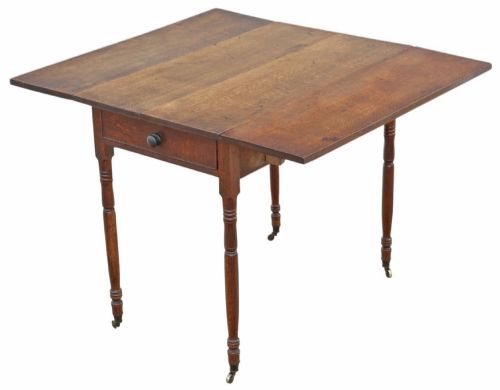
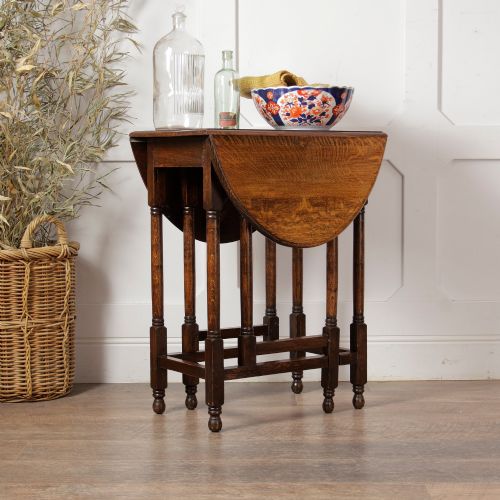
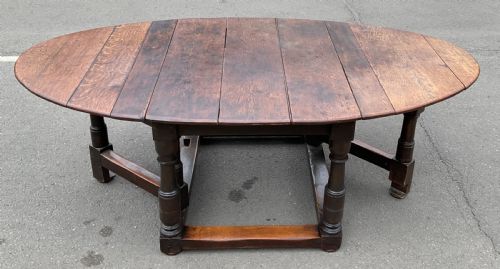
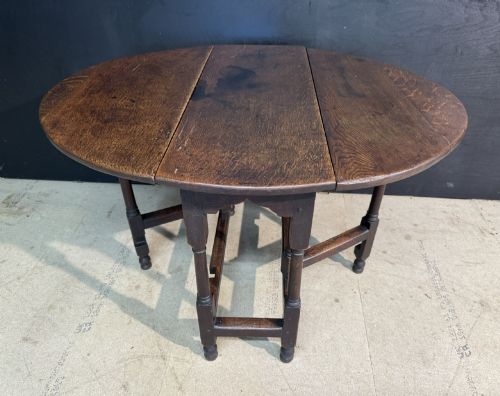
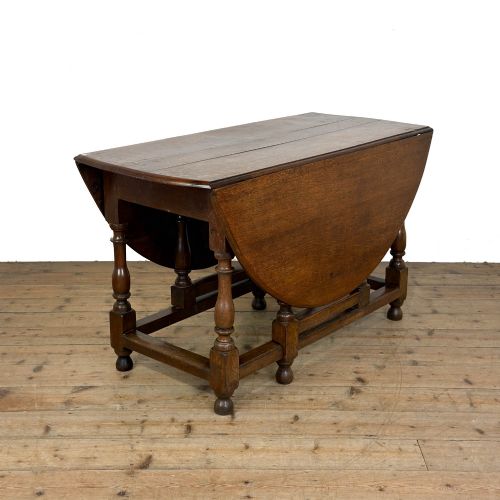
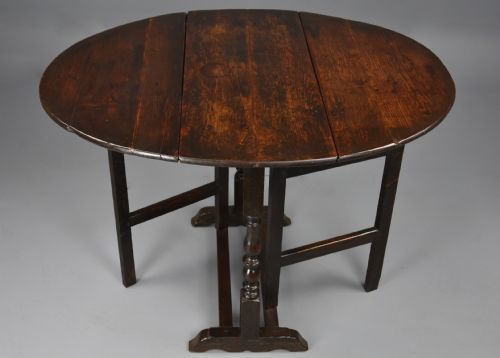
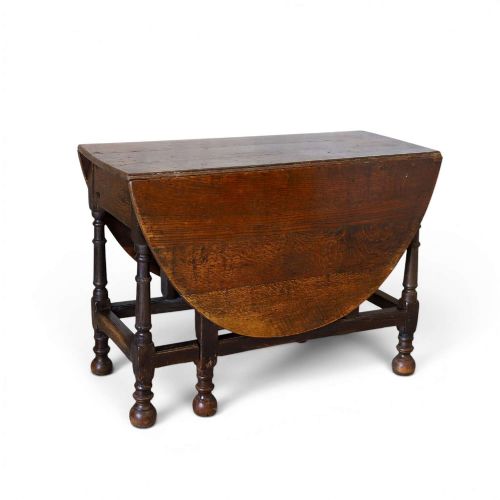
An oak flap dining table is primarily represented here by gateleg and drop-leaf forms that expand on hinged supports to accommodate multiple diners. These tables draw on centuries of British cabinet making, utilising solid timber frames designed to fold away when space is required.
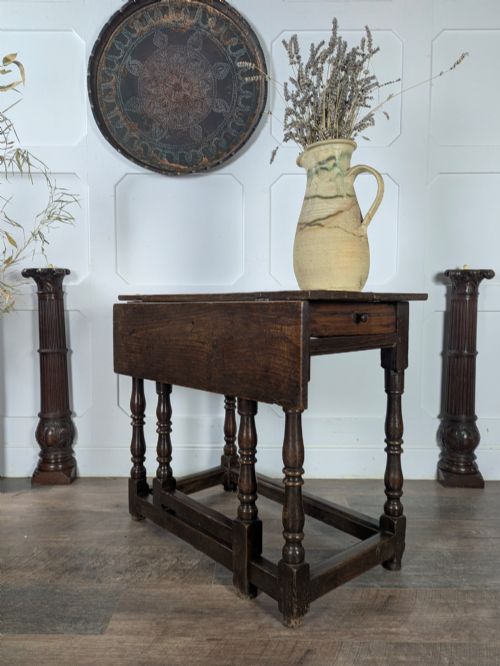
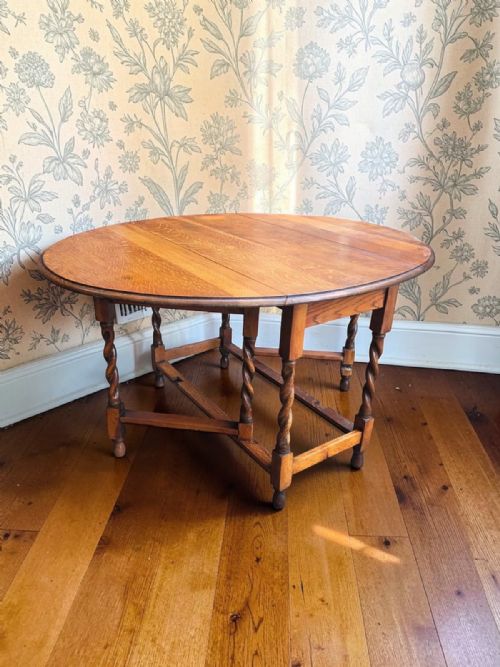
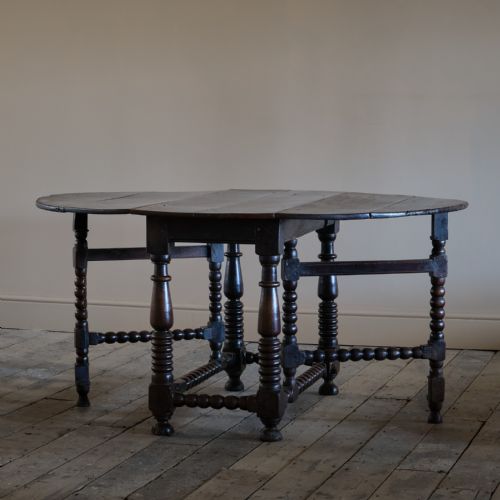
The pieces on this page span several centuries, reaching from the seventeenth century through the Georgian and Edwardian eras up to the nineteen-thirties. Seventeenth-century examples often display turned supports, while later interpretations from the early twentieth century adapt the traditional drop-leaf mechanism into lighter domestic settings.
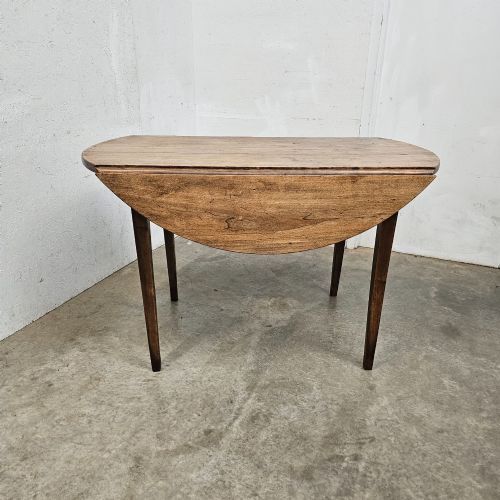
Most entries belong to seventeenth, eighteenth, and early twentieth-century periods, showing substantial oak construction combined with fruitwood or mahogany elements in select variations. Buyers encounter oval and rectangular tops supported by swinging gate legs or Pembroke-style drop leaves.
What varies in quality
Quality rests in the integrity of the timber and the retention of original components such as hinges, latches, and structural pegs. Tables retaining a warm, deep patination developed through centuries of use stand apart from pieces subjected to aggressive modern stripping or rebuilding.
The refinement of the leg turnings and the thickness of the solid oak top define the upper tier of examples. Subtleties in proportion, from small seventeenth-century proportions to large six-seater wake tables, dictate how successfully the table balances daily utility with historical presence.
Listings span from the seventeenth century through the Georgian and Edwardian periods up to nineteen-thirty, utilising solid oak, fruitwood, and mahogany.
The Oak Flap Dining Table Glossary
- Gateleg table
- A table with hinged leaves supported by swinging legs that pivot outward like a gate. This design allows the surface to expand significantly when needed.
- Drop-leaf table
- A table featuring a fixed centre section and hinged flaps on either side that lower or rise. These leaves rest on pull-out brackets or pivoting supports.
- Barley twist
- A type of spiral turning resembling a twisted rope, carved into wooden furniture legs and uprights. This decorative technique appears frequently on seventeenth-century and revival pieces.
- Bobbin turned
- A style of furniture turning that creates a series of rounded spheres resembling spools or bobbins threaded along a post. It provides sturdy support with distinct visual rhythm.
- Patina
- The surface sheen and coloration developed by wood through age, handling, and exposure to light over many decades. A rich patina indicates undisturbed historical surfaces.
Oak Flap Dining Table: Frequently Asked Questions
How do I seat six people at an oak flap dining table?
You lift both drop leaves into a horizontal position and swing the outer gate legs outward from the central frame to lock beneath the wood. This creates a wide oval or rectangular surface with sufficient clearance for chairs along the sides.
When the meal concludes, drop the flaps down and push the gate legs back flush with the fixed centre section to reduce the table's footprint against the wall.
What is the difference between a gateleg and a drop-leaf table?
A gateleg table utilises pivoting legs that swing out on a hinged gate to directly support the extended flaps. This mechanical support handles substantial weight from large oak tops.
Standard drop-leaf tables, such as Pembroke designs, often rely on sliding wooden brackets or rule joints rather than swinging legs to hold the leaves aloft.
How can I tell a seventeenth-century oak table from a revival piece?
Seventeenth-century tables display authentic hand-carved joinery, pegged framing, and timber surfaces showing heavy tool marks and natural wear patterns accumulated over hundreds of years. The colour and depth of the patina reflect genuine age.
Revival pieces made around nineteen-twenty often feature machine-cut elements, standardised turnings, and lighter finishes that lack the dense grain compaction and tactile history of earlier centuries.
Where should I place an oak flap dining table in my home?
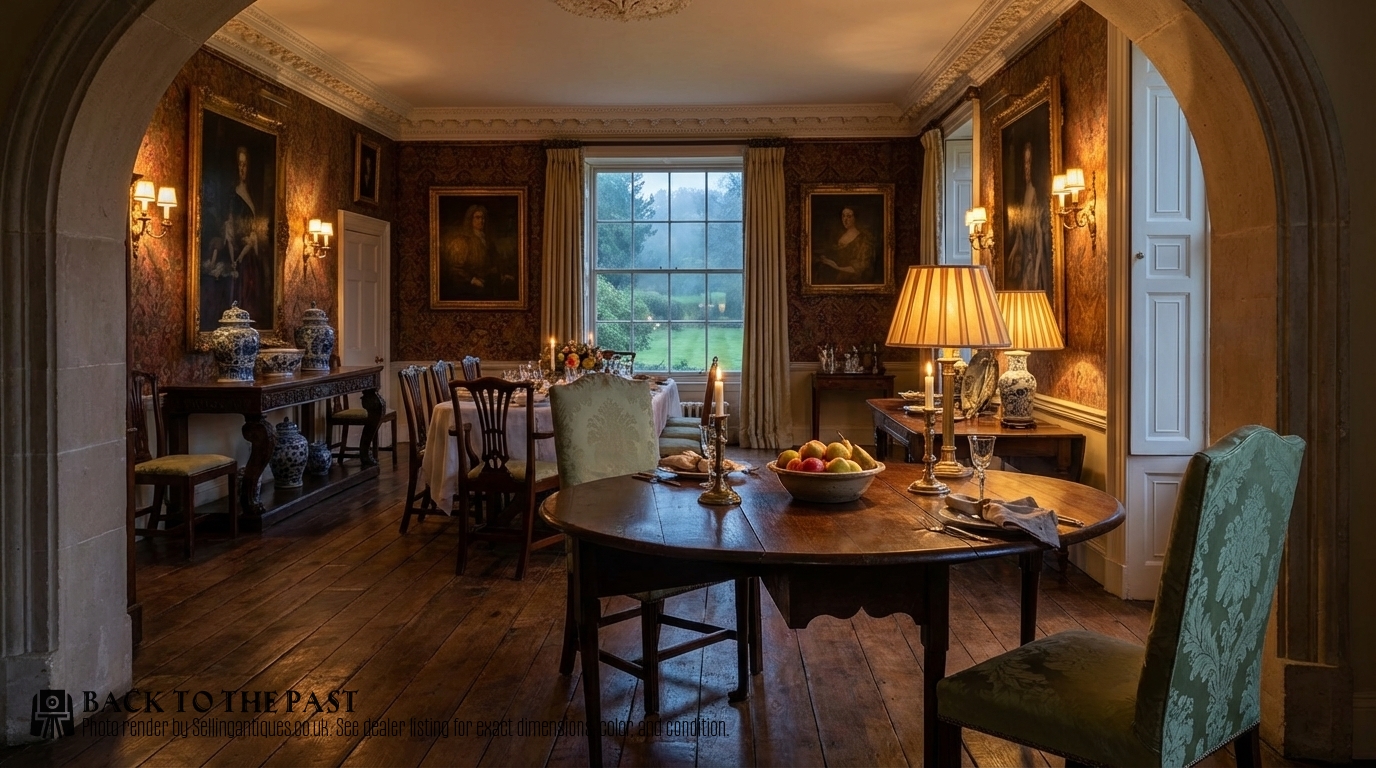
These tables fit well in dining rooms, kitchens, or large living spaces where flexibility in floor area is desired. With the leaves dropped down, the table functions as a side table or console against a wall.
When fully opened, it serves as a central dining hub for family gatherings without permanently occupying maximum room space.