
Oak Entryway Seat
An oak entryway seat brings immediate character to a hallway, offering a solid place to sit when entering the home.
Oak Entryway Seat
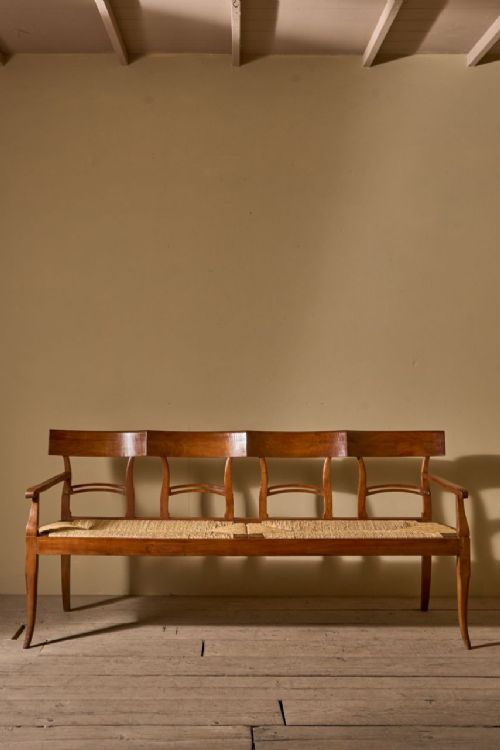
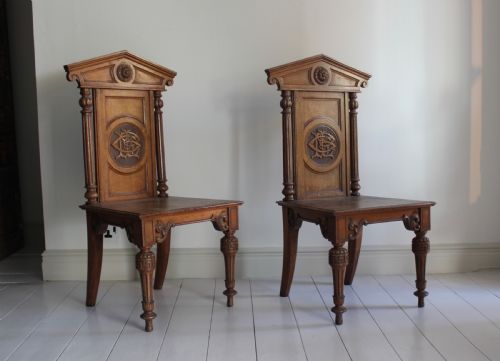
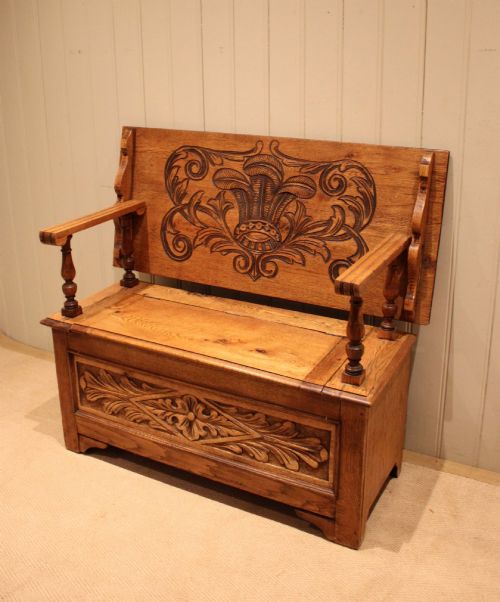
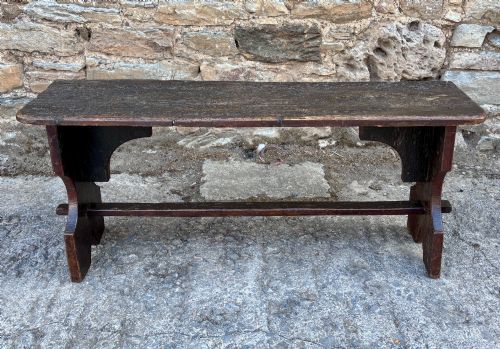
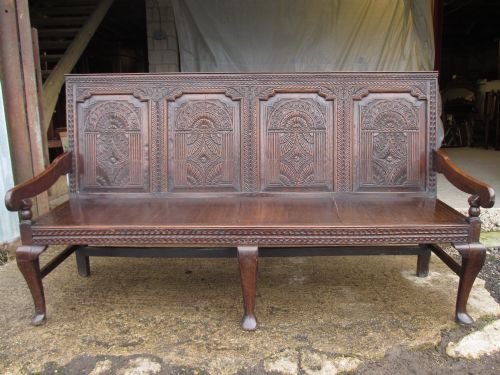
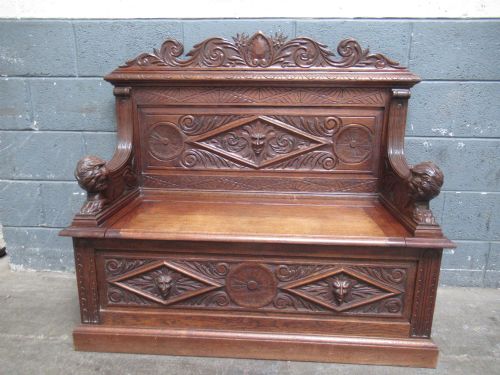
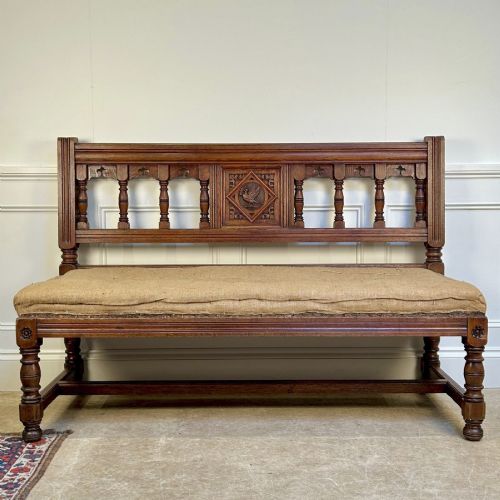
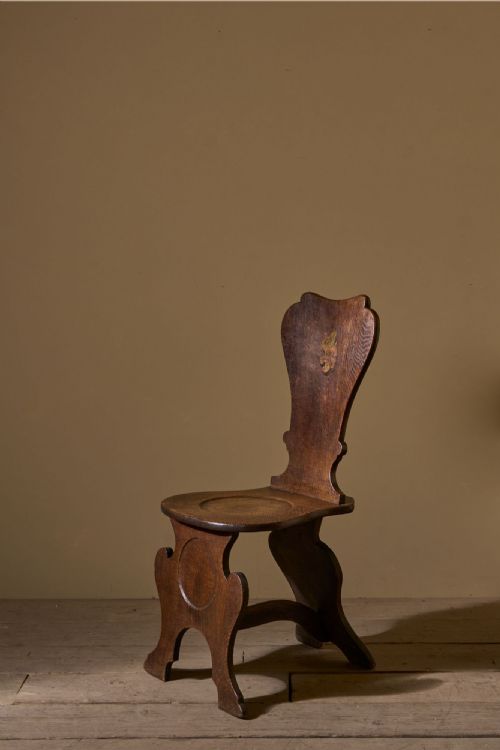
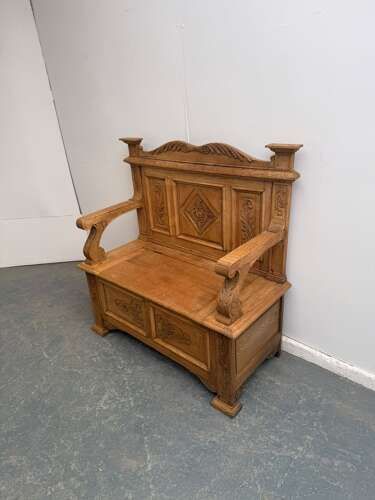
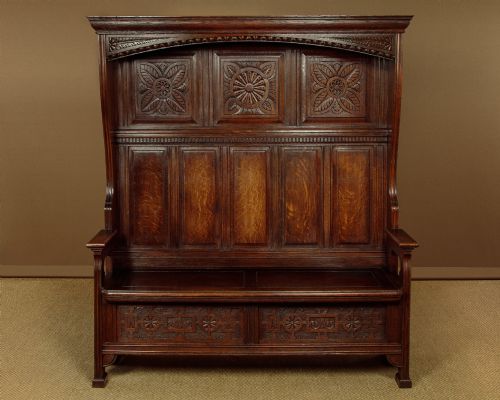
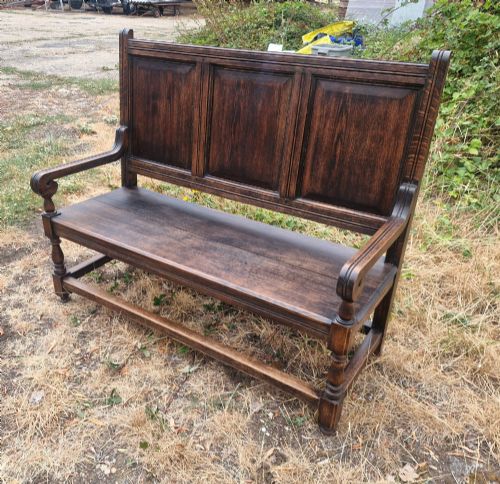
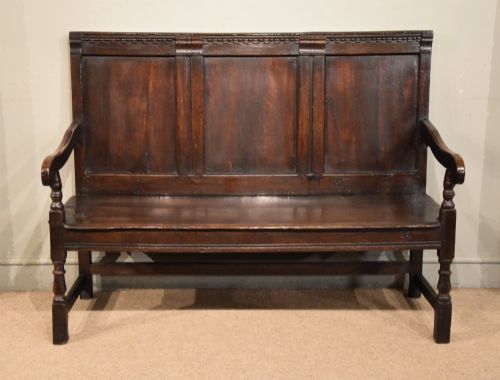
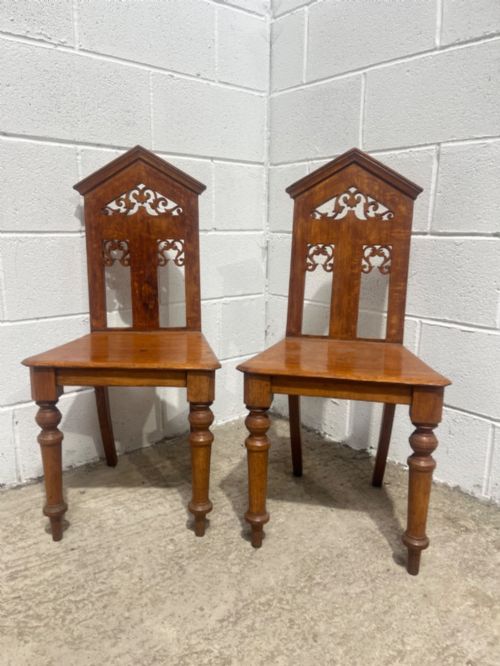
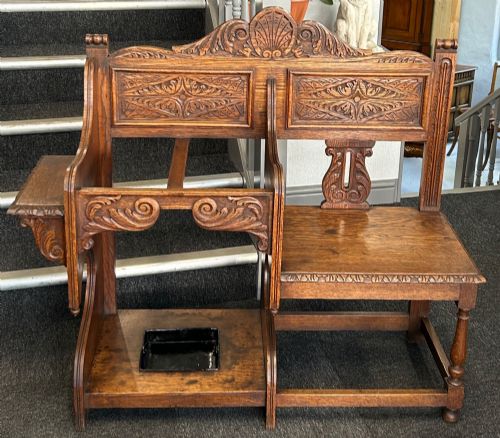
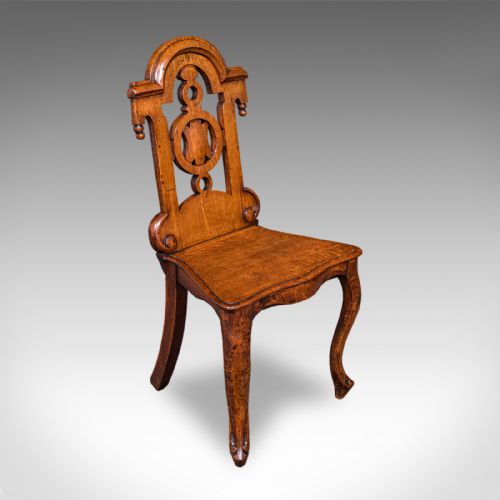
An oak entryway seat appears in several traditional forms across this selection, including benches, settles, monks benches, and hall chairs designed specifically for corridors and vestibules. These pieces originate from various periods spanning the eighteenth century through the early twentieth century, reflecting shifting domestic habits and architectural needs.
The most common examples on this page date from the nineteenth and early twentieth centuries, encompassing Victorian, Edwardian, and Arts and Crafts movements. Buyers encounter sturdy box settles with storage compartments alongside narrow hall benches and matched pairs of high-backed chairs.
Regional British and Irish country house styles shape much of what survives, alongside revival aesthetics such as Gothic, Jacobean, and Renaissance. Each piece serves the practical function of welcoming visitors while setting a distinct historical tone in the hall.
Materials and Construction
Solid timber forms the structural core of these items, with oak dominating the selection alongside supplementary elements of cherrywood, burr elm, brass, iron, leather, fabric, and rush. Workshops utilised traditional joinery techniques, employing pegged mortise and tenon joints to ensure stability in heavy-use corridor furniture.
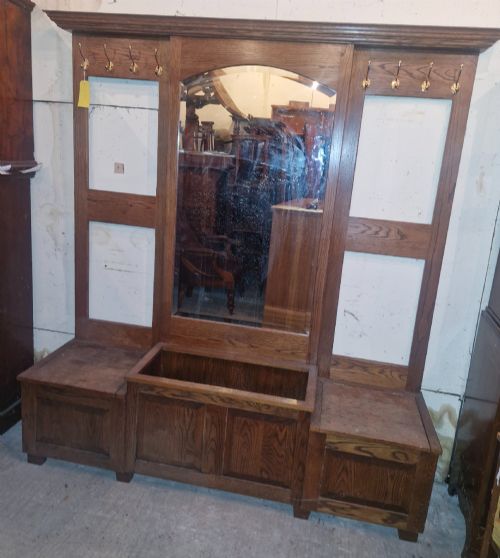
Surface ornamentation ranges from plain waxed finishes to deep hand-carved panels, heraldic shield backs, canopy tops, and integrated stick or umbrella stands. Metal hardware such as brass hooks and mounts frequently provides functional contrast to the dark or golden grain of the wood.
Several pieces double as umbrella stands or boot stores, ready to catch the eternal dampness of the British weather.
Distinctions in Execution
The standard of a piece rests largely on the depth and crispness of its carved decoration, the weight of the timber, and the integrity of its structural framing. Heavier box settles and architectural canopy benches demonstrate a higher tier of joinery than lighter utility seating.
Maker attribution elevates certain examples, particularly where documented workshops or prominent retailers like James Shoolbred and Liberty applied their distinct design philosophies. Proportions also govern quality, as narrow, balanced forms designed for compact hallways command particular attention.
GIllows·James Shoolbred & Co.·Liberty
The Oak Entryway Seat Glossary
- Settle
- A wooden bench with high back, solid arms, and often a storage box beneath the seat. This form protected sitters from draughts in entrance halls.
- Monks Bench
- A convertible piece of furniture that typically transforms from a bench with a solid back into a table. The hinged back flips forward to create a flat surface.
- Hall Chair
- A rigid, upright wooden seat designed for occasional use in a vestibule rather than prolonged lounging. These often feature heraldic shields or carved panels.
- Box Settle
- A bench incorporating a hinged seat lid that opens to reveal a deep storage compartment underneath. These served as practical receptacles for boots and outer garments.
- Gothic Revival
- An architectural and decorative style drawing inspiration from medieval forms. Pieces display pointed arches, tracery, and heavy carved mouldings.
Oak Entryway Seat: Frequently Asked Questions
What is an oak entryway seat used for?
These pieces provide a practical spot for putting on or removing shoes and boots near the front door. Many incorporate storage boxes, umbrella stands, or coat hooks to keep hallway clutter hidden.
Historically, they also established an immediate impression of status and hospitality for visitors entering the home. Today, they continue to serve both functional storage and decorative roles in modern corridors.
How do I tell an 18th-century settle from a Victorian one?
Earlier eighteenth-century examples usually exhibit simpler, pegged construction with heavy hand-planed boards and simpler, deeper patination. Their proportions tend to be more rustic and utilitarian.
Victorian and later revival pieces frequently display heavier, more complex machine-assisted or deeply sculpted carving, often incorporating Gothic or Jacobean motifs. The interior secondary woods and hardware can also offer clues to the actual period of manufacture.
Are these seats suitable for narrow hallways?
Many styles, particularly specific hall benches and pairs of hall chairs, are designed with exceptionally shallow dimensions. These fit comfortably against corridor walls without obstructing movement.
Box settles require slightly more floor clearance due to their depth and the space needed to open storage lids. Checking the exact depth measurements ensures a proper fit for restricted spaces.
How do I care for antique oak furniture?
Maintaining the wood involves occasional application of quality wax to nourish the grain and protect the surface from moisture. Avoiding direct sunlight and sudden temperature changes prevents the timber from drying out or splitting.
Dusting regularly with a soft, dry cloth preserves the natural sheen developed over centuries of handling.