
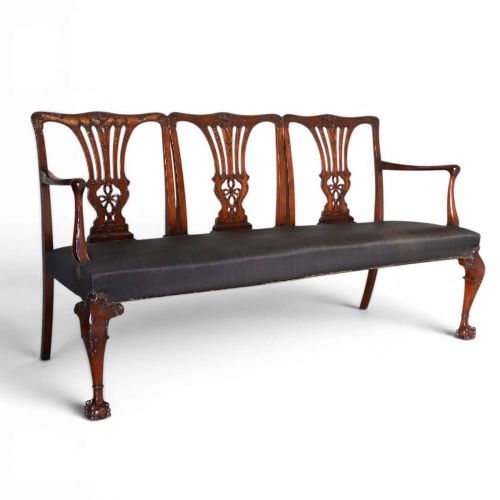
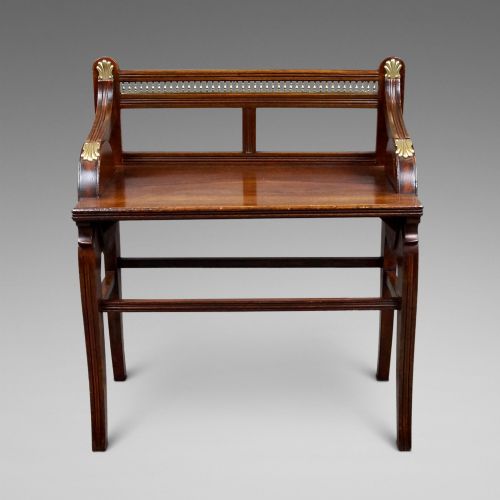


Edwardian Carved Bench
An edwardian carved bench brings solid timber and traditional joinery together, offering practical seating with distinctive period ornament.
Edwardian Carved Bench
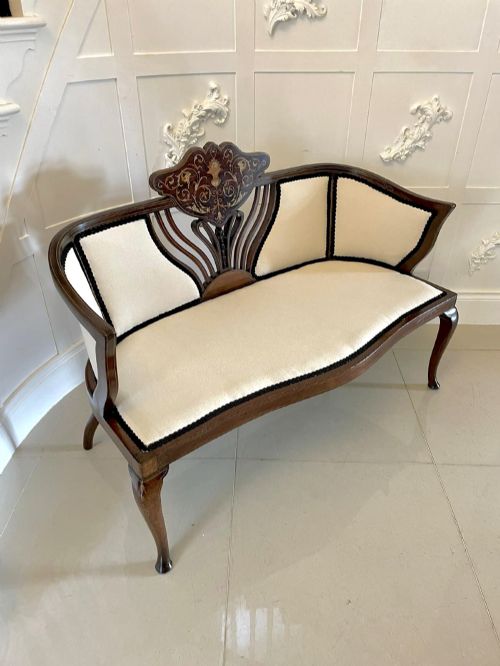
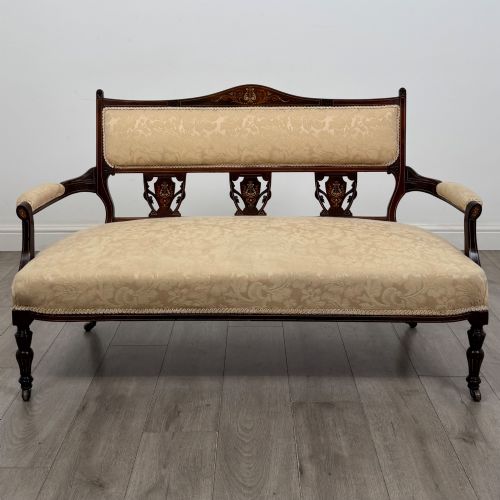
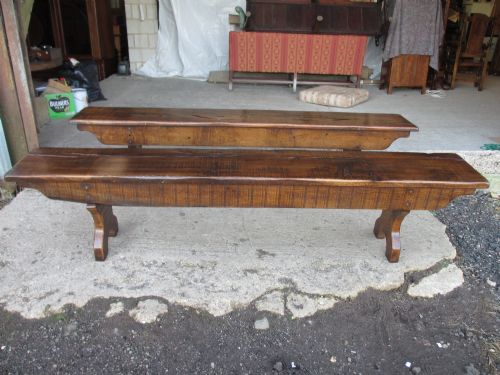
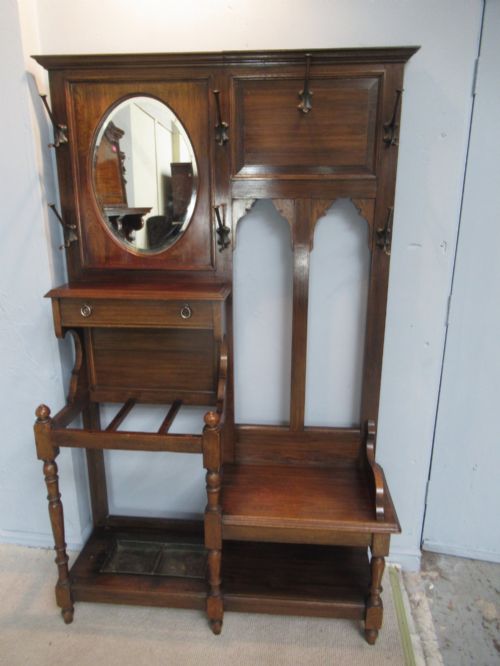
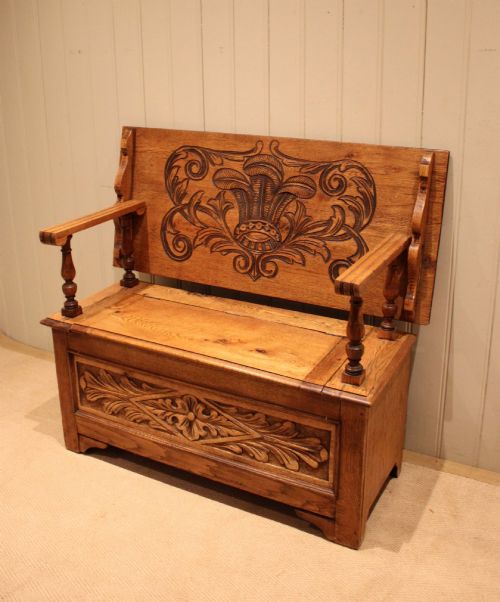
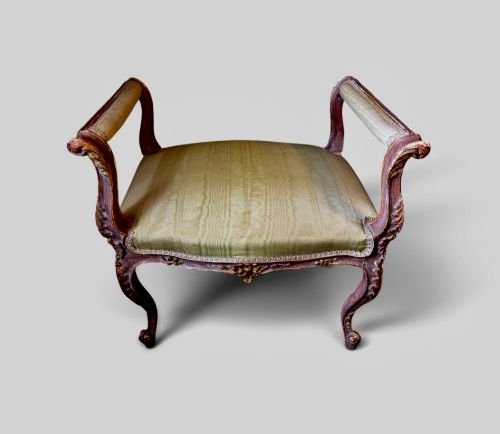
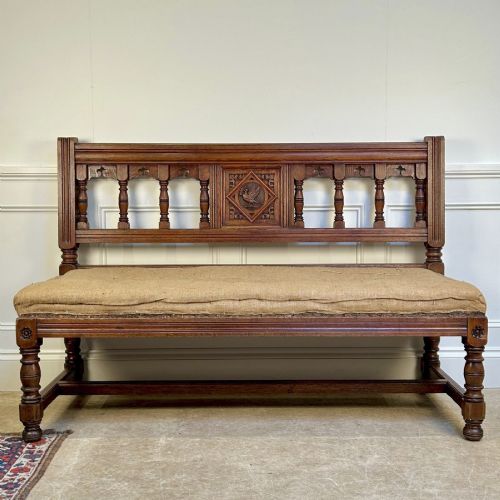
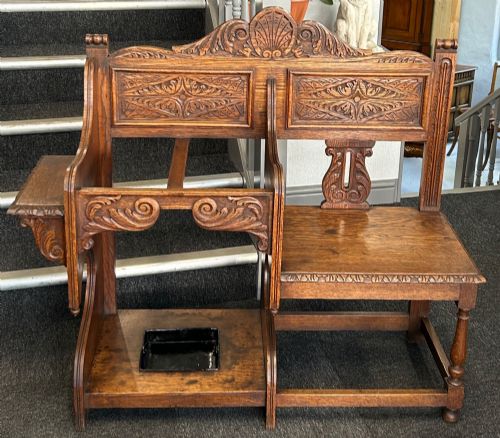
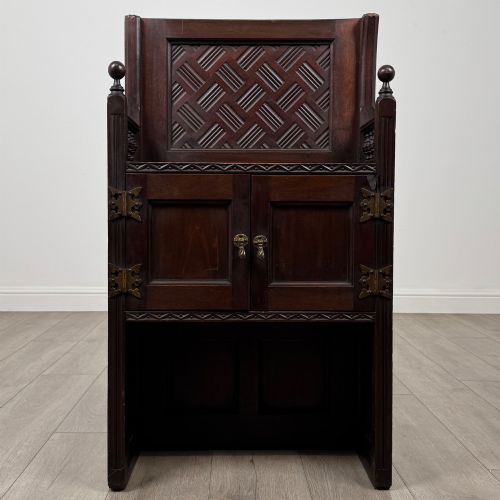
An edwardian carved bench is primarily represented on this page by oak and mahogany hallway seating, box settles, and monks benches. These pieces originate predominantly from the early twentieth century, reflecting the domestic architecture and interior tastes of the period.
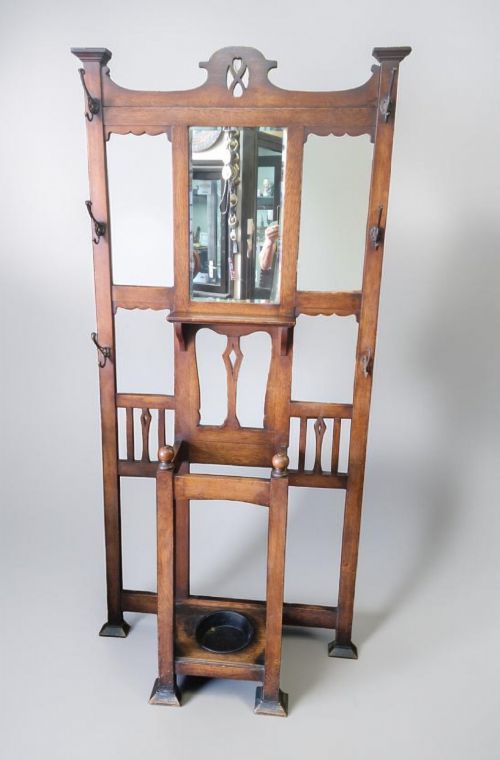
The selection frequently includes hall seats with integrated stick stands, coat hooks, or lift-up storage compartments designed for narrow entrance halls. Heavy oak construction dominates the Edwardian entries, often paired with shaped trestle ends or panelled backs.
Makers and workshops of the era drew heavily on Jacobean and Arts and Crafts design vocabularies, applying chip carving, linenfold panels, and geometric strapwork directly to solid timber frames.
Materials and construction
Timbers are predominantly solid oak and mahogany, selected for durability and finished with traditional wax or polish to reveal the grain. Secondary woods appear in internal framing, while brass fittings supply structural strength and functional hardware.
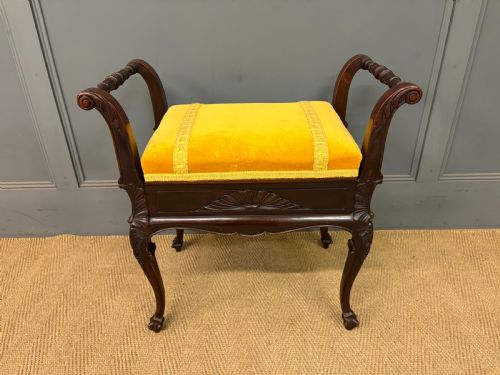
Joinery relies on pegged mortise and tenon joints, manual hand-carving for decorative panels, and turned supports. Upholstered variants incorporate fabric, leather, or velvet over webbed or sprung bases.
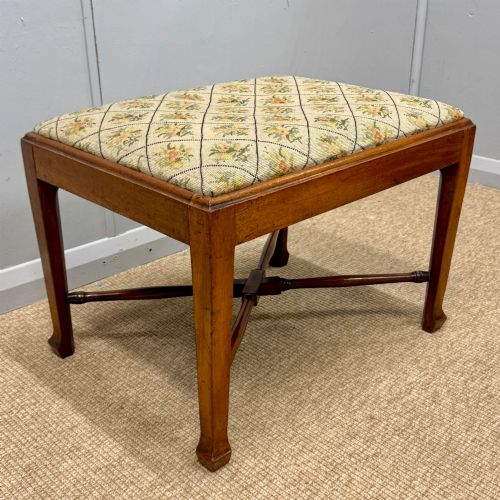
Listings feature oak, mahogany, walnut, and satinwood alongside fabrics like velvet, leather, and needlework.
Assessing quality
Quality rests upon the weight of the timber, the crispness of the hand-carving, and the integrity of the original joints. Superior examples display dense, figured grain and deep, deliberate chisel work rather than shallow machine routing.
The integration of functional elements, such as hinged box seats or fitted coat panels, distinguishes higher-grade workshop production from simpler utility pieces. Retaining original hardware and unblemished surface patination elevates an example within its type.
GIllows·Jas Shoolbred·Shapland & Petter·Liberty·Wylie Lockhead Manufacturers·Maple & Co
The Edwardian Carved Bench Glossary
- Monks bench
- A convertible seat featuring a hinged back that folds down onto the arms to form a table top. This dual-purpose form became particularly popular during the Edwardian revival periods.
- Settle
- A wooden bench with a high solid back designed to block draughts, often incorporating a storage box beneath the seat. They are traditionally placed in halls or beside fireplaces.
- Trestle ends
- Vertical supporting frameworks positioned at each end of a bench rather than traditional corner legs. They provide rigid lateral stability for heavy timber seating.
- Chippendale-style
- A design vocabulary characterised by ornate interlaced carved splats and cabriole legs ending in ball and claw feet. It was frequently revived by Edwardian cabinet makers.
- Box settle
- A bench featuring a lidded compartment under the seat base for storing outerwear or household goods. This form combines seating with heavy wooden storage.
Edwardian Carved Bench: Frequently Asked Questions
Where were these benches placed originally?
Edwardian seating forms were designed primarily for hallways, vestibules, and large entrance spaces where guests were received. Their robust construction suited areas of high domestic traffic.
Many incorporated coat hooks, umbrella wells, or storage boxes to serve as multifunctional cloakroom furniture for everyday household use.
How do I care for a polished oak bench?
Maintain the timber by applying a traditional beeswax polish sparingly and buffing it with a soft cloth to preserve the natural lustre. Avoid placing solid wood furniture near direct heat sources or in fluctuating humidity.
Keep upholstered elements vacuumed lightly and protect leather or velvet surfaces from direct sunlight to prevent fading.
What defines the Arts and Crafts influence?
Arts and Crafts pieces emphasise visible hand-craftsmanship, pegged joinery, and honest materials rather than machine-made ornamentation. Carvings tend to be simpler and more stylized.
This movement valued structural integrity and utility, resulting in sturdy oak frames with functional storage and minimal applied decoration.
How do I distinguish Edwardian from Victorian oak?
Victorian oak furniture frequently displays heavier, darker finishes with elaborate, deep relief carving inspired by Gothic or Renaissance revivals. Proportions tend to be massive.
Edwardian interpretations often exhibit slightly lighter framing, cleaner lines, and brighter honey-toned wax finishes while retaining traditional joinery techniques.