


Oak Dresser Base Rack
An oak dresser base rack combines a heavy timber sideboard with an open upper display, offering practical storage for kitchenware and historic charm.
Oak Dresser Base Rack
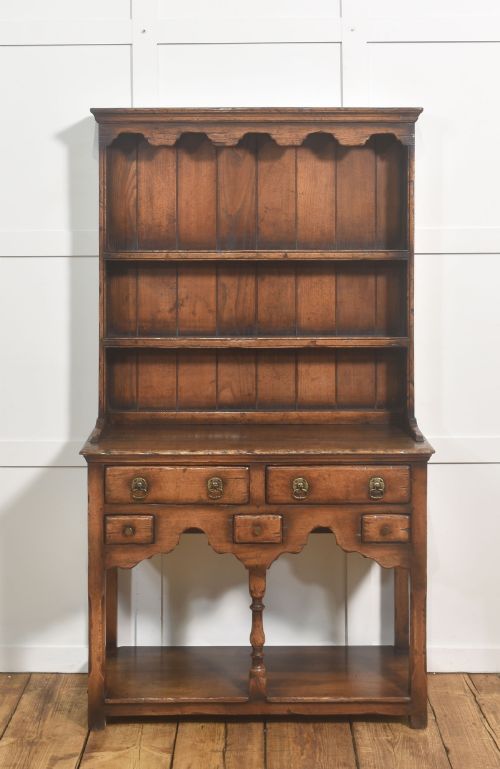
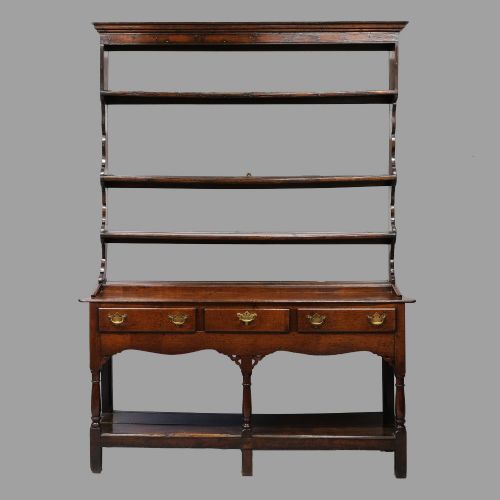
An oak dresser base rack unites a lower storage cabinet or potboard with an upper plate shelf structure, originating primarily from Welsh and English farmhouses. These substantial items serve as functional furniture for displaying ceramics while concealing everyday utensils below.
The pieces appearing on this page span the 18th century, Georgian era, and later Victorian and Edwardian revivals. Buyers frequently encounter regional variations featuring enclosed cupboards or open potboards beneath stepped plate racks.
What varies in quality
Proportion and timber selection dictate the standing of a piece, with finely figured grain and well-balanced dimensions marking superior examples. Regional rarity, such as specific Welsh breakfront configurations, also influences the distinction between standard and exceptional items.
The retention of original upper racks paired to their corresponding bases remains a primary factor in historical integrity. Alterations to hardware, feet, or cornices alter the overall standard of the furniture.
Some antique dresser racks still retain faint grease marks behind the shelves from centuries of resting mutton bones and dripping ladles.
G T Rackstraw
The Oak Dresser Base Rack Glossary
- Potboard
- A lower slatted shelf fitted between the legs of a dresser base, traditionally used for storing pots and pans. This open platform distinguishes many country pieces from standard enclosed sideboards.
- Plate rack
- The upper tiered shelving unit attached to or hung above a dresser base, designed to display ceramic plates upright. Grooves along the shelves hold the dinnerware securely in place.
- Breakfront
- A cabinet design where the central section projects forward from the flanking wings. This architectural arrangement adds depth and shadow to larger regional dressers.
- Joined
- A term indicating furniture constructed using rigid mortise and tenon joints pegged together with wood. It denotes traditional craftsmanship preceding mass manufacturing.
- Cottage dresser
- A scaled-down version of a farmhouse dresser, built to fit smaller domestic spaces without sacrificing storage capacity. These compact pieces typically feature simpler mouldings and fewer drawers.
Oak Dresser Base Rack: Frequently Asked Questions
How were oak dresser base racks used originally?
Families utilised the lower base for storing heavy cookware, dry goods, and tableware behind panelled doors or within drawers. The upper rack displayed pewter and ceramic plates for daily dining and social status.
Over generations, these items formed the functional heart of rural kitchens and pantries across England and Wales. Their dual purpose eliminated the need for separate sideboards and shelving units.
How do I care for an antique oak dresser?
Maintain the timber by applying natural beeswax sparingly to nourish the dry grain and protect the surface from moisture. Avoid placing the furniture near direct heat sources or strong sunlight, which causes timber to warp and split.
Keep the environment stable in humidity to preserve the historic joints and iron or brass hardware. Gentle dusting with a dry cloth prevents dirt accumulation without harming the patina.
Are the plate racks original to the bases?
Many surviving pieces retain their matching upper racks, though some combinations were assembled later in the furniture's history due to the separation of tops and bases. Examining the timber colour, wear patterns, and peg construction helps determine if the components originated together.
Both married and original configurations appear frequently in historical listings, reflecting centuries of domestic rearrangement.
What is the difference between English and Welsh dressers?
Welsh dressers frequently incorporate open potboards beneath the base and tend to feature distinct regional architectural traits, such as breakfront profiles from Anglesey or Carmarthenshire. English country variants more commonly feature enclosed cupboards or simple drawers in the lower section.
Both regional traditions utilised native oak and similar joinery techniques for farmhouse use.