
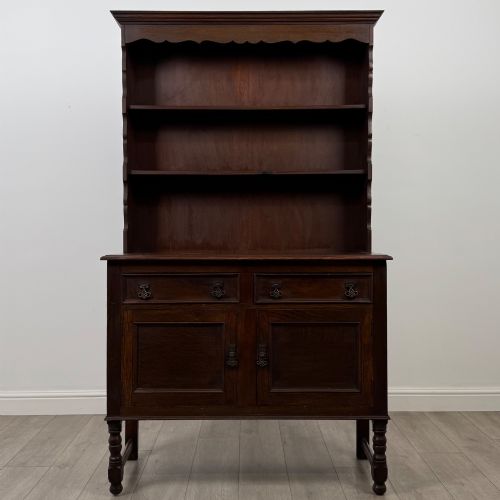

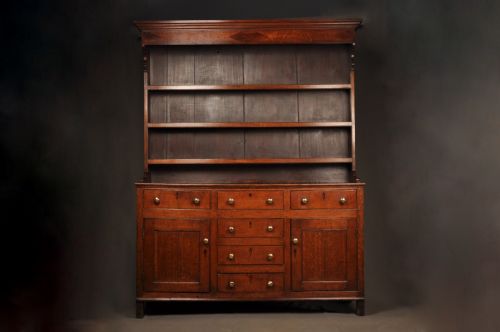
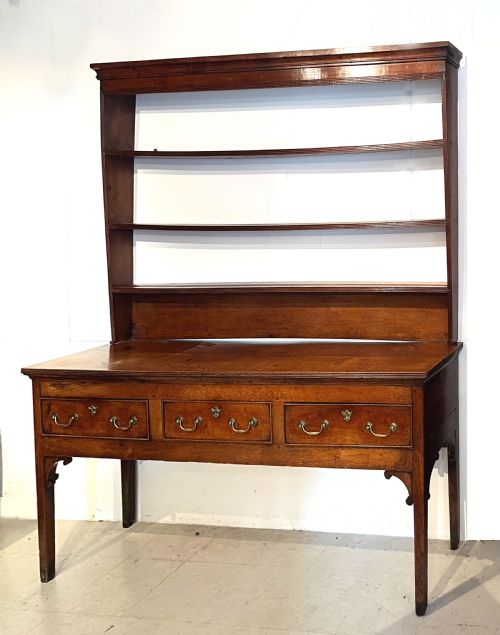


Vintage Oak Sideboard Hutch
A vintage oak sideboard hutch provides substantial timber storage and display for domestic interiors.
Vintage Oak Sideboard Hutch
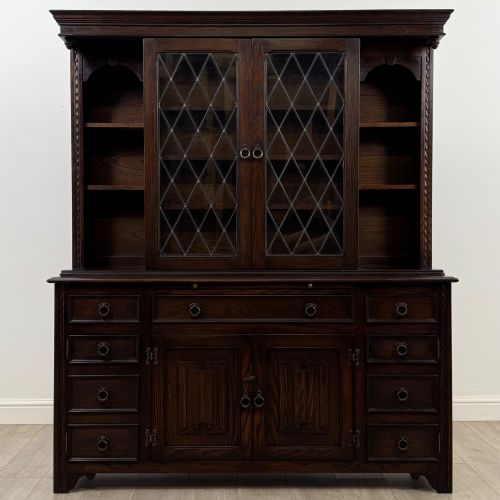
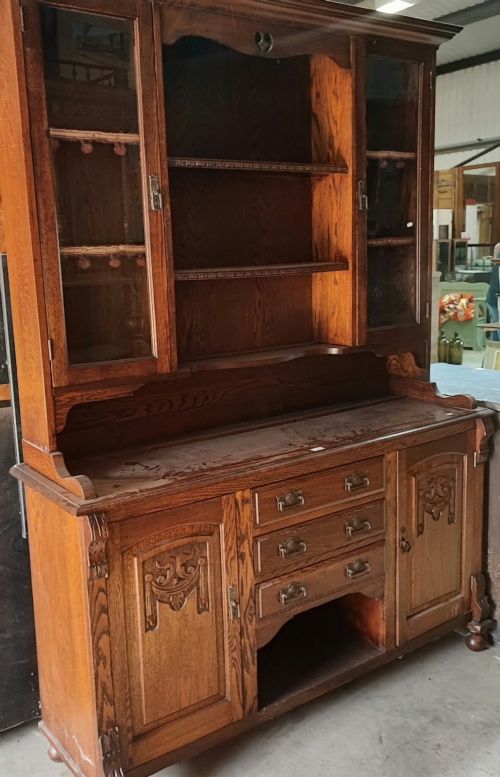
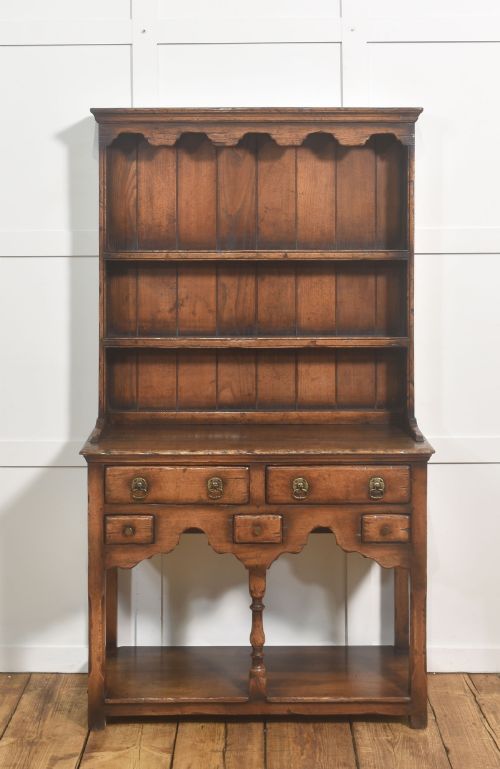
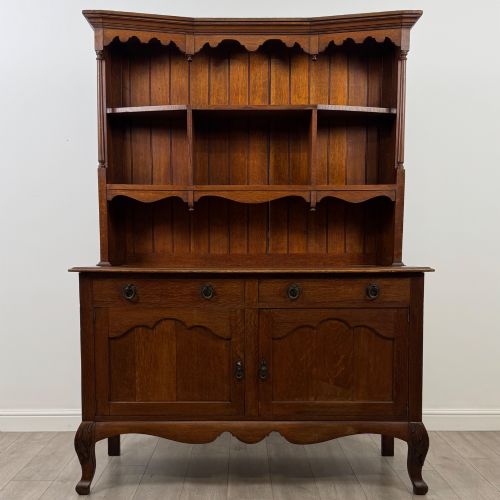
When searching for a vintage oak sideboard hutch, buyers encounter a robust category of storage furniture primarily comprising dressers, Welsh dressers, and display cabinets. These utilitarian and display items combine lower cupboard or drawer storage with upper shelving or glazed enclosures.
The pieces appearing on this page span several centuries and stylistic revivals, ranging from eighteenth-century country examples to Edwardian and later twentieth-century iterations. Construction heavily relies on oak timber, frequently paired with plate racks, leaded glass, and brass hardware.
Regional variations such as Cornish, Ipswich, and Welsh forms populate the selection, alongside revival pieces adopting Jacobean, Georgian, and Arts and Crafts aesthetics. Buyers frequently encounter two-part formats featuring a base cabinet surmounted by a plate rack or display section.
What varies in quality
Quality differences emerge through the selection and handling of timber, distinguishing plain domestic utility furniture from sophisticated joined pieces with decorative carving. The integration of period hardware and the preservation of original two-part formats influence the standing of individual examples.
The refinement of decorative elements, such as carved mouldings, leaded glass work, and panel construction, marks the distinction between standard provincial items and finer workshops like Heals of London.
Current listings feature oak timber combined with brass, glass, iron, metal, lead, and bone across eighteenth, nineteenth, and twentieth-century periods.
Heals of London
The Vintage Oak Sideboard Hutch Glossary
- Welsh dresser
- A traditional storage item featuring a base of cupboards or drawers combined with an open upper plate rack for displaying ceramic plates and kitchenware.
- Plate rack
- An open shelving structure mounted upon the upper rear of a dresser, designed specifically to display plates upright.
- Joined oak
- Furniture construction utilising mortise and tenon joints secured with wooden pegs, typical of earlier cabinet making before mass industrial production.
- Leaded glass
- Small panes of glass held together within a network of lead cames to form windows or cabinet doors, seen frequently in display cabinets.
- Jacobean Revival
- A nineteenth and twentieth-century stylistic movement copying seventeenth-century English furniture characteristics, particularly heavy proportions and geometric carving.
Vintage Oak Sideboard Hutch: Frequently Asked Questions
How do I style a vintage oak sideboard hutch?
Utilise the plate racks to display ceramics and glassware while storing tableware in the lower cupboards and drawers.
Position the piece against a solid wall in a dining room or kitchen to anchor the space with its timber presence.
What is the difference between a dresser and a sideboard?
A dresser traditionally incorporates an upper plate rack or display shelving section above the lower base.
A sideboard consists solely of the lower table or cabinet storage unit without superstructure.
How can I tell an eighteenth-century piece from a revival?
Examine the timber grain, construction joints, and overall patination for signs of authentic age and hand tool marks.
Revival pieces from the nineteenth and twentieth centuries often display machine tooling and stylised uniformity in their carved motifs.
Are these pieces suitable for modern kitchens?
The generous timber storage capacity makes them practical for holding kitchen equipment and tableware.
Their varied regional styles, from farmhouse to Arts and Crafts, suit diverse interior design schemes.