



Oak Dower Chest
An oak dower chest is a substantial storage piece built to hold household linen and bridal portions, offering robust timber construction suited to generations of daily use.

Oak Dower Chest
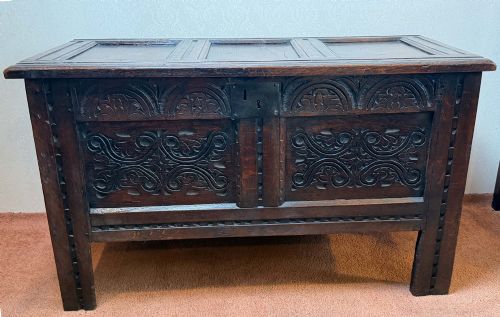
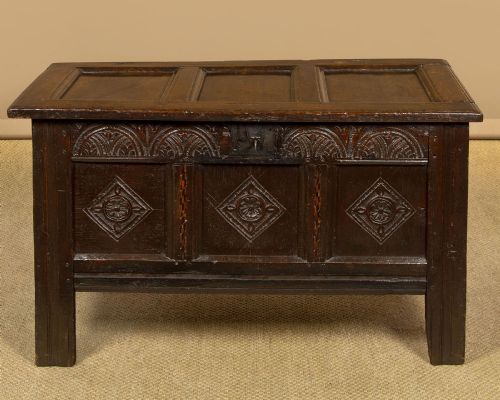
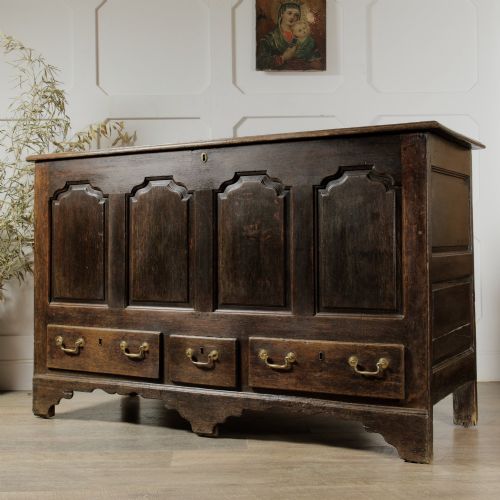
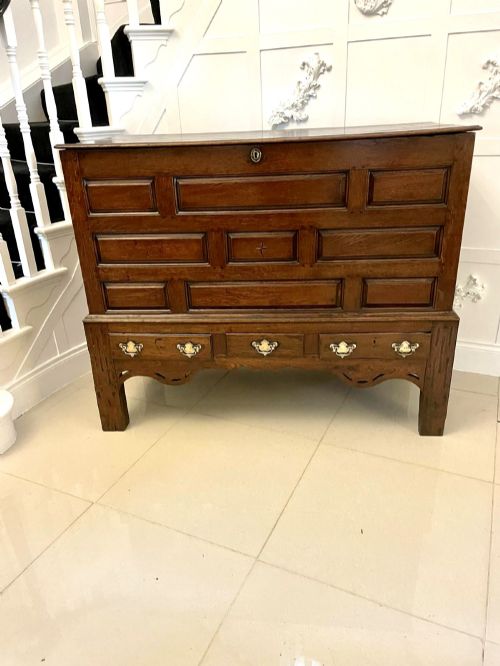
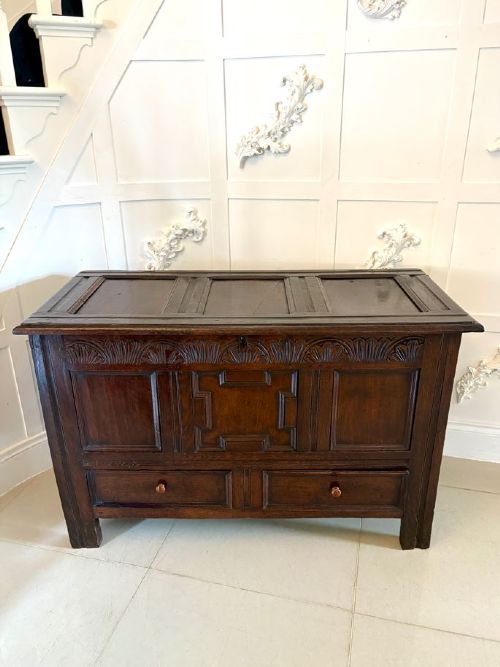
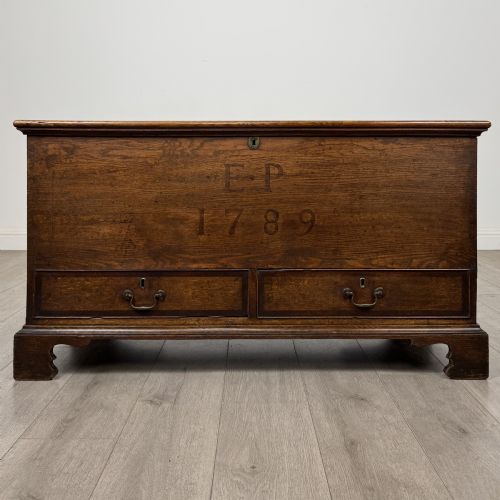
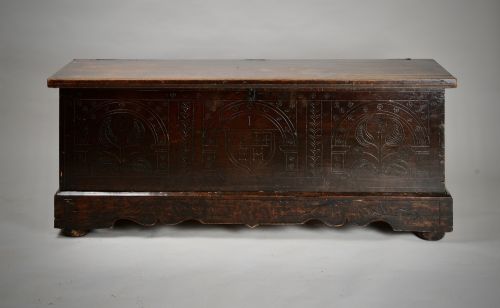
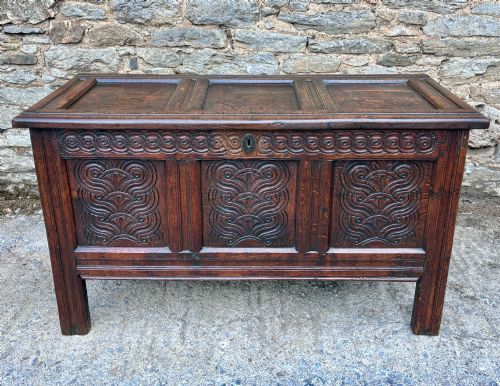
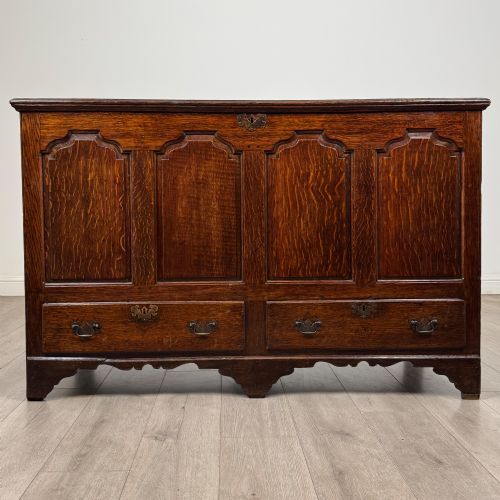
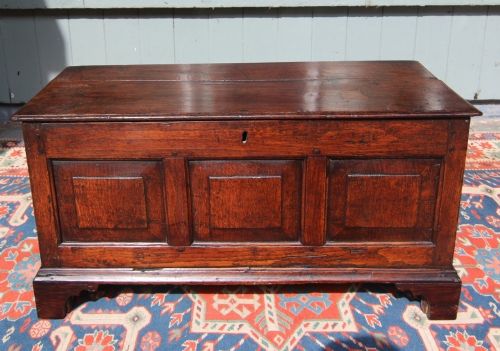
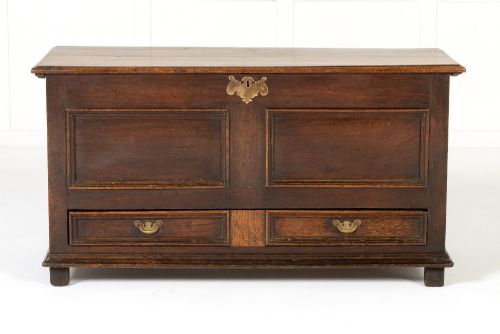
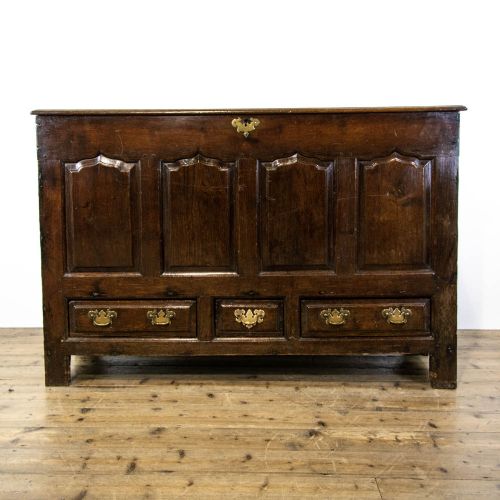
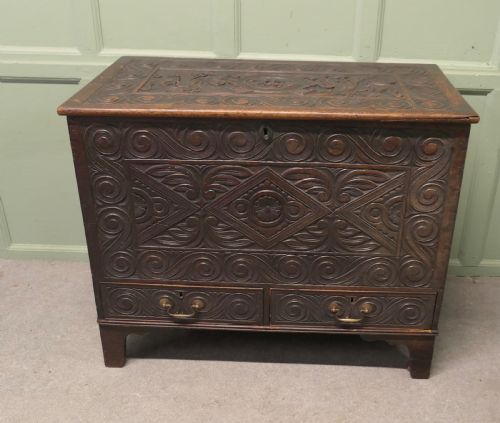
An oak dower chest is a heavy storage receptacle traditionally designed for household linens and personal belongings. These pieces span centuries of regional craftsmanship, appearing as simple boarded coffers or elaborate drawer-fitted mule chests.
The versions most commonly encountered on this page date from the seventeenth and eighteenth centuries, reflecting British vernacular traditions. Examples often combine lift-top lids with base drawers, showing regional characteristics from Lakeland, Lancashire, and Wales.
How they were made
Makers utilised solid oak alongside secondary timbers such as fruitwood, burr elm, and mahogany for cross-banding and panel highlights. Construction relied on joined frameworks, pegged mortise and tenon joints, and board chests secured with wrought iron or brass hardware.
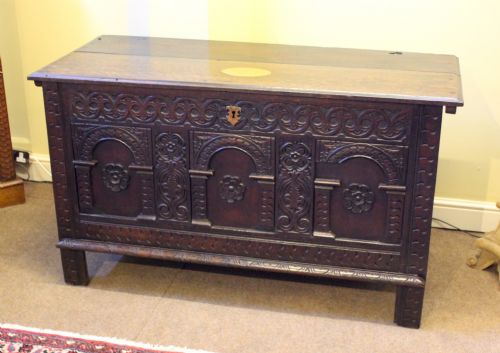
Surface decoration incorporated hand carving, applied mouldings, and wood inlay or marquetry. Iron bindings reinforced heavy lids and corners on early examples intended for security and travel.
Oak Dower Chest Retail Price Guide 2026
Typical asking prices for oak dower chest among the pieces listed under this phrase on Sellingantiques today, from the lower quarter to the upper quarter. They describe what is for sale here now, not the wider market.
What varies in quality
Quality rests upon the integrity of the timber, the depth and crispness of hand carving, and the survival of original hardware. Superior examples display well-figured oak panels and harmonious proportions without excessive later alterations.
The sophistication of the internal drawer configuration and secondary wood selection separates standard utilitarian pieces from high-status regional workshops. Original hinges, locks, and feet contribute significantly to the standing of a piece.

The Oak Dower Chest Glossary
- Mule chest
- A storage chest featuring one or more drawers beneath the main lift-top compartment. This form evolved from the standard coffer to provide easier access to stored textiles.
- Coffer
- A heavy wooden box with a hinged lid used primarily for storage. Early variations relied on joined or boarded oak construction.
- Kist
- A regional term, particularly used in northern Britain, denoting a wooden chest or box. These pieces frequently served domestic storage functions.
- Marquetry
- Decorative veneer work arranged in geometric or pictorial patterns. Craftsmen utilised contrasting timbers such as fruitwood to create detailed surface designs.
- Cross-banding
- A border technique where thin strips of veneer are laid with the grain running perpendicular to the main panel. This finish appears frequently on eighteenth-century drawer fronts.
Oak Dower Chest: Frequently Asked Questions
What is a dower chest used for?
These chests were traditionally used to store household linens, blankets, and bridal property accumulated for marriage. Families utilised the deep interior and lower drawers to protect textiles from damp and pests.
Over generations, they adapted into general household storage for bulky items. Their robust tops also allowed them to function as makeshift seating or side tables in domestic interiors.
How do I tell a coffer from a mule chest?
A standard coffer consists of a single enclosed box compartment accessed solely via a lift-top lid. Reaching items at the bottom requires removing everything stacked above.
A mule chest incorporates one or more drawers beneath the main storage cavity. This design innovation allowed users to retrieve clothing without disturbing the contents of the upper chest.
How do I date an antique oak chest?
Dating relies on examining construction methods, tool marks, and hardware styles. Seventeenth-century examples often display pegged frame-and-panel assembly and hand-rived timber.
Eighteenth-century pieces frequently introduce dovetailed drawers and sophisticated secondary woods. Regional vernacular traits also help assign pieces to specific periods and workshops.
How do I care for an oak chest?
Keep the timber away from direct heat sources and dramatic humidity fluctuations to prevent wood splitting. Natural beeswax polish applied sparingly helps nourish dry oak surfaces.
Avoid placing heavy moisture-holding objects directly onto the top surface. Regular gentle dusting preserves the natural patina built up over centuries.