
Oak Dining Credenza
An oak dining credenza brings solid timber weight and enduring presence to a room, offering generous storage for tableware.
Oak Dining Credenza
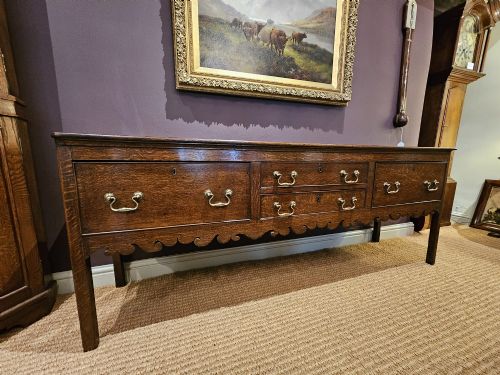
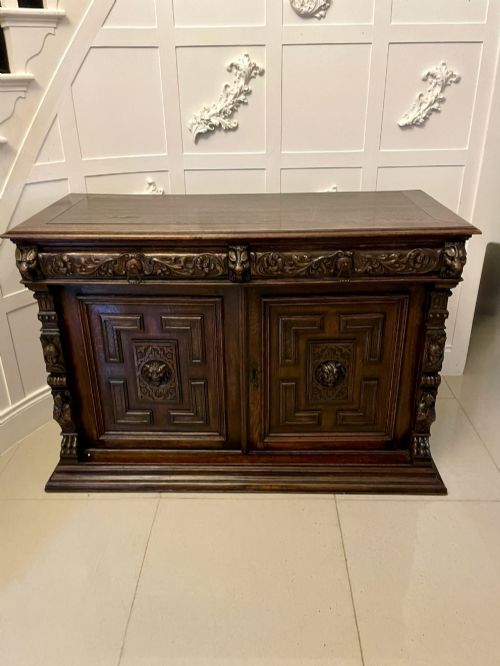
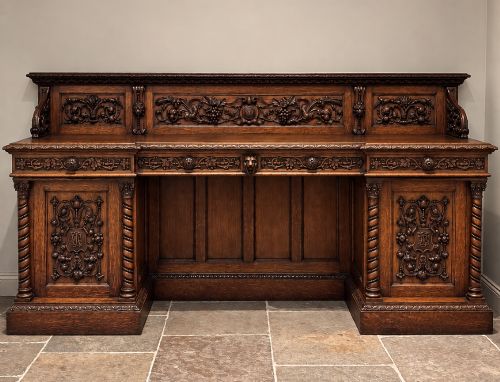
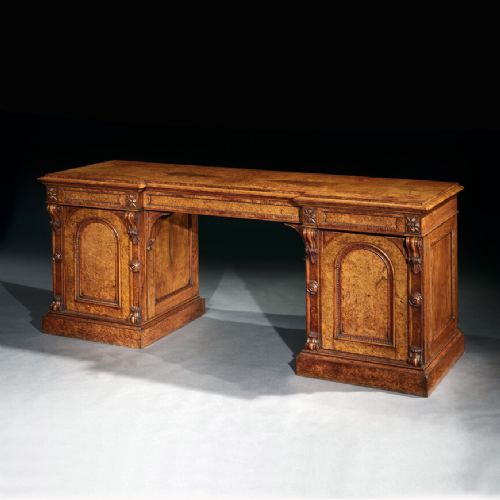
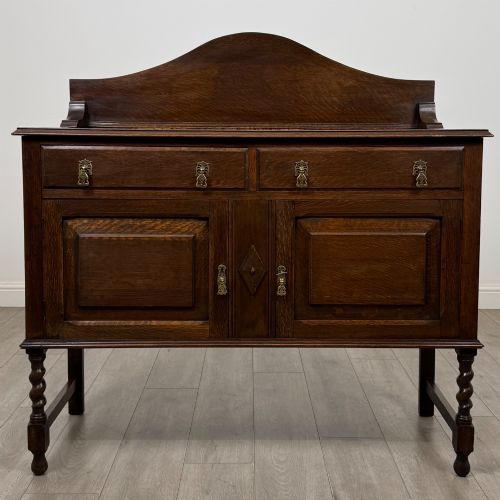
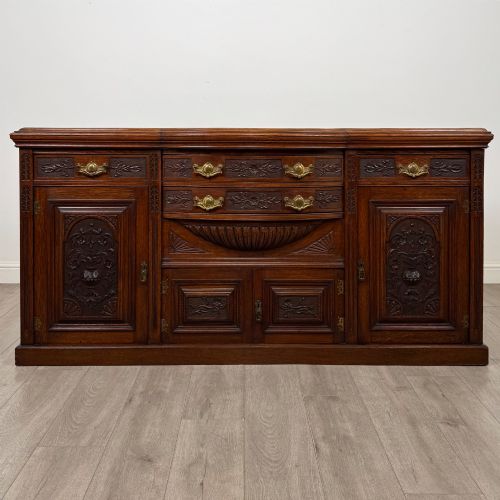
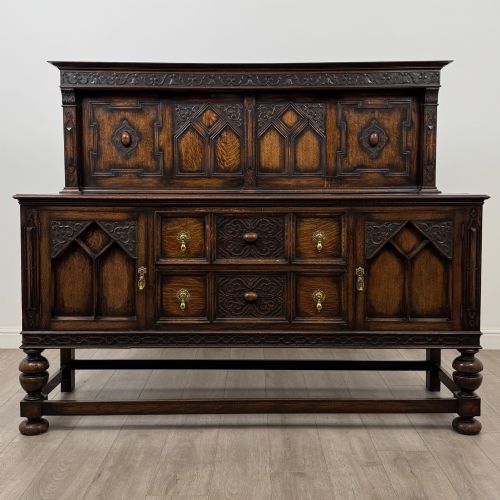
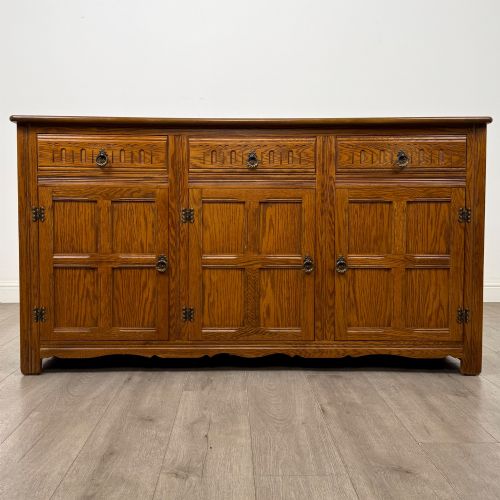
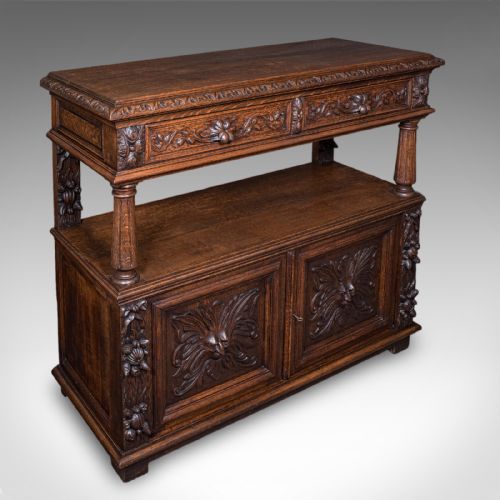
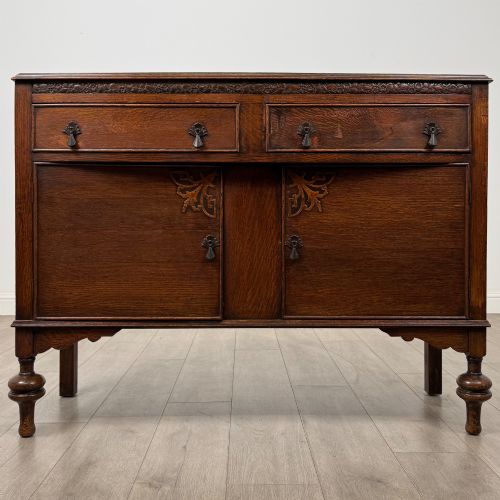
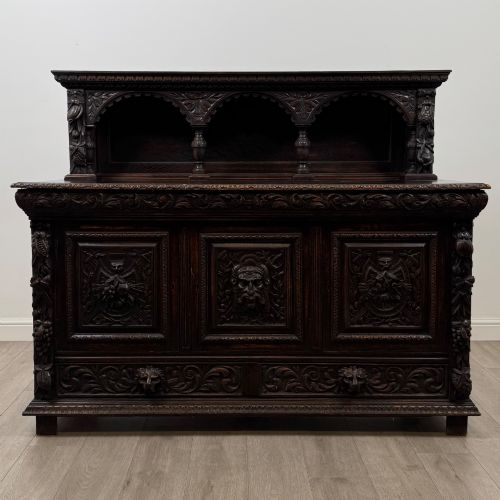
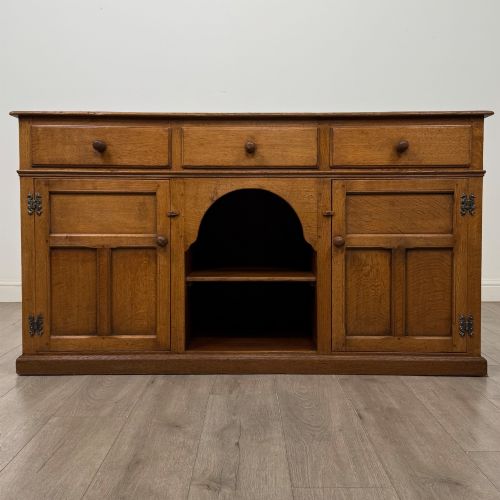
An oak dining credenza groups together sturdy sideboards, servers, and low cabinets built primarily to serve a dining room. Most examples meet the eye as heavily carved Victorian or Edwardian sideboards, though earlier eighteenth-century dresser bases and later 1930s cabinets appear.
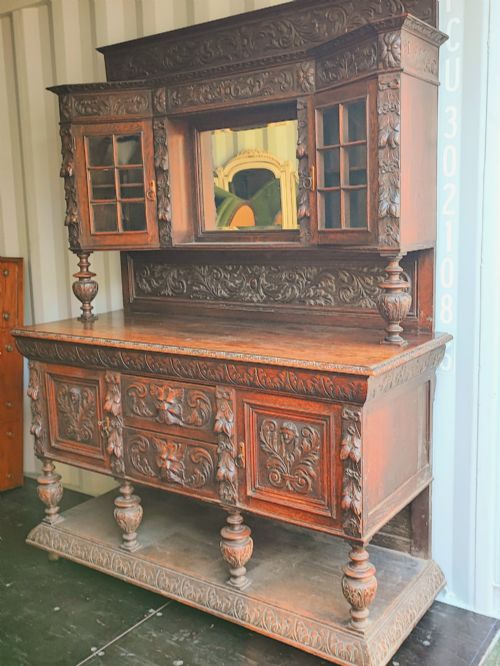
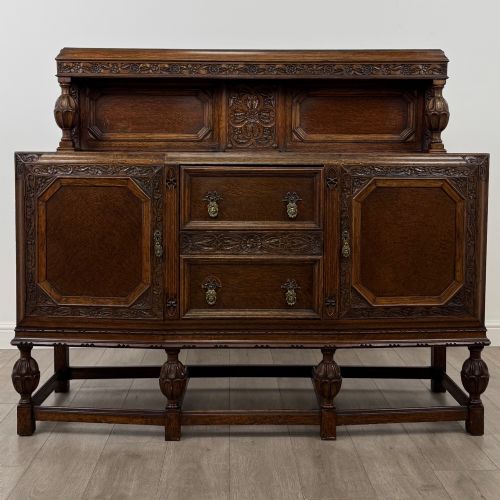
The form stretches from compact server tables to large mirrored buffet cabinets fitted with drawers and cupboards. Buyers seeking this phrase encounter heavy timber constructions designed to anchor a traditional or revival interior.
How they were made
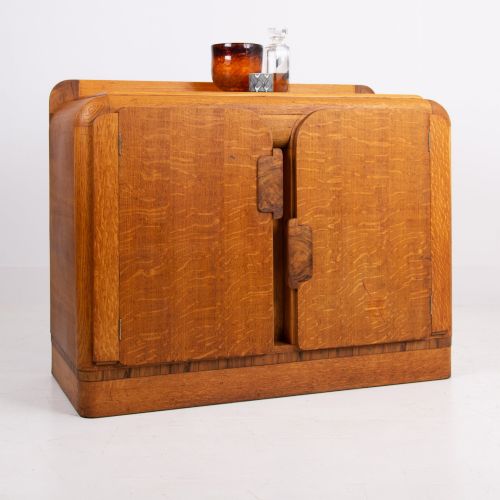
Constructed predominantly from solid oak, these pieces frequently incorporate figured sections like pollard oak, burr walnut, and golden oak veneers to add surface pattern. Workshops employed traditional joinery alongside heavy carving, turning, and parquetry to ornament the dense timber.
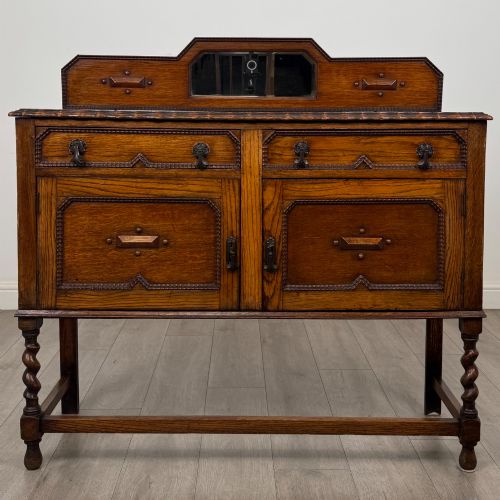
Hardware plays a structural and decorative role, with brass handles, copper details, and iron fittings securing doors and drawers. Mirror glass and glass panels are integrated into upper backsplashes or cabinet doors on larger nineteenth-century iterations.
Keep an eye out for carved Green Man faces glaring out from the foliage on nineteenth-century panels.
What varies in quality
Quality rests upon the selection of timber and the crispness of the carved detail executed by the cabinetmaker. Pieces featuring figured pollard oak or deliberate grain selection stand apart from plainer utility builds.
Construction integrity defines the upper tier, seen in the weight of the timber, the integration of original brass or copper hardware, and the balance of proportions across large buffet and mirror-back formats.
Gomme·Heals of London
The Oak Dining Credenza Glossary
- Pollard oak
- Timber taken from trees that have been pollarded, producing a dense, highly figured grain pattern prized for decorative panels.
- Dresser base
- A low cabinetry unit fitted with drawers and cupboards below, lacking the upper plate racks of a full kitchen dresser.
- Barley twist
- A decorative turning style resembling a twisted rope, commonly found on the legs and supports of Edwardian furniture.
- Parquetry
- Geometric wood mosaic work used to pattern tabletops and cabinet doors using contrasting timber tones.
- Green Man
- A sculptural architectural motif depicting a human face carved with leaves and vines, frequent in nineteenth-century revival carvings.
Oak Dining Credenza: Frequently Asked Questions
What is an oak dining credenza?
An oak dining credenza refers to robust timber sideboards, buffet servers, and low cabinets designed for storing dining room essentials.
These pieces typically date from the eighteenth to the twentieth centuries and feature substantial oak construction with diverse revival styles.
How do I date an oak sideboard?
Dating relies on observing stylistic markers such as heavy Victorian carving, Arts and Crafts simplicity, or later 1930s art deco geometry.
Hardware styles, timber finishes like golden or limed oak, and construction techniques also help place a piece within its period.
How were these sideboards used?
Historically, these low cabinets and servers held heavy serving dishes, silverware, and table linens in the dining room.
Top surfaces provided staging space during meals, while upper shelves and mirror backs displayed fine ceramics.
How do I style an antique credenza?
Pairing a heavy oak sideboard with modern dining furniture creates a striking contrast of textures and eras within a room.
Keep surface styling minimal to let the carved details and figured oak grain remain the focal point of the space.