



Oak Desktop Cabinet
An oak desktop cabinet organises correspondence and小物 neatly, bringing period craftsmanship directly to a working surface.
Oak Desktop Cabinet
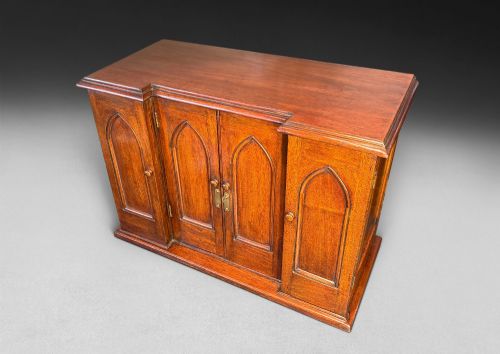
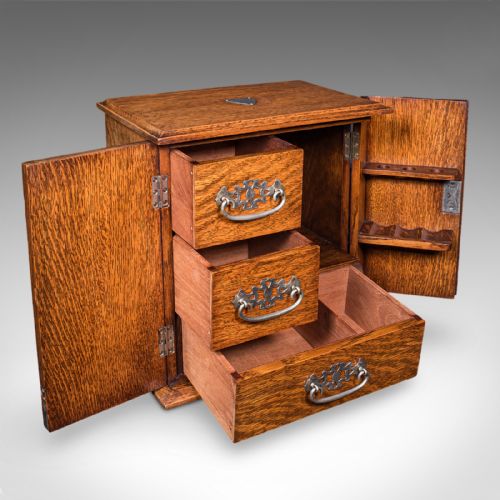
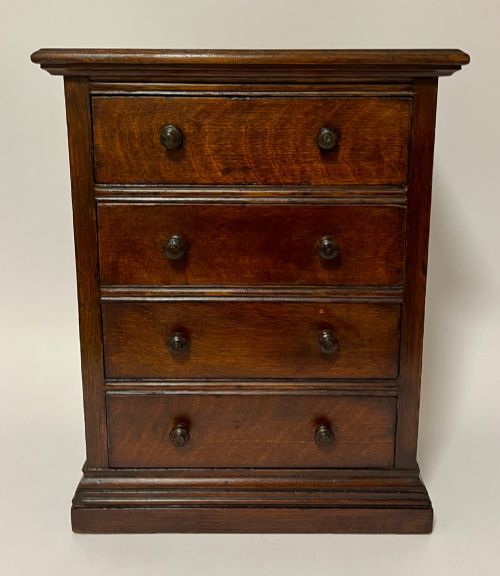
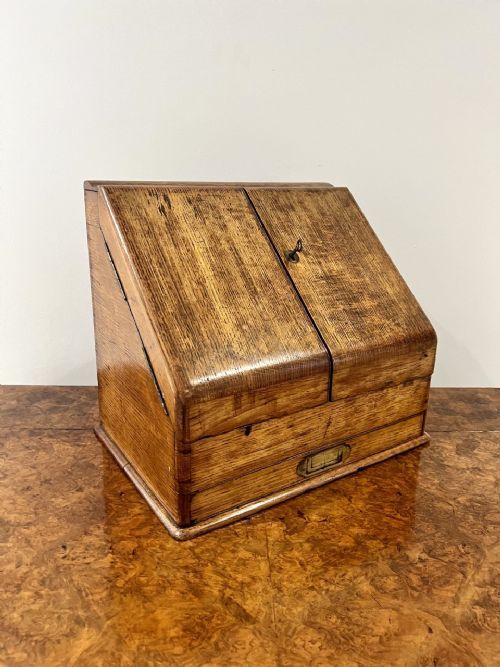
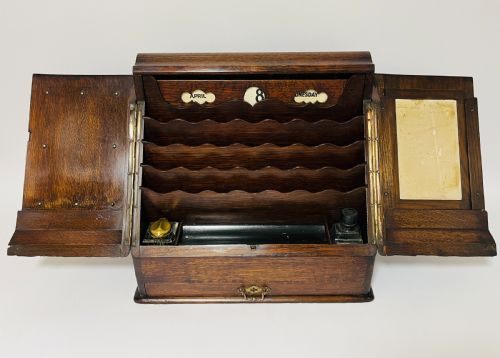
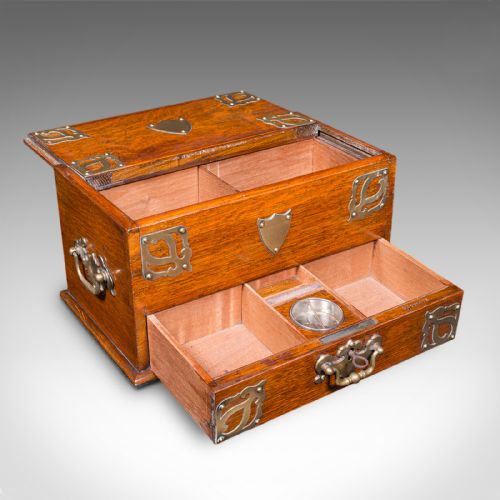
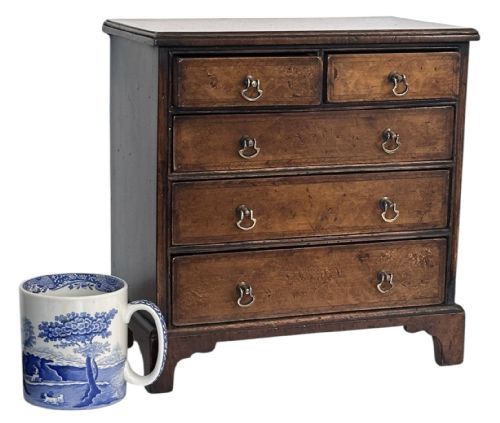
An oak desktop cabinet serves primarily as functional tabletop storage, encompassing stationery boxes, letter boxes, and small chests of drawers designed for daily use. These pieces appear frequently from the Victorian and Edwardian eras, alongside earlier Georgian and 18th-century examples.
How They Were Made
Cabinet makers relied predominantly on solid oak, frequently utilising figured timber, complemented by brass handles, hinges, and lock plates. Internal fittings often incorporate glass panels, iron mechanisms, paper labels, and copper accents.
Construction techniques span traditional dovetail joinery for miniature drawers, fitted compartments for stationery, and tambour doors sliding smoothly on grooved tracks. Carved ornamentation and panelled doors appear on Gothic Revival and Arts and Crafts iterations.
At least one pair of small oak cabinets was manufactured directly from the timbers of a named ship, HMY Osborne.
What Varies in Quality
Superior examples distinguish themselves through dense, figured timber selection and meticulous joinery that ensures drawers and tambour doors operate smoothly without binding. Original hardware, functional locks with matching keys, and intact interior fittings elevate a piece significantly.
Proportion and decorative restraint separate standard commercial boxes from bespoke workshop output. Finer cabinets display harmonious grain matching across panels and thoughtful internal division designed for specific professional or domestic tasks.
Manoah Rhodes & Sons Ltd·Amberg
The Oak Desktop Cabinet Glossary
- Stationery box
- A tabletop cabinet fitted with slots, shelves, and compartments specifically arranged for writing paper, envelopes, and inkwells. These often feature sloping fall fronts or hinged lids.
- Tambour
- A flexible door constructed from narrow vertical strips of oak glued to a canvas backing, allowing it to slide around a curved track to enclose a cabinet front.
- Apprentice piece
- A small-scale item of furniture demonstrating advanced woodworking skills, executed by a trainee to prove competency before entering a trade guild.
- Humidor
- A specialised storage box designed to maintain humidity, frequently utilised for cigars and tobacco within smoking cabinets.
- Collector's cabinet
- A miniature chest containing multiple shallow drawers intended for organising specimens, coins, or small curiosities.
Oak Desktop Cabinet: Frequently Asked Questions
What fits inside an oak desktop cabinet?
These small pieces hold letters, writing instruments, stamps, and small collectables within fitted interior compartments and shallow drawers.
Larger variations accommodate documents, tobacco accessories, or small workshop tools on a desk or countertop.
How do I identify a Victorian stationery cabinet?
Victorian examples frequently display robust oak construction, often incorporating brass hardware, calendar attachments, and panelled doors.
They date from the nineteenth century and generally reflect the revival styles of the period, such as Gothic or Arts and Crafts.
Where were these cabinets placed originally?
Owners kept them upon writing desks, library tables, and commercial countertops for immediate access to daily correspondence.
Specialist versions also stood in club lounges, doctors' surgeries, and merchant shops for secure storage.
What is a tambour front?
A tambour front consists of narrow slats of oak fixed to a flexible backing fabric that slides along a curved track.
This mechanism conceals the cabinet interior while requiring less clearance space than a traditional hinged door.