


Edwardian Specimen Chest
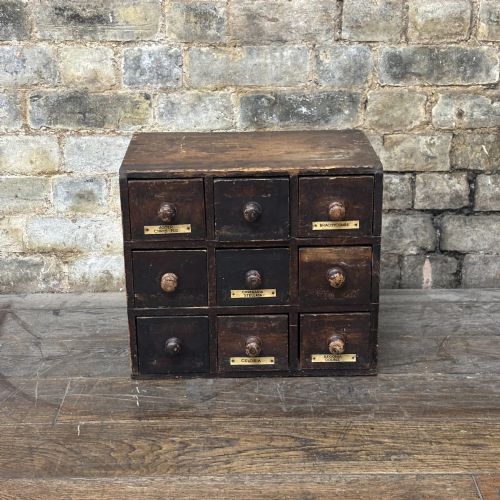
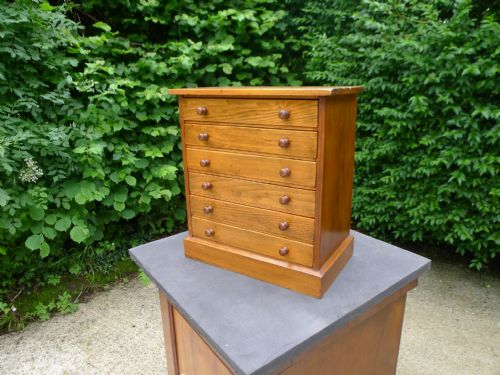
An edwardian specimen chest provides shallow multi-drawer storage designed to house natural history specimens, geological samples or small objects.
Edwardian Specimen Chest
An edwardian specimen chest takes the form of a small cabinet or bank of drawers built to organise orderly collections of natural history items. Buyers examining this page encounter pieces dating from the Edwardian period alongside nineteenth-century examples and later utilitarian variations.
The objects on offer appear under various descriptions including collectors cabinets, specimen cabinets and small storage chests. These pieces typically feature numerous shallow drawers designed to protect fragile items rather than store bulky garments.
How They Were Made
Cabinet makers constructed these pieces using dense hardwoods such as mahogany, oak and walnut, alongside utilitarian softwoods like pine and deal. Drawer construction prioritises tight tolerances and smooth runs to protect delicate contents from dust and vibration.
Brass fittings such as recessed handles, card holders and small locks appear frequently across the surviving examples. Glass panels are integrated into doors or lids where contents require visual inspection without handling.
The listings span the Victorian era, the Edwardian period and the early twentieth century, utilising mahogany, oak, pine, walnut and brass.
What Varies In Quality
The standard of timber selection and drawer runner precision determines the calibre of a piece. Cabinets built by documented workshops display superior carcass stability and finer dovetail joinery than utilitarian workshop storage.
Hardware choice and internal lining materials further differentiate the standard of manufacture. Original brass pulls and intact locking mechanisms elevate the integrity of a chest.
Brady of Edmonton·J.T. Crockett
The Edwardian Specimen Chest Glossary
- Specimen chest
- A cabinet containing multiple shallow drawers intended for classifying natural history items, seeds or scientific samples. These pieces rely on tight fits to exclude dust.
- Collectors cabinet
- A multi-drawer housing unit built to display or store structured groupings of small artefacts. Variations range from glass-fronted display pieces to enclosed drawer banks.
- Dovetail
- A traditional interlocking joint used in drawer construction to ensure strength under regular use. Fine, tight pins indicate skilled cabinet work.
- Wellington chest
- A tall, narrow chest of drawers secured by a locking hinged vertical stile on one side. This mechanism covers the drawer edges to secure the entire stack.
- Pitch pine
- A resinous pine timber utilised in nineteenth-century and Edwardian cabinet making. It offers durability and prominent grain figuring.
Edwardian Specimen Chest: Frequently Asked Questions
What were specimen chests originally used for?
These chests stored classified natural history samples, including insects, botanical specimens, eggs and geological fragments. Collectors relied on the shallow drawer design to keep delicate items separated and organised.
The banks of small drawers allowed enthusiasts to maintain extensive libraries of physical items without risking damage from stacking heavier objects.
Can these chests be used for modern storage?
The shallow drawer configurations suit the organisation of small modern items like jewellery, stationery, art supplies or craft materials. Collectors continue to utilise them for miniature artefacts and coins.
Placing a chest in a study or hallway provides functional tabletop surface area alongside segmented internal storage.
How should I care for timber specimen chests?
Maintain stable indoor humidity levels to prevent the timber drawers from sticking or warping within their carcasses. Avoid placing cabinets in direct sunlight to protect polished wood surfaces.
Occasional dusting with a dry lint-free cloth preserves the finish without requiring heavy wax treatments.